Luxor Travel Guide | Things to Do, Temples & Travel Tips
Luxor Travel Guide: Best Things to Do, Temples, Tombs & Travel Tips
Few cities in the world allow you to walk through thousands of years of history quite like Luxor, Egypt.
On one side of the Nile rise the monumental columns of Karnak and Luxor Temple. Across the river, hidden among the desert mountains, lie the tombs of pharaohs, queens, nobles, and workers who helped create some of ancient Egypt’s greatest treasures.
This is the landscape once known as Thebes, capital of Egypt during some of the most powerful periods of its ancient history.
Today, Luxor is often described as the world’s greatest open-air museum. But that description only begins to capture what makes the city special.
You can watch the sunrise from a hot-air balloon above the West Bank, descend into brilliantly decorated royal tombs, sail the Nile in a traditional felucca, explore enormous temple complexes, and finish the evening walking between illuminated columns that were carved more than three thousand years ago.
For anyone interested in ancient Egypt, Luxor is not simply another stop on an Egypt itinerary. It is essential.
This Luxor Travel Guide will help you decide what to see, how many days you need, which side of the Nile to explore first, when to visit, and how to combine Luxor with a Nile cruise and the rest of Egypt.
Why Visit Luxor?
Cairo and Giza introduce you to the age of the pyramids.
Luxor introduces you to the Egypt of Tutankhamun, Hatshepsut, Ramses II, Seti I, Amenhotep III, and many of the rulers of the New Kingdom.
The concentration of monuments is extraordinary.
Within the wider Luxor area, you can visit:
- Karnak Temple
- Luxor Temple
- Valley of the Kings
- Valley of the Queens
- Temple of Hatshepsut
- Colossi of Memnon
- Medinet Habu
- Tombs of the Nobles
- Deir el-Medina
- Ramesseum
And a little farther away:
- Dendera Temple
- Abydos
- Temple of Seti I
- Esna Temple
Yet Luxor isn’t only about archaeological sites.
The Nile runs through the center of the city, dividing its ancient landscape into the East Bank and West Bank and creating opportunities for sunset sailing, luxury Nile cruises, waterfront dining, and some of Egypt’s most beautiful hotels.
Luxor at a Glance
| Information | Details |
|---|---|
| Country | Egypt |
| Ancient Name | Thebes |
| Ancient Egyptian Name | Waset |
| Location | Upper Egypt |
| River | Nile |
| Best Time to Visit | October–April |
| Ideal Stay | 3–4 days |
| Minimum Stay | 2 days |
| Main Areas | East Bank & West Bank |
| Famous For | Temples, royal tombs, Nile cruises & ancient Thebes |
| Major Nearby Excursions | Dendera & Abydos |
Why Was Luxor So Important in Ancient Egypt?
Ancient Luxor was known as Waset, later called Thebes by the Greeks.
Its importance grew dramatically during the Middle and New Kingdoms, when Thebes became one of Egypt’s most powerful religious and political centers.
At the heart of the city stood the great sanctuary of Amun at Karnak.
As Amun became one of Egypt’s most important gods, successive pharaohs expanded Karnak, adding pylons, temples, obelisks, statues, courtyards, and monumental gateways.
Across the Nile, the desert mountains became the sacred burial landscape of Egypt’s kings.
Instead of constructing enormous pyramids that advertised the location of royal burials, New Kingdom rulers created tombs hidden inside the mountains of what we now call the Valley of the Kings.
The result is extraordinary.
The eastern side of ancient Thebes became associated with temples, daily life, and the rising sun.
The western landscape became closely associated with death, burial, and the setting sun.
That relationship is still visible when you explore Luxor today.
East Bank vs. West Bank: What’s the Difference?
Understanding Luxor becomes much easier once you divide it into two areas.
Luxor East Bank
The East Bank contains the modern city and two of Egypt’s greatest temple complexes:
Karnak Temple and Luxor Temple.
You’ll also find many hotels, restaurants, shops, the railway station, and the main embarkation points for Nile cruises.
The East Bank is usually the best base for first-time visitors.
Luxor West Bank
Cross the Nile and the atmosphere changes completely.
The busy city gives way to farmland, villages, desert, and mountains.
This is where you’ll find the great necropolises of ancient Thebes, including:
- Valley of the Kings
- Valley of the Queens
- Hatshepsut Temple
- Medinet Habu
- Deir el-Medina
- Tombs of the Nobles
- Colossi of Memnon
For history lovers, the West Bank can easily fill two full days.
How Many Days Do You Need in Luxor?
One Day
Possible, but rushed.
If you have only one day, prioritize:
Karnak → Valley of the Kings → Hatshepsut Temple → Colossi of Memnon → Luxor Temple
You’ll see the headline monuments but miss much of what makes Luxor extraordinary.
Two Days
Two days is the minimum we recommend.
Spend one day exploring the West Bank and another exploring Karnak and Luxor Temple.
Three Days
For most first-time visitors, three days is ideal.
This gives you time for:
- Karnak Temple
- Luxor Temple
- Valley of the Kings
- Valley of the Queens
- Hatshepsut Temple
- Medinet Habu
- Hot-air balloon
- Felucca sailing
without turning the trip into a race between monuments.
Four Days or More
History enthusiasts should consider four or five days.
Use the additional time for:
- Dendera
- Abydos
- Deir el-Medina
- Tombs of the Nobles
- Ramesseum
- More specialized tombs
This is also the best approach for travelers who prefer a slower, more luxurious pace.
Best Time to Visit Luxor
Luxor has a hot desert climate, making the season of your visit important.
October to April
This is generally the best time to visit Luxor.
Temperatures are more comfortable for exploring open archaeological sites, particularly the West Bank.
December and January are among the busiest months, so premium hotels, guides, and Nile cruises should be arranged well in advance.
May to September
Summer can be extremely hot, especially around midday.
However, fewer visitors can mean quieter archaeological sites.
If traveling during summer, start sightseeing very early and avoid scheduling extensive outdoor visits during the hottest part of the afternoon.
What Is the Best Time of Day for Sightseeing?
Early morning.
This is particularly important on the West Bank.
Starting early provides:
- Cooler temperatures
- Softer photography light
- Fewer tour groups
- A quieter atmosphere inside tombs
It also makes it possible to return to your hotel during the hottest hours before continuing sightseeing later in the afternoon.
Luxor Temple is different.
Whenever possible, visit around sunset and remain after dark.
The illuminated columns, statues, and pylons create one of the most atmospheric archaeological experiences in Egypt.
Is Luxor Worth Visiting If You’re Already Seeing the Pyramids?
Absolutely.
Giza and Luxor represent very different chapters of Egyptian history.
The Giza Pyramids primarily belong to the Old Kingdom, more than a thousand years before many of Luxor’s most famous monuments.
Luxor is dominated by the New Kingdom and later periods.
At Giza, architecture is monumental and exterior-focused.
In Luxor, you enter temples covered with inscriptions and descend into tombs filled with extraordinary paintings describing ancient Egyptian ideas about death and the afterlife.
Seeing both provides a far richer understanding of Egyptian civilization.
Should You Visit Luxor Before or After Cairo?
Either works, but for first-time travelers we generally prefer:
Cairo & Giza → Luxor → Nile Cruise → Aswan
Cairo introduces ancient Egyptian civilization through the pyramids and major museums.
Luxor then takes you deeper into the age of the great New Kingdom pharaohs before a Nile cruise connects the temples between Luxor and Aswan.
It creates a natural historical and geographical progression through Egypt.
Luxor and the Nile Cruise
Luxor is one of the two principal starting points for a classic Nile cruise.
Most itineraries operate between Luxor and Aswan, stopping at archaeological sites such as:
- Esna
- Edfu
- Kom Ombo
before reaching Aswan.
For travelers looking for a premium journey, combining several nights in Luxor with a luxury Nile cruise provides the best balance.
You can explore the major sites without rushing and then continue south along the Nile at a much slower pace.
Hot-Air Balloon Over Luxor
One of the most memorable ways to experience Luxor is from above.
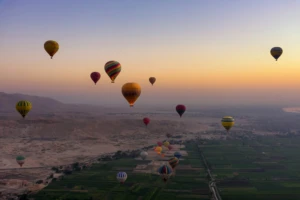
Before sunrise, hot-air balloons rise over the West Bank as the first light reaches the Nile Valley.
From the air, you may see:
- Nile River
- Agricultural fields
- Desert mountains
- Hatshepsut Temple
- Ancient necropolises
- Villages of the West Bank
The contrast between the green Nile Valley and surrounding desert is spectacular.
Weather conditions determine whether flights operate, so we recommend scheduling your balloon ride early in your stay rather than on your final morning.
If weather causes a cancellation, you’ll have another opportunity to try.
Is Luxor Safe for Tourists?
Luxor is one of Egypt’s principal tourism destinations and receives international visitors throughout the year.
The main archaeological areas, hotels, cruise docks, and tourist routes are accustomed to foreign travelers.
As anywhere, use normal travel precautions:
- Keep valuables secure.
- Use reputable transportation.
- Drink plenty of water.
- Protect yourself from the sun.
- Arrange licensed guides for archaeological sightseeing.
- Confirm current site regulations before visiting.
For most travelers, the greater practical challenge in Luxor is heat and trying to fit too many monuments into one day, rather than navigating the city itself.
What Should You Wear in Luxor?
For archaeological sightseeing, prioritize comfort.
We recommend:
- Lightweight breathable clothing
- Comfortable walking shoes
- Hat
- Sunglasses
- Sunscreen
During winter, mornings can feel surprisingly cool, particularly during hot-air balloon flights and early sightseeing.
Bring a light jacket.
Modest clothing is also appropriate when visiting local neighborhoods or religious sites.
Should You Hire an Egyptologist in Luxor?
If there is one place in Egypt where we strongly recommend an expert guide, it is Luxor.
The walls surrounding you are filled with stories.
Without context, you may see beautiful hieroglyphs and paintings.
With an Egyptologist, those scenes become accounts of:
- Coronations
- Religious festivals
- Battles
- Offerings to gods
- Funerary rituals
- Ancient Egyptian beliefs about eternity
The difference is substantial, particularly inside the royal tombs and enormous temple complexes.
A Local Tip: Don’t Try to See Everything
Luxor has an unusual problem.
There is simply too much to see.
Travelers sometimes attempt Karnak, Luxor Temple, Valley of the Kings, Hatshepsut, Medinet Habu, Valley of the Queens, and several additional tombs in one day.
Technically, it may be possible.
Experientially, it is a mistake.
After the fifth or sixth monument, extraordinary ancient art can begin to blur together.
Instead, select fewer sites and spend more time understanding them.
For luxury travelers especially, time is part of the experience.
Experience Luxor with Delta Tours Egypt
Since 1974, Delta Tours Egypt has designed private journeys through Egypt that combine expert guiding with carefully planned logistics and comfortable pacing.
In Luxor, we can arrange private experiences including:
- Licensed Egyptologist guides
- Private air-conditioned transportation
- East and West Bank sightseeing
- Valley of the Kings
- Valley of the Queens
- Karnak and Luxor Temple
- Dendera and Abydos
- Hot-air balloon experiences
- Luxury Nile cruises
- Premium hotels
- Special-access requests where officially available
For travelers who want Luxor to form part of a complete private journey through Cairo, Giza, Aswan, Abu Simbel and the Nile Valley, explore our Luxury Egypt Tours and let our team create the itinerary around your interests and preferred travel style.
East Bank of Luxor: Karnak, Luxor Temple & Things to Do
The East Bank of Luxor was the living and religious heart of ancient Thebes.
While the West Bank became famous for royal tombs and temples associated with the afterlife, the eastern side of the Nile was dominated by enormous religious complexes, royal processions, markets, homes, and daily life.
Today, it remains the center of modern Luxor.
Here you’ll find two of Egypt’s most important archaeological sites—Karnak Temple and Luxor Temple—along with the Avenue of Sphinxes, museums, Nile promenades, restaurants, hotels, and the city’s principal cruise docks.
For most first-time visitors, one full day is enough to see the major East Bank attractions comfortably.
But if you love ancient Egyptian history, it’s easy to spend longer.
Karnak Temple
If you visit only one temple complex in Luxor, make it Karnak.
Karnak is not simply one temple.
It is an enormous religious complex that was expanded by generations of Egyptian rulers over many centuries.
Its principal sanctuary was dedicated to Amun-Ra, but the wider complex incorporated temples, chapels, pylons, obelisks, sacred lakes, statues, and sanctuaries associated with several deities.
Walking through Karnak is therefore like walking through a physical timeline of ancient Egyptian history.
Different pharaohs left their mark on the complex, sometimes adding new monuments and sometimes modifying those created by earlier rulers.
Among the names connected with Karnak are some of the most famous rulers in Egyptian history:
- Hatshepsut
- Thutmose III
- Seti I
- Ramses II
- Amenhotep III
- Tutankhamun
Allow at least two to three hours if you want to appreciate the complex rather than simply photograph the main monuments.
The Great Hypostyle Hall
The most famous part of Karnak is the Great Hypostyle Hall.
Even travelers who have seen photographs are often surprised by its scale.
The hall contains 134 enormous columns, arranged across a vast ceremonial space.
The tallest central columns rise more than 20 meters.
Walk between them and look upward.
Their capitals once supported a massive stone roof, meaning the space ancient Egyptians experienced would have been darker and more enclosed than the open-air forest of columns we see today.
The walls and columns are covered with hieroglyphic inscriptions and scenes depicting pharaohs interacting with the gods.
This isn’t decoration added simply for beauty.
The reliefs communicate royal authority, religious ritual, and the relationship between the king and Egypt’s divine world.
Internal link suggestion: Link Great Hypostyle Hall or Karnak Temple to your dedicated Karnak Temple article.
Hatshepsut’s Obelisk
One of Karnak’s most striking monuments is the surviving obelisk commissioned by Queen Hatshepsut.
Carved from a single piece of granite and transported from Aswan, it demonstrates the extraordinary engineering capabilities of ancient Egyptian builders.
Obelisks had strong solar associations and were typically erected in pairs at temple entrances.
Hatshepsut’s surviving obelisk remains one of the tallest ancient obelisks still standing in Egypt.
It is also an important physical reminder of one of Egypt’s most extraordinary rulers.
Later in your Luxor journey, you’ll encounter Hatshepsut again at her magnificent mortuary temple on the West Bank.
The Sacred Lake
Behind the principal temple structures lies Karnak’s Sacred Lake.
Priests used the lake for purification rituals connected with temple ceremonies.
The area also provides an opportunity to step away from the most crowded parts of the complex and appreciate Karnak from a different perspective.
Nearby you’ll encounter the famous granite scarab associated with Amenhotep III.
You may hear various modern stories about walking around it for luck, marriage, or wishes.
They are entertaining traditions, but they shouldn’t be confused with established ancient Egyptian ritual.
The Pylons of Karnak
Karnak contains a series of monumental gateways known as pylons.
These enormous structures help reveal how the temple expanded over time.
Instead of imagining Karnak as a building designed and completed by one pharaoh, think of it as a sacred city that developed across generations.
Successive kings added:
- New courtyards
- Gateways
- Chapels
- Obelisks
- Statues
- Inscriptions
This layered history is one reason having an Egyptologist at Karnak makes such a difference.
Without explanation, its scale can become overwhelming.
With context, every section becomes another chapter in Egypt’s history.
How Long Should You Spend at Karnak?
For most visitors:
Minimum: 1.5 hours
Recommended: 2–3 hours
History enthusiasts: 3+ hours
Avoid trying to see every corner.
Instead, prioritize the principal monuments and allow time to appreciate them.
Best Time to Visit Karnak
Go early in the morning.
The advantages are significant:
- Cooler temperatures
- Fewer large groups
- Better photography
- More comfortable walking
Karnak involves considerable outdoor walking, so midday can become uncomfortable during warmer months.
Luxor Temple
Karnak overwhelms you with scale.
Luxor Temple impresses in a completely different way.
Located directly beside the Nile in the heart of modern Luxor, the temple feels more intimate and atmospheric.
It is particularly beautiful around sunset and after dark, when illumination transforms the statues, pylons, and colonnades.
Unlike Karnak, which was the principal cult center of Amun, Luxor Temple played an important role in ideas surrounding divine kingship and royal renewal.
Its history stretches across different periods and civilizations, creating one of Egypt’s most fascinating archaeological layers.
The First Pylon and Ramses II
Your visit begins dramatically.
The enormous First Pylon was constructed during the reign of Ramses II.
In front once stood colossal statues and two obelisks.
Today, only one obelisk remains in Luxor.
The other stands thousands of kilometers away in Place de la Concorde in Paris.
The surviving statues of Ramses II immediately establish the royal character of the temple.
Walk through the pylon and you’ll enter another monumental courtyard surrounded by columns.
Court of Ramses II
This large courtyard contains rows of papyrus-bud columns and enormous statues of Ramses II.
But look carefully and you’ll notice something unusual.
A mosque sits within the ancient temple complex.
The Abu Haggag Mosque represents another chapter in the site’s extraordinarily long history.
Luxor Temple was never simply abandoned and forgotten.
Different communities continued using the area across thousands of years.
Ancient Egyptian, Roman, Christian, and Islamic history can all be found within the same archaeological landscape.
The Colonnade of Amenhotep III
One of Luxor Temple’s most beautiful sections is the monumental colonnade begun under Amenhotep III.
Its enormous columns create a ceremonial avenue through the temple.
Reliefs associated with the Opet Festival are particularly important here.
During this great religious celebration, sacred images of Amun, Mut, and Khonsu traveled ceremonially between Karnak and Luxor Temple.
This connection brings us to one of modern Luxor’s most impressive restored archaeological features.
Internal link suggestion: Link Luxor Temple to your dedicated Luxor Temple article.
The Avenue of Sphinxes
Karnak and Luxor Temple were not independent monuments.
They were physically connected by a ceremonial avenue stretching for approximately 2.7 kilometers.
Today it is generally known as the Avenue of Sphinxes.
Hundreds of sphinx statues once lined the route used during religious processions such as the Opet Festival.
Different sections include sphinxes with varying forms, including human-headed and ram-headed figures.
The restored avenue helps modern visitors understand something extremely important:
Ancient Thebes wasn’t simply a collection of archaeological sites.
It was an interconnected sacred city.
Temples, processional routes, the Nile, and the surrounding landscape all formed part of a larger religious environment.
Can You Walk from Karnak to Luxor Temple?
The two temples are connected by the restored Avenue of Sphinxes, although how much of the route visitors can practically access can depend on current site arrangements.
Even if you don’t walk the entire distance, seeing portions of the avenue dramatically improves your understanding of ancient Thebes.
For a comfortable sightseeing day, we generally recommend using private transportation between the principal sites rather than making a long walk under the Egyptian sun.
Best Time to Visit Luxor Temple
Unlike Karnak, we recommend visiting Luxor Temple late in the afternoon.
Arrive before sunset.
Explore while there is still daylight.
Then remain as the sky darkens and the temple illumination comes on.
You’ll effectively see the monument twice:
Luxor Temple by daylight reveals architectural details.
Luxor Temple at night creates atmosphere.
If your itinerary allows only one evening archaeological experience in Luxor, this should be high on the list.
Luxor Museum
Travelers often overlook the Luxor Museum, which is unfortunate.
The museum is smaller than Cairo’s major collections, but that’s part of its appeal.
Instead of confronting thousands of objects in enormous galleries, visitors encounter a carefully selected collection connected strongly with ancient Thebes and the surrounding region.
It can be particularly valuable after visiting Karnak and the West Bank because you’ll recognize names, artistic styles, and historical periods you’ve encountered at the archaeological sites.
Allow around one to two hours.
For travelers genuinely interested in Egyptology, it deserves a place in a three-day Luxor itinerary.
Mummification Museum
The Mummification Museum focuses on one of the aspects of ancient Egyptian civilization that fascinates visitors most: preservation of the dead.
Its displays explore the beliefs, techniques, tools, and materials associated with mummification.
Importantly, mummification wasn’t simply a technical process.
It was inseparable from ancient Egyptian beliefs about the afterlife.
The body needed to be preserved because it remained important to the deceased’s continued existence.
Visiting the museum before the Valley of the Kings can provide useful context for understanding the tombs you’ll encounter on the West Bank.
Walk Along the Nile Corniche
Not everything in Luxor needs to involve hieroglyphs.
The Nile Corniche offers a completely different experience.
Walk beside the river in the late afternoon and you’ll see:
- Feluccas crossing the Nile
- Cruise ships arriving and departing
- West Bank mountains in the distance
- Local boats
- Sunset over the river
It is a good reminder that the Nile isn’t simply part of ancient Egyptian history.
It remains central to life in Egypt today.
Take a Sunset Felucca
After a full day of temple sightseeing, a traditional felucca ride is one of the best ways to slow down.
These simple sailing boats have crossed the Nile for generations.
There’s no need for a complicated itinerary.
Board before sunset, sail away from the busy riverbank, and watch the landscape change as the light fades over the West Bank.
For couples and luxury travelers, a private felucca provides a particularly peaceful contrast to a busy day of archaeological exploration.
Where to Stay on the East Bank
Most first-time visitors choose the East Bank because it offers convenient access to:
- Karnak
- Luxor Temple
- Restaurants
- Shops
- Nile cruise docks
- Airport transfers
Luxury travelers have several historic and high-end options.
The legendary Sofitel Winter Palace Luxor, overlooking the Nile, remains one of the city’s most iconic hotels.
Staying here also places you within easy reach of Luxor Temple.
Travelers who prioritize quieter surroundings may instead prefer the West Bank, which we’ll discuss later.
The Perfect East Bank Itinerary
For most travelers, this sequence works extremely well:
Early Morning – Karnak Temple
Start around opening time when temperatures are comfortable.
Allow approximately 2–3 hours.
Late Morning – Luxor Museum
Continue to Luxor Museum for a focused look at objects connected with ancient Thebes.
Lunch & Rest
Return to your hotel.
This break is particularly valuable during warmer months.
Late Afternoon – Nile Corniche
Walk beside the Nile or enjoy a private felucca.
Sunset – Luxor Temple
Enter before sunset and remain until after dark.
This creates a balanced day without rushing from one archaeological site to another.
If You Only Have Half a Day
Prioritize:
Karnak Temple → Luxor Temple
These are the two essential East Bank monuments.
Don’t add several museums simply to increase the number of attractions you’ve visited.
Quality matters more than quantity in Luxor.
Common East Bank Mistakes
Visiting Karnak at Midday
Karnak is enormous and exposed.
Start early whenever possible.
Spending Only 45 Minutes at Karnak
You can technically photograph the Hypostyle Hall and leave.
But you’ll miss much of the site’s historical importance.
Give it at least two hours if your schedule permits.
Visiting Luxor Temple Only During Daylight
It’s beautiful during the day.
It’s exceptional after sunset.
Try to experience both.
Skipping the Avenue of Sphinxes
Understanding the avenue helps connect Karnak and Luxor Temple into one ancient ceremonial landscape.
Trying to Do East and West Banks in One Day
It’s possible.
We don’t recommend it unless your schedule absolutely requires it.
Luxor rewards travelers who slow down.
Private East Bank Experience with Delta Tours Egypt
Exploring Luxor privately allows you to control the pace rather than following a fixed group schedule.
With Delta Tours Egypt, an East Bank experience can be tailored around your interests and include:
- Private licensed Egyptologist
- Private air-conditioned transportation
- Karnak Temple
- Luxor Temple
- Luxor Museum
- Mummification Museum
- Private felucca sailing
- Luxury hotel arrangements
- Nile cruise connections
- Special-access requests where officially available
For travelers creating a complete premium journey through Cairo, Giza, Luxor, Aswan, and the Nile Valley, connect this section directly to your Luxury Egypt Tours page.
The purpose of that link should be clear:
Don’t just visit Luxor—build it into a privately designed journey through Egypt.
Luxor West Bank: Valley of the Kings, Royal Tombs & Ancient Temples
Cross the Nile from modern Luxor and the landscape changes almost immediately.
The busy streets of the East Bank give way to green agricultural fields, small villages, desert plains, and the dramatic limestone mountains of the Theban Necropolis.
This is the West Bank of Luxor—the great burial landscape of ancient Thebes.
For centuries, pharaohs, queens, princes, nobles, priests, and the craftsmen who created their tombs were buried here.
Today, the West Bank contains some of the most extraordinary archaeological sites anywhere in Egypt, including the Valley of the Kings, Valley of the Queens, Temple of Hatshepsut, Medinet Habu, Deir el-Medina, and the Colossi of Memnon.
If the East Bank represents the monumental temples of ancient Thebes, the West Bank takes you into ancient Egyptian beliefs surrounding death, rebirth, and eternity.
For many travelers, this becomes the highlight of Luxor.
Why Did the Ancient Egyptians Use Luxor’s West Bank?
The location was deeply symbolic.
The sun rises in the east and disappears beyond the western horizon.
Ancient Egyptians associated this daily cycle with life, death, and rebirth.
The West Bank therefore became closely associated with the realm of the dead.
Its geography also offered practical advantages.
Behind the cultivated Nile Valley rises a dramatic desert mountain range. Hidden within this landscape were secluded valleys where royal tombs could be cut deep into the limestone.
During the New Kingdom, pharaohs largely abandoned the enormous pyramid-style royal tombs associated with the Old Kingdom.
Instead, they created hidden underground tombs.
The greatest concentration of these royal burials lies in the Valley of the Kings.
Valley of the Kings
The Valley of the Kings is one of the most important archaeological sites in Egypt.
For roughly five centuries during the New Kingdom, it became the principal royal burial ground for many of Egypt’s pharaohs and powerful elites.
More than 60 tombs have been identified within the wider valley.
Among the rulers buried here are some of the most famous names in Egyptian history:
- Tutankhamun
- Seti I
- Ramses II
- Merenptah
- Ramses III
- Ramses IV
- Thutmose III
Unlike the Great Pyramid of Khufu, these tombs were not designed primarily to impress from the outside.
Their magnificence is underground.
Descend through their corridors and you’ll encounter walls covered with gods, stars, hieroglyphs, funerary texts, and extraordinary scenes describing the king’s journey into the afterlife.
Internal link: Use Valley of the Kings to link to your dedicated article rather than expanding every historical detail here.
Which Tombs Should You Visit?
This is one of the most important questions when planning a West Bank day.
Not every tomb is open simultaneously.
Authorities rotate access to help protect the monuments, and some particularly important tombs may require additional tickets.
Because access and ticketing can change, always confirm the current situation before visiting.
For most travelers, we recommend choosing tombs based on quality and variety, rather than simply trying to enter as many as possible.
Tomb of Ramses III
The tomb of Ramses III is often an excellent choice for first-time visitors.
Its long corridors contain beautifully preserved painted reliefs, religious texts, and astronomical imagery.
It gives you a strong introduction to the artistic richness of New Kingdom royal tombs.
Tomb of Ramses IV
The tomb of Ramses IV is particularly impressive because of its scale and colorful decoration.
Its astronomical ceiling is one of the highlights.
It is also relatively straightforward to access compared with some of the more physically demanding tombs.
Tomb of Merenptah
Merenptah was the son and successor of Ramses II.
His tomb extends deep into the mountain and gives visitors a strong sense of the enormous engineering involved in creating these royal burial chambers.
Tutankhamun’s Tomb
No name is more closely associated with the Valley of the Kings than Tutankhamun.
When Howard Carter discovered the tomb in 1922, its extraordinary collection of royal objects transformed our understanding of ancient Egyptian burial practices and created a global fascination with the young king.
Interestingly, the tomb itself is relatively small.
Compared with the enormous tombs of rulers such as Seti I, it can initially seem modest.
Its importance comes from what survived inside.
Tutankhamun’s burial escaped the extensive looting suffered by many other royal tombs, allowing archaeologists to recover thousands of objects.
Today, the experience of entering the tomb is less about elaborate architecture and more about standing inside one of archaeology’s most famous discoveries.
Is Tutankhamun’s Tomb Worth the Extra Ticket?
For a first visit to Egypt, yes—particularly if the story of Tutankhamun interests you.
But don’t expect it to be the most visually spectacular tomb in the valley.
For decoration alone, several other tombs are arguably more impressive.
Its value is historical.
You’re entering the place where one of the greatest archaeological discoveries of the 20th century occurred.
Tomb of Seti I
For travelers interested in ancient Egyptian art, Seti I’s tomb is one of the masterpieces of the Valley of the Kings.
It is among the longest, deepest, and most elaborately decorated royal tombs in the valley.
Its walls contain remarkably detailed scenes and inscriptions from ancient Egyptian funerary texts.
The quality of carving is exceptional.
Is Seti I’s Tomb Worth the Additional Ticket?
For serious history enthusiasts:
Absolutely.
If your budget allows only one premium tomb experience on the West Bank, Seti I should be near the top of the list.
The additional ticket is relatively expensive compared with normal Valley of the Kings admission, but the experience is substantially different from many standard tombs.
Valley of the Queens
Not far from the Valley of the Kings lies another royal necropolis.
The Valley of the Queens was used for the burials of queens, royal children, and other members of the royal family.
More than 90 tombs have been identified in the area.
One tomb, however, stands above almost everything else.
Tomb of Queen Nefertari
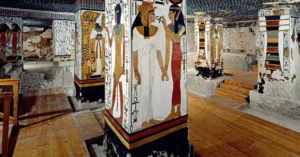
The tomb of Queen Nefertari, wife of Ramses II, is widely considered one of the most beautiful tombs in Egypt.
Its paintings are extraordinary.
The colors remain remarkably vivid, and the artistic quality is exceptional.
Scenes depict Nefertari interacting with gods and progressing through the ancient Egyptian afterlife.
Unlike monuments where enormous scale creates the impression, Nefertari’s tomb feels intimate and intensely artistic.
Is Nefertari’s Tomb Worth It?
If open and available during your visit:
Yes.
For travelers interested in ancient Egyptian art, it is one of the most rewarding premium archaeological experiences in Luxor.
Because conservation requirements can affect access, always confirm availability and current ticket rules before building an itinerary around it.
Internal link: Link Valley of the Queens to your existing dedicated article.
Temple of Hatshepsut
At the base of towering limestone cliffs stands one of Egypt’s most recognizable temples.
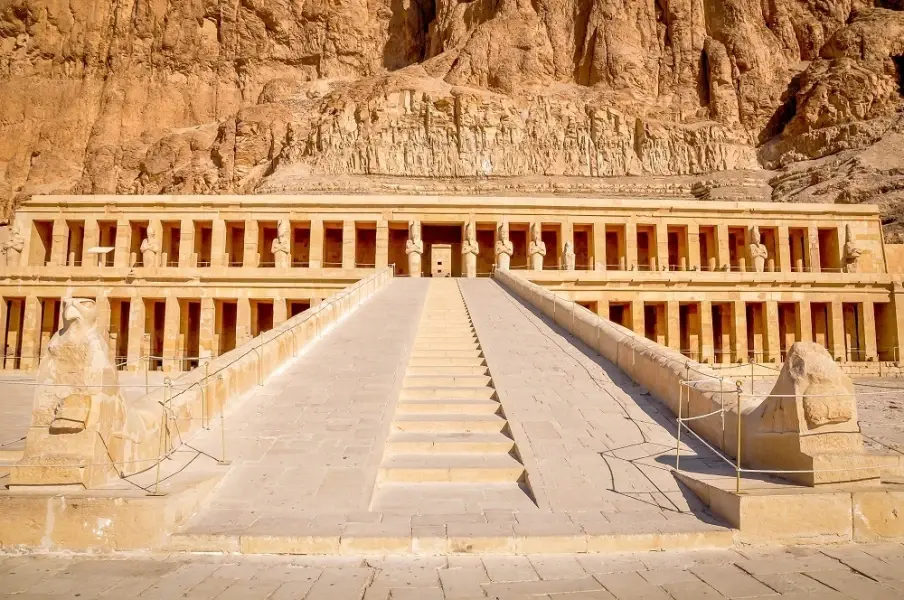
The Mortuary Temple of Hatshepsut at Deir el-Bahari looks dramatically different from many other Egyptian temples.
Its terraces rise gradually toward the cliffs behind it, creating an extraordinary relationship between architecture and landscape.
Hatshepsut was one of ancient Egypt’s most remarkable rulers.
Although female rulers were unusual, she adopted many of the traditional symbols and titles of kingship and presided over a period of prosperity and monumental construction.
Her temple tells several important stories.
Look for scenes associated with:
- Hatshepsut’s divine birth
- Expedition to Punt
- Offerings to the gods
- Royal ceremonies
- Amun
- Hathor
- Anubis
The famous Punt reliefs are particularly important because they provide fascinating evidence about Egypt’s trade relationships.
Best Time to Visit Hatshepsut Temple
Go early.
The temple sits directly against the cliffs and can become extremely hot as the day progresses.
Morning light is also excellent for photography.
Internal link: Use Temple of Hatshepsut to send readers to your dedicated article.
Colossi of Memnon
Two enormous seated statues stand beside the road across the West Bank.
These are the Colossi of Memnon.
Each originally represented Pharaoh Amenhotep III.
Today they appear somewhat isolated, but this can be misleading.
They once stood at the entrance to Amenhotep III’s enormous mortuary temple.
Much of that temple disappeared over time because of floods, earthquakes, stone reuse, and natural deterioration.
Archaeological work continues to reveal more of the complex.
The statues are usually visited as a short stop rather than a major sightseeing destination.
Allow around 15–20 minutes.
Medinet Habu
If you want to visit one spectacular Luxor temple with considerably fewer visitors than Karnak, choose Medinet Habu.
The enormous mortuary temple of Ramses III is one of the best-preserved temple complexes on the West Bank.
Its reliefs are remarkable.
Many depict military campaigns and battles, including famous scenes associated with the Sea Peoples.
But don’t focus only on warfare.
The complex also preserves religious scenes, ceremonial architecture, towering pylons, courtyards, and traces of ancient color.
Why We Recommend Medinet Habu
Many first-time itineraries skip it.
That’s a mistake.
After visiting the busy Valley of the Kings and Hatshepsut Temple, Medinet Habu often feels surprisingly peaceful.
It provides:
- Excellent preservation
- Impressive architecture
- Extensive reliefs
- Fewer crowds
- Excellent photography
If you have three days in Luxor, make room for it.
Deir el-Medina – The Workers’ Village
One of the most fascinating places on the West Bank isn’t a royal monument.
It’s a village.
Deir el-Medina was home to the skilled craftsmen responsible for constructing and decorating many of the royal tombs.
These were highly specialized workers.
They included:
- Painters
- Sculptors
- Draftsmen
- Stonecutters
- Scribes
Because they lived together in an organized settlement, archaeologists recovered extraordinary evidence about their daily lives.
Written records tell us about:
- Families
- Salaries
- Food
- Arguments
- Marriage
- Work schedules
- Illness
- Religious beliefs
They even document one of history’s earliest known organized labor strikes.
Deir el-Medina gives us something royal monuments cannot:
a glimpse into the lives of ordinary people who created extraordinary things.
Tombs of the Workers
The craftsmen who decorated royal tombs also created their own burial places.
Unsurprisingly, many are beautiful.
Although smaller than royal tombs, their decoration can be incredibly vivid.
These tombs are particularly rewarding for travelers who have already visited the Valley of the Kings and want a different perspective.
Tombs of the Nobles
Scattered across the Theban hills are hundreds of tombs belonging to officials, priests, governors, and other elite individuals.
These are collectively known as the Tombs of the Nobles.
They are fascinating because their decoration often differs from royal tombs.
Royal tombs concentrate heavily on the afterlife and religious texts.
Nobles’ tombs can show much more about daily Egyptian life.
You may see:
- Agriculture
- Fishing
- Banquets
- Musicians
- Hunting
- Crafts
- Family scenes
- Foreign delegations
For travelers returning to Luxor for a second visit, the Tombs of the Nobles should be high on the list.
The Ramesseum
The Ramesseum was the mortuary temple of Ramses II.
Although less complete than Medinet Habu, its ruins remain extremely impressive.
One of its most famous features is the remains of an enormous fallen statue of Ramses II.
The shattered pieces provide a sense of the extraordinary scale of the original sculpture.
Because fewer visitors include the Ramesseum in their itineraries, it can also offer a quieter archaeological experience.
Hot-Air Balloon Over the West Bank
For a completely different perspective, see the West Bank from above.
Before sunrise, hot-air balloons lift into the sky over Luxor.
As daylight begins to spread across the landscape, you’ll see the extraordinary boundary between:
green agricultural fields and golden desert.
Depending on the flight route and conditions, views can include:
- Nile Valley
- West Bank villages
- Hatshepsut Temple
- Ancient necropolises
- Desert mountains
Flights depend on weather and aviation conditions.
Our Planning Tip
Schedule your balloon ride for your first available morning in Luxor.
If weather prevents flying, you’ll still have another morning available.
The Perfect One-Day West Bank Itinerary
If you have only one day, we recommend:
Early Morning
Hot-air balloon (optional)
Return for breakfast.
8:00 AM – Valley of the Kings
Allow approximately 2–3 hours depending on which tombs you enter.
11:00 AM – Hatshepsut Temple
Allow approximately one hour.
12:15 PM – Colossi of Memnon
Short photography stop.
Lunch
Take a proper break.
Afternoon – Medinet Habu
Allow around 1–1.5 hours.
This provides an excellent introduction without overwhelming you.
The Perfect Two-Day West Bank Itinerary
For history enthusiasts, two days are significantly better.
Day One – Royal Luxor
- Hot-air balloon
- Valley of the Kings
- Tutankhamun’s Tomb
- Seti I’s Tomb
- Hatshepsut Temple
- Colossi of Memnon
Day Two – Hidden West Bank
- Valley of the Queens
- Nefertari’s Tomb
- Medinet Habu
- Deir el-Medina
- Tombs of the Nobles
- Ramesseum
This is the approach we recommend for travelers who want to understand the West Bank rather than simply collect photographs of its most famous monuments.
Which Extra Tomb Tickets Are Worth Buying?
If available during your visit, our priority would generally be:
1. Nefertari
Best for: Art and color.
One of the finest decorated tombs in Egypt.
2. Seti I
Best for: Scale, reliefs, and Egyptology.
Exceptional for serious history enthusiasts.
3. Tutankhamun
Best for: Historical significance.
The tomb itself is modest compared with Seti I and Nefertari, but its archaeological story makes it unique.
If budget allows, visiting all three creates three completely different experiences.
What Should You Wear on the West Bank?
The West Bank involves considerable walking and exposure to the sun.
Bring:
- Comfortable shoes
- Lightweight clothing
- Hat
- Sunglasses
- Sunscreen
- Water
Inside tombs, temperatures can feel warmer because of limited airflow and enclosed corridors.
Avoid carrying unnecessary bags.
Photography Inside the Tombs
Photography rules can change between sites and ticket categories.
Never assume that because photography was permitted during a previous visit, the same rules still apply.
Check the current regulations before entering.
And most importantly:
Never use flash where prohibited.
These paintings have survived for thousands of years and conservation takes priority over getting a photograph.
Common West Bank Mistakes
Trying to Visit Every Tomb
After several tombs, even extraordinary decoration can begin to feel repetitive.
Choose quality over quantity.
Skipping Medinet Habu
It’s one of Luxor’s most impressive temples and deserves far more attention than it receives.
Visiting Too Late
The West Bank becomes hot.
Start early.
Ignoring Deir el-Medina
Pharaohs tell only part of Egypt’s story.
The workers who created their tombs are equally fascinating.
Spending the Entire Day Without a Break
Archaeological fatigue is real.
Take lunch and rest before continuing.
You’ll appreciate the afternoon monuments much more.
Private West Bank Experience with Delta Tours Egypt
The West Bank is where private guiding becomes particularly valuable.
A knowledgeable Egyptologist can help you choose which tombs are most worthwhile on the day of your visit, explain the scenes you’re seeing, and design the itinerary around your interests rather than following a fixed group route.
With Delta Tours Egypt, your private Luxor experience can include:
- Private licensed Egyptologist
- Private air-conditioned vehicle
- Valley of the Kings
- Premium tomb tickets where requested and available
- Valley of the Queens
- Hatshepsut Temple
- Medinet Habu
- Deir el-Medina
- Tombs of the Nobles
- Hot-air balloon arrangements
- Dendera and Abydos extensions
- Luxury Nile cruise connections
For travelers who want to experience Luxor as part of a complete privately designed journey through Egypt, this is another natural place to link to your Luxury Egypt Tours page.
Where to Stay, Nile Cruises, Restaurants, Day Trips & Travel Tips
After exploring the temples and tombs of ancient Thebes, Luxor offers another side of the experience.
You can wake beside the Nile, sail at sunset in a traditional felucca, stay in a historic palace hotel, cross the river to quiet West Bank villages, or begin a luxury Nile cruise toward Aswan.
Choosing where to stay in Luxor, how to get around, and which experiences to add can make as much difference to your trip as deciding which tombs to visit.
This section covers everything you need to plan that part of your stay.
Where to Stay in Luxor: East Bank or West Bank?
The Nile divides Luxor into two very different experiences.
Neither side is automatically better. The right choice depends on the type of trip you want.
East Bank: Best for First-Time Visitors
For most first-time visitors, we recommend staying on the East Bank.
You’ll be close to:
- Karnak Temple
- Luxor Temple
- Nile Corniche
- Restaurants
- Shops
- Luxor Museum
- Cruise docks
- Airport connections
The East Bank also offers a wider selection of full-service and luxury hotels.
If you’re spending only two or three nights in Luxor, its convenience is difficult to beat.
West Bank: Best for Peace & Atmosphere
The West Bank feels completely different.
Cross the Nile and the urban environment gives way to agricultural fields, villages, palms, desert, and the mountains of the Theban Necropolis.
It is ideal for travelers seeking:
- Smaller boutique accommodation
- Quieter surroundings
- Easy access to archaeological sites
- Rural atmosphere
- Longer stays
- Slower travel
The trade-off is that you’ll need to cross the Nile when visiting East Bank attractions.
Best Luxury Hotels in Luxor
Luxor has several excellent hotels, but one property has a particularly strong connection with the city’s travel history.
Sofitel Winter Palace Luxor
The Winter Palace is one of Egypt’s legendary historic hotels.
Located beside the Nile and close to Luxor Temple, it has welcomed royalty, archaeologists, writers, and travelers for generations.
Its greatest advantage isn’t simply luxury.
It’s atmosphere.
Gardens, historic architecture, Nile views, and the hotel’s proximity to Luxor Temple make it particularly suitable for travelers who want their accommodation to feel connected to the destination.
For a classic luxury Egypt itinerary, it remains one of our preferred choices.
Hilton Luxor Resort & Spa
The Hilton Luxor Resort & Spa offers a more contemporary resort experience.
Located along the Nile north of central Luxor, it provides a quieter environment while remaining convenient for sightseeing.
It is particularly appealing to travelers who value:
- Nile views
- Swimming pools
- Spa facilities
- Resort atmosphere
- Modern rooms
After long mornings exploring archaeological sites, having a comfortable place to relax by the Nile can be extremely valuable.
Steigenberger Nile Palace
The Steigenberger Nile Palace provides a convenient Nile-side location and is a practical upscale option for travelers who want easy access to the center of Luxor.
It also works well for travelers combining a hotel stay with a Nile cruise.
Should You Stay in a Hotel or on a Nile Cruise?
This is an important planning question.
Many travelers assume their Nile cruise gives them enough time to experience Luxor fully.
Sometimes it does.
Often, it doesn’t.
Cruise itineraries generally need to keep to sailing schedules, meaning sightseeing can be concentrated into relatively short periods.
If Luxor is important to you, we recommend:
2–3 nights in Luxor + Nile cruise
rather than relying exclusively on cruise sightseeing.
This gives you more freedom to visit:
- Premium tombs
- Medinet Habu
- Valley of the Queens
- Museums
- Dendera
- Abydos
- Hot-air balloon
- Luxor Temple after dark
without racing back to the ship.
Luxury Nile Cruises from Luxor
Luxor is one of the principal departure points for Nile cruises between Luxor and Aswan.
The classic route follows the Nile south through Upper Egypt.
Depending on the itinerary, stops typically include:
Luxor → Esna → Edfu → Kom Ombo → Aswan
A cruise combines archaeology with something increasingly rare in modern travel:
time to slow down.
Instead of flying between cities, you watch agricultural fields, villages, palm trees, and desert landscapes pass from the deck.
How Many Nights Is a Nile Cruise?
Common itineraries include:
Luxor to Aswan
Usually around 4 nights / 5 days.
Aswan to Luxor
Usually around 3 nights / 4 days.
Schedules vary by vessel and season, so always check the exact sailing calendar before planning domestic flights or hotels.
What Makes a Luxury Nile Cruise Different?
The term “luxury cruise” is used very broadly in Egypt.
A truly premium experience should be judged on more than how the lobby looks in photographs.
Consider:
- Cabin size
- Number of cabins
- Food quality
- Service
- Deck space
- Swimming pool
- Egyptologist quality
- Vessel maintenance
- Sailing schedule
- Noise levels
- Cabin location
Smaller luxury vessels and premium dahabiyas can provide a more intimate alternative to larger cruise ships.
Internal link: This is the strongest informational placement for your Luxury Nile Cruise page.
Felucca Sailing in Luxor
You don’t need to take a multi-day cruise to experience the Nile.
A private felucca ride at sunset is one of Luxor’s simplest pleasures.
Traditional feluccas rely primarily on wind rather than engines, creating a peaceful experience away from traffic and archaeological crowds.
Allow roughly one to two hours.
For couples, families, and luxury travelers, we recommend arranging a private boat rather than joining a larger shared excursion.
Where to Eat in Luxor
Luxor’s dining scene ranges from hotel restaurants to small local establishments.
Rather than building your itinerary around a long list of restaurants, focus on three experiences.
Egyptian Food
Try traditional dishes such as:
- Molokhia
- Kofta
- Grilled meats
- Stuffed vegetables
- Mezze
- Fresh bread
- Egyptian desserts
Nile-View Dining
At least once, have lunch or dinner overlooking the Nile.
The atmosphere around sunset can be more memorable than the meal itself.
Hotel Dining
After a long West Bank sightseeing day, returning to your hotel for dinner can sometimes be the best decision.
Luxury travel doesn’t need to involve constant movement.
Luxor Souk & Shopping
Luxor has markets and shops selling:
- Spices
- Scarves
- Cotton
- Jewelry
- Alabaster
- Papyrus
- Leather goods
- Souvenirs
Bargaining is common in traditional markets.
Treat it as a friendly interaction rather than a confrontation.
If you’re purchasing higher-value objects, buy from reputable shops and ask questions about materials and provenance.
Never purchase genuine archaeological objects.
Alabaster Workshops on the West Bank
The West Bank is particularly associated with alabaster workshops.
You’ll see craftsmen producing:
- Vases
- Bowls
- Statues
- Decorative objects
Quality varies considerably.
Handmade pieces generally show small variations, while inexpensive mass-produced souvenirs tend to appear extremely uniform.
A good guide can help you distinguish between them.
Dendera: One of the Best Day Trips from Luxor
If you have an additional day in Luxor, Dendera should be high on your list.
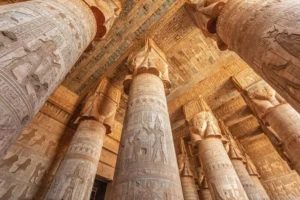
The Temple of Hathor at Dendera is one of Egypt’s best-preserved temple complexes.
Its interior is particularly famous for its extraordinary colors.
Highlights include:
- Temple of Hathor
- Hathor-headed columns
- Astronomical ceiling
- Crypts
- Rooftop chapels
- Sacred lake
- Birth house
- Reliefs associated with Cleopatra VII
Dendera is very different from the New Kingdom monuments dominating Luxor.
Much of the surviving temple belongs to the Ptolemaic and Roman periods, giving visitors another chapter of Egyptian history.
Dendera’s Famous Zodiac
One of Dendera’s most famous archaeological features is its astronomical imagery.
The original circular Dendera Zodiac is no longer at the temple; it is held in the Louvre in Paris.
A replica occupies its original location.
However, the temple contains extensive additional astronomical decoration, including its spectacular restored ceiling.
For anyone interested in ancient Egyptian astronomy, Dendera is exceptional.
Abydos: A Sacred City of Ancient Egypt
Continue farther north and you reach Abydos, one of ancient Egypt’s most sacred places.
Abydos was strongly associated with Osiris, god of death, resurrection, and the afterlife.
Its principal attraction is the magnificent Temple of Seti I.
The temple is famous for:
- Beautiful reliefs
- Exceptional carving
- Seven sanctuaries
- Religious scenes
- Abydos King List
The King List is particularly important because it records the names of many Egyptian rulers and has helped historians reconstruct ancient Egyptian chronology.
The Osirion
Behind the Temple of Seti I lies one of Abydos’s most unusual structures.
The Osirion.
Its massive stone architecture and association with Osiris have made it one of the site’s most fascinating monuments.
Normal visitor access can be restricted, and closer or special access may require separate authorization.
Never build a client’s itinerary around restricted Osirion access unless current permission has actually been confirmed.
For travelers interested in special archaeological experiences, this is where your separate VIP Access Egypt article should be internally linked.
Can You Visit Dendera and Abydos in One Day?
Yes.
A common private excursion is:
Luxor → Dendera → Abydos → Luxor
It is a long day, but an excellent one for travelers with a strong interest in Egyptology.
If you prefer slower travel, visit Dendera alone.
For serious ancient Egypt enthusiasts, combine both.
How to Get Around Luxor
Private Car & Driver
For archaeological sightseeing, this is our preferred option.
A private air-conditioned vehicle allows you to:
- Start early
- Control your schedule
- Avoid waiting
- Carry water and belongings
- Move efficiently between distant West Bank sites
Combine it with a private Egyptologist for the best experience.
Boat
Crossing the Nile by boat can be both practical and enjoyable.
Private motorboats provide fast transfers between East and West Banks.
Taxi
Taxis are widely available.
Agree on the price or confirm how the fare will be calculated before departing.
Walking
Central East Bank Luxor is relatively compact.
You can walk between some hotels, restaurants, the Corniche, and Luxor Temple.
However, archaeological sightseeing across the West Bank requires transportation.
Luxor International Airport
Luxor has its own international airport.
Domestic flights commonly connect Luxor with Cairo, making flying one of the easiest ways to integrate the city into a larger Egypt itinerary.
Your itinerary might look like:
Cairo → Flight to Luxor → Luxor sightseeing → Nile cruise → Aswan → Flight to Cairo
This is one of the most efficient ways to experience Egypt for first-time visitors.
Train from Cairo to Luxor
Rail travel is another option.
Trains connect Cairo and Luxor, including overnight services.
The journey is significantly longer than flying but can appeal to travelers who prefer rail travel or want a different experience.
For luxury itineraries with limited time, we generally recommend domestic flights.
What Does a Day in Luxor Cost?
Costs vary enormously depending on travel style.
A traveler exploring independently will spend very differently from someone using:
- Private Egyptologist
- Private vehicle
- Premium tomb tickets
- Luxury hotel
- Private boat
- Special access
Instead of focusing only on the cheapest possible price, decide which experiences matter most.
In Luxor, we particularly recommend allocating budget toward:
- A knowledgeable Egyptologist
- Comfortable transportation
- Selected premium tomb tickets
Those three upgrades generally have more impact on the experience than purchasing unnecessary extras.
Tipping in Luxor
Tipping—or baksheesh—is common throughout Egypt’s tourism industry.
You may encounter tipping for:
- Guides
- Drivers
- Hotel staff
- Boat crews
- Porters
Amounts depend on the service and travel style.
For private luxury trips, ask your tour operator for suggested tipping guidelines before arrival.
This removes uncertainty and makes the experience more comfortable.
Luxor with Children
Luxor can be wonderful for families, but avoid turning it into a history marathon.
Children often particularly enjoy:
- Entering tombs
- Hot-air balloon flights
- Felucca sailing
- Horse carriages
- Swimming at the hotel
- Stories about Tutankhamun
- Exploring giant temples
Break archaeological visits into manageable sections.
A private guide is particularly useful because explanations can be adapted to the children’s ages.
Luxor for Couples & Honeymooners
Luxor can also be surprisingly romantic.
Consider:
- Sunrise balloon flight
- Private felucca at sunset
- Nile-view suite
- Dinner overlooking the river
- Luxury Nile cruise
- Privately guided temples
- Luxor Temple after dark
Combine Luxor with a few nights in Aswan and a luxury Nile cruise for one of Egypt’s strongest honeymoon itineraries.
VIP & Special Access in Luxor
For travelers looking beyond conventional sightseeing, some archaeological experiences may occasionally be arranged outside normal visitor patterns or through special authorization.
Depending on current regulations, this can include specially timed visits or access requests.
These experiences should always be described accurately.
Private tour does not automatically mean private archaeological site.
Special access depends on official permissions, conservation requirements, security, and availability.
For a detailed explanation, internally link VIP Access Egypt here.
What Not to Do in Luxor
Don’t Cram Every Monument Into Two Days
You’ll see more but remember less.
Don’t Skip Rest
A few hours beside the Nile in the afternoon can make your evening much more enjoyable.
Don’t Choose a Cruise Only by Price
The vessel becomes your hotel, restaurant, and transportation for several days.
Quality matters.
Don’t Assume Every Tomb Is Open
Tomb rotations and conservation requirements change.
Check current access.
Don’t Leave Dendera and Abydos Out Automatically
If you have enough time, they add substantial historical depth to a Luxor itinerary.
Don’t Treat Luxor as Only a Cruise Stop
Luxor deserves time of its own.
The Luxury Way to Experience Luxor
Luxury in Luxor doesn’t need to mean rushing between expensive experiences.
The greatest luxury is often better pacing.
Imagine:
Wake before sunrise for a hot-air balloon flight over the West Bank.
Return to your hotel for breakfast.
Visit three carefully selected royal tombs with your private Egyptologist.
Stop for lunch rather than immediately rushing to another temple.
Spend the afternoon relaxing beside the Nile.
Sail privately at sunset.
Then enter Luxor Temple as the columns illuminate against the night sky.
The following day, explore Karnak before the largest crowds arrive.
Then board your luxury Nile cruise and begin sailing south toward Aswan.
That is a very different experience from checking eight attractions off a list in a single day.
Experience Luxor with Delta Tours Egypt
Since 1974, Delta Tours Egypt has created tailor-made journeys through Egypt for travelers seeking private guiding, comfortable logistics, and experiences built around their interests.
Your Luxor journey can include:
- Private Egyptologist
- Private luxury transportation
- Premium hotels
- Valley of the Kings
- Premium royal tombs
- Karnak and Luxor Temple
- Hot-air balloon
- Private felucca
- Dendera and Abydos
- Luxury Nile cruise
- Special-access requests where officially available
- Airport and hotel assistance
Luxor can then be seamlessly combined with Cairo, Giza, Aswan, Abu Simbel, and the Red Sea.
For travelers seeking a complete premium Egypt journey, this is another strong contextual location for your Luxury Egypt Tours page.
Luxor Itineraries, FAQs & Final Planning Tips
Luxor is one of those destinations where having more to see than time available is almost guaranteed.
You could spend a week exploring ancient Thebes and still leave archaeological sites untouched.
For most first-time visitors, however, three days in Luxor offers the best balance. It gives you enough time to experience the essential temples and tombs without turning your trip into a race.
Below, we’ve created several Luxor itineraries based on how much time you have.
One Day in Luxor
Can you see Luxor in one day?
Yes.
Should you?
Only if your itinerary gives you no alternative.
If you have just one day, concentrate on the absolute highlights.
Morning – Valley of the Kings
Start as early as possible.
Choose three open tombs rather than trying to see everything.
If you’re willing to purchase additional tickets, consider:
- Tutankhamun for archaeological significance.
- Seti I for exceptional decoration and scale.
Allow approximately 2–3 hours.
Late Morning – Temple of Hatshepsut
Continue to the magnificent terraced temple at Deir el-Bahari.
Allow around one hour.
Colossi of Memnon
Make a short photography stop before leaving the West Bank.
Afternoon – Karnak Temple
Cross to the East Bank and spend around two hours exploring Karnak.
Prioritize:
- Great Hypostyle Hall.
- Obelisks.
- Sacred Lake.
- Principal temple axis.
Evening – Luxor Temple
Finish at Luxor Temple around sunset.
Remain after dark to see the illuminated columns and statues.
One-Day Luxor Route
Valley of the Kings → Hatshepsut Temple → Colossi of Memnon → Karnak → Luxor Temple
It’s intensive, but it covers Luxor’s essential monuments.
Two Days in Luxor
Two days is the minimum we recommend for most travelers.
Day 1 – West Bank
Start early with an optional hot-air balloon flight.
Then visit:
- Valley of the Kings.
- Tutankhamun’s Tomb (optional extra ticket).
- Seti I’s Tomb (optional extra ticket).
- Hatshepsut Temple.
- Colossi of Memnon.
After lunch, continue to:
- Medinet Habu.
Return to your hotel for rest.
Finish the evening with a private felucca or dinner overlooking the Nile.
Day 2 – East Bank
Begin at:
- Karnak Temple.
Continue to:
- Luxor Museum.
Take an afternoon break.
Around sunset, visit:
- Luxor Temple.
- Avenue of Sphinxes.
Is Two Days Enough for Luxor?
Yes, if your primary goal is seeing the headline attractions.
But you’ll miss several excellent sites.
If your schedule allows it, add another day.
Three Days in Luxor – Our Recommended Itinerary
For most first-time visitors, three days in Luxor is ideal.
Day 1 – Royal West Bank
Optional sunrise balloon.
Then:
Valley of the Kings → Hatshepsut Temple → Colossi of Memnon → Medinet Habu
Select a few high-quality tombs rather than entering every available one.
Day 2 – Karnak & Luxor Temple
Morning:
- Karnak Temple.
- Luxor Museum.
Afternoon:
Relax at your hotel.
Late afternoon:
Take a private felucca.
Evening:
Visit Luxor Temple after sunset.
Day 3 – Queens, Workers & Hidden Luxor
Visit:
- Valley of the Queens.
- Nefertari’s Tomb (if open and available).
- Deir el-Medina.
- Tombs of the Nobles.
- Ramesseum.
This third day completely changes your Luxor experience.
Instead of seeing only the monuments everyone visits, you’ll begin understanding the people who actually lived and worked in ancient Thebes.
Four Days in Luxor
Four days allows you to explore at a much more comfortable pace.
Follow the three-day itinerary above, then dedicate Day 4 to Dendera.
Day 4 – Dendera Temple
Travel north from Luxor to the magnificent Temple of Hathor.
Explore:
- Hathor Temple.
- Hathor-headed columns.
- Astronomical ceiling.
- Crypts where accessible.
- Rooftop sanctuaries.
- Birth house.
- Sacred lake.
Return to Luxor during the afternoon.
Spend your final evening relaxing beside the Nile.
Five Days in Luxor – For Egyptology Lovers
If ancient Egypt is one of the main reasons you’re traveling, five days will not feel excessive.
Use Days 1–4 above.
Then:
Day 5 – Abydos
Travel to one of ancient Egypt’s most sacred cities.
Explore the Temple of Seti I, including:
- Seven sanctuaries.
- Exceptional reliefs.
- Abydos King List.
- Osiris-related religious scenes.
See the Osirion from areas permitted under current visitor rules.
Where officially authorized in advance, special-access arrangements may sometimes be possible.
Return to Luxor in the evening.
Luxor Before or After a Nile Cruise?
For first-time visitors, we generally recommend:
Cairo → Luxor → Nile Cruise → Aswan
Spend two or three nights in Luxor before boarding.
Why?
Because it prevents your cruise schedule from controlling your entire Luxor experience.
You’ll have time for:
- Premium tombs.
- Hot-air balloon.
- Museums.
- Medinet Habu.
- Dendera.
- Luxor Temple after dark.
Then you can board your cruise and begin sailing south without feeling that you’ve rushed through ancient Thebes.
Luxor or Aswan: Which Is Better?
This isn’t really a competition.
They offer completely different experiences.
Choose Luxor for:
- Ancient temples.
- Royal tombs.
- Egyptology.
- Archaeological depth.
- New Kingdom history.
Choose Aswan for:
- Nile scenery.
- Nubian culture.
- Philae Temple.
- Feluccas.
- Relaxation.
- Abu Simbel access.
The strongest Egypt itinerary includes both.
Luxor gives you archaeological intensity.
Aswan gives you space to slow down.
A Nile cruise connects the two beautifully.
Frequently Asked Questions About Luxor
Is Luxor worth visiting?
Absolutely.
For travelers interested in ancient Egypt, Luxor is one of the most important destinations in the country.
Few places anywhere in the world contain such a concentration of temples, tombs, monuments, and archaeological history.
How many days do you need in Luxor?
We recommend:
Minimum: 2 days
Ideal: 3 days
History enthusiasts: 4–5 days
Three days provides the best balance for most first-time visitors.
Is two days enough in Luxor?
Yes.
Spend one day on the West Bank and one day exploring the East Bank.
However, three days gives you significantly more flexibility and allows you to explore beyond the most crowded attractions.
What should you not miss in Luxor?
For a first visit, prioritize:
- Karnak Temple.
- Valley of the Kings.
- Luxor Temple.
- Temple of Hatshepsut.
- Medinet Habu.
- Valley of the Queens.
If time permits, add Dendera.
Which tomb is the best in the Valley of the Kings?
This depends on which tombs are open.
For premium experiences, Seti I is often one of the most impressive because of its scale and decoration.
Always check current access before visiting.
Is Tutankhamun’s Tomb worth visiting?
Yes, particularly for its historical importance.
However, don’t expect it to be the largest or most elaborately decorated tomb in the valley.
Its significance comes primarily from the extraordinary archaeological discovery associated with it.
Is Nefertari’s Tomb worth the price?
For travelers interested in ancient Egyptian art, yes.
When open, Nefertari’s tomb is among the most beautifully decorated tombs in Egypt.
Availability and ticketing can change for conservation reasons.
Can you visit Luxor without a tour?
Yes.
However, we strongly recommend exploring the major archaeological sites with a licensed Egyptologist.
The monuments contain layers of religious symbolism, historical events, royal propaganda, and funerary texts that are difficult to understand without context.
Can you walk around Luxor?
Central areas of the East Bank are walkable.
However, you’ll need transportation for the West Bank and more distant archaeological sites.
A private vehicle is the most comfortable option for sightseeing.
Can you visit Karnak and Luxor Temple on the same day?
Yes.
In fact, that’s our preferred approach.
Visit Karnak early in the morning and Luxor Temple around sunset.
Can you visit the Valley of the Kings and Karnak on the same day?
Yes.
But unless you have limited time, we prefer separating East and West Bank sightseeing.
It creates a much more relaxed experience.
Is a hot-air balloon in Luxor worth it?
For many travelers, yes.
The sunrise view over the West Bank, Nile Valley, farmland, and desert is one of Luxor’s most memorable experiences.
Flights depend on weather and operating conditions.
What is the best month to visit Luxor?
The period from October through April generally offers the most comfortable sightseeing weather.
December and January are particularly popular and can be busy.
Is Luxor very hot?
During summer, yes.
Temperatures can become extremely high.
If visiting between May and September, start archaeological sightseeing as early as possible.
What is Luxor famous for?
Luxor is famous for the archaeological remains of ancient Thebes, including Karnak Temple, Luxor Temple, Valley of the Kings, Valley of the Queens, and Hatshepsut Temple.
Are the East Bank and West Bank far apart?
No.
They are separated by the Nile.
Private motorboats and road bridges provide connections between the two sides.
Should I stay on the East Bank or West Bank?
For first-time visitors:
East Bank.
For travelers prioritizing quiet surroundings and boutique accommodation:
West Bank.
Is Dendera worth visiting from Luxor?
Yes.
Dendera is one of Egypt’s best-preserved temple complexes and provides a very different experience from the New Kingdom monuments around Luxor.
Is Abydos worth the drive?
For serious Egyptology enthusiasts, absolutely.
The Temple of Seti I contains some of Egypt’s finest reliefs and the historically important Abydos King List.
The Perfect First-Time Luxor Experience
If we were designing Luxor for someone visiting Egypt for the first time, we’d prioritize:
Day 1:
Valley of the Kings → Hatshepsut → Medinet Habu → Colossi of Memnon.
Day 2:
Karnak → Luxor Museum → private felucca → Luxor Temple at night.
Day 3:
Valley of the Queens → Nefertari → Deir el-Medina → relaxed afternoon.
Then:
Board a luxury Nile cruise to Aswan.
This combination gives you history, architecture, tombs, temples, Nile scenery, and enough downtime to actually enjoy them.
Experience Luxor with Delta Tours Egypt
Luxor isn’t a destination we recommend rushing.
Since 1974, Delta Tours Egypt has created tailor-made journeys through Egypt for travelers who want to experience the country’s archaeological treasures privately and comfortably.
Your Luxor itinerary can include:
- Private licensed Egyptologist.
- Private air-conditioned transportation.
- Carefully selected royal tombs.
- Valley of the Kings.
- Valley of the Queens.
- Karnak Temple.
- Luxor Temple.
- Hatshepsut Temple.
- Medinet Habu.
- Dendera and Abydos.
- Private felucca.
- Hot-air balloon.
- Premium hotels.
- Luxury Nile cruises.
- Special-access requests where officially available.
We can then combine Luxor with Cairo, Giza, Aswan, Abu Simbel, and the Red Sea to create a complete private journey through Egypt.
Final Thoughts
Luxor isn’t simply a city containing ancient monuments.
It is the surviving landscape of one of history’s greatest civilizations.
On the East Bank, enormous temples tell stories of gods, kings, festivals, and royal power.
Across the Nile, the mountains conceal tombs created for pharaohs, queens, nobles, and the craftsmen who prepared them for eternity.
Then there is the Nile itself.
Sail across it at sunset and you’ll see green farmland meeting golden desert, temple columns silhouetted against the sky, and the mountains of the West Bank glowing in the final light.
That combination of history, landscape, and living culture is what makes Luxor extraordinary.
Give it enough time.
Three well-planned days will reveal far more than one rushed day ever could.
And if ancient Egypt is the reason you’re traveling, stay longer.