Aswan Travel Guide | Things to Do, Abu Simbel & Tips
Few places in Egypt change the rhythm of a journey quite like Aswan.
Cairo is energetic. Giza is monumental. Luxor surrounds you with temples and royal tombs.
Aswan feels different.
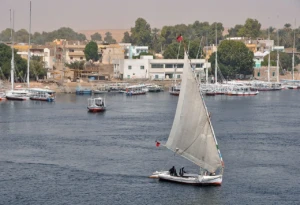
Here, the Nile flows between granite islands, palm-covered riverbanks and golden desert. White-sailed feluccas move slowly across the water. Nubian communities add another cultural dimension to the city, while some of southern Egypt’s greatest monuments lie within Aswan or can be reached from it.
This is where many travelers finally slow down.
You can approach the island sanctuary of Philae Temple by boat, explore ancient granite quarries, discover Nubian history, sail the Nile at sunset, and use Aswan as the gateway to the extraordinary temples of Abu Simbel.
Aswan was also historically Egypt’s southern gateway, connecting the country with Nubia and the African regions farther south. Its position around the First Cataract made it strategically and commercially important for thousands of years.
Today, Aswan deserves much more than being treated simply as the place where your Nile cruise starts or ends.
For most first-time visitors, we recommend two full days in Aswan, or three days if you’re including Abu Simbel comfortably.
This Aswan Travel Guide explains how to do it properly.
Why Visit Aswan?
Aswan offers something increasingly valuable during an Egypt itinerary:
contrast.
After several intensive days exploring Cairo, Giza and Luxor, Aswan gives you room to experience the country at a slower pace.
The city’s highlights combine archaeology, landscape and living culture.
You can:
- Visit Philae Temple.
- Explore Elephantine Island.
- Discover Nubian history and culture.
- See the Unfinished Obelisk.
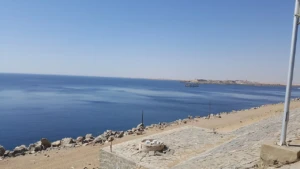
- Visit the Aswan High Dam.
- Sail between Nile islands.
- Explore the Nubian Museum.
- Visit a Nubian village.
- See the Tombs of the Nobles.
- Visit St. Simeon’s Monastery.
- Explore Aswan’s souk.
- Stay at the historic Old Cataract.
- Travel to Abu Simbel.
- Begin or finish a Nile cruise.
The Nile itself is one of the principal attractions.
One of the biggest mistakes travelers make is treating Aswan simply as “the place where we board the cruise.” Aswan is less monument-dense than Luxor, but that is part of its appeal.
You come here not only to see archaeological sites.
You come to experience the Nile.
Aswan at a Glance
| Topic | Details |
|---|---|
| Location | Southern Egypt, on the Nile near the First Cataract |
| Region | Upper Egypt / Nubia |
| Ancient name | Swenet |
| Best time to visit | October–April |
| Ideal stay | 2–3 full days (3 if you include Abu Simbel) |
| Minimum stay | 1 full day |
| Best for | Nile scenery, temples, Nubian culture & relaxation |
| Essential monument | Philae Temple (allow about two hours including boat transfers) |
| Essential experience | Sunset felucca |
| Major day trip | Abu Simbel, about 280 km away: about 3 to 3.5 hours each way by road, or by air |
| Nile cruise connection | Aswan to Luxor (3 nights) or Luxor to Aswan (4 nights) |
| Airport | Aswan International Airport |
Where Is Aswan?
Aswan lies in southern Egypt, considerably farther south than Luxor.
The city developed around the Nile near the First Cataract, where granite formations historically made river navigation more difficult.
This location gave ancient Aswan enormous strategic importance.
It stood near Egypt’s southern frontier and served as an important link between Egypt, Nubia and regions farther into Africa.
Ancient Aswan
Ancient Aswan was known to the Egyptians as Swenet and developed around an important frontier and trading region.
Aswan also possessed another resource that transformed Egyptian architecture:
granite.
Why Aswan’s Granite Was So Important
Many travelers arrive in Aswan after seeing enormous granite objects elsewhere in Egypt.
Perhaps you’ve stood inside the King’s Chamber of the Great Pyramid.
Or seen enormous statues in Luxor.
Or looked upward at ancient obelisks.
Much of the granite used in monumental Egyptian architecture came from the Aswan region.
Ancient quarrymen extracted enormous blocks of stone here and transported them north along the Nile.
That makes Aswan an important part of understanding how Egypt’s monuments were actually constructed.
And nowhere is that story clearer than at the Unfinished Obelisk.
How Many Days Do You Need in Aswan?
This depends heavily on whether you’re visiting Abu Simbel.
For most first-time visitors, three days in Aswan is ideal if Abu Simbel is included. Two days works well without it. Four days suits travelers who want a slower pace and deeper cultural experience.
One Day in Aswan
Possible, but rushed. If you have only one full day, focus on the essentials:
- Early morning – Philae Temple: take the boat to Agilkia Island and explore before the hottest part of the day. Allow around two hours including boat transfers.
- Late morning – Unfinished Obelisk: connect Aswan’s granite quarries with the obelisks you’ve seen elsewhere in Egypt.
- Lunch: return to your hotel and rest during the hottest hours.
- Late afternoon – Nubian Museum or a Nubian cultural experience: spend time understanding Nubian history and culture beyond pharaonic Egypt.
- Sunset – private felucca: finish the day on the Nile, then have dinner overlooking the river.
Philae → Unfinished Obelisk → Nubian Museum → Sunset Felucca
This is the strongest one-day itinerary because it combines archaeology, culture, and the Nile. It is a much better day than trying to squeeze every Aswan attraction into eight hours.
Two Days in Aswan
Two days is enough for the city itself if you are not including Abu Simbel.
Day 1 – Archaeology & Nile
- Philae Temple
- Unfinished Obelisk
- Nubian Museum
- Sunset felucca
Day 2 – Islands & Nubian Culture
- Elephantine Island
- Nilometer
- Nubian Village
- Aswan Souk
- Private dinner or Nile-view evening
Three Days in Aswan – Our Recommended Itinerary
For first-time visitors including Abu Simbel, this is the itinerary we recommend most.
Day 1 – Aswan Highlights
- Philae Temple
- Unfinished Obelisk
- High Dam
- Nubian Museum
- Sunset felucca
Day 2 – Abu Simbel
Travel to Abu Simbel by road or air. Explore both temples. Return to Aswan and enjoy a relaxed evening.
Day 3 – Nubian Aswan
- Elephantine Island
- Nubian Village
- Souk
- Optional Botanical Garden
- Sunset by the Nile
This creates a far better balance than trying to squeeze Abu Simbel into an already crowded sightseeing day. Then either board a Nile cruise to Luxor or fly back to Cairo.
Four Days or More
Four days is ideal for travelers who value slow travel.
Use the three-day itinerary above, then add:
Day 4 – West Bank & Hidden Aswan
- Tombs of the Nobles
- Qubbet el-Hawa
- St. Simeon’s Monastery
- West Bank views
- Private boat back to the East Bank
With more time, add the Botanical Garden, a longer felucca sail, the Old Cataract experience and Kalabsha. This is an excellent addition for history lovers and repeat visitors.
Best Time to Visit Aswan
Aswan has an extremely dry desert climate.
For sightseeing, the cooler months are significantly more comfortable.
October to April
This is generally the best time to visit Aswan.
Daytime conditions are better suited to temples, archaeological sites and outdoor activities.
Winter is particularly popular.
December and January
Expect excellent weather but higher demand.
Luxury hotels and premium Nile cruises should be booked well in advance.
May to September
Summer in Aswan can be extremely hot.
Travel is still possible, but sightseeing needs to be structured carefully.
Start very early.
Use the middle of the day for:
- Hotel rest.
- Lunch.
- Pool time.
- Indoor attractions.
Return outdoors later in the afternoon.
Luxor vs. Aswan: What’s the Difference?
Travelers frequently compare the two.
They shouldn’t.
They complement each other.
Luxor
Choose Luxor for:
- Valley of the Kings.
- Royal tombs.
- Karnak.
- Luxor Temple.
- Hatshepsut.
- Monumental archaeology.
- New Kingdom history.
Aswan
Choose Aswan for:
- Nile scenery.
- Philae.
- Nubian culture.
- Feluccas.
- Granite islands.
- Abu Simbel access.
- Slower travel.
Luxor is archaeologically intense.
Aswan is more atmospheric.
A strong Egypt itinerary includes both.
And the Nile cruise between them provides the connection.
Our Luxor travel guide covers the city’s temples and tombs in detail.
Best Things to Do in Aswan
For first-time visitors, the challenge isn’t finding things to do in Aswan.
It’s deciding what deserves your time.
Philae Temple
If you’re visiting Aswan for the first time, Philae Temple should be your archaeological priority.
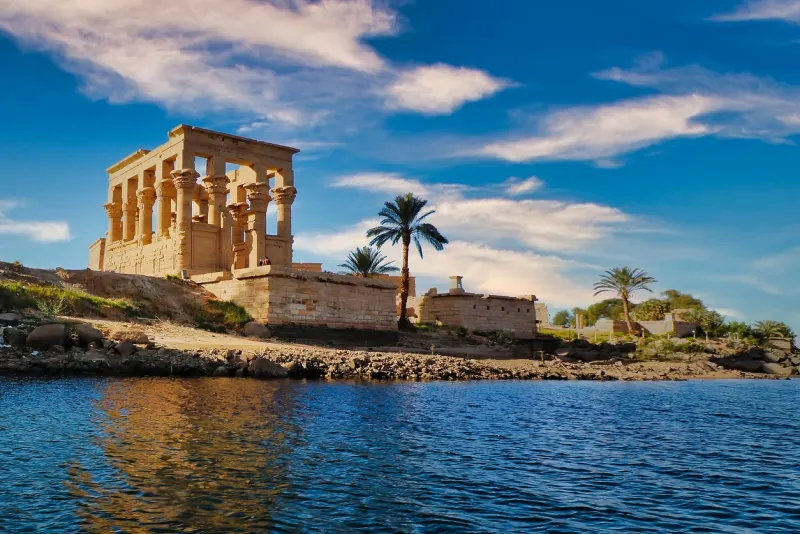
Unlike many Egyptian temples approached by road, Philae requires a boat journey, and the temple gradually appears across the water on Agilkia Island. Its primary association is with Isis, and the surviving complex contains architecture and inscriptions primarily from the Ptolemaic and Roman periods. The temple you see today isn’t standing in its original location: it was transferred from its increasingly inundated original island to Agilkia during the UNESCO campaign to save the Nubian monuments.
We recommend either early morning or later afternoon, and you should allow approximately two hours including boat transfers. Philae can also be experienced after dark through its Sound and Light Show, subject to the current operating schedule, but if you’re choosing only one experience, visit during daylight first.
Our Philae Temple guide covers the history and the visit in detail.
The Unfinished Obelisk
The Unfinished Obelisk reveals something completed monuments cannot.
It shows us the construction process.
The enormous monument remains attached to the granite bedrock in an ancient quarry.
Had it been successfully completed and erected, it would have been among the largest obelisks ever produced in ancient Egypt.
But cracks developed in the stone.
The project was abandoned.
The unfinished monument preserves evidence of ancient quarrying techniques and allows us to see how enormous stone objects were shaped directly from bedrock.
Don’t expect a standing obelisk. You’re visiting an ancient industrial site, and the value lies in understanding how ancient Egyptians worked stone.
This becomes particularly meaningful if you’ve already visited Karnak and seen enormous obelisks standing upright.
Quarry in Aswan → transport along the Nile → temple in Luxor.
The Aswan High Dam
The Aswan High Dam represents a completely different period of Egyptian history.
Constructed during the 20th century, the dam transformed Egypt’s relationship with the Nile by helping control flooding and generate hydroelectric power.
Its construction also created Lake Nasser.
But the project came with enormous cultural consequences.
Rising water threatened Nubian communities and archaeological sites throughout the region.
That threat ultimately led to the international campaign to save monuments including Philae and Abu Simbel.
So when visiting the High Dam, don’t treat it simply as an engineering photo stop. It connects directly with modern Egyptian development, Nile management, Nubian displacement, Lake Nasser and UNESCO’s monument rescue campaign.
Elephantine Island
Elephantine Island sits in the Nile opposite central Aswan.
Its strategic location near the First Cataract made it one of ancient Egypt’s important southern frontier settlements, linked with trade routes into Nubia.
Archaeological remains on the island document thousands of years of occupation.
The island was associated particularly with the gods Khnum, Satet and Anuket, deities closely connected with the Nile and the cataract region. Khnum, a ram-headed deity linked with creation, was sometimes imagined forming human beings on a potter’s wheel.
One of the most interesting archaeological features is the Nilometer. Before modern dams regulated the river, Egypt’s prosperity depended heavily on the annual Nile flood: too little water could mean crop failure, and too much could cause destruction. Nilometers allowed officials to monitor water levels and anticipate the quality of the agricultural season.
Although the surviving remains are less visually monumental than Karnak or Philae, Elephantine is extremely important historically. Visit if you have at least two full days in Aswan; if you have only one day, prioritize Philae.
Nubian Museum
If we had to choose one museum in Aswan, this would be it.
The Nubian Museum documents the history, archaeology, culture and traditions of Nubia across thousands of years.
Its collections address:
- Prehistoric Nubia.
- Ancient Egypt and Nubia.
- Kingdoms of Nubia.
- Christianity.
- Islamic periods.
- Traditional Nubian culture.
- Daily life.
- Architecture.
- Displacement associated with dam construction.
- UNESCO’s archaeological rescue campaign.
This is important because Nubian history shouldn’t be reduced to a footnote within Egyptian history.
The museum works particularly well in the late afternoon: spend the morning at outdoor sites, return to your hotel during the hottest part of the day, then visit when temperatures begin to cool.
It is particularly valuable before or after visiting a Nubian village. One gives you historical context. The other gives you a connection with living culture.
Aswan Botanical Garden
On Kitchener’s Island, officially known as El Nabatat Island, you’ll find the Aswan Botanical Garden.
The island provides a green contrast to Aswan’s surrounding desert.
Paths run among palms and tropical and subtropical plants introduced from different regions.
It’s not an essential archaeological attraction.
And that’s exactly why it can be enjoyable.
It also combines easily with a felucca or motorboat trip.
Tombs of the Nobles (Qubbet el-Hawa)
Across the Nile from central Aswan, tombs are cut into the West Bank hillside.
These are often referred to as the Tombs of the Nobles, although they include burials belonging to important officials and governors associated with ancient Elephantine and the southern frontier.
The archaeological area containing many of these tombs is known as Qubbet el-Hawa, meaning “Dome of the Wind.” These aren’t tombs of pharaohs. They belonged to the people responsible for expeditions, administration and relations with regions to Egypt’s south.
There is another reason to go: the view. Climbing the West Bank provides excellent perspectives over the Nile, Elephantine Island, modern Aswan, the desert and agricultural areas.
This is one of Aswan’s most underrated archaeological experiences.
Monastery of St. Simeon
Beyond the West Bank lies the remains of a large Christian monastery commonly known as the Monastery of St. Simeon.
The site provides another reminder that Aswan’s history didn’t end with the pharaohs.
The monastery’s desert location makes the visit especially atmospheric.
It can be combined with the Tombs of the Nobles or a West Bank excursion.
Aga Khan Mausoleum
Another prominent West Bank landmark is the Aga Khan Mausoleum.
Its location overlooking the Nile makes it highly visible from the river.
Public access can vary, so check current arrangements rather than assuming you’ll be able to enter.
Even when viewed only from the river, it remains part of Aswan’s distinctive landscape.
Kalabsha Temple
Travelers with additional time can consider the Temple of Kalabsha, located near the High Dam.
Like Philae and Abu Simbel, the temple was relocated as part of efforts to save Nubian monuments from the rising waters created by the High Dam.
The site receives significantly fewer visitors than Philae.
That makes it appealing to travelers who have already seen Egypt’s headline monuments and want something quieter.
Aswan Souk
For a change from archaeology, walk through Aswan’s souk.
Its southern location gives the market a different character from Cairo’s Khan el-Khalili.
You’ll find products including:
- Spices
- Hibiscus
- Dates
- Peanuts
- Scarves
- Baskets
- Perfumes
- Incense
- Nubian crafts
- Souvenirs
Late afternoon or early evening works well: the heat is lower, more local people are out, and the atmosphere becomes livelier.
Bargaining is common. Keep the interaction friendly, and don’t worry about achieving the absolute lowest possible price.
For crafts, ask where the item was made.
If your goal is supporting local communities, purchasing directly from Nubian artisans is preferable to buying mass-produced souvenirs marketed as handmade.
How to Prioritize Aswan Attractions
If you’re overwhelmed by the options, use this hierarchy.
Essential for first-time visitors:
- Philae Temple
- Abu Simbel
- Private felucca
- Meaningful Nubian cultural experience
Highly recommended:
- Nubian Museum
- Unfinished Obelisk
- Elephantine Island
Add if you have more time:
- Tombs of the Nobles
- Botanical Garden
- St. Simeon’s Monastery
- Kalabsha
The High Dam is historically important, but for many travelers it requires less sightseeing time than Philae or the cultural attractions.
Nubian Culture in Aswan
Aswan isn’t only about ancient Egypt.
It is one of the best places for international visitors to learn about Nubian culture.
Nubia is a historical region extending through southern Egypt and northern Sudan, with its own deep history, languages, traditions, music, architecture and cultural identity.
The relationship between Egypt and Nubia stretches back thousands of years and included periods of trade, conflict, political exchange, cultural influence, migration and shared religious traditions.
Reducing Nubian culture to “colorful houses for Instagram” misses almost everything important about it.
Visit a Nubian Village—But Do It Properly
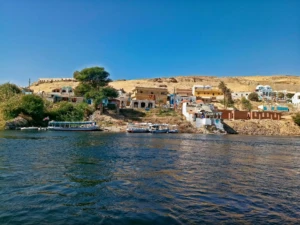
Visiting a Nubian village is one of the most popular experiences in Aswan, and the journey itself is part of the attraction. Depending on where you’re staying and which community you’re visiting, you may travel by motorboat through some of the most scenic stretches of the Nile, past granite formations, small islands, desert banks and palm trees, before brightly painted houses begin appearing.
But we recommend approaching the experience as cultural interaction, not simply a photography stop.
A meaningful visit can include:
- Meeting a Nubian family.
- Drinking traditional tea.
- Learning about Nubian architecture.
- Hearing about local customs and Nubian languages.
- Trying regional food.
- Buying directly from local craftspeople.
- Learning how construction of the High Dam affected Nubian communities.
Ask before photographing people.
And don’t assume every house exists for tourists to enter.
The more respectful the interaction, the more meaningful the experience becomes.
A Note About Crocodiles in Nubian Villages
You may encounter homes displaying or keeping crocodiles as part of tourism experiences.
We recommend considering animal welfare before participating.
You don’t need a captive crocodile photograph to have an authentic Nubian experience.
Focus instead on people, culture, food, architecture, music, and the Nile.
Felucca Sailing in Aswan
If you do only one non-archaeological activity in Aswan, make it a felucca ride.
The traditional sailing boats are one of the defining images of the city.
Aswan’s stretch of the Nile is especially beautiful because the river flows around islands, granite formations and narrow channels.
Depending on the route and wind conditions, you may sail near:
- Elephantine Island.
- Kitchener’s Island and the Botanical Garden.
- West Bank desert.
- Aga Khan Mausoleum area.
- Cataract landscapes.
Because feluccas rely on wind, the exact route isn’t always predictable.
That’s part of the experience.
The Best Time for a Felucca Ride
Late afternoon into sunset.
The temperature begins to fall.
The light softens.
The desert changes color.
And the river becomes one of the most peaceful places in Egypt.
For couples and luxury travelers, arrange a private felucca rather than joining a large shared group.
Felucca or Motorboat?
Boats are not just attractions in Aswan. They are part of the transport system, and both have advantages.
Choose a felucca for:
- Atmosphere.
- Silence.
- Sunset.
- Relaxation.
- Traditional sailing experience.
- Photography.
Choose a motorboat for:
- Faster transfers.
- Nubian Village.
- Fixed schedules.
- Covering more distance.
- Low-wind conditions.
A private motorboat is also useful for Elephantine Island, the Botanical Garden, the West Bank and transfers between riverside hotels and attractions. For luxury travelers, arranging a private boat in advance often makes the day more comfortable and predictable.
For the best Aswan experience, use both.
Take motorboats when you need transportation.
Take a felucca when you don’t need to be anywhere quickly.
Best Sunset Experiences in Aswan
Aswan sunsets are among the most beautiful in Egypt.
- Private felucca: the classic choice.
- Old Cataract terrace: excellent for travelers staying at or visiting the historic hotel.
- West Bank: the perspective looking back toward the city and islands can be beautiful.
- Nile-view hotel: sometimes the best decision is simply to stay where you are. Order tea, sit beside the river, and watch the light change.
Experience Aswan with Delta Tours Egypt
A private Aswan itinerary allows you to experience the city at the pace it deserves.
With Delta Tours Egypt, your journey can include:
- Private licensed Egyptologist.
- Private air-conditioned transportation.
- Private felucca sailing and private motorboats.
- Private Nubian cultural experiences.
- Luxury accommodation.
- Abu Simbel excursions.
- Luxury Nile cruises and domestic flights.
- Airport meet and assist.
Popular Aswan excursions:
- Aswan Day Tour: from $85
- Abu Simbel by Car: from $120
- Abu Simbel by Air: from $360
- Nubian Village Tour from Aswan by Boat: from $50
- Philae Temple Sound and Light Show: from $60
See all our Aswan tours and excursions. For travelers building a complete premium journey through Cairo, Giza, Luxor, Aswan and Abu Simbel, see our Luxury Egypt Tours page.
Abu Simbel: The Great Day Trip from Aswan
About 280 kilometers southwest of Aswan, close to Egypt’s border with Sudan, stand two of the most extraordinary temples ever constructed in ancient Egypt. The Temples of Abu Simbel were created during the reign of Ramses II in the 13th century BC. Four colossal seated statues of the king dominate the Great Temple’s façade, while the smaller temple was dedicated to Hathor and Queen Nefertari, who appears at a scale unusually close to that of the pharaoh.
On specific dates around February 22 and October 22, sunlight penetrates deep into the Great Temple and illuminates figures within the sanctuary. During the 20th century, when the Aswan High Dam threatened the site with flooding, the temples were cut into enormous blocks, dismantled, and reconstructed on higher ground, part of the same UNESCO campaign that saved Philae.
Our Abu Simbel temples guide covers the history, the sun phenomenon and the relocation in detail.
Getting There and Time at the Site
Driving is the most common choice. The journey takes about 3 to 3.5 hours each way, which usually means leaving Aswan before sunrise. The advantage is simplicity and flexibility, particularly with private transportation; the disadvantage is that you spend a significant portion of the day on the road.
Flying dramatically reduces travel time, but schedules and availability vary and domestic schedules can change, so build your itinerary around the actual flight availability for your travel date.
For a premium Egypt itinerary, we would check the flight schedule first and then compare it with a private road transfer.
Once there, approximately two hours at the site is sufficient for most travelers. Don’t spend the entire visit photographing the colossal façade: go inside both temples, because the interior is fundamental to understanding the monument.
Most travelers don’t need to stay overnight, as Abu Simbel works well as a day trip from Aswan; an overnight stay mainly suits those who dislike extremely early starts or are particularly interested in photography.
The Nile Cruise Between Aswan and Luxor
For many travelers, the next chapter after Aswan begins on the Nile itself. A cruise between Aswan and Luxor connects two of the country’s greatest historic cities through a landscape of palm groves, agricultural villages, desert cliffs, and ancient temples, stopping at Kom Ombo, Edfu and Esna, sites that would otherwise require long drives.
A typical Aswan to Luxor itinerary lasts around 3 nights / 4 days; the reverse route from Luxor to Aswan commonly lasts around 4 nights / 5 days. The right choice depends more on your overall itinerary and cruise schedule than on which direction is “better.” On our Nile cruise packages, the sightseeing listed in the itinerary is always private, with your own English-speaking Egyptologist.
Our Nile cruise Luxor–Aswan guide covers directions, nights, day-by-day itineraries, cabins and what’s included, and our luxury Nile cruises page compares the ships we book.
Kom Ombo
The temple of Kom Ombo rises directly beside the Nile. Its most distinctive feature is its unusual double design: one side was associated with Sobek, the crocodile god, and the other with Haroeris, a form of Horus, so entrances, courts, halls and sanctuaries appear in pairs. The nearby Crocodile Museum displays mummified crocodiles and objects connected with the worship of Sobek. Many ships visit in the late afternoon or early evening, when the site can become crowded. Our Kom Ombo Temple guide covers the reliefs and the visit.
Edfu
The Temple of Horus at Edfu is one of the best-preserved ancient temples in Egypt. Much of the structure dates to the Ptolemaic period, and its pylons, courtyards, halls, sanctuary and inscriptions allow visitors to understand the layout of an Egyptian temple more clearly than at many older sites. Traditionally, many cruise programs use horse-drawn carriages between the river and the temple; if you are uncomfortable using a carriage, ask your operator in advance whether private vehicle transportation or another alternative can be arranged. Our Edfu Temple guide covers the temple in detail.
Esna
Most travelers know Esna because of the Esna Lock, where cruise ships wait to move between different water levels. But Esna also has a temple dedicated primarily to Khnum, the ram-headed creator god also strongly associated with the Aswan region. Much of it lies below the level of the modern town; its hypostyle hall has elaborately decorated columns and astronomical ceilings, and recent conservation work has revealed striking colors. If your itinerary allows time for a proper visit, Esna is far more interesting than simply passing through the lock.
Aswan Before or After Your Cruise?
If your cruise begins in Aswan, spend at least two nights in the city beforehand. It allows you to visit Philae properly, enjoy a felucca, explore Nubian culture and arrive at embarkation relaxed, and it gives you some protection against delays from domestic flights. Visit Abu Simbel before the cruise begins: trying to fit it into embarkation morning can create unnecessary stress unless the cruise and flight or road schedules have been specifically coordinated.
If you are sailing from Luxor to Aswan, stay at least one or two nights after disembarkation and do not fly out immediately if your schedule allows.
Where to Stay in Aswan
Where you stay, how you move around, and how much time you leave unplanned can completely change the experience.
For most first-time visitors, the best accommodation depends on three things:
- Nile views
- Ease of transportation
- How much quiet you want
East Bank
The East Bank is the most convenient option for many travelers.
You’ll be close to:
- Aswan souk
- Restaurants
- Boat departures
- Railway station
- Main roads
- Airport transfers
It is practical and works especially well for short stays.
On or Near Elephantine Island
Staying on or near Elephantine Island offers a more atmospheric experience.
You are closer to the river and away from some of the traffic and activity of the main city.
This can be particularly appealing for:
- Couples
- Longer stays
- Travelers looking for quieter surroundings
- Guests interested in Nubian culture and island life
The trade-off is that boats become part of your daily transportation.
West Bank
The West Bank is even quieter.
It offers beautiful desert and Nile views and can feel more removed from the modern city.
This is best for travelers who value atmosphere over convenience.
The Old Cataract
For luxury travelers, the Old Cataract, managed by Mandarin Oriental since May 2026, is Aswan’s most iconic hotel.
The historic Palace Wing remains open while the Nile Wing is renovated. If you stay during the renovation, ask for a Palace Wing room and check what facilities are open.
Its location above the Nile is extraordinary.
Terraces overlook Elephantine Island, feluccas, granite outcrops, and the western desert.
But the hotel is more than a scenic property.
It is part of Aswan’s travel history.
Writers, diplomats, explorers, and famous guests have stayed here for generations, giving it a strong sense of place that modern luxury hotels sometimes lack.
Why we recommend it:
- Exceptional Nile views
- Historic atmosphere
- Elegant rooms and suites
- Excellent terraces
- Convenient access to central Aswan
- Ideal for honeymoon and luxury itineraries
Even travelers not staying overnight may consider stopping for a drink or meal, subject to hotel access policies.
For luxury itineraries, the view matters: in Aswan, paying slightly more for a Nile-facing room can genuinely improve the experience.
Boutique & Nubian-Style Accommodation
Travelers seeking something more personal may prefer smaller hotels or guesthouses influenced by Nubian architecture.
These properties can offer:
- Brightly decorated rooms
- Local design
- Home-style hospitality
- Closer contact with local communities
- Quieter atmosphere
Quality varies considerably, so check room standards, air conditioning, bathroom quality, and access logistics before booking.
Where to Eat and Drink in Aswan
Aswan’s dining scene is smaller than Cairo or Luxor, but it has plenty of memorable options.
The best meals often combine food with atmosphere.
Nile-View Dining
At least once, have lunch or dinner overlooking the river.
The setting is often as important as the menu.
Nubian Food
Nubian cuisine adds another layer to the Aswan experience.
Depending on where you eat, you may encounter:
- Grilled meat
- Rice dishes
- Local bread
- Spiced vegetables
- Lentils
- Fresh salads
- Dates
- Hibiscus drinks
- Tea with local herbs
A meal with a Nubian family or at a well-run local restaurant can be more memorable than a formal hotel dinner.
What to Drink in Aswan
One drink appears everywhere:
Karkade, or hibiscus tea.
It can be served hot or cold and is deeply associated with southern Egypt and Nubia.
You should also try:
- Egyptian tea
- Turkish-style coffee
- Fresh juices
- Sugarcane juice where available
During summer, hydration becomes especially important.
Carry bottled water or use safe filtered water throughout the day.
Getting to and Around Aswan
Private Car & Driver
This is the easiest option for road-based sightseeing.
It works well for:
- Philae transfer point
- High Dam
- Unfinished Obelisk
- Airport
- Nubian Museum
- Abu Simbel departures
Taxi
Taxis are widely available.
Confirm the fare beforehand if no meter is used.
Walking
Parts of central Aswan are walkable, especially around the souk and Corniche.
However, heat can make long walks uncomfortable during the day.
Boats
For islands and West Bank areas, boats are essential.
Aswan International Airport
Aswan has a well-connected airport serving domestic flights and selected international or charter services.
For most travelers, domestic flights are the easiest way to connect Aswan with Cairo.
If Abu Simbel flights are part of your itinerary, coordinate them carefully with cruise departure and hotel timing.
Train Travel
Aswan is also connected by rail to Luxor and Cairo.
Train travel can suit travelers who enjoy overland journeys or want to experience Egypt differently.
For luxury itineraries or shorter trips, flights are usually more efficient.
Practical Tips for Visiting Aswan
Is Aswan Safe?
Aswan is one of Egypt’s major tourism destinations and is generally straightforward for international visitors.
As with any destination, use normal precautions:
- Keep valuables secure
- Use reputable transport
- Follow current travel guidance
- Stay hydrated
- Respect local customs
- Confirm archaeological site rules before visiting
The biggest practical issue is usually heat, not safety.
What Should You Wear in Aswan?
Wear lightweight, breathable clothing.
Bring:
- Comfortable shoes
- Hat
- Sunglasses
- Sunscreen
- Light scarf
- Reusable water bottle
Modest clothing is respectful, particularly in local communities and religious settings.
Winter mornings and evenings can feel cooler than expected, especially on the river, so pack a light layer.
How Much Does Aswan Cost?
Daily costs vary greatly depending on travel style.
As a guide to excursion prices, our Aswan tours listed above start from $50 for the Nubian Village Tour by boat, from $85 for the Aswan Day Tour, and from $120 (by car) or from $360 (by air) for Abu Simbel.
A luxury traveler may spend significantly more, so rather than optimizing only for price, prioritize the experiences that matter most.
In Aswan, we would spend extra on:
- A good Nile-view hotel
- Private boat experiences
- A private Egyptologist
- Comfortable Abu Simbel logistics
Those upgrades have a noticeable impact.
Tipping in Aswan
Tipping is common for:
- Guides
- Drivers
- Boat crews
- Hotel staff
- Porters
Ask your tour operator for recommended amounts before the trip if you prefer clear guidance.
Aswan for Families and Couples
Visiting Aswan with Children
Aswan can work extremely well for families.
Children often enjoy the combination of:
- Boats
- Feluccas
- Nubian Village visits
- Philae
- Swimming pools
- Abu Simbel
- Markets
The slower pace is often easier for families than full days of temples and tombs in Luxor.
Keep archaeological visits relatively short and build in boat rides, food stops, and hotel time.
Aswan for Couples & Honeymooners
Aswan is one of Egypt’s most romantic destinations.
A strong honeymoon itinerary could include:
- Old Cataract stay
- Nile-view suite
- Private sunset felucca
- Private dinner
- Philae by boat
- Abu Simbel by air
- Luxury Nile cruise
The city’s slower pace works especially well after several busy sightseeing days.
Common Aswan Planning Mistakes
- Treating Aswan as a transit stop. Aswan deserves its own time; otherwise you miss the city’s strongest experiences.
- Packing too much into one day. The biggest mistake is trying to combine Abu Simbel, Philae, the High Dam, the Unfinished Obelisk, a Nubian village and a felucca in one day. Abu Simbel alone involves significant travel, so give it its own day whenever possible.
- Skipping Nubian culture. Temples tell only part of the story; Aswan is not only ancient Egypt.
- Choosing a hotel without considering location or view. The view and river access matter here; if your budget allows, a Nile-view room is worth it.
- Skipping the felucca. You miss one of the city’s defining experiences.
- Visiting only archaeological sites. Leave time for the river, food, and local communities.
- Booking domestic flights too close to cruise departure. Build in a reasonable buffer.
Frequently Asked Questions About Aswan
Is Aswan worth visiting?
Yes.
Aswan combines Nile scenery, ancient temples, Nubian culture, Abu Simbel access, and a slower atmosphere that complements Cairo and Luxor.
How many days do you need in Aswan?
We recommend:
Minimum: 1 full day
Ideal: 2–3 days
With Abu Simbel: 3 days
Slow travel: 4 days
Is two days enough?
Yes, if Abu Simbel is not included.
If you want to visit Abu Simbel comfortably, add another day.
Should you visit Abu Simbel from Aswan?
Yes. For most first-time visitors, Abu Simbel is one of the strongest reasons to include Aswan in the itinerary, and it works best as a separate day. By road it takes about 3 to 3.5 hours each way; by air it is faster, but subject to current flight schedules and availability.
Is Aswan better than Luxor?
They are different.
Luxor is stronger for monumental archaeology and royal tombs.
Aswan is stronger for Nile scenery, Nubian culture, Philae, and a slower pace.
The ideal Egypt itinerary includes both.
Can you visit Aswan without a tour?
Yes.
However, a private Egyptologist adds substantial value at Philae, Elephantine, and the archaeological sites.
What is the best month to visit Aswan?
October through April offers the most comfortable weather.
December and January are especially popular.
Is Aswan very hot?
During summer, yes.
Start sightseeing early and use midday for rest or indoor attractions.
Where should you stay in Aswan?
For luxury, the Old Cataract, now managed by Mandarin Oriental, is the iconic choice; its historic Palace Wing remains open while the Nile Wing is renovated.
For convenience, stay on the East Bank.
For quieter atmosphere, consider Elephantine Island or selected West Bank accommodation.
Plan Your Aswan Trip with Delta Tours Egypt
Since 1974, Delta Tours Egypt has created tailor-made journeys through Egypt that combine expert guiding, private logistics, and carefully selected experiences.
Our Aswan day tours cover Philae, the High Dam, a Nubian village by boat and Abu Simbel by air or by car, and most of our Nile cruises start or end in Aswan.
For a complete premium journey through Cairo, Giza, Luxor, Aswan and Abu Simbel, see our luxury Egypt tours.
Final Thoughts
Aswan is one of the places in Egypt where less can become more.
You can fill every hour with sightseeing.
Or you can allow the Nile, the islands, the light, and the slower rhythm of southern Egypt to become part of the journey.
- Visit Philae.
- See Abu Simbel.
- Understand Nubian history.
- Sail at sunset.
- Sit beside the Nile without an agenda.
That balance is what makes Aswan memorable.
Planning to visit a Nubian village? Read our guide to Gharb Soheil and Nubian villages in Aswan, including etiquette and photography.