Luxor Temple: History, Highlights & Visitor Guide
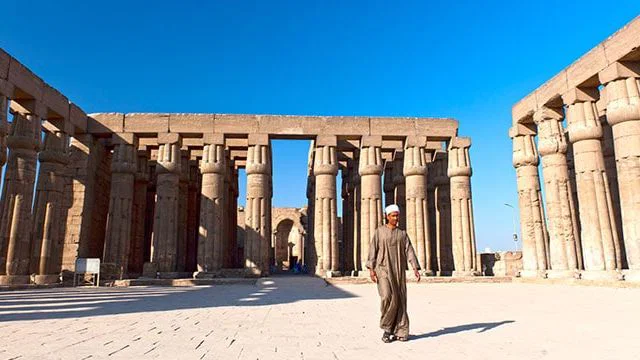
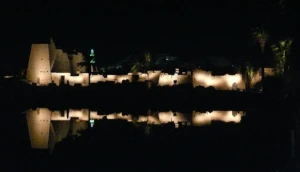
Luxor Temple does not stand apart from the modern world. It rises from the center of Luxor, beside busy streets and close to the Nile, while the active Abu Haggag Mosque remains embedded high within one of its ancient courts. At sunset, sandstone columns turn honey-gold. After dark, carefully positioned lights reveal colossal statues, papyrus capitals, and processional walls against the night sky. Few monuments in Egypt make the continuity between ancient and living city feel so immediate.
The temple is also more complex than the usual description of “a temple dedicated to Amun.” Its principal surviving buildings were created by Amenhotep III and Ramesses II, but Hatshepsut, Tutankhamun, Horemheb, Alexander the Great, Roman emperors, Christians, and Muslim worshippers all left traces. Its central purpose was closely connected with the Opet Festival, when the gods of Karnak traveled south in procession and royal power was ritually renewed.
This complete Luxor Temple guide explains what the monument was, who built it, why it was important, how to understand its plan, and what to look for in each section. It also includes current tickets and opening hours, recommended routes, photography advice, accessibility guidance, and a practical plan for combining Karnak and Luxor temples without rushing either one.
What Is Luxor Temple?
The Temple of Luxor is one of the great surviving monuments of ancient Thebes, the city the Egyptians called Waset. Unlike a royal tomb or a mortuary temple on the West Bank, it stood within the living city on the East Bank. Its ancient name, Ipet-resyt, distinguished it as the southern sanctuary in relation to the vast Karnak Temple complex farther north.
Luxor Temple is often introduced as a sanctuary of the Theban Triad: Amun-Re, his consort Mut, and their son Khonsu. That is useful but incomplete. The temple received the divine images of the triad during the Opet Festival, yet its theology was particularly concerned with the regenerative form of Amun at Luxor and the renewal of the king’s divine identity. Egyptologists have therefore emphasized its relationship to the royal ka—the divine life force and authority embodied by legitimate kingship.
This helps explain why images of divine conception, coronation, festival procession, and royal offering are so prominent. Luxor Temple was not simply a house where a god remained in permanent isolation. It was a destination within a ritual journey that joined temple, city, river, gods, and pharaoh.
Its orientation reinforces that relationship. Most Egyptian temples are described through an east–west axis, but Luxor Temple turns toward Karnak to the north. The processional connection shaped both its layout and its meaning.
Why Is Luxor Temple Important?
Luxor Temple matters for four main reasons.
First, it preserves one of ancient Egypt’s clearest architectural expressions of divine kingship. Amenhotep III’s Divine Birth scenes present the god Amun as the king’s true father, supporting the ruler’s sacred legitimacy. Later kings restored, adapted, or inserted themselves into the temple’s ritual program.
Second, its Great Colonnade contains major scenes of the Opet Festival. These reliefs show sacred barques, priests, musicians, dancers, offerings, boats, crowds, and the movement between Karnak and Luxor. They provide evidence for one of ancient Thebes’ most important religious celebrations.
Third, the temple records repeated cultural transformation. A Macedonian ruler appears in pharaonic form inside the sanctuary. Roman authorities converted part of the complex into an imperial cult chamber and surrounded the temple with a military fort. Christian churches occupied sections of the site. The Mosque of Abu Haggag later rose within Ramesses II’s court and remains active today.
Finally, Luxor Temple remains inseparable from the modern city. Karnak can feel like a vast archaeological zone; Luxor Temple feels like an ancient monument around which urban life continued to grow. Its layered use makes it one of the most revealing temples in Luxor Egypt.
Luxor Temple History: From Hatshepsut to the Present
Hatshepsut and the earliest surviving structure
The official Egyptian monuments record identifies a shrine from Hatshepsut’s reign as the oldest surviving structure at Luxor Temple. Hatshepsut built barque stations for the gods’ festival journey between Karnak and the southern sanctuary. Parts of this earlier phase were later incorporated into the expanded temple.
The site may have had sacred importance before Hatshepsut, but the surviving stone evidence should be distinguished from assumptions about an undocumented original foundation. Luxor Temple history, as visitors can materially trace it today, begins in the Eighteenth Dynasty.
Amenhotep III builds the temple’s core
Amenhotep III, who ruled in the fourteenth century BCE, created the architectural core of the temple. His work includes the large solar court, a columned hall, inner ritual rooms, and the monumental Great Colonnade. The construction used sandstone, much of it quarried at Gebel el-Silsila north of Aswan and transported along the Nile.
Amenhotep III’s reign was a period of immense wealth and diplomatic reach. His monuments across Thebes linked royal splendor to solar and Amun-centered theology. At Luxor, architecture narrowed from open court to increasingly restricted inner spaces, directing movement toward rooms where divine and royal renewal could be enacted.
The temple’s Divine Birth cycle belongs to this theological program. In the reliefs, Amun assumes the appearance of Thutmose IV to approach Queen Mutemwiya, and the resulting conception establishes Amenhotep III as the god’s son. Modern readers should understand the scenes as sacred royal ideology, not a biographical report in the modern sense.
Tutankhamun and Horemheb complete the Opet reliefs
Amenhotep III began the Great Colonnade, with two rows of seven colossal open-flower papyrus columns. The hall’s famous Opet Festival decoration was completed after the religious upheaval of Akhenaten’s reign.
Tutankhamun’s restoration of traditional cults gave the project particular significance. Scenes created under him presented the movement of gods and people between Karnak and Luxor. Horemheb later appropriated or reinscribed some royal images and names, a reminder that temple decoration could be politically revised without removing the larger ritual sequence.
Ramesses II transforms the northern entrance
About a century after Amenhotep III, Ramesses II expanded the temple dramatically toward the north. He added the massive First Pylon, a peristyle court, colossal statues, and a pair of granite obelisks. Only one obelisk remains in Luxor; its former companion now stands in the Place de la Concorde in Paris.
Ramesses II’s court bends slightly away from Amenhotep III’s straighter axis. The change accommodated the earlier triple shrine and the approach from Karnak. Rather than correcting the irregularity, the new construction made earlier sacred geography part of Ramesses’ monumental entrance.
The pylon’s exterior reliefs celebrate the Battle of Kadesh, fought against the Hittites in Ramesses II’s fifth regnal year. The scenes magnify the king’s bravery and divine favor. They contain historical material, but they are royal ideology in stone—not an impartial military chronicle.
Alexander the Great enters the pharaonic tradition
After Alexander conquered Egypt in 332 BCE, a barque shrine within the temple’s inner rooms was rebuilt or redecorated in his name. He appears on its walls as an Egyptian pharaoh performing rituals before Amun. The imagery shows how foreign rulers used established temple traditions to present themselves as legitimate kings of Egypt.
Alexander did not personally carve the shrine, and the scenes should not be read as evidence that he performed every depicted ceremony. Egyptian priests and artists expressed his authority through a visual language already thousands of years old.
The Roman fort and imperial cult chamber
In the late third century CE, Roman forces incorporated the temple into a fortified military complex. The Arabic name Luxor ultimately derives from al-Uqsur, “the palaces” or “fortifications,” reflecting the monumental and defensive remains visible in later periods.
Inside the temple, Roman authorities transformed a pharaonic chamber into an imperial cult room. Ancient reliefs were covered with plaster, and painted figures represented Emperor Diocletian and his fellow tetrarchs. The surviving Roman frescoes are rare evidence of a new state ritual environment imposed within an older Egyptian sanctuary.
This is one of Luxor Temple’s most important historical lessons. Reuse did not always erase the past completely; sometimes a new sacred or political system was layered directly over it.
Christian churches and the Mosque of Abu Haggag
Christian communities later established churches in and around the temple. Architectural traces survive within the complex, adding another phase to its religious history.
As ancient buildings became partly buried beneath centuries of occupation, homes and streets rose above the original temple floor. The Mosque of Abu Haggag was constructed within the elevated urban level over Ramesses II’s court. When archaeologists cleared the surrounding temple, the mosque was preserved and remains a functioning place of worship.
Its high doorway is a visual measure of how deeply the ancient court had been buried. More importantly, it prevents the site from being presented as if history ended with the pharaohs. Luxor Temple has been interpreted, occupied, and revered by communities across very different eras.
Who Built Luxor Temple?
No single ruler built the Temple of Luxor. Amenhotep III created most of its core, while Ramesses II added the monumental entrance seen from the city today. Several other rulers contributed construction, decoration, restoration, or adaptation.
| Builder or period | Main contribution |
|---|---|
| Hatshepsut | Earliest surviving shrine and barque stations associated with the festival route |
| Amenhotep III | Core temple, solar court, hypostyle hall, inner rooms, Divine Birth scenes, and Great Colonnade |
| Tutankhamun | Major decoration of the Great Colonnade, including Opet Festival scenes |
| Horemheb | Completed, restored, and appropriated portions of earlier post-Amarna decoration |
| Ramesses II | First Pylon, peristyle court, colossal statues, obelisks, and Kadesh reliefs |
| Alexander the Great | Rebuilt or redecorated the inner barque shrine in pharaonic form |
| Roman authorities | Fortified the precinct and created the imperial cult chamber with painted tetrarchic imagery |
| Christian and Islamic communities | Adapted parts of the site for churches and the still-active Abu Haggag Mosque |
The best answer to “who built Luxor Temple?” is therefore: Amenhotep III was its principal architect, Ramesses II created its famous northern façade, and later rulers and communities transformed it across more than three millennia.
Understanding the Luxor Temple Map and Plan
The standard visitor route moves broadly from north to south, from the Avenue of Sphinxes toward the temple’s inner sanctuary. This direction is important because the temple faces Karnak rather than following a simple sunrise-to-sunset alignment.
A clear Luxor Temple map should identify these principal spaces:
- Avenue of Sphinxes: the processional approach from the direction of Karnak.
- First Pylon of Ramesses II: the monumental gateway decorated with Kadesh scenes.
- Obelisk and colossal statues: the surviving granite obelisk and royal figures before the pylon.
- Court of Ramesses II: an angled peristyle court containing the triple shrine and Abu Haggag Mosque.
- Great Colonnade: fourteen towering papyrus columns and the Opet Festival reliefs.
- Court of Amenhotep III: a broad, elegant court surrounded by papyrus-bundle columns.
- Hypostyle Hall: a roofed hall in antiquity, supported by 32 columns.
- Roman imperial cult chamber: a later painted layer within the pharaonic sequence.
- Barque shrine of Alexander: an inner chamber decorated with Alexander as pharaoh.
- Divine Birth and sanctuary rooms: restricted spaces at the southern end of the temple.
The progression was theatrical and theological. Open public-facing architecture gave way to courts, colonnades, halls, and small inner rooms. Ceiling height, light, doorway width, and access all changed as the visitor moved toward the sacred core.
What to See at Luxor Temple
1. The Avenue of Sphinxes
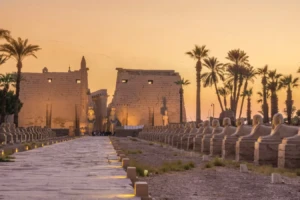
The ceremonial avenue linking Karnak and Luxor temples begins or ends at Luxor’s northern entrance, depending on the direction of procession. Its human-headed sphinxes present the king as guardian of the divine road. Other stretches near Karnak include different sculptural forms, including ram-headed figures, so the entire route should not be described simply as an avenue of identical rams.
The approximately 2.7-kilometer route developed over different reigns and contained barque stations where processions could pause. Its ancient significance was functional as well as visual: it organized the movement of sacred images, priests, royalty, performers, and offerings through the city.
The avenue was reopened after extensive excavation and restoration, but walking access, entrances, and ticket arrangements can change. Confirm the current procedure locally if you intend to walk between the temples rather than visiting each entrance separately.
2. The First Pylon of Ramesses II
The First Pylon is the dramatic façade most people picture when they search for Luxor Temple photos. Its two stone towers rise behind the surviving obelisk and colossal royal statues. Flagpoles once stood against the façade, adding height, movement, and color to the entrance.
Reliefs present episodes associated with the Battle of Kadesh. Ramesses appears larger than surrounding figures, driving his chariot and defeating enemies. Dense registers of troops, horses, chariots, and fortified city imagery reward a guide or a slow examination in angled light.
Some inscriptions are difficult to read because of erosion, scale, later damage, and modern viewing distance.
3. The Standing Obelisk—and the One in Paris
Ramesses II placed two red-granite obelisks before the pylon. The eastern obelisk remains at Luxor Temple, while its partner was transported to Paris in the nineteenth century and erected in the Place de la Concorde.
The two obelisks were not exactly equal in height, but their placement and proportions helped them appear balanced when viewed from the approach. Their pyramidions caught the sun, while vertical inscriptions linked Ramesses with divine power and perpetual kingship.
The Paris obelisk was transferred as a diplomatic gift under Muhammad Ali’s government, although modern discussions reasonably examine the unequal political context surrounding the movement of antiquities in that era. Calling it simply “stolen” or treating the transfer as uncomplicated generosity both flatten a more complex history.
4. The Colossal Statues of Ramesses II
Seated and standing statues of Ramesses II once dominated the entrance and court. Several colossal figures survive or have been restored. The king’s scale is intentional: monumentality communicates stability, divinity, and control, while smaller royal family figures appear beside his legs.
Look closely at throne panels and statue bases. Bound enemies, plants representing Upper and Lower Egypt, and the unification motif transform the king’s body and throne into a statement about ordered rule over the Two Lands.
5. The Court of Ramesses II
Beyond the pylon lies a peristyle court surrounded by columns with closed papyrus-bud capitals. Colossal royal figures stand between or before parts of the colonnade. Because the court’s axis turns to accommodate earlier sacred structures, it does not align perfectly with Amenhotep III’s temple beyond.
On the northwest side is the triple barque shrine associated with Amun, Mut, and Khonsu. These chambers preserved a ritual stopping place for the gods’ portable shrines during festival movement.
The Abu Haggag Mosque rises within the eastern side of the court. Its position above the ancient paving reflects the later ground level before excavation. It is not a reconstruction or visitor exhibit; it is an active religious building and should be treated respectfully.
6. The Great Colonnade of Amenhotep III
The Great Colonnade is Luxor Temple’s most graceful architectural passage. Fourteen open-flower papyrus columns, arranged in two rows of seven, rise about 16 meters and support massive architraves. Amenhotep III began the structure, but its decoration belongs largely to the restoration period of Tutankhamun and Horemheb.
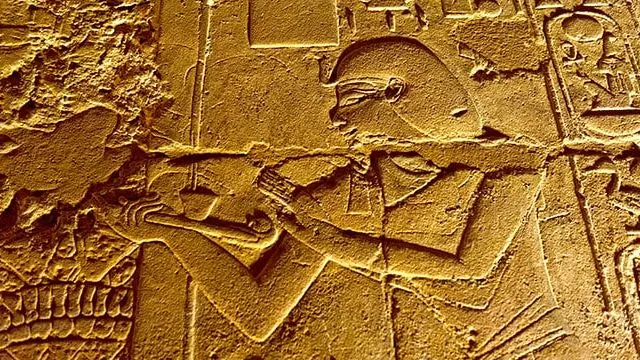
The walls preserve the Opet Festival procession in remarkable detail. One side follows the outward journey from Karnak toward Luxor, while the opposing sequence shows the return. Sacred barques, river vessels, soldiers, musicians, dancers, priests, offerings, and public celebration turn the hall into a permanent ritual route.
This is where an Egyptologist can make the greatest difference. Without explanation, the reliefs may look like repeating rows of figures. With context, they become a moving account of the temple’s reason for being.
7. The Court of Amenhotep III
South of the colonnade, Amenhotep III’s court creates a calmer, more symmetrical space. Double rows of papyrus-bundle columns line three sides, producing strong patterns of light and shadow. The surviving proportions demonstrate why UNESCO describes the temple as one of the refined achievements of Egyptian architecture.
In 1989, workers discovered a cache of statues buried beneath the court. The objects included exceptional images of gods and kings, several of which are now displayed in Luxor Museum. Their preservation and artistic quality make the museum an ideal companion to a temple visit.
8. The Hypostyle Hall
Amenhotep III’s hypostyle hall originally had a stone roof supported by 32 columns. As in other Egyptian temples, the loss of roofing changes the modern experience: what now feels bright and open would once have been shaded, enclosed, painted, and ritually controlled.
The hall led toward a series of smaller chambers associated with offerings, divine barques, and sanctuary functions. Notice how the architecture compresses after the expansive court. The closer one moved to the divine core, the fewer people would have been permitted to proceed.
9. The Roman Imperial Cult Chamber
One of Luxor Temple’s most easily overlooked spaces contains the remains of Roman wall paintings. When the temple became part of a Roman military fort, a chamber was adapted for the imperial cult. Plaster covered earlier reliefs, and painted rulers associated with the Tetrarchy occupied the walls.
The frescoes are fragile and may be difficult to see clearly depending on conservation conditions and barriers. They matter because they show Roman power working through both replacement and appropriation: the new imperial image was installed inside a place already charged with divine kingship.
10. The Barque Shrine of Alexander the Great
Within the inner temple, Alexander appears in traditional pharaonic dress making offerings to Egyptian gods. The chamber replaced or modified an earlier shrine associated with Amenhotep III and housed the divine barque during ritual activity.
The scenes are a lesson in political translation. Alexander’s rule was foreign in origin, but the temple walls presented him within the established relationship between pharaoh and deity. Continuity of ritual imagery helped make new power legible to Egyptian institutions.
11. The Divine Birth Room
Amenhotep III’s Divine Birth cycle narrates his conception by Amun, gestation, birth, presentation, and recognition. The sequence parallels related royal birth imagery elsewhere in Egypt, including Hatshepsut’s temple at Deir el-Bahari.
These scenes did not merely flatter the king. They addressed a fundamental political and religious question: why was this individual entitled to embody divine kingship? The answer was expressed through mythic conception and the gods’ approval.
Reliefs can be worn and lighting uneven, so a guide, diagram, or preloaded reference image helps. Do not use flash where prohibited or touch the walls in an attempt to trace faint carving.
The Opet Festival: Why Karnak and Luxor Temples Belong Together
The annual Opet Festival connected Karnak and Luxor temples physically and theologically. Sacred images of Amun, Mut, and Khonsu left Karnak in portable barques and traveled to the southern sanctuary. Depending on period and ritual phase, the procession used the land route, the Nile, or both.
This was not simply a parade between two temples. At Luxor, Amun’s regenerative aspect and the king’s divine identity were renewed. The festival reaffirmed legitimate rule and cosmic order while allowing the wider community to participate through music, movement, offerings, and public celebration outside the most restricted sanctuaries.
The Great Colonnade’s reliefs are the essential visual source. Rather than treating them as decorative scenes, read them in sequence. Boats and carrying poles explain transport. Musicians and dancers convey sound and movement. Offering lists reveal the material scale of ritual. The king appears repeatedly because temple art collapses multiple ceremonial moments into a permanent sacred narrative.
The festival also explains why a traveler should see both sites. Karnak was the divine point of departure; Luxor was the destination of renewal. Visiting only one leaves half the ritual geography unread.
Luxor Temple Construction and Architectural Meaning
The temple was built mainly from sandstone quarried at Gebel el-Silsila. Blocks traveled by river, then were shaped, raised, carved, plastered where needed, and painted. Granite used for obelisks and some statues came from Aswan.
Ancient builders did not complete every stage in the order a modern contractor might expect. Some surfaces were carved after blocks were set. Later rulers added names over existing work, altered figures, or inserted new architectural units into older spaces. Construction ramps, lever systems, hauling teams, boats, skilled stoneworkers, and administrative organization all played roles, but simplified animations claiming one universal building method should be treated cautiously.
The plan relies on controlled transition:
- Pylon: a horizon-like monumental threshold between city and sacred enclosure.
- Open court: a brighter, larger space accessible to broader ritual groups on certain occasions.
- Colonnade and hypostyle hall: increasingly enclosed zones where columns evoke marsh vegetation and the ordered creation of the world.
- Barque rooms and sanctuary: restricted chambers for divine presence and ritual service.
Decoration completed the architecture. Carved offerings sustained the ideal relationship between king and gods. Battle scenes defeated chaos. Festival reliefs made ceremonial movement eternal. Hieroglyphs named spaces, rulers, deities, and benefits expected in return for royal devotion.
A Living Monument: Egyptian, Roman, Christian, and Islamic Luxor
Many archaeological sites are presented as ruins belonging to one civilization. Luxor Temple resists that simplicity. Pharaonic architecture remains dominant, but later users did not encounter it as a finished museum. They adapted a monumental environment to their own religious, military, and urban lives.
Roman frescoes transformed an inner room. Churches occupied ancient spaces. The Abu Haggag Mosque became part of the neighborhood that grew above the partially buried court. When the temple was excavated, removing the mosque would have erased an important layer of Luxor’s history and disrupted a living community.
Visitors should therefore avoid claiming that later buildings “ruined” a pure ancient temple. Reuse sometimes damaged earlier material, but it also preserved evidence of changing belief and gave the site an exceptionally long cultural biography. The mosque’s presence is not an interruption to the story—it is part of the story.
Facts, Myths, and Common Misunderstandings
“Luxor Temple was built by Ramesses II”
Only partly true. Ramesses II created the famous pylon, outer court, statues, and obelisks, but Amenhotep III built most of the temple’s core. Hatshepsut, Tutankhamun, Horemheb, Alexander, and Roman authorities also contributed.
“Luxor Temple and Karnak Temple are the same site”
False. They are separate temple complexes about 3 kilometers apart. The Avenue of Sphinxes and the Opet Festival connected them.
“Luxor Temple was a tomb”
False. It was a ceremonial temple within the living city. Royal burials were placed primarily in necropolises on the West Bank, including the Valley of the Kings.
“The whole Avenue of Sphinxes had ram-headed statues”
Misleading. Different sections and phases used different forms, including human-headed sphinxes and ram-related statues. “Rams Road” is a popular modern name, not a precise description of every surviving figure.
“The Battle of Kadesh walls are an objective war report”
False. They contain valuable historical and geographical information, but their primary function was to proclaim Ramesses II’s courage, divine support, and victory over disorder.
“The Paris obelisk was simply stolen”
Too simplistic. It was transferred to France through a nineteenth-century diplomatic gift, although the political inequalities and antiquities practices of the period deserve critical discussion.
“The mosque should have been removed to restore the temple”
That would erase a major part of the site’s later history and affect an active place of worship. Modern conservation recognizes layered cultural significance rather than preserving only one chosen era.
Practical Guide to Visiting Luxor Temple
Luxor Temple location
Luxor Temple stands in the center of modern Luxor on the East Bank, close to the Nile Corniche, the souk, hotels, restaurants, and the public ferry area. Its central position makes it one of Egypt’s easiest major monuments to reach without a long drive.
When using a map, select the official Luxor Temple entrance rather than a nearby section of the Avenue of Sphinxes or a roadside photo pin. Drivers can normally drop visitors near the ticket and security area, but traffic control may alter the exact approach.
Luxor Temple opening hours in 2026
The official Egyptian monuments page lists Luxor Temple as open daily from 6:00 a.m. to 8:00 p.m. These hours were checked on September 11, 2026.
Last admission may be earlier than closing, and hours can change during Ramadan, official events, conservation work, or special security arrangements. Check the Ministry of Tourism and Antiquities monument page and the official ticket platform shortly before visiting.
Luxor Temple ticket prices in 2026
According to the same official page, admission checked on September 11, 2026 was:
| Visitor category | Price |
|---|---|
| Foreign adult | EGP 500 |
| Foreign student | EGP 250 |
| Egyptian adult | EGP 40 |
| Egyptian student | EGP 20 |
Reduced student admission normally requires valid identification and may be subject to eligibility conditions. Prices can change without much notice, so check them shortly before you travel. Do not assume that Avenue of Sphinxes access, special events, or professional photography permits are included in standard admission.
Best time to visit Luxor Temple
There is no single best time; the right choice depends on what you want.
| Visit time | Best for | Trade-off |
|---|---|---|
| 6:00–8:00 a.m. | Cooler air, fewer groups, clear relief photography | No evening illumination |
| Late afternoon | Warm sandstone color and transition into sunset | Crowds often increase |
| After dark | Dramatic lighting and a memorable city atmosphere | Fine carving can be harder to study |
For a first visit, arrive about an hour before sunset and stay into the illuminated period. You will see the architecture in changing light without making the visit entirely dependent on nighttime lighting. Serious photographers and archaeology enthusiasts may prefer opening time.
How long do you need?
- 60–75 minutes: pylon, statues, Ramesses II’s court, Great Colonnade, Amenhotep III’s court, and a quick look at the inner rooms.
- 1.5–2 hours: ideal for most visitors, with time for reliefs, the mosque, Roman chamber, Divine Birth room, and photography.
- 2.5 hours or more: suitable for a guided historical visit or careful study of inscriptions and later layers.
Even though Luxor Temple is more compact than Karnak, rushing through in 30 minutes misses the architectural sequence and the site’s multicultural history.
How to get to Luxor Temple
Travelers staying in central East Bank hotels may be able to walk, particularly in cooler weather. A taxi or private vehicle is convenient from hotels farther south or north. Agree on an independent taxi fare before departure or use a clearly priced service.
From the West Bank, take the public ferry or a motorboat to the East Bank and continue on foot or by short taxi ride, depending on the landing point. A private road transfer crosses the bridge south of central Luxor and takes longer but can be more comfortable for families, luggage, or limited mobility.
Travelers arriving on Nile River cruises should confirm the ship’s berth. Some docking areas are close to the center; others require transportation. Cruise excursions often combine Karnak and Luxor temples, so ask how much time is actually allocated to each.
What to wear and bring
Luxor Temple is an archaeological site, not an active mosque visit for standard ticket holders, so there is no formal mosque dress requirement throughout the ruins. Wear comfortable, respectful clothing suited to the heat and sturdy shoes for stone paving and uneven thresholds.
Bring water, sunscreen, and a hat for daytime visits. A light layer can help during winter evenings. If your itinerary includes entry into a separate active religious space, follow local instructions and dress requirements.
How to Visit Karnak and Luxor Temples in One Day
Karnak and Luxor temples belong in the same historical story, but they should not be treated as one rushed attraction.
Start at Karnak around opening and allow 2–3 hours. Its immense precinct, Hypostyle Hall, obelisks, sanctuary, and Sacred Lake demand more walking and concentration. Return to central Luxor for breakfast or lunch and rest during the hottest part of the day. If schedules align, visit Luxor Museum in a separate opening session. Enter Luxor Temple in late afternoon and remain until the lighting comes on.
This order works for three reasons:
- Karnak is cooler and quieter early.
- A midday break prevents “temple fatigue.”
- Luxor Temple is especially atmospheric near sunset and after dark.
Do not force the Valley of the Kings into the same short day unless your time in Luxor is extremely limited. The West Bank requires separate transport and its tomb tickets involve different decisions. A two-day Luxor plan gives the East and West Banks the attention they deserve.
Luxor Temple and Karnak can be seen together on our private Karnak and Luxor Temple tour, or with the West Bank on the Luxor East and West Banks day. Browse all our Luxor day tours.
Frequently Asked Questions About Luxor Temple
What is Luxor Temple?
Luxor Temple is a New Kingdom ceremonial temple in ancient Thebes, now central Luxor. It was closely associated with Amun, the Opet Festival, and the ritual renewal of divine kingship.
Where is the Temple of Luxor located?
It stands on the East Bank of the Nile in the center of Luxor, around 3 kilometers south of Karnak Temple and close to the Corniche and public ferry area.
When was the Temple of Luxor built?
The oldest surviving structure dates to Hatshepsut’s reign in the fifteenth century BCE. Amenhotep III built the temple’s core around the fourteenth century BCE, and Ramesses II added the monumental northern entrance in the thirteenth century BCE. Later rulers continued modifying it.
Who built Luxor Temple?
Amenhotep III was the principal builder of the surviving core. Ramesses II added the pylon, outer court, statues, and obelisks. Hatshepsut, Tutankhamun, Horemheb, Alexander the Great, and Roman authorities also contributed.
Why is Luxor Temple important?
It preserves evidence for the Opet Festival, royal renewal, New Kingdom architecture, Alexander’s pharaonic kingship, Roman imperial religion, Christian use, and continuing Islamic worship at the Abu Haggag Mosque.
Which deity was Luxor Temple dedicated to?
The temple was associated with Amun and received the Theban Triad—Amun, Mut, and Khonsu—during Opet. More specifically, its ritual function centered on Amun’s regenerative form at Luxor and the renewal of the king’s divine authority.
Is Luxor Temple the same as Karnak Temple?
No. They are separate sites linked by the Avenue of Sphinxes and the Opet Festival. Karnak is much larger; Luxor Temple is more compact and located directly in the modern city center.
Can you walk between Karnak and Luxor temples?
The restored Avenue of Sphinxes physically links the two areas, but public access procedures, entry points, and ticket requirements may change. Confirm the current walking route locally.
What happened to the second Luxor obelisk?
It was transported to France in the nineteenth century and now stands in the Place de la Concorde in Paris. Its companion remains before Ramesses II’s pylon in Luxor.
Why is there a mosque inside Luxor Temple?
The Abu Haggag Mosque was built when much of the ancient court lay buried beneath the medieval and later city. Archaeologists preserved the mosque during excavation, and it remains an active place of worship.
What are the Luxor Temple opening hours?
The official monument page listed daily hours of 6:00 a.m.–8:00 p.m. when checked on September 11, 2026. Verify last entry and any seasonal or Ramadan changes before visiting.
How much is the Luxor Temple entrance ticket?
As checked on September 11, 2026, the official price was EGP 500 for foreign adults and EGP 250 for eligible foreign students. Egyptian admission was EGP 40 for adults and EGP 20 for students. Recheck before travel.
Is Luxor Temple better during the day or at night?
Daylight is better for studying shallow reliefs and surviving color. Sunset and night are better for atmosphere and wide architectural photography. Arriving before sunset and staying after illumination offers both experiences.
How long should I spend at Luxor Temple?
Allow 1.5–2 hours for a satisfying first visit. A fast circuit takes about an hour, while a detailed guided visit may need 2.5 hours.
Is there a dress code?
There is no special religious dress code for ordinary sightseeing in the archaeological zone. Wear respectful, lightweight clothing and comfortable shoes. Follow separate instructions if entering an active religious area.
Is Luxor Temple suitable for families?
Yes. Its compact plan, large statues, festival imagery, missing-obelisk story, and evening lighting work well for children. Visit outside peak heat and keep the route focused.
Is Luxor Temple wheelchair accessible?
Access is partial. Some major areas are broad and relatively level, but uneven paving, thresholds, steps, and crowded passages may limit the route. Confirm current assistance and entrance arrangements before arrival.
Why Luxor Temple Belongs on Your Egypt Itinerary
The power of Luxor Temple comes from more than its obelisk or colossal statues. It is the way the whole site remains connected: Karnak’s gods arrive through the festival avenue; Ramesses II turns an older route into a monumental forecourt; Amenhotep III’s columns lead toward rooms of royal rebirth; Alexander adopts the image of a pharaoh; Roman paintings cover ancient relief; a mosque rises above a court that had disappeared beneath the city.
Seen in daylight, the temple rewards close attention to carving, scale, and architectural sequence. Seen after dark, it becomes one of Luxor’s most atmospheric landmarks. The best visit combines both—then looks beyond the spectacle to understand why generations kept choosing this place to express sacred authority.
Allow at least 90 minutes, visit Karnak separately, and give yourself time to follow the Opet story through the colonnade. If you would like the temple placed within a thoughtfully paced Luxor itinerary, Delta Tours Egypt can coordinate a private Egyptologist, transport, and timing around your preferred travel style. Luxor Temple is not simply another ancient ruin; it is a living record of how one sacred place continued to matter.