Kitchener’s Island: Aswan’s Botanical Garden
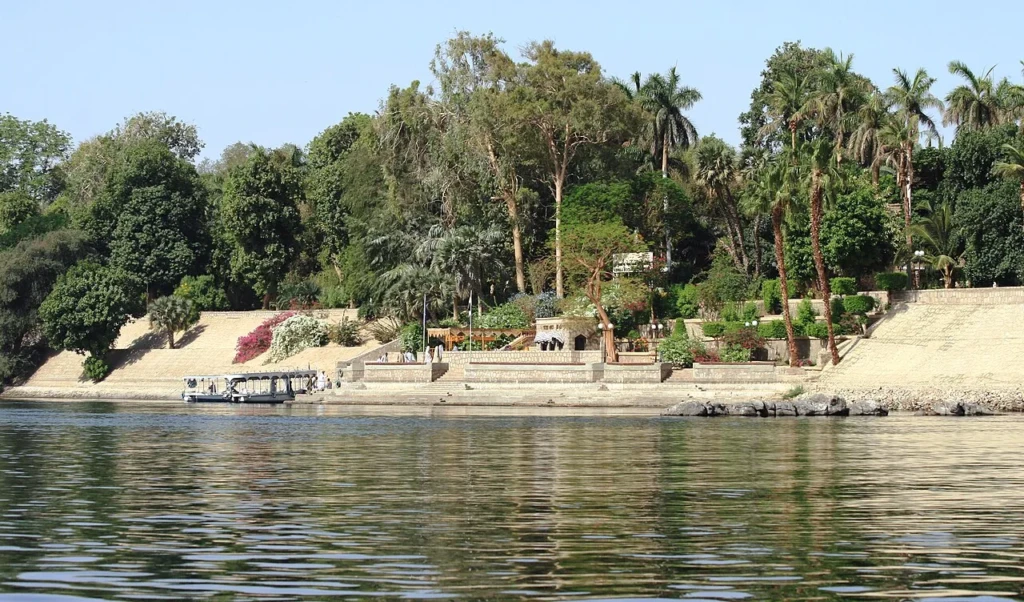
Covering a narrow island in the Nile just west of Elephantine, the Aswan Botanical Garden is a working plant research garden that began with Lord Kitchener’s exotic trees. Today it holds hundreds of tropical and subtropical species from Asia and Africa. You reach it by boat, and most visitors spend about an hour walking its shaded paths.
Here is what the island is, how it became a garden, what to look for on a walk, and how to fit it into a day on the river in Aswan.
Aswan Botanical Garden: Quick Facts
| Fact | Details |
|---|---|
| Location | An island in the Nile at Aswan, west of Elephantine Island and opposite the Tombs of the Nobles on the west bank |
| Other names | Kitchener’s Island, Geziret el-Nabatat (“Plant Island”), the Botanical Island |
| Size | Roughly 700 to 750 m (about half a mile) long and narrow |
| Linked to | Lord Kitchener, the British commander and later Consul-General of Egypt, who began planting exotic trees here |
| What it is today | A government-owned botanical garden and plant research station |
| Collection | More than 820 plant species, according to the garden’s director in 2025 |
| Access | By boat only, usually a felucca or a motorboat from the Aswan riverfront |
| Time needed | Our planning suggestion: 1 to 1.5 hours on the island |
What Is Kitchener’s Island?
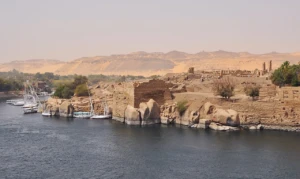
Aswan’s stretch of the Nile is full of granite boulders and small islands. Elephantine is the largest one opposite the city. Behind it, closer to the west bank, lies a smaller oval island that is easy to miss from the Corniche. That is Kitchener’s Island, now the Aswan Botanical Garden.
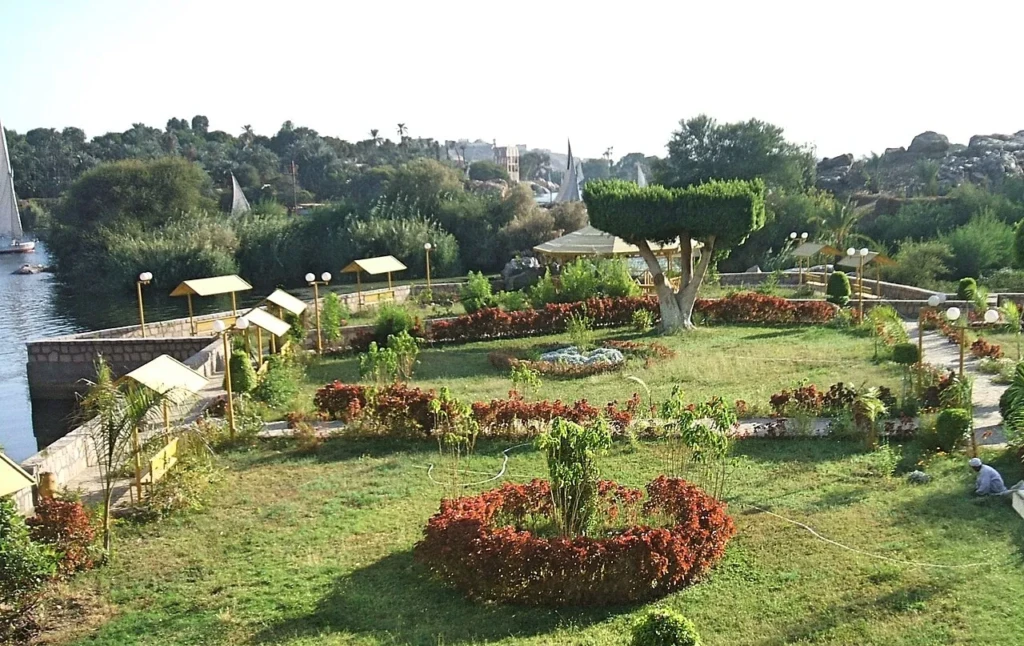
The island is long and thin. Al-Ahram Weekly gives its length as about 700 meters and its greatest width as 115 meters. Walkways run along it and across it, so you can loop through the whole garden on foot without retracing your steps.
It is not a theme park or a formal palace garden. It is a research site run by the state, open to visitors. That is part of its appeal. The atmosphere is quiet, and most of the space is given over to trees and beds rather than cafés or shops.
How Did the Island Become a Garden?
The island has carried several names. According to Al-Ahram Weekly, Nubians once called the area the Natron Gardens. In the colonial period, it became tied to Horatio Herbert Kitchener, the British general who led the campaign in Sudan in the 1890s.
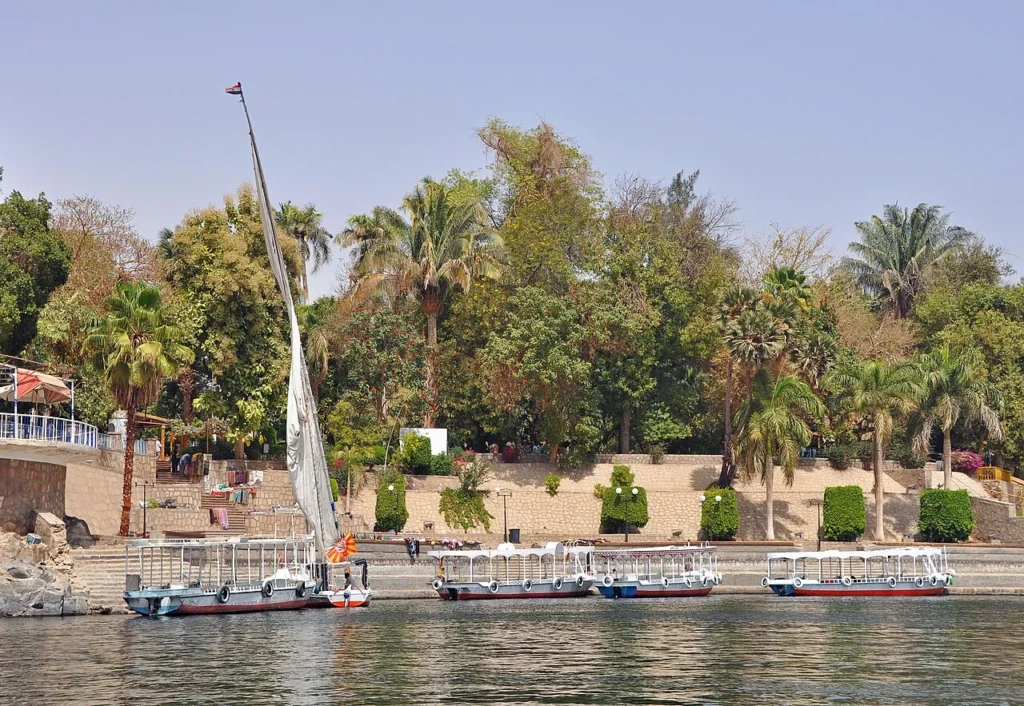
Sources give slightly different accounts of Kitchener’s role. Al-Ahram Weekly says he used the island as a headquarters from 1898, after the defeat of the Mahdist state in Sudan, and that it also served as a station for carrier pigeons carrying messages to and from Sudan. Other accounts say he owned the island while serving as Consul-General of Egypt, from 1911 to 1914. Either way, he is credited with bringing in exotic trees, many from India, and laying out walkways.
From private garden to research station
After the British left, the island passed to the Egyptian state. Its horticulture staff turned it into a center for studying how plants cope with Aswan’s intense summer heat. From 1928, collecting expeditions brought back tropical and subtropical plants, and many of those still grow on the island.
The island was renamed several times. Under King Fuad I it was called King’s Island. After the 1952 revolution, it became the Botanical Island, the name used in Arabic today.
The research side has grown since then. A herbarium and seed bank were set up in 1995, and a small botanical museum opened in 2005.
What to See on a Walk Through the Garden
The garden is laid out in sectors by plant use. Al-Ahram Weekly lists seven: timber trees, tropical fruit trees, medicinal and aromatic plants, spice plants, ornamental plants, vegetable oil plants and palms. A simple loop from the landing takes you through most of them.
1. The landing and the riverside path
Boats usually land on the island’s southeastern side. From there, the path follows the water. Stop to look back across the river toward the hills of the west bank and the granite rocks around Elephantine. This is one of the best places in Aswan to see the river at eye level.
2. The palm collection
Palms are among the garden’s best-known plants. Look for royal palms, with their smooth gray trunks, and sabal palms. Their height and straight lines make them easy to spot from the path.
3. Timber and tropical trees
Next come the heavy hardwoods and tropical trees. The collection includes teak, ebony and sandalwood, along with the kigelia, often called the sausage tree because of its long, heavy fruit. You may also see alstonia, nicknamed the devil’s tree. Many plants came from India, Sri Lanka, Indonesia, Malaysia and several African countries.
Several trees here are very old. The garden’s director told Egypt’s state broadcaster in 2024 that some trees are more than 150 years old. Their twisted trunks and spreading roots are worth a closer look.
4. Fruit, spice and medicinal plants
The fruit section includes tropical species such as jackfruit, whose fruit can weigh up to 25 kg in its native regions. In the spice and medicinal beds, look for ginger and other aromatic plants. Hibiscus adds color in the ornamental areas.
5. Papyrus and lotus
The garden also grows papyrus and lotus, two plants with deep roots in ancient Egyptian art and writing. Papyrus was the paper of the pharaohs, and the lotus appears on countless temple columns and tomb walls. Seeing them growing helps you read the carvings at Philae and Abu Simbel later in your trip.
6. The botanical museum
The small museum sits in the ground-floor hall of the administration building, at the northern end of the gardens. According to Al-Ahram Weekly, it is air-conditioned and has no separate fee. Inside are herbarium specimens and a three-dimensional model of the island. It is a cool place to rest before the boat back.
How to Get to the Aswan Botanical Garden
There is no bridge to the island. You arrive by boat from the Aswan riverfront, either on a felucca, the traditional wooden sailing boat, or on a small motorboat.
Most visitors build the island into a longer boat trip. A typical plan pairs it with a sail around Elephantine or a ride south to a Nubian village. Sailing time depends on the wind, so a felucca trip can be slower than a motorboat. Your guide or boat captain will confirm timing on the day.
If you are on a Nile cruise, a free afternoon in Aswan is a good time for the island. Our Nile cruise itinerary guide shows how Aswan days are usually arranged.
Opening Hours and Ticket Prices
The garden is not a Ministry of Tourism and Antiquities site, so it does not appear on the ministry’s official monuments listing. We could not find an official published opening time or foreigner ticket price for October 2026, so we have not printed one. Your guide will confirm the current entry fee and hours before you go.
Remember that the boat is a separate cost from the garden entry. If you book a felucca or motorboat yourself, agree on the price, the stops and the waiting time before you leave the dock.
Best Time to Visit
The shade of the big trees makes the garden one of the more comfortable outdoor stops in Aswan. Even so, the middle of the day can be very hot for much of the year. Our planning suggestion is to go in the morning or in the late afternoon.
A late-afternoon visit has another advantage. You can leave the island just as the light softens and sail back toward the city at sunset. For a month-by-month view of the weather, see our guide to the best time to visit Egypt.
Practical tips
- Bring insect repellent, especially in the warmer months. The garden is green and close to the water.
- Wear comfortable shoes for the paths. Some sections are uneven.
- Carry cash in small notes for the boat and the entry fee.
- Take water with you, as you will be outdoors for most of the visit.
- Read plant labels where they exist. Many beds carry names that help you follow the collection.
How to Combine It With Nearby Sites
The garden fits neatly into a day on the Nile. These are the easiest pairings.
- A Nubian village. Continue south by boat to a Nubian village on the west bank for colorful houses and local hospitality. Our Nubian village guide explains what to expect.
- Philae Temple. The Temple of Isis on Agilkia Island is Aswan’s most important ancient site. Read our Philae Temple visitor guide.
- Abu Simbel. Many travelers base themselves in Aswan for the trip to Ramesses II’s great temples. See our Abu Simbel temples guide.
- The rest of Aswan. For hotels, markets and a full plan, start with our Aswan travel guide.
Visit With Delta Tours Egypt
We do not sell a fixed Botanical Garden tour, but we can arrange a private visit on request, with a boat, a guide and timing that suits you. Share your plans through our tailor-made Egypt tours page and we will fit the island into your Aswan days.
If you are building a fuller Aswan stay, our Aswan Day Tour is from $85 per person, and the Nubian Village Tour from Aswan by Boat is from $50 per person. For the evening, the Philae Temple Sound and Light Show is from $60 per person. For the big day out, Abu Simbel by car is from $120 per person.
Frequently Asked Questions
Is the Aswan Botanical Garden the same as Kitchener’s Island?
Yes. The garden covers Kitchener’s Island, which is also called the Botanical Island or Geziret el-Nabatat, meaning “Plant Island.” All three names refer to the same place.
How do I get to the Aswan Botanical Garden?
Only by boat. Most visitors take a felucca or motorboat from the Aswan riverfront, often as part of a longer trip that includes a Nubian village or a sail around Elephantine.
How much is the Aswan Botanical Garden ticket?
We could not find an official published foreigner price in October 2026, so we have not listed one. Your guide will confirm the current fee, and the boat is paid separately.
How long should I spend at the Botanical Garden?
Our planning suggestion is 1 to 1.5 hours on the island. Add the boat time on either side, which depends on your route and the wind.
Is the Aswan Botanical Garden worth visiting?
Yes, if you enjoy plants, shade and quiet. It is a calm break between temple visits, and the boat ride there is part of the experience.
Who was Kitchener?
Horatio Herbert Kitchener was a British general who led the campaign in Sudan in the 1890s and later served as Consul-General of Egypt. He is credited with starting the island’s collection of exotic trees.
Planning your time in Aswan? Browse our private Aswan day tours, and we will help you balance temples, the river and time to rest.
Featured image: Kitchener’s Island in the Nile at Aswan. Photo: Karelj / Wikimedia Commons, public domain