Nubian Village Aswan: Visiting Gharb Soheil Respectfully
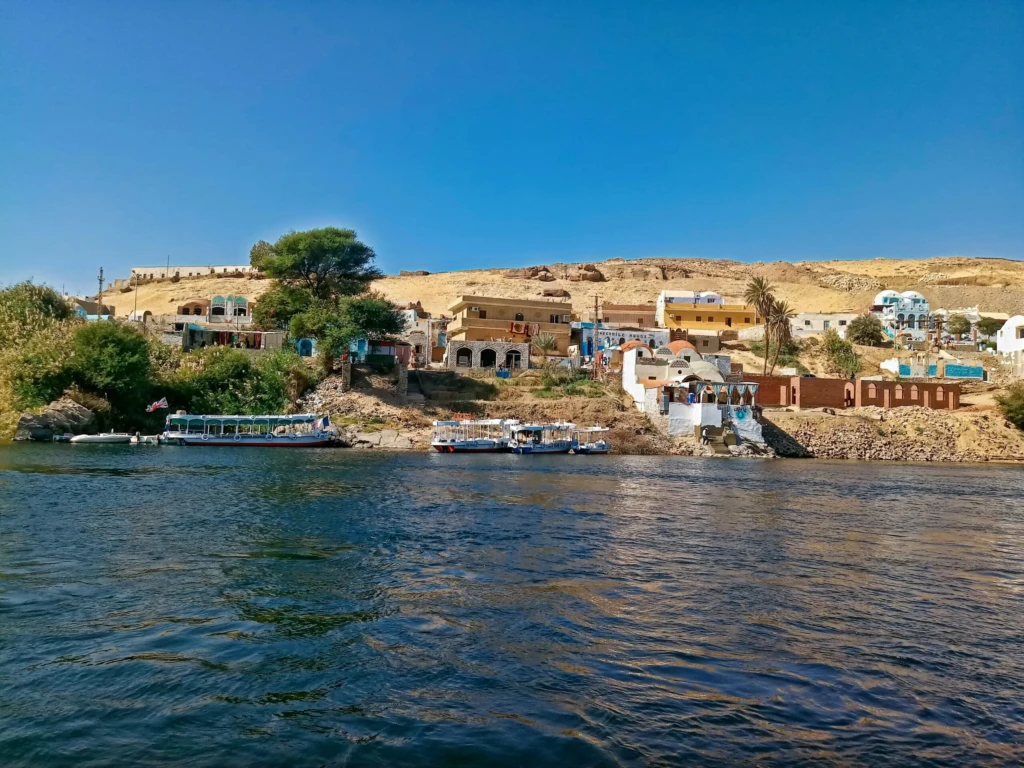
The best-known Nubian village near Aswan is Gharb Soheil (West Soheil), a living community on the west bank of the Nile, a few miles upstream from the city toward the High Dam. You reach it by motorboat or felucca, then walk its painted lanes, drink tea in a family home, try henna and browse small craft stalls. Delta’s private Nubian village tour from Aswan by boat starts from $50 per person.
This guide explains who the Nubians are and why their villages look the way they do today, what a visit involves step by step, how to behave as a guest, the honest story behind the crocodiles you may see, and how to fit the village into a day with Elephantine and the Nubian Museum.
| Quick facts | Details |
|---|---|
| Main village visited | Gharb Soheil (also spelled Gharb Sohail or West Soheil) |
| Location | West bank of the Nile, a few miles south of Aswan toward the High Dam |
| Getting there | Motorboat or felucca across and up the river; the village sits on the opposite bank from central Aswan |
| Size | About 3,000 residents, as reported by Al-Ahram |
| Type of site | A lived-in village, not a Ministry of Tourism and Antiquities monument |
| What visitors do | Walk the lanes, visit a home for tea, henna, shopping, optional crocodile viewing |
| Best months | October to April; Aswan’s average summer highs top 40°C (104°F) |
| Delta tour | Nubian Village Tour from Aswan by Boat, 1 day, from $50 per person |
Who are the Nubians?
Nubia is the stretch of the Nile valley that runs from southern Egypt into northern Sudan. Its people, the Nubians, have their own languages and a long history alongside ancient Egypt. In Egypt, the two main Nubian languages are Nobiin and Kenzi (also called Mattokki). Both belong to the Nilo-Saharan family, and most Egyptian Nubians also speak Arabic.
Aswan was always the meeting point. The Ministry of Tourism and Antiquities describes the city as Egypt’s southern gateway, the stop where traders arriving from Nubia by river entered the country. That role explains why Nubian culture is so visible here today, in music, food, architecture and the faces you meet on the corniche.
Most Nubians are Muslim, and many communities were Christian before Islam spread through the region. Nubian identity is kept alive through poetry, novels, music and storytelling. Many Nubians now live and work in Egypt’s larger cities, while the villages around Aswan remain an important home base.
How did the High Dam change Nubian life?
You cannot understand a Nubian village visit without this part of the story. The Aswan High Dam was built between 1960 and 1970. Behind it formed Lake Nasser, a reservoir about 500 km (310 miles) long that covered much of Lower Nubia.
According to AFP reporting, 44 Nubian villages were flooded when the lake began to fill in 1964. Across Egypt and Sudan, between 100,000 and 120,000 people were resettled. In Egypt, most of the roughly 50,000 Nubians affected were moved to a new settlement area near Kom Ombo, about 45 km (28 miles) downstream from Aswan, which became known as “New Nubia.” It was set back three to ten kilometers from the river, a hard change for families whose life had centered on the Nile.
Many Nubians say promises of fair land and compensation were not kept for decades. Egypt began paying compensation to displaced Nubian families in 2019–20. When you hear residents talk about “old Nubia,” this loss is what they mean. Listening with interest, rather than treating the village as a backdrop, is the best way to respect it.
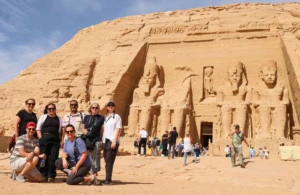
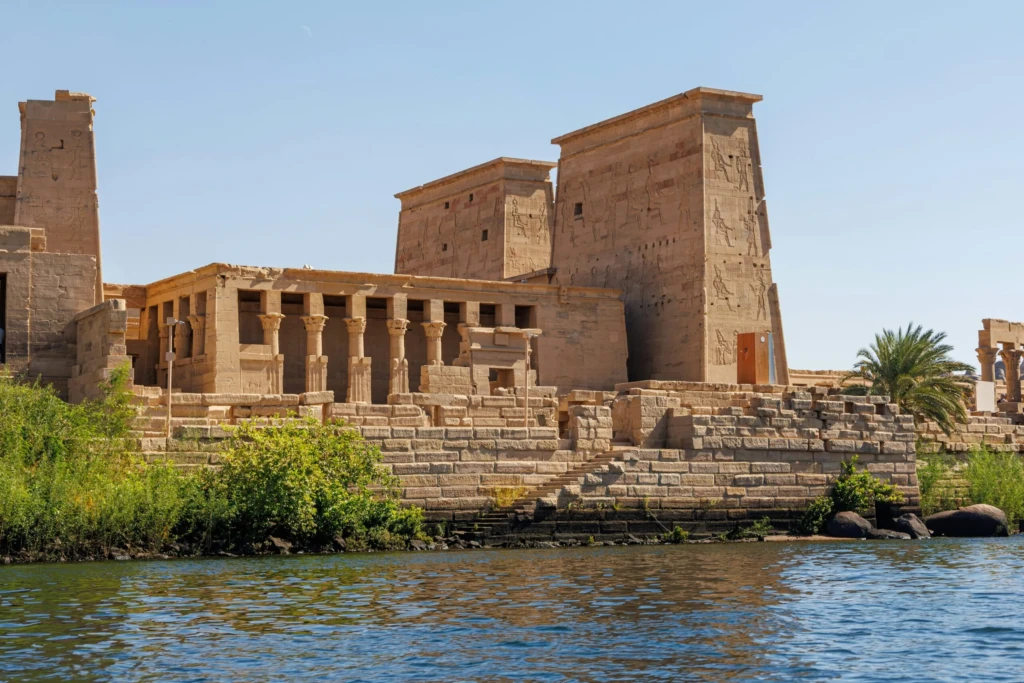
The same flooding threatened ancient monuments. Under a UNESCO-led campaign, 22 monuments, including Abu Simbel and Philae, were moved to higher ground. The Philae Temple on Agilkia Island and the Abu Simbel temples you visit today are both results of that rescue.
What is Gharb Soheil like?
Gharb Soheil is the Nubian village most visitors to Aswan see. Al-Ahram described it as a community of about 3,000 people known for food, crafts and hospitality. Tourism is now central to the local economy, and many families have turned their homes into guesthouses.
The houses are the first thing you notice. Walls are painted in strong reds, greens and blues, often with flowers, nature scenes or images of daily life. Traditional homes are built from stone, sand and clay, with arched roofs covered in reeds or grain stalks. This style keeps rooms naturally cool. Inside, you will often see a large hall, built-in benches called mastabas and an area for serving tea.
Some homes keep fine sand on the floors near the entrance. Traditionally this showed the tracks of snakes or crocodiles that might come in from the river. Others hang a stuffed crocodile over the door, a sign that the family keeps live ones.
What to see and do in a Nubian village, in visiting order
Most visits follow a similar sequence. The exact stops depend on your boat captain and guide, so treat this as a guide rather than a fixed plan.
- The boat ride from Aswan. You leave from the Aswan side and head upstream toward the High Dam, landing on the west bank. Motorboats are quicker. A felucca is slower and depends on the wind, but the quiet sail is part of the appeal.
- Walking the lanes. Wander the painted streets with your guide. Look at the door decorations and the domed and vaulted roofs.
- Tea in a Nubian home. Families welcome visitors for tea and conversation. This is the best chance to ask questions about language, food and family history.
- Local food. Some homes serve home-baked bread and dishes such as fatta or a meat tagine. You may also be offered a drink made from the fruit of the doum palm.
- Henna. Henna painting is an old Nubian art, and many visitors leave with designs on their hands or arms. Agree on the price before the artist starts.
- The crocodile room (optional). Some houses keep young crocodiles in pens or cages. Read the section below before you decide to go in.
- The market. A narrow market sells spices, perfumes, incense, baskets and handwoven clothing.
- The return trip. Many visitors time the boat back for late afternoon, when the light on the west-bank dunes softens.
Crocodiles in Nubian homes: what you should know
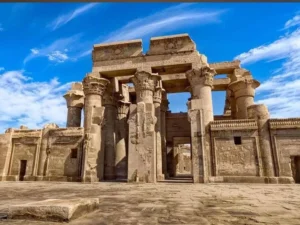
Crocodiles hold a special place in Nubian belief, where they are seen as a sign of blessing. The link goes back a long way. Ancient Egyptians worshipped the crocodile god Sobek, and the Kom Ombo temple north of Aswan is dedicated to him.
In Gharb Soheil, keeping crocodiles has become a tourist attraction and a source of income. A 2020 AFP report described a resident who collects newly hatched crocodiles from the banks of Lake Nasser and raises them at home. Visitors pay to see them, take selfies and watch handlers open the animals’ jaws.
There is another side to this. Animal welfare groups such as World Animal Protection warn that wild animals used as photo props are often taken from the wild young. They are handled by many people, kept in small enclosures and exposed to stress and noise. That research looked at other countries, but the same concerns apply wherever wild animals are kept for photos.
Our honest advice: you can respect the cultural meaning without paying to hold or pose with a crocodile. If you do step inside, do not touch or feed the animals, and skip any photo that involves handling them. The stuffed crocodiles over doorways and the stories behind them tell you just as much about Nubian belief.
Etiquette and photography
Gharb Soheil is someone’s home first and an attraction second. A few habits make a big difference.
- Ask before photographing people. This matters most with women, older residents and children. A smile and a gesture toward your camera is enough. Accept a “no” without argument.
- Photograph houses from the street. Do not walk into courtyards or open doorways unless you are invited.
- Dress modestly. Shoulders and knees covered is a sensible standard for both men and women in a traditional village.
- Accept tea graciously. Hospitality is part of the culture. If a family hosts you, buying something small or leaving a tip is a kind way to say thank you.
- Bargain politely. Prices in the market are open to negotiation, but keep it friendly. A few dollars matter far more to a craftsperson than to you.
- Avoid giving money or candy to children. It encourages begging. Buy from adults instead.
Shopping in the village
The village market is a single narrow strip, so it does not take long to browse. Good things to look for:
- Spices, light and easy to pack.
- Woven baskets and trays, a traditional Nubian craft.
- Handwoven scarves and clothing, often made in the village.
- Incense and perfume oils.
Bring Egyptian pounds in small notes. Card machines are not something to count on in a village market.
How do you get to the Nubian village, and how long does it take?
Gharb Soheil is across the river from central Aswan, so the trip is by water. Visitors cross by motorboat or felucca from the Aswan side, and the river trip is part of the experience.
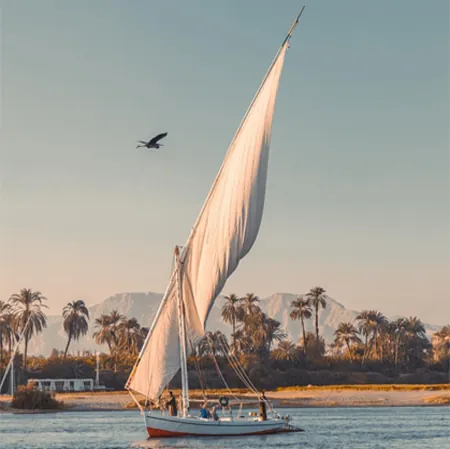
Plan on a half day for a relaxed visit, including the boat ride, tea, a walk and some shopping. Delta lists its Nubian village tour by boat as a one-day excursion from $50 per person. Boat travel time depends on the vessel and the wind, so ask your guide on the day rather than relying on a fixed figure.
If you are on a Nile cruise, ask whether a Nubian village visit is part of your Aswan program or can be added. Our Luxor to Aswan Nile cruise guide shows how Aswan days usually fit into a sailing.
Best time to visit
Aswan is one of the hottest and driest cities in the world. Average highs stay above 40°C (104°F) from June through September. The village is mostly outdoors, so the cooler months from October to April are far more comfortable. Aswan is known as a winter destination for this reason.
For time of day, late afternoon works well year-round. The heat eases, the colors of the houses glow in the low sun and you can return to Aswan around sunset. In summer, an early morning visit is the other sensible choice. For month-by-month planning across Egypt, see our guide to the best season to visit Egypt.
Practical tips for your visit
- Wear comfortable shoes. Village lanes can be sandy and uneven.
- Carry a hat, sunscreen and water, even in winter.
- Keep small Egyptian pound notes for tea, henna, tips and shopping.
- Agree on prices before henna or any extra boat stops.
- Henna stains skin for days. Avoid it before a wedding or formal event if that matters to you.
- If you have mobility concerns, mention them when you book. Boat boarding usually means stepping down from a jetty onto a moving deck.
How to combine the Nubian village with nearby sites
Elephantine Island
Elephantine sits in the Nile right off central Aswan and makes a natural pairing on a boat day. The Ministry of Tourism and Antiquities notes it was the gateway for traders entering from Nubia. The archaeological area includes the temples of Khnum and Satet, a Nilometer and a small museum showing finds by the German archaeological mission. As listed on the official Ministry of Tourism and Antiquities site in October 2026, the site opens daily from 8:00 a.m. to 4:00 p.m., and the foreign adult ticket is EGP 200 (EGP 100 for students). Check before you go.
The Nubian Museum
The Nubian Museum in Aswan is the best place to understand what was lost under Lake Nasser. It grew out of the UNESCO salvage campaign, opened in 1997 and received an Aga Khan architecture award in 2001. Its three floors cover Nubian history from early times, and dioramas show traditional crafts and daily life. The garden includes a reconstructed Nubian house.
As listed on the official Ministry of Tourism and Antiquities site in October 2026, the museum opens daily from 9:00 a.m. to 5:00 p.m. (ticket window closes at 4:00 p.m.), with evening hours on Thursday and Friday from 6:00 to 9:00 p.m. The foreign adult ticket is EGP 400 (EGP 200 for students). Check before you go. Visiting the museum before the village gives you context that makes the village visit richer.
Philae and the High Dam area
Philae Temple stands on an island south of Aswan, close to the dams. A morning at Philae followed by an afternoon in the village is a balanced day. Delta’s private Philae Temple tour in Aswan starts from $85 per person. If you want to return to Philae after dark, the Philae sound and light show starts from $60 per person.
Abu Simbel
Abu Simbel needs its own day because of the distance south. Our Abu Simbel tours page compares the road and air options. The Abu Simbel day trip by private car starts from $120 per person.
For a full picture of the city, hotels and sights, read our Aswan travel guide.
Visit with Delta Tours Egypt
Delta Tours Egypt is a family-run operator founded in 1974, holding Ministry of Tourism licence No. 121. Our Nubian Village Tour from Aswan by Boat is a one-day excursion from $50 per person. We can pair it with Philae, the Nubian Museum or Elephantine, depending on your time in Aswan. Browse every option on our Aswan tours and excursions page, or ask us to build the village into a longer private trip.
Frequently Asked Questions
Is the Nubian village in Aswan worth visiting?
Yes, if you go with the right expectations. Gharb Soheil is a tourist-oriented village, but it is also a real community with its own language and history. The boat ride, tea with a family and the painted houses make it a relaxed contrast to temple days.
Do you need a ticket to enter Gharb Soheil?
Gharb Soheil is a living village, not a ticketed Ministry of Tourism and Antiquities monument. You pay for the boat and for what you choose inside, such as tea, henna or crafts. Some homes ask a fee to see their crocodiles.
Is it ethical to visit the crocodiles?
The crocodiles are wild animals, reported to be collected as hatchlings from Lake Nasser and raised in homes for visitors. Animal welfare groups warn against using wild animals as photo props. If you go in, do not hold, touch or feed them.
Can I take photos of Nubian people?
Always ask first, especially with women and children. Most people are happy to say yes when asked politely. Photograph houses from the street rather than entering private spaces.
How long should I spend at the Nubian village?
A half day is enough for the boat trip, a walk, tea and shopping. Delta lists its Nubian village tour as a one-day excursion, which leaves room for a slower pace or another Aswan stop.
What should I wear?
Choose light clothing that covers shoulders and knees, plus comfortable shoes for sandy lanes. Add a hat and sunscreen, as most of the visit is outdoors.
Planning a few days in the far south? See all our private Aswan day tours and Abu Simbel trips and tell us what you would like to see.