Cave Church Cairo: The Rock-Cut Monastery of Moqattam
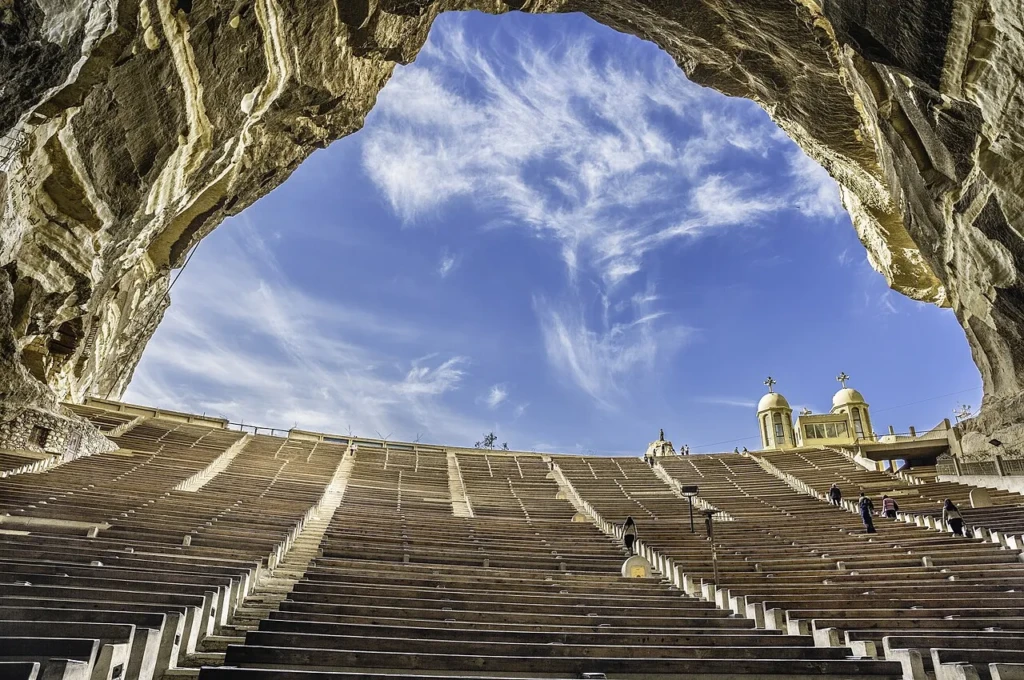
Cairo’s Cave Church is the Monastery of Saint Simon the Tanner (Saint Samaan), a group of churches carved into the cliffs of the Mokattam hills on the city’s eastern edge. It serves the Coptic Christian community of Manshiyat Naser, the neighborhood often called “Garbage City.” The Cairo Governorate lists one of its halls at 2,000 people, and no official ticket price or opening hours are published.
The site is quite different from Cairo’s ancient monuments. It is a modern place of worship, built mostly from the 1970s onward, by a community that has made a living from recycling the city’s waste. This guide explains its story, what you will see, and how to plan a respectful visit.
Cave Church Quick Facts
| Item | Details |
|---|---|
| Official name | Monastery of Saint Simon the Tanner (Deir Samaan el-Kharraz) |
| Location | Mokattam hills, behind the Zabbaleen quarter of Manshiyat Naser, eastern Cairo |
| Built | First community church in 1975; cave churches developed from the late 1970s onward |
| Dedicated to | Saint Simon the Tanner, a 10th-century Coptic saint |
| Main spaces | Cathedral of the Virgin Mary and Saint Samaan, Anba Abraam Church, Saint Marcos Church, Saint Samaan’s hall, Anba Paula Church |
| Tickets and hours | No official ticket price or opening hours published |
| Time needed | Our planning suggestion: 1 to 1.5 hours on site |
Who Are the Zabbaleen?
You cannot understand the Cave Church without understanding its congregation. The Zabbaleen, whose name means “garbage collectors,” are a mostly Coptic Christian community. Many families came to Cairo from Upper Egypt from the 1940s onward and found work collecting and sorting the city’s waste.
According to Wikipedia, the Cairo governor moved the garbage collectors to a settlement beneath the Mokattam cliffs in 1969. The area became known as Manshiyat Naser, or more bluntly, Garbage City. Recycling still shapes daily life here. You will see sacks of sorted plastic, paper and metal stacked in doorways as you drive in.
For years the community had no central place to worship. Egypt Today reports that residents began establishing a church in 1975. After a fire in 1976, work started on a monastery cut into the mountain itself. The result grew, cave by cave, into the complex you see today.
The Legend of Saint Simon and the Moving Mountain
The monastery is named for Simon the Tanner, also known as Simon the Shoemaker. He is a Coptic Orthodox saint who lived in the 10th century. He worked with leather and, according to tradition, carried water to the poor and sick.
His fame rests on a story set during the reign of the Fatimid caliph al-Mu’izz. As the Coptic tradition tells it, Pope Abraham of Alexandria was challenged in a debate before the caliph. His opponent quoted the Gospel verse saying faith can move mountains. The caliph demanded proof, threatening the Coptic community if none came.
Pope Abraham asked for three days. The community fasted and prayed. On the third morning, the tradition says, the Virgin Mary appeared to him in the Hanging Church and directed him to a one-eyed water carrier in the market. That man was Simon. He led the people to the Mokattam, where they cried “Lord, have mercy” three times, and the mountain moved.
How the story lives on
Wikipedia records that the Coptic Church still keeps three extra fasting days before the Nativity Fast in memory of the event. The Cairo Governorate’s page on the monastery notes that this makes the Nativity Fast 43 days rather than 40.
It is worth knowing that the story is a matter of faith rather than settled history. Wikipedia notes that Muslim historians, including Ahmad Zaki Pasha and Muhammad Abdullah Enan, reject it. For visitors, the legend explains why this mountain, of all places, carries such meaning for Egypt’s Copts.
Simon’s relics
Accounts of Simon’s remains differ. The governorate’s page says Coptic archaeologists found a cave tomb in February 1974 that they believed was his, and the monastery grew around it. Wikipedia’s article on Simon the Tanner describes a later find: a skeleton identified as his, uncovered on August 4, 1991, beneath a church in Old Cairo during restoration work. Both strands feed the devotion you will see on site.
What to See at the Cave Church, in Visiting Order
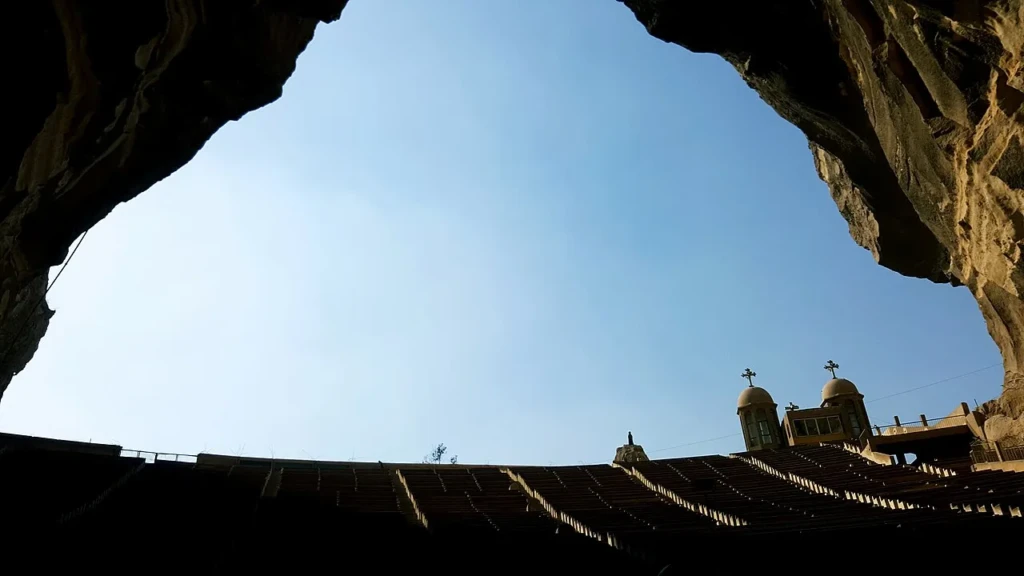
The governorate describes the monastery as carved into the rock of the Mokattam, so that it looks like part of the cliff. It lists five main worship spaces. Your guide will set the exact route, but the order below follows a natural walk through the complex.
1. The approach through Manshiyat Naser
The visit starts before you reach the church. The road climbs through the recycling quarter, past workshops and family homes. Treat this as part of the experience rather than something to rush through. It shows you who built the church and who still fills it.
2. The Cathedral of the Virgin Mary and Saint Samaan
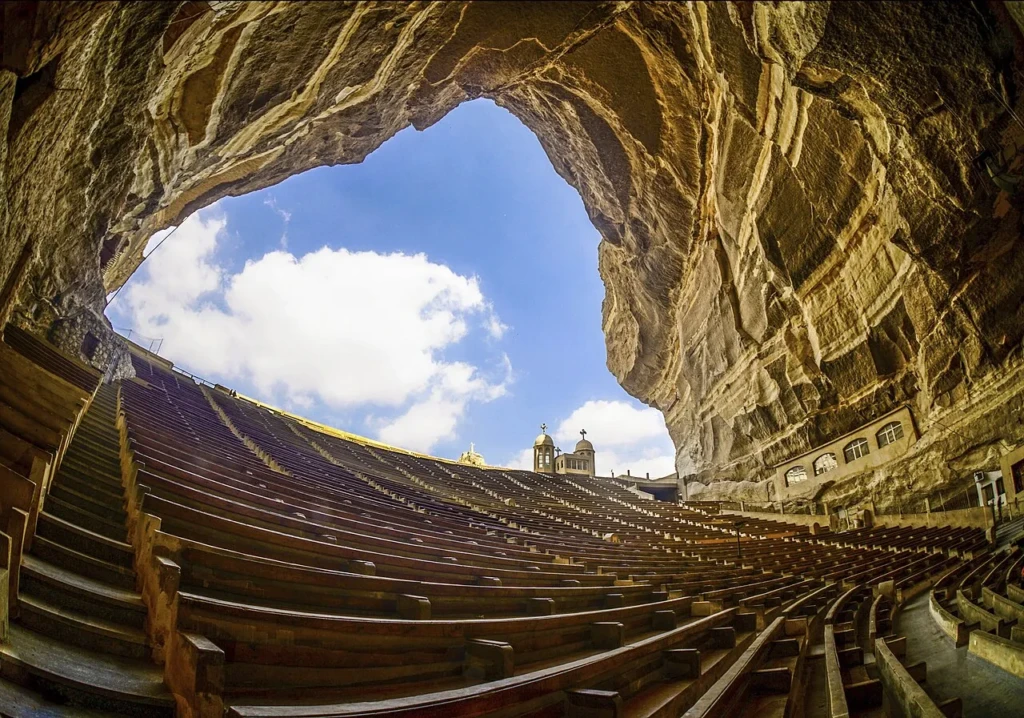
This is the space most people mean when they say “the Cave Church.” The governorate calls it the largest church in the monastery. It was built in two phases, with its stepped, amphitheater-style seating added in November 1994. The rock overhang forms a natural roof above rows of benches that curve around the altar.
Sources disagree sharply on how many people the cathedral holds, so we do not quote a figure. What is clear is the scale. It feels more like an open-air arena than a parish church.
3. The rock carvings
Walk the paths around the cliff faces to see the relief carvings cut into the stone. They show biblical scenes and figures. Egypt Today also describes sculpted statues of the Virgin Mary and Mary Magdalene. Many visitors find these carvings the most memorable part of the visit, so leave time for them.
4. Saint Samaan’s hall
The governorate lists this hall with a capacity of 2,000 people. It is one of the main gathering spaces of the complex. When services are not running, it is a good place to sit and take in the setting.
5. Anba Abraam and Saint Marcos churches
The Anba Abraam Church honors the pope at the center of the mountain story. The Saint Marcos Church is dedicated to Saint Mark, who in Coptic tradition brought Christianity to Egypt. Both are smaller and quieter than the cathedral.
6. Anba Paula Church
This church is named after a hermit who, according to the governorate, lived in a mountain cave for 70 years. That cave was found in 1986, and the church held its first Mass in 1991. It is a reminder that the complex has kept growing over decades.
Opening Hours and Entry Fees
We could not find official opening hours or a ticket price for the Cave Church. The monastery is not listed on the Ministry of Tourism and Antiquities monument site, and the Cairo Governorate page gives no visiting times. It is an active place of worship rather than a ticketed monument.
Times can change with services, feast days and church events. Your guide can check the current arrangements before you set out. If you plan to leave a donation, carry small Egyptian pound notes.
How to Get to the Cave Church
The monastery sits at the base of the Mokattam cliffs in eastern Cairo, reached by road through Manshiyat Naser. Atlas Obscura notes that ride-hailing directions to the site can be unreliable, and suggests asking locals along the way.
For international travelers, a private car with a driver who knows the route is the simplest option. The lanes are narrow and busy with recycling trucks and carts. Your driver or guide will confirm timing from your hotel, since Cairo traffic changes a great deal through the day.
Practical Tips for a Respectful Visit
- Dress modestly. This is a working church. Cover shoulders and knees, and bring a light scarf.
- Be mindful with your camera. People live and work along the approach road. Ask before photographing anyone, and be discreet during services.
- Go with a local guide. A guide can explain the carvings and the community’s history, and handles the directions.
- Bring water and sun protection. Several spaces are open to the sky, and the paths between them are exposed.
- Wear sturdy shoes. You will walk on stone steps and uneven paths around the cliffs.
For general advice on clothing and what to bring, see our Egypt packing and dress guide. Our Egypt safety guide covers the current official travel advice for the country.
Best Time of Day to Visit
Morning is usually the most comfortable time, before the sun heats the open spaces. Cooler months make the walk between churches far more pleasant. Our month-by-month Egypt weather guide helps you pick dates.
If you would like to see the church in use, ask your guide about service times in advance. Large services can be moving to witness, but you should expect crowds and keep a low profile.
How to Combine the Cave Church With Other Cairo Sights
The Cave Church fits well into a day focused on Cairo’s religious heritage. The Citadel of Saladin also stands on the Mokattam hills, so the two sit naturally in the same part of the city. The churches of Old Cairo, including the Hanging Church linked to the Simon legend, complete the story.
Delta’s Old Cairo & Citadel private day tour, from $100 per person, covers the Citadel, Khan El Khalili and the churches and synagogue of Coptic Cairo. The Cave Church is not part of its published route, but we can discuss adding it.
Most travelers also need a day at Giza. Our Pyramids day tour starts from $55 per person. For a wider view of the city, our Cairo travel guide covers neighborhoods, hotels and other sights.
Visit With Delta Tours Egypt
Delta does not offer a fixed tour of the Cave Church. We can arrange a private visit on request, with a driver who knows the route through Manshiyat Naser and a guide who can explain the site. Tell us your dates through our tailor-made tours page. If you want a fuller Cairo stay, our Taste of Egypt 4-day Cairo package starts from $535 per person, and you can ask us to add the monastery. You can also browse our private guide experiences and Cairo day tours.
Frequently Asked Questions
What is the Cave Church in Cairo?
It is the Monastery of Saint Simon the Tanner, a complex of churches carved into the Mokattam cliffs. It serves the Coptic Christian Zabbaleen community of Manshiyat Naser. Its name honors a 10th-century saint linked to the legend of the moving mountain.
Is there an entrance fee for the Cave Church?
We found no official ticket price. The site is an active place of worship and is not listed on the Ministry of Tourism and Antiquities monument site. Your guide can confirm current arrangements before your visit.
How old is the Cave Church?
It is modern. The community began its first church in 1975, and work on the cliff monastery started after a fire in 1976. The cathedral’s stepped seating was added in November 1994.
Why is it called Garbage City?
The surrounding district, Manshiyat Naser, is home to the Zabbaleen, who collect and recycle much of Cairo’s waste. The Cairo governor moved the garbage collectors to this area beneath the Mokattam cliffs in 1969. Sorting and recycling still take place in many homes.
What should I wear to the Cave Church?
Dress as you would for any active church. Cover your shoulders and knees, and bring a light scarf. Comfortable, closed shoes help on the stone paths.
How long should I spend there?
Our planning suggestion is 1 to 1.5 hours on site, plus travel time. That allows you to see the main cathedral, the carvings and one or two smaller churches without rushing.
The Cave Church shows a side of Cairo that few itineraries reach: a living faith, a working community and a remarkable setting in the rock. If you would like to include it in a private Cairo day, start planning with us on our tailor-made tours page.
Featured image: Cave Church of Saint Simon carved into the Mokattam cliffs. Photo: Ehab ahmed mohammed / Wikimedia Commons, CC BY-SA 4.0