Museum of Islamic Art Cairo: Highlights and Visitor Guide
Give the Museum of Islamic Art in Cairo two to three hours and you will walk through more than a thousand years of art from Spain to India in 25 halls. Opened in 1903 at Bab al-Khalq in historic Cairo, it holds over 100,000 objects, according to the Ministry of Tourism and Antiquities. Highlights include the earliest surviving key to the Kaaba, an 8th-century Quran with diacritical marks and enameled Mamluk mosque lamps.
This guide explains the museum’s history, how the galleries are laid out, which pieces to look for in visiting order, official hours and foreigner ticket prices, and how to combine a visit with the rest of Islamic Cairo.
Museum of Islamic Art Cairo: Quick Facts
| Fact | Details |
|---|---|
| Location | Port Said Street, Bab al-Khalq Square, El-Darb El-Ahmar, Cairo |
| Opened | 28 December 1903, under Khedive Abbas Helmy II |
| Building | Mamluk-style façade, adjacent to the National Library of Egypt |
| Collection | Over 100,000 objects from India, China and Iran to the Arabian Peninsula, the Levant, Egypt, North Africa and Andalusia |
| Galleries | 25 permanent exhibition halls since the 2017 reopening |
| Opening hours | 9:00 am to 5:00 pm daily; ticket window closes at 4:00 pm |
| Foreigner tickets | Adult EGP 340, student EGP 170 |
| Time needed | Our planning suggestion: 2 to 3 hours |
Hours and prices are as listed on the official Ministry of Tourism and Antiquities site in October 2026; check before you go.
Why the Museum of Islamic Art Is Worth Your Time
Most first-time visitors to Cairo plan around the pharaohs. That makes sense, but it leaves out the city they are actually standing in. Medieval Cairo was one of the great capitals of the Islamic world, and its mosques, gates and markets are still in daily use. This museum is the key that unlocks them. After a morning here, the carved wood, stucco, metalwork and calligraphy you see on the streets suddenly make sense.
The museum is also a calm, well-lit, manageable space. Unlike the vast pharaonic collections, you can see the whole permanent display in one visit without rushing. The labels are clear, and the layout follows a logical path through time and theme.
A Short History of the Museum
The idea of a museum for Islamic art took shape under Khedive Ismail in 1869, according to the museum’s official brochure. It became real in 1880 under Khedive Tawfiq, when Julius Franz, known as Franz Pasha, began gathering pieces from Cairo’s monuments into the ruined Mosque of al-Hakim on al-Muizz Street. That first display was known as the Arab Museum.
The collection soon outgrew the mosque. Under its next director, Max Herz, a purpose-built home was planned at Bab al-Khalq. The new building, designed by Alfonso Manescalo in a neo-Mamluk style, opened on 28 December 1903 as the House of Arab Antiquities. It took the name Museum of Islamic Art in 1952.
Bombing and reopening
A major renovation began in 2003, and the display was fully redesigned by 2010. Then, on 24 January 2014, a car bomb aimed at the Cairo Security Directorate across the street badly damaged the museum’s façade and many objects inside. The Ministry restored the building, and the museum reopened in January 2017 with the 25 permanent halls you see today.
How the Galleries Are Laid Out
The official brochure divides the museum into two wings around the entrance. One wing runs in historical order, dynasty by dynasty. The other is organized by theme. Knowing this before you go saves a lot of back-and-forth.
| Hall numbers | Theme |
|---|---|
| 00 | Bases of Islamic Civilization |
| 01 | Umayyad and Abbasid periods |
| 02–04 | Fatimid period |
| 05–07 | Ayyubid period |
| 08–10 | Mamluk period |
| 11–12 | Ottoman period |
| 13 | Muhammad Ali dynasty |
| 14 | Weapons and currency |
| 15–16 | Eastern Islamic world (Iran, Turkey, India) |
| 17–19 | Calligraphy |
| 20–21 | Textiles and carpets |
| 22 | Daily life |
| 23 | Water and gardens |
| 24 | Astronomy |
| 25 | Medicine |
Our suggested route is simple. Begin in Hall 00, walk the historical wing in order through Hall 14, then return past the entrance to the thematic halls, finishing with medicine. That path takes you through the story first and the specialist topics second.
What to See, in Visiting Order
The objects below are pieces the Ministry has highlighted in its brochure and official gallery features. Displays can rotate for loans and conservation, so if one piece matters to you, ask the staff where it is on the day.
Hall 00: Bases of Islamic civilization
Start with two of the museum’s most important objects. The first is a Quran from the 2nd century AH (8th century CE), which the brochure calls the oldest known copy with diacritical marks. Those small marks fixed how each word should be read. The second is the earliest surviving key to the Kaaba in Mecca, made of copper inlaid with silver. It belonged to the Mamluk sultan al-Ashraf Sha’ban in the 14th century and carries verses from the Quran along with his name and titles.
Hall 01: Umayyad and Abbasid
Early Islamic art borrowed freely from the Sassanian, Byzantine and Coptic styles it inherited. Look for the bronze ewer linked to Marwan ibn Muhammad, the last Umayyad caliph, with a rooster-shaped spout. Nearby, the cup of Abd al-Samad ibn Ali is described as the oldest surviving example of metallic luster used on Islamic glass.
Halls 02–04: Fatimid Cairo
The Fatimids founded Cairo in the 10th century, and these halls show their love of lively, everyday scenes. Find the carved wooden panels that once decorated the Fatimid caliphs’ palaces on al-Muizz Street. They show hunting, music and dancing. Two centuries later, the Mamluk sultan Qalawun reused them in his complex on the same street in 1285. Also look for the portable wooden mihrab from the shrine of Sayyida Ruqayya, made around 1154–1160, with fine floral carving and early star-shaped inlay.
Halls 05–07: Ayyubid
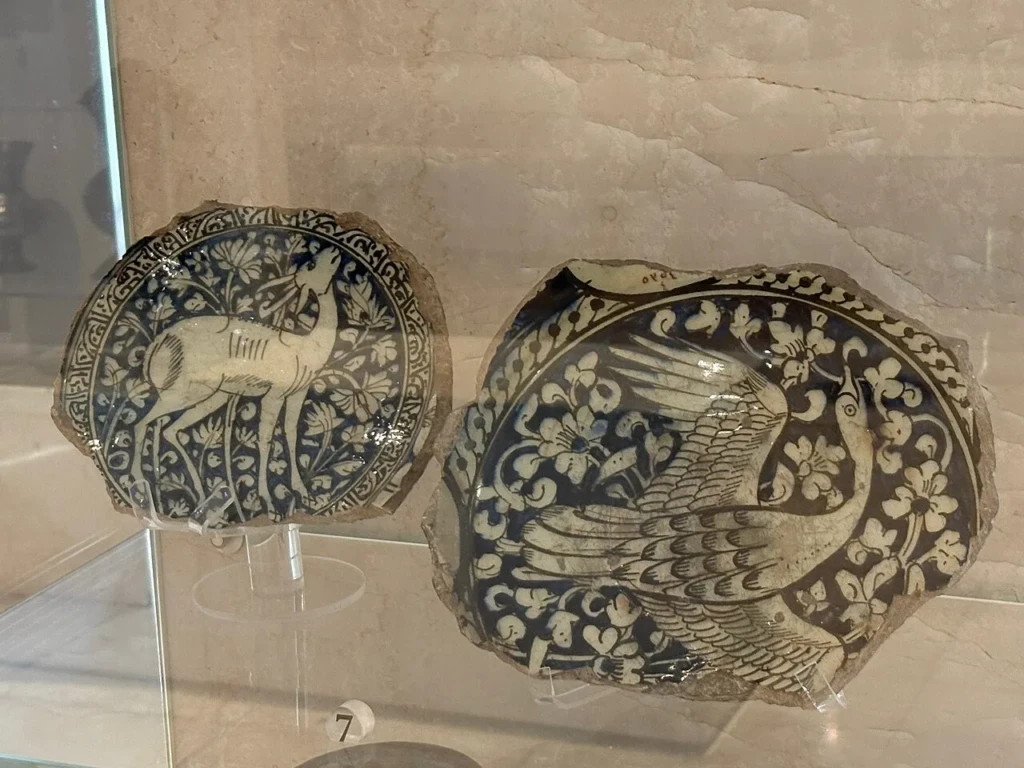
The Ayyubid period, founded by Saladin, saw metalworkers perfect silver inlay on brass. A candlestick bearing the names of Haj Ismail and Muhammad al-Musly is a fine example. Look also at the painted pottery under clear glaze, where colors still look bright.
Halls 08–10: Mamluk
The brochure calls the Mamluk era the golden age of Islamic art and architecture in Egypt, and these halls are the heart of the museum. Look for the enameled glass mosque lamp made in the name of the emir Shaykhu in the 14th century, and the candlestick that Sultan Qaitbay dedicated to light the Prophet’s tomb in Medina. Another favorite is a marble water jar from the mosque and school of Tatar al-Hijaziyya, a foundation dated to 1359. It was used as a public drinking fountain, and its marble stand held water for birds and animals.
Halls 11–13: Ottoman and Muhammad Ali
Ottoman rule brought Istanbul’s tastes to Cairo. Look for a turned-wood mashrabiya balcony from the 18th century. These screened wooden windows let people inside see out without being seen, and you will spot many on old Cairo houses. In the Muhammad Ali hall, European influence grows stronger. The Ministry has also featured a large silver-plated wooden door from this era, signed by the craftsman Yahudah Aslan, which came from the Mosque of Sayyida Zaynab.
Hall 14: Weapons and currency
Coins trace the dynasties you have just walked through. Among the arms is a 16th-century sword bearing the name of the Mamluk sultan Tumanbay.
Halls 15–25: The thematic wing
Return past the entrance to the second wing. The Eastern Islamic world halls show ceramics, metalwork and manuscripts from Iran, Turkey and India. Then come three calligraphy halls, two halls of textiles and carpets, and a hall on daily life, celebrations and weddings. The water and gardens hall explains fountains and irrigation. The astronomy hall holds scientific instruments. The visit ends in the medicine hall, which presents medieval achievements in medicine and surgery. The Ministry also lists a textile bearing the oldest known Kufic inscription among the museum’s prized holdings.
Opening Hours and Ticket Prices
The official Ministry of Tourism and Antiquities page lists the following, as of October 2026. Check before you go, since prices and hours can change.
| Item | Details |
|---|---|
| Regular hours | 9:00 am to 5:00 pm, every day |
| Last ticket | 4:00 pm |
| Ramadan hours | 9:00 am to 3:00 pm; ticket window closes at 2:00 pm |
| Foreign adult | EGP 340 |
| Foreign student | EGP 170 |
| Children under 6 | Listed under the free entry policy |
| Phone photography | Free of charge; no flash, no tripods or monopods |
Museum rules worth knowing
- Bags, backpacks or parcels larger than 40 x 40 cm must go to the cloakroom. Umbrellas and sharp items must also be checked in.
- Food and drinks are not allowed in the galleries, except small water bottles.
- Do not touch exhibits or showcases, and do not use flashlights or laser pointers.
- Do not photograph other visitors or staff.
- Appropriate attire is requested. Modest clothing that covers shoulders and knees is a safe choice.
- Children must stay with an adult at all times.
Accessibility
The Ministry lists an elevator, a ramped entrance, an accessible toilet, Braille labels and sign language services, along with a gift shop, library and parking. Travelers with limited mobility should still ask their guide to confirm access to specific halls on the day.
Getting There and the Best Time to Go
The museum faces Port Said Street at Bab al-Khalq, close to the medieval core of historic Cairo. Most visitors arrive by private car or taxi. Cairo traffic varies a lot by hour and day, so your driver or guide will confirm timing from your hotel.
Arrive at opening time if you can. Morning visits are usually quieter, and you then have the afternoon for nearby streets and mosques. Remember that the ticket window closes an hour before the museum does, and earlier still during Ramadan. In summer, the indoor galleries are also a welcome break from the midday heat in the old city.
How to Combine It With Islamic Cairo
The museum sits at the edge of the historic district that UNESCO lists as Historic Cairo. After your visit, you are well placed to walk or drive into the medieval streets where many of the museum’s objects came from. A good half-day pairs the museum with the gate of Bab Zuwayla, the southern end of al-Muizz Street and its Mamluk monuments, or a stop at Khan el-Khalili for coffee and shopping. Seeing a Mamluk lamp in a glass case and then a Mamluk mosque in use is a fine way to connect the two.
For a full day in Cairo, many travelers add the pharaonic side. Read our Egyptian Museum Cairo guide and our Grand Egyptian Museum guide to choose between them. For hotels, food and neighborhoods, see our Cairo travel guide, and for local dishes to try after a long morning, our list of traditional Egyptian food.
Delta itineraries that leave room for a day in Islamic Cairo include the Taste of Egypt – 4 Days (Cairo) package, from $535 per person, and the Old Cairo & Citadel day tour, from $100 per person. Neither lists the museum as a fixed stop, so ask us to add it. On longer trips such as King Treasure – 6 Days (Cairo & Luxor), from $840 per person, ask us whether a museum morning can fit your Cairo days.
Visit the Museum of Islamic Art With Delta Tours Egypt
We do not sell a set tour built around the Museum of Islamic Art, but we can arrange a private visit on request. A specialist guide makes a real difference here, because the objects come alive when someone explains the dynasties, the inscriptions and the buildings they came from. Share your dates and interests on our tailor-made Egypt tours page, or see how our private guides and VIP experiences work.
Frequently Asked Questions
How much is the Museum of Islamic Art ticket for foreigners?
The official Ministry site lists EGP 340 for foreign adults and EGP 170 for foreign students, as of October 2026. Phone photography is free. Check the site before you go, since prices change.
What are the Museum of Islamic Art opening hours?
It opens daily from 9:00 am to 5:00 pm, and the ticket window closes at 4:00 pm. During Ramadan, hours are 9:00 am to 3:00 pm, with the last ticket at 2:00 pm.
How long do you need at the Museum of Islamic Art?
Most visitors need two to three hours to walk all 25 halls at a comfortable pace. If time is short, focus on Halls 00 to 10, which cover the key early pieces and the Mamluk galleries.
Can you take photos inside the museum?
Yes, with a mobile phone and free of charge. Flash, tripods and monopods are not allowed, and you should not photograph other visitors or staff.
Is the Museum of Islamic Art the same as the Egyptian Museum?
No. The Egyptian Museum in Tahrir and the Grand Egyptian Museum in Giza focus on ancient Egypt. The Museum of Islamic Art covers the Islamic world from about the 7th to the 19th century.
What is the most famous object in the museum?
The earliest surviving key to the Kaaba, from the 14th century, is the best-known single piece. The early Quran with diacritical marks and the Mamluk enameled lamps are close rivals.
A morning among these halls changes how you see the rest of Cairo, from its minarets to its wooden balconies. To build it into your trip, browse our private Cairo day tours or ask us for a tailor-made Egypt itinerary.
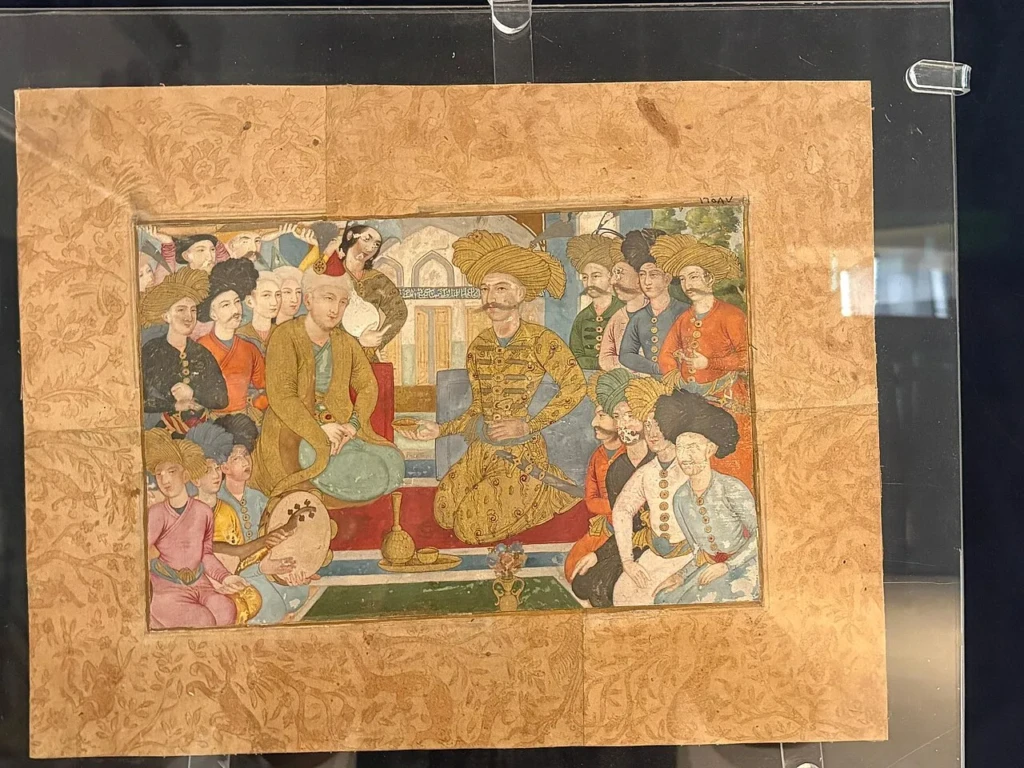
Featured image: Illustrated manuscript page in the Museum of Islamic Art, Cairo. Photo: Hassan Hamdy wahidy / Wikimedia Commons, public domain