20 Top Unmissable Traditional Egyptian Food when in Egypt
Traditional Egyptian food is built on bread, beans, rice and vegetables, with meat saved for family meals and feast days. The dishes to try first are koshari, ful medames, ta’ameya, molokhia and mahshi, followed by sweets such as om ali and basbousa. Much of it is cheap street food, and a good share of it happens to be vegetarian.
Below are 20 Egyptian dishes and drinks worth looking for, grouped by when Egyptians eat them, with notes on where to find them and what to ask if you avoid meat. After the dishes, you will find regional specialties, what to expect at breakfast, on a Nile cruise and during Ramadan, and practical food safety advice for your trip.
Egyptian Food Quick-Reference Table
Use this table as a cheat sheet when you read a menu or walk past a food stall. Each dish is explained in more detail further down.
| Dish | What it is | Where to try it | Vegetarian? |
|---|---|---|---|
| Koshari | Rice, lentils, pasta and chickpeas with tomato sauce and fried onions | Koshari shops, such as Abou Tarek in downtown Cairo | Yes, usually vegan |
| Ful medames | Slow-cooked fava beans | Breakfast carts and ful shops everywhere | Yes |
| Ta’ameya | Fava bean falafel | Breakfast carts and sandwich shops | Yes |
| Besara | Fava bean and herb purée | Traditional, home-style restaurants | Yes |
| Feteer meshaltet | Layered, flaky pastry | Feteer shops with an oven at the front | Plain or cheese versions are |
| Eish shamsi | Thick sun-risen sourdough bread | Upper Egypt | Yes |
| Hawawshi | Spiced minced meat baked inside bread | Street shops, especially late at night in Cairo | No |
| Kebda Iskandarani | Fried beef liver with garlic and peppers | Street stalls in Alexandria and nationwide | No |
| Molokhia | Jute leaf stew | Home-style restaurants; with shrimp or fish on the coast | Ask: often made with meat stock |
| Mahshi | Stuffed vegetables and vine leaves | Home-style restaurants | Ask: some contain meat or stock |
| Fatta | Bread, rice, garlic sauce and boiled meat | Egyptian restaurants, especially around Eid al-Adha | No |
| Hamam mahshi | Stuffed pigeon | Specialist restaurants | No |
| Kofta and kebab | Charcoal-grilled meat | Grill houses | No |
| Sayadeya | Fish with spiced brown rice | Alexandria and the Suez Canal towns | No (pescatarian) |
| Shorbet ads | Red lentil soup | Restaurants in winter and at Ramadan iftar | Usually |
| Om ali, basbousa, konafa, roz bel laban | Desserts | Pastry and dessert shops | Yes, but contain dairy |
| Qatayef | Small filled pancakes | Pastry shops, during Ramadan only | Yes, but fillings may contain dairy |
| Karkadeh | Hibiscus drink, hot or cold | Cafés everywhere; Aswan is famous for it | Yes |
What Is a Typical Egyptian Breakfast?
A standard Egyptian breakfast is ful medames and ta’ameya with flatbread, plus salad, pickles, cheese and a glass of sweet black tea. It is cheap, filling and eaten everywhere, from street carts to family tables. The individual dishes are described in the next section; here is how they come together on the table.
The bread
Eish baladi, a thick, hearty pita, comes with almost every meal. Bread is often used to scoop ful and dips, though cutlery is standard in restaurants and hotels. In Upper Egypt, many families eat eish shamsi instead, a thick sourdough whose name, “sun bread,” is thought to come from letting the dough rise in the sun.
Eggs and cheese
Eggs appear as shakshouka, cooked in a tomato and vegetable sauce, or as eggah, a baked omelet with parsley. The most common cheese is domiati, a soft white cheese. You may also see areesh, a mild fresh cheese, and rumi, a hard, salty aged cheese. Mish is a strong fermented cheese with a long rural history; it is an acquired taste.
Tea
Tea is Egypt’s national drink and arrives black, in a glass, usually with plenty of sugar. In Upper Egypt, Sa’idi tea is boiled until very strong and sweetened heavily. Ask for “shai bi-laban” if you want it with milk, or with mint, “shai bi-na’na’.”
Where to have it
Ful and ta’ameya carts work from early morning. A ful shop with a busy counter is a good first stop on your first day, since fast turnover means the food is freshly made.
Breakfast and Street Food
1. Koshari
Often called Egypt’s national dish, koshari layers rice, brown lentils and short macaroni, adds chickpeas, then finishes with spiced tomato sauce, crisp fried onions and a sharp garlic and vinegar dressing called da’ah. Chili sauce comes on the side. It became a Cairo street staple in the 19th and 20th centuries and is still the cheapest filling meal in the city. Abou Tarek, on Champollion Street in downtown Cairo, started as a cart in 1963 and is the best-known koshari shop.
2. Ful Medames
Fava beans cooked slowly until soft, then mashed lightly with oil, cumin, lemon and salt. Ful is Egypt’s everyday breakfast, sold from carts in the morning and eaten with flatbread used as a spoon. Toppings vary: tahini, chopped tomato, chili oil, boiled egg or a spoon of butter.
3. Ta’ameya
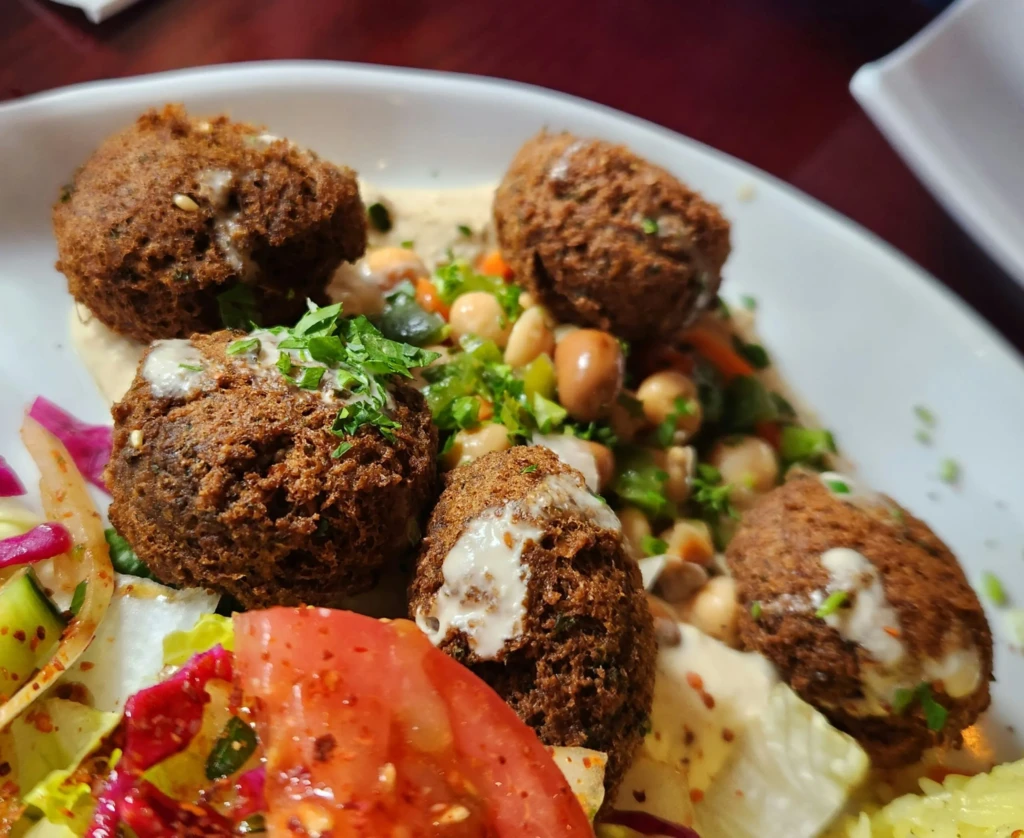
Egypt’s version of falafel is made from fava beans rather than chickpeas, which gives it a green center and a lighter texture. It is stuffed into baladi bread with tahini, salad and pickles. Ful and ta’ameya together make the standard Egyptian breakfast sandwich pair.
4. Besara
A thick green purée of dried fava beans cooked with herbs such as dill, parsley, coriander or molokhia leaves, topped with fried onions. It is home food more than restaurant food, so it is worth asking for at traditional places.
5. Feteer Meshaltet
Dough is stretched very thin, brushed with samna (clarified butter), folded many times and baked, giving a pastry with dozens of flaky layers. It is eaten plain with honey or molasses, or filled with cheese, minced meat or sweet fillings. Look for a feteer shop with a wood or gas oven at the front.
6. Hawawshi
Spiced minced meat with onion and chili, sealed inside a round of baladi bread and baked until the bread is crisp and soaked with the meat juices. It is a popular late-night snack in Cairo.
7. Kebda Iskandarani
Alexandria-style liver: thin strips of beef liver fried quickly with garlic, green peppers, chili and cumin, then served in bread with a squeeze of lemon. It is sold from street stalls and small shops across the country, not only in Alexandria.
Home Cooking and Main Dishes
8. Molokhia
Jute mallow leaves chopped very finely and simmered in stock until they turn into a silky green soup. It is finished with ta’leya, garlic and ground coriander fried in butter or oil. Molokhia is served with rice or bread alongside chicken or rabbit inland, and with seafood in coastal towns. The texture is slippery, which surprises some visitors; try it before deciding.
9. Mahshi
Vegetables such as peppers, zucchini, eggplant, cabbage leaves and vine leaves are stuffed with rice mixed with tomato, herbs and spices, then cooked in broth. Families often make large trays of mixed mahshi for weekend meals.
10. Fatta
A festive dish closely tied to Eid al-Adha: toasted bread pieces and rice layered in a tray, soaked with meat broth, covered with a garlic, vinegar and tomato sauce and topped with boiled lamb or beef. It is rich and heavy, so share a portion.
11. Hamam Mahshi
Squab (young pigeon) stuffed with rice or freekeh, green wheat, then boiled and roasted or grilled until the skin crisps. Pigeons are raised in tall pigeon towers in the countryside, and this is a dish Egyptians order at specialist restaurants or for celebrations.
12. Sayadeya
A fisherman’s dish from the coast: white fish cooked with rice that has been browned with caramelized onions and spices, giving it a deep brown color. Alexandria and the Suez Canal towns are the places to order it.
13. Kofta and Kebab
Kofta is spiced minced meat shaped onto skewers; kebab is chunks of lamb or beef. Both are grilled over charcoal and served by weight with bread, tahini, salad and pickles. Grill houses are the usual place for a family dinner out.
14. Shorbet Ads
Red lentil soup with onion, carrot and cumin, served with a squeeze of lemon and crisp bread. It is a winter staple and a common opener at Ramadan iftar.
15. Salads and Dips
Every table has small plates: salata baladi (chopped tomato, cucumber, onion and parsley with lemon), tahini, baba ghanoug of smoky eggplant, and torshi, pickled vegetables. Order a few with bread and you have a light vegetarian meal.
Egyptian Desserts
16. Om Ali
Egypt’s bread pudding: pieces of puff pastry or flaky bread baked in sweetened milk with nuts, raisins and coconut, served hot. The name means “Ali’s mother,” and many stories compete to explain it.
17. Basbousa
A dense semolina cake baked, then soaked in sugar syrup and often topped with almonds or hazelnuts. Versions are found across the Middle East and the Balkans, and it is sold by the slice in every pastry shop.
18. Konafa
Fine pastry threads baked with butter around a filling of cream, nuts or cheese, then soaked in syrup. It is especially popular during Ramadan, when pastry shops make it in huge round trays.
19. Roz bel Laban
Rice pudding cooked in milk and sugar, often served cold and sometimes scented with vanilla or topped with nuts. Its smoother relative, mahalabiya, is thickened with ground rice or cornstarch and flavored with rose or orange-blossom water.
Drinks
20. Karkadeh, Tea and Fresh Juices
Karkadeh is a deep red hibiscus drink served cold in summer and hot in winter, and Aswan is famous for it. Tea is drunk black and sweet at all hours, often with fresh mint. Juice stalls press sugarcane in front of you, and in winter sahlab, a warm, thick milk drink topped with nuts, appears in cafes.
Egyptian Food by Region
Most of the dishes above are eaten all over the country. Some regions, though, have their own staples, and it is worth ordering them where they are made.
Alexandria and the Mediterranean coast
Alexandria, Port Said and Suez are seafood towns. In Alexandria, the usual way to eat fish is to choose it raw from the display, have it weighed, and ask for it grilled or fried. Two local twists on Egypt’s favorite green stew are worth trying: Alexandria is known for molokhia with shrimp, and Port Said for molokhia cooked with fish. Sayadeya, rice browned with onions and served with fish, is the classic coastal plate. Look out too for sobet, a cold cuttlefish salad.
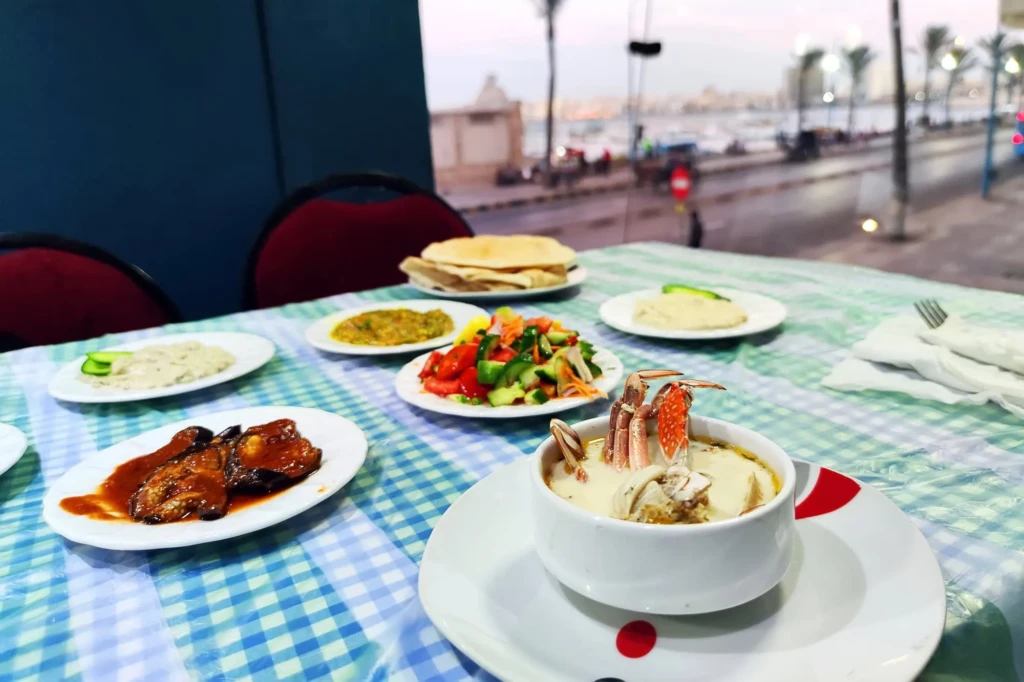
Alexandria also gave its name to kebda Iskandarani, the garlicky fried liver sold in bread. Our Alexandria travel guide covers the city’s sights between meals.
Upper Egypt: Luxor and the Nile Valley
South of Cairo, food becomes simpler and more rural. Eish shamsi replaces the flat baladi bread in many homes and is still often baked in clay ovens. Sa’idi tea, boiled long and very sweet, is the drink of the region. Millet and sorghum have long been grown in the region alongside wheat.
Nubian food in Aswan
Nubian cooking uses barley, sorghum and wheat. One staple is kabed, a bread made from corn flour and eaten with milk, honey, vegetables or meat. Nolo madid, a wheat porridge with ghee traditionally served before weddings, is now rare. Nubian food is mostly home cooking rather than restaurant fare, so a visit to a Nubian village is the most likely place to taste it. Our Aswan travel guide explains how to plan time in the Nubian communities.
Where to Try Egyptian Food
- Street carts and small shops: Ful and ta’ameya in the morning, koshari at lunch, hawawshi and liver in the evening. Busy places with a fast turnover are the safest choice.
- Old Cairo: The streets around Khan el-Khalili have tea houses and simple restaurants; our Old Cairo and Citadel tour passes through the area. The Cairo travel guide has more on the city.
- Alexandria: Go for fish and seafood, chosen raw and cooked to order, plus sayadeya. A day trip to Alexandria leaves time for a seafood lunch.
- Aswan and Luxor: Aswan’s Nubian community has its own cooking, and a Nubian village visit is a chance to see local homes. Luxor is covered in our Luxor guide.
- On a Nile cruise: Ships serve buffets that usually include Egyptian dishes alongside international food; compare ships on our Nile cruises page.
What Do You Eat on a Nile Cruise?
On most Nile cruise ships, meals are served on board, often as buffets, with Egyptian dishes next to international ones. Menus differ from ship to ship, so check what your package includes before you book.
- Tell the ship early. Share vegetarian, vegan, halal, gluten-free or allergy needs when you book, not on the first evening.
- Use the buffet like a local. Hot, freshly cooked dishes are the safest picks; go easier on raw salads in the first days.
- Drink bottled water. Use it for brushing your teeth as well.
- Ask what is Egyptian. Staff can point out the local dishes, which makes a cruise an easy place to taste them before you order them in town.
Our Luxor to Aswan cruise guide walks through a typical 3- or 4-night itinerary day by day.
Eating in Egypt During Ramadan
During Ramadan, most Egyptian Muslims fast from dawn to sunset, then break the fast at iftar, usually a large family meal. A second, lighter meal called suhoor is eaten before dawn. The dates of Ramadan follow the Islamic lunar calendar and move about 11 days earlier each year, so check them when you plan your trip.
What changes for travelers
- Daytime: Visitors are not expected to fast. Ask your hotel or guide where to eat during the day, and avoid eating, drinking or smoking openly in the street as a courtesy.
- Sunset: Many people head home to break the fast with family, so plan around sunset, and expect evenings to be the social heart of the day.
- Sightseeing hours: Some sites shorten their hours. The Egyptian Museum in Cairo, for example, lists Ramadan hours of 9:00 am to 4:00 pm on egymonuments.gov.eg.
Ramadan foods and drinks
Ramadan is the best time of year for sweets. Qatayef, small pancakes folded around cream or nuts, appear only during the holy month. Konafa is made in huge trays, and lentil soup is a common opener at iftar. Seasonal drinks include kharoub (carob), erq sous (licorice), qamar el-din made from dried apricot sheets, and sobia, a sweet coconut milk drink.
Dietary Notes for Visitors
Vegetarian and Vegan Travelers
Egypt is easier than many destinations. Coptic Orthodox Christians keep long fasting periods without meat, dairy or eggs, so plant-based cooking is part of everyday life, and many restaurants mark fasting dishes as “siyami.” Koshari, ful, ta’ameya, besara, lentil soup and the salads are normally vegan. Molokhia, mahshi and okra stew are often cooked with meat stock, so ask for them “bidoon lahma” (without meat) and check.
Vegans should also watch for samna, the clarified butter used in feteer and many pastries, and for dairy in desserts such as om ali and roz bel laban.
Halal Food
Egypt is a majority-Muslim country, so most meat is halal and pork is rare. Muslim travelers can usually eat freely at local restaurants and street stalls. In international hotels and on cruise ships, ask staff if you are unsure about a particular dish.
Other Things to Know
- Gluten-free eating is hard because bread comes with everything; rice dishes and grills are the easiest options.
- Nuts appear in many desserts, including basbousa, om ali and konafa. If you have a nut allergy, carry a written note in Arabic.
- Avoid feseekh, the fermented salted mullet eaten at the spring festival of Sham el-Nessim, unless it comes from a trusted source; Egyptian health authorities issue warnings about badly prepared fish every year.
Food and Water Safety Tips for Egypt
The main food risks for visitors are untreated water, raw produce and undercooked food, not Egyptian cooking itself. The CDC Yellow Book chapter on Egypt gives clear guidance, summarized here as it read in October 2026:
- Tap water: The CDC says tap water outside large international tourist hotels is unsafe to drink. Even in those hotels, bottled water is usually provided for drinking. Drink bottled water, and remember that ice is only as safe as the water it was made from.
- Cooked food: Food that is cooked and served hot is generally safe in tourist settings. Avoid raw or undercooked meat and shellfish.
- Salads and fruit: The CDC describes uncooked vegetables and salads as of questionable safety. Be careful with raw salads in the first days, and choose fruit you peel yourself.
- Travelers’ diarrhea: The CDC rates the risk as high. Pack oral rehydration salts and ask your doctor before the trip about medication to carry.
- Vaccines: The CDC’s Egypt travel page recommends hepatitis A and typhoid vaccines for most travelers. See a travel doctor at least a month before you leave.
- Hands: Wash or sanitize your hands before eating, especially after sightseeing.
- Fresh water: The CDC also advises avoiding wading or swimming in fresh water, including the Nile. Chlorinated pools and the Red Sea and Mediterranean are not a risk for the parasite it warns about.
Our Egypt travel tips cover health basics and packing.
Frequently Asked Questions
What is the national dish of Egypt?
Koshari is usually named as the national dish, though ful medames has an equally strong claim as the food most Egyptians eat every day.
What should I eat first in Egypt?
Start with a ful and ta’ameya breakfast and a bowl of koshari. Both are cheap, everywhere and very Egyptian.
Is Egyptian food spicy?
Not usually. It is seasoned with cumin, coriander and garlic, and chili sauce is served on the side so you can add heat yourself.
Is street food safe for tourists?
Freshly cooked, hot food from busy stalls is generally a good bet. Be more careful with raw salads, unpeeled fruit and tap water.
Can vegetarians eat well in Egypt?
Yes. Many staple dishes are vegetarian or vegan, and Coptic fasting traditions mean plant-based food is widely understood.
Can you drink tap water in Egypt?
The CDC advises against drinking tap water outside large international hotels, and even there bottled water is usually provided. Stick to bottled water, including for brushing your teeth.
Food is one of the easiest ways into Egyptian daily life. If you want time for markets, local restaurants and a Nubian village in your itinerary, we can build it into one of our tailor-made tours.