Best places to visit in Egypt!
The best places to visit in Egypt are the Giza Pyramids and the Grand Egyptian Museum near Cairo, the temples and royal tombs of Luxor, Aswan and the island temple of Philae, and the rock-cut temples of Abu Simbel. Add Saqqara, Alexandria, the river temples of Edfu and Kom Ombo, and a few days on the Red Sea, and you have covered the country’s essential sights.
This guide explains what each place is for, how many days it needs, and how to link them into one sensible route.
Egypt’s Top Sights at a Glance
| Place | Why go | Days needed | Best for |
|---|---|---|---|
| Giza and Cairo | The pyramids, the Sphinx, the Grand Egyptian Museum, medieval and Coptic Cairo | 2 to 3 | Every first-time visitor |
| Saqqara and Dahshur | The Step Pyramid of Djoser, decorated Old Kingdom tombs, the Bent and Red Pyramids | Half to 1 | Travelers who want more than Giza |
| Alexandria | Greco-Roman catacombs, Qaitbay Citadel, the Mediterranean seafront | 1 | Repeat visitors, history readers |
| Luxor East Bank | Karnak and Luxor Temple | 1 | Everyone |
| Luxor West Bank | Valley of the Kings, Temple of Hatshepsut, Medinet Habu | 1 to 2 | Tomb art and archaeology |
| Edfu and Kom Ombo | Two Ptolemaic temples on the river between Luxor and Aswan | Visited during a cruise | Nile cruise passengers |
| Aswan and Philae | The temple of Isis on its island, Nubian villages, felucca sailing | 1 to 2 | A slower pace |
| Abu Simbel | The two rock-cut temples of Ramesses II and Nefertari | 1 (day trip from Aswan) | Anyone who can spare the day |
| Red Sea coast | Beaches, snorkeling and diving | 3 to 5 | Ending a trip with rest |
| Western Desert (Siwa, White Desert) | Oasis life and chalk rock formations | 3 or more | Travelers with extra time |
Giza and Cairo
The Giza Pyramids and the Sphinx
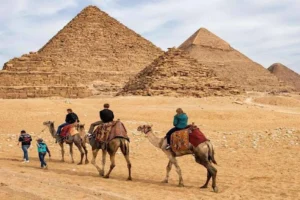
The three pyramids of Khufu, Khafre and Menkaure, built in the Fourth Dynasty around 4,500 years ago, are the reason most people come to Egypt. The Great Pyramid is the last of the Seven Wonders of the Ancient World still standing. Plan at least half a day so you can see the plateau viewpoint, walk around the Sphinx and its Valley Temple, and decide whether to go inside a pyramid. Our Giza Pyramids guide and Great Sphinx guide cover the site in detail.
The Grand Egyptian Museum
The Grand Egyptian Museum opened officially on 1 November 2025, about 2 km from the pyramids. It displays the full Tutankhamun collection together for the first time, along with the colossal statue of Ramesses II in the atrium and one of Khufu’s ancient wooden boats. Give it at least half a day, and pair it with Giza if you have only one day in Cairo. See our Grand Egyptian Museum guide.
Islamic and Coptic Cairo
The older districts show Cairo as a living city rather than an archaeological site. The Citadel of Saladin and the Mosque of Muhammad Ali look over the skyline, Khan el-Khalili is the historic market quarter, and Coptic Cairo holds old churches and the Ben Ezra Synagogue within a few streets. A private Old Cairo and Citadel tour covers them in a day. The Cairo travel guide has neighborhoods, hotels and timing.
Saqqara and Dahshur
Saqqara, south of Giza, was the burial ground of ancient Memphis for well over two thousand years. Its centerpiece, the Step Pyramid of Djoser, is the earliest large stone monument in Egypt and the design that led to the true pyramids at Giza. The private tombs of Old Kingdom officials here have some of the finest painted reliefs of daily life you will see anywhere. Nearby Dahshur has the Bent Pyramid and the Red Pyramid, often with very few visitors. Read our Saqqara guide before you go.
Alexandria
Founded by Alexander the Great, Alexandria was the capital of Ptolemaic Egypt and the home of the famous Lighthouse and Library. Little of that ancient city survives above ground, but the Catacombs of Kom el-Shoqafa mix Egyptian and Roman styles in a way you will not see elsewhere, Pompey’s Pillar stands on the old Serapeum hill, and the 15th-century Qaitbay Citadel sits on the site of the Lighthouse. The modern Bibliotheca Alexandrina, opened in 2002, is worth a stop for its architecture. Most visitors come on a day trip from Cairo, about three hours each way by road; see the Alexandria travel guide.
Luxor
Luxor stands on the site of ancient Thebes, the religious capital of the New Kingdom. It holds more major monuments than any other city in Egypt, and it is where most Nile cruises begin or end. The Luxor travel guide covers hotels and getting around.
The East Bank: Karnak and Luxor Temple
Karnak is a vast temple complex built and rebuilt over some two thousand years; its Great Hypostyle Hall, with 134 columns, is the single most impressive room in Egyptian architecture. Luxor Temple, in the middle of town, was linked to Karnak by an avenue of sphinxes and is at its best in the late afternoon and after dark.
The West Bank: Tombs and Mortuary Temples
Across the river, the Valley of the Kings holds the painted tombs of New Kingdom pharaohs. The terraced Temple of Hatshepsut sits under the cliffs of Deir el-Bahari, and Medinet Habu, the temple of Ramesses III, keeps some of its original paint. One full day covers the highlights; two days lets you add the Valley of the Queens and the workers’ village of Deir el-Medina.
Dendera and Abydos
North of Luxor, the Temple of Hathor at Dendera has a well-preserved painted ceiling, and the Temple of Seti I at Abydos has some of the most refined reliefs in Egypt. They make a long but rewarding day trip from Luxor.
Edfu and Kom Ombo
These two temples sit on the Nile between Luxor and Aswan, and cruise ships stop at both. The Temple of Horus at Edfu was built under the Ptolemies and is one of the most complete temples in Egypt, roof and all. Kom Ombo is unusual because it is a double temple, dedicated to the crocodile god Sobek and to Horus the Elder, and a small museum beside it displays mummified crocodiles. Seeing both by road from Luxor or Aswan is possible, but a cruise is the easier way.
Aswan and Philae
Aswan is the calmest of Egypt’s tourist cities, with granite islands, sailing boats and a strong Nubian identity. The Temple of Isis at Philae was moved stone by stone to Agilkia Island when the dams raised the river, and you reach it by small boat. Other good reasons to stay a night or two: a felucca sail at sunset, the Unfinished Obelisk, and a boat trip to a Nubian village. Our Aswan travel guide lists what to see.
Abu Simbel
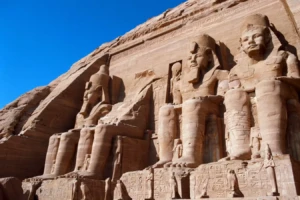
About 280 km south of Aswan on Lake Nasser, the two temples of Abu Simbel were cut into the rock for Ramesses II and his queen Nefertari. In the 1960s they were sawn into blocks and rebuilt on higher ground to save them from the rising lake. The drive takes about three to three and a half hours each way, so most visitors leave Aswan before dawn; the flight takes about 45 minutes. Twice a year, around 22 February and 22 October, the rising sun reaches the statues in the inner sanctuary. More in our Abu Simbel guide.
The Red Sea Coast
After the temples, many travelers end with a few days on the Red Sea. Hurghada and El Gouna are a few hours’ drive from Luxor, Sharm El Sheikh and Dahab sit on the Sinai coast with famous reefs, and Marsa Alam is quieter and better for divers who want fewer boats. The sea stays warm enough to swim for much of the year. Our Red Sea travel guide compares the resorts.
The Western Desert: Siwa and the White Desert
For travelers with extra time, the Western Desert is a different Egypt. Siwa Oasis, around 560 km from Cairo and close to the Libyan border, has salt lakes, natural springs, the ruined mud-brick fortress town of Shali, and the remains of the oracle temple of Amun that Alexander the Great consulted. Its people speak Siwi, a Berber language. The White Desert, near Farafra, is known for wind-carved chalk formations.
Two points before you plan it. The UK Foreign Office advises against all but essential travel in most of the area west of the Nile Valley; Siwa town, the Marsa Matruh to Siwa road, the White and Black Deserts and the main oasis towns are listed as exceptions, but the road between Bahariya and Siwa is not, so check current advice from your own government. And these trips need several extra days. We do not run Western Desert trips, so plan them separately.
How to Combine Egypt’s Best Places
Egypt’s main sights lie along the Nile, so the classic route runs north to south: start in Cairo, fly to Luxor or Aswan, and connect the two by river. See our guide to the best season to visit Egypt before you choose dates.
- 7 to 8 days: Two or three nights in Cairo for Giza, the Grand Egyptian Museum and Saqqara, then a three- or four-night Nile cruise between Luxor and Aswan, which takes in Edfu and Kom Ombo. Add Abu Simbel from Aswan as an early day trip.
- 10 to 11 days: The same route with an extra day in Luxor for the West Bank and Dendera or Abydos, and a day trip to Alexandria from Cairo.
- 12 to 14 days: Add three or four nights on the Red Sea at the end. Hurghada pairs easily with Luxor.
A Nile cruise is the simplest way to see the river temples without repacking; our Nile cruises page lists the ships, and the Luxor to Aswan cruise guide explains the route. If you prefer a ready-made plan, our Egypt tour packages combine Cairo with a cruise, with private guided sightseeing throughout.
FAQ
What is the number one place to visit in Egypt?
The Giza Pyramids. They are the oldest and most famous sight in the country, and with the Grand Egyptian Museum next door they are the obvious first stop.
How many days do I need to see Egypt’s main sights?
Eight to ten days covers Cairo, Giza, Luxor, Aswan and Abu Simbel at a comfortable pace. Add three or four days for the Red Sea or Alexandria.
Is Luxor or Aswan better?
Luxor has more monuments; Aswan is quieter and more scenic. Most visitors see both, linked by a Nile cruise.
Is Abu Simbel worth the trip from Aswan?
Yes, if you can spare a full day. The road trip is long, but the temples are among the most striking in Egypt. Flying shortens the day considerably.
Can I visit the Pyramids and the Grand Egyptian Museum on the same day?
Yes. They are about 2 km apart, so a morning at Giza and an afternoon at the museum works well.
Is Siwa Oasis safe to visit?
The UK Foreign Office lists Siwa town and the Marsa Matruh road as exceptions to its Western Desert warning, but advice changes, so check your government’s latest guidance before booking.
Every traveler weighs these places differently, so the best route is the one built around your interests and dates. Tell us what you want to see and we will plan it with you through our tailor-made tours.