Ben Ezra Synagogue and the Cairo Geniza: Old Cairo Guide
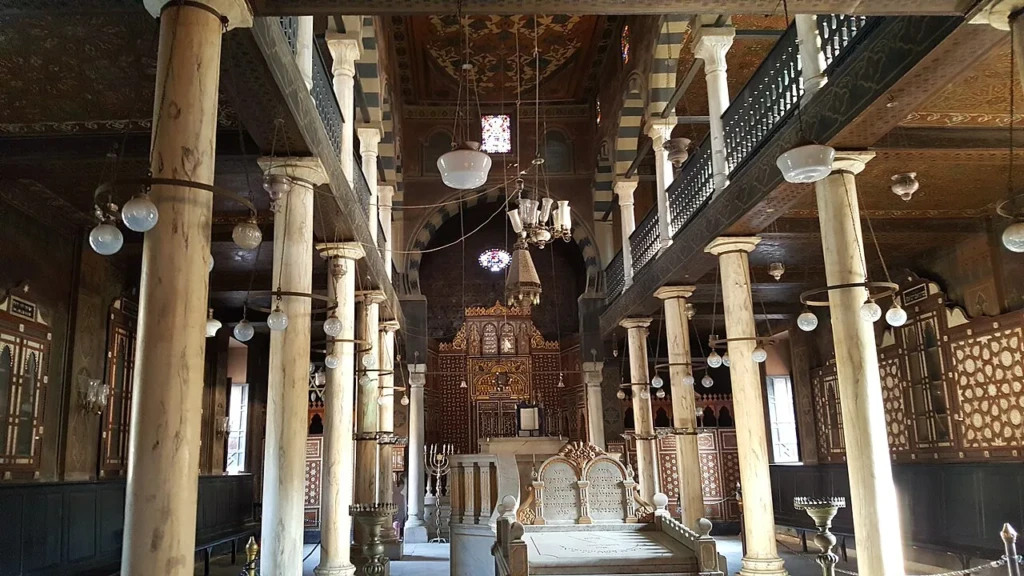
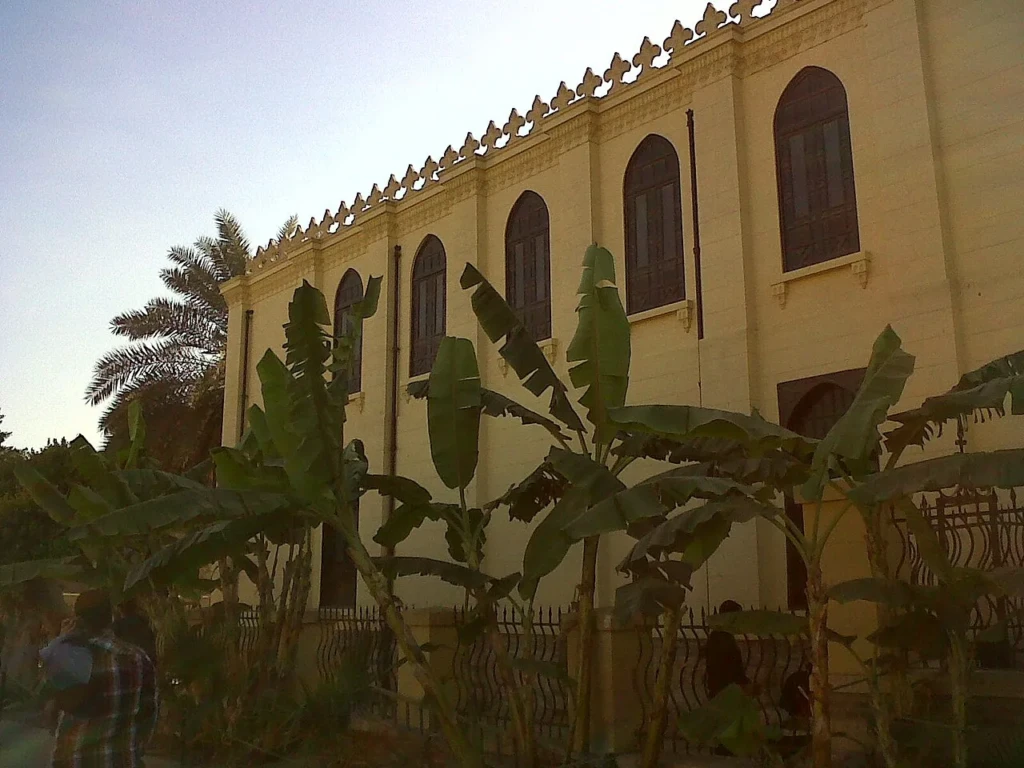
Step inside the Ben Ezra Synagogue in Old Cairo and you are standing where the Cairo Geniza was kept, the hoard of roughly 400,000 manuscript fragments that changed how historians see the medieval Mediterranean. Egypt’s Ministry of Tourism and Antiquities calls it the oldest synagogue in Egypt. It no longer holds services, but it is open to visitors as a heritage site in the Fustat district.
This guide covers the synagogue’s long history, the story of the Geniza and where its documents went, what to look at inside, official opening hours, and how to pair a visit with the rest of Old Cairo.
Ben Ezra Synagogue at a Glance
| Fact | Details |
|---|---|
| Location | Al-Fustat (Old Cairo), Cairo, close to the old churches of the Coptic quarter |
| Founded | Unknown; evidence from the Geniza points to before 882 CE |
| Current building | Rebuilt 1889–1892, with later remodeling and a major restoration completed in 2023 |
| Other names | Geniza Synagogue; historically the Synagogue of the Levantines or of the Jerusalemites |
| Status | No longer an active congregation; open as a heritage site |
| Opening hours | 9:00 am to 4:00 pm daily, as listed on the official Ministry of Tourism and Antiquities site in October 2026 |
| Ticket | No foreigner ticket price is listed on the official site |
| Time needed | Our planning suggestion: 30 to 45 minutes for the synagogue; half a day for Old Cairo as a whole |
Why the Ben Ezra Synagogue Matters
Many old synagogues have beautiful interiors. Ben Ezra’s real fame comes from a room most visitors never think about: its geniza. Jewish custom forbids throwing away writing that may contain the name of God. Such papers were stored in a geniza and, in most communities, later buried. At Ben Ezra, the papers were simply kept, and the pile grew for about 850 years.
Because people threw in everything with Hebrew script on it, the Geniza preserved far more than religious texts. It held shopping lists, marriage contracts, court records, business letters, poems, school exercises and medical notes. Together they give a street-level view of Jewish, Muslim and Christian life in Egypt and across the Mediterranean, especially between the 10th and 13th centuries.
A building with several lives
The synagogue you see today is not the original. Historians count at least three earlier phases before the present building:
- Before 882 CE: Documents from the Geniza suggest the congregation was already established by then, and it may be older than the Arab conquest of Egypt. A long-repeated story links its origin to a church sold to Jews in 882, but modern scholars think that sale went to a rival congregation.
- Around 1012: The Fatimid caliph al-Hakim ordered churches and synagogues destroyed, and the first building was pulled down.
- 1025–1040: Under the next caliph, the synagogue was rebuilt. This second building had the unusually large, two-story geniza chamber that later became famous.
- 1889–1892: The synagogue was rebuilt again in the form you visit today. During that work, masses of papers were left lying in the open, which helped bring the Geniza to outside attention.
- 2023: After a long restoration, Egypt’s prime minister inaugurated the renovated synagogue on 31 August 2023. The ceiling was reinforced and the library restored.
Maimonides and Old Cairo
In 1168, the philosopher and physician Moses Maimonides settled in Fustat, a short walk from the synagogue, and lived there until his death in 1204. He became head of Egypt’s Jewish community and worshipped at Ben Ezra. Some Geniza documents are in his own handwriting, and they remain key sources for his life. Note that Cairo also has a separate Maimonides Synagogue in the old Jewish quarter near al-Muizz Street. It is a different building.
Who was Ben Ezra?
The Ministry of Tourism and Antiquities says the synagogue takes its name from Abraham ibn Ezra, the medieval Jewish scholar and philosopher. Over the centuries it also carried other names, including the Synagogue of the Levantines and the Synagogue of the Jerusalemites, after the congregation that used it.
The Cairo Geniza: What Was Found and Where It Is Now
The Cairo Geniza is a collection of some 400,000 manuscript fragments dating from roughly the 6th to the 19th century. Most are in Hebrew, Arabic, Judeo-Arabic or Aramaic, written on paper and vellum, with some on papyrus and cloth. Most came from the synagogue’s geniza chamber, while others were dug up nearby or found in the Basatin cemetery east of Old Cairo.
How the hoard reached the outside world
In the 1890s, the geniza was a windowless room reached only by a ladder up to an opening in the wall. Travelers and collectors had noticed it before, and some papers had already been sold to tourists. In 1896, two Scottish twin sisters, Agnes Lewis and Margaret Gibson, brought fragments back from Egypt and showed them to Solomon Schechter, a lecturer at Cambridge. Schechter recognized what they were. With funding from his colleague Charles Taylor, he traveled to Cairo and removed most of the chamber’s contents to Cambridge. Schechter had not dealt with the papers left in the courtyard during the rebuilding, so the Egyptologist Count Riamo d’Hulst spent almost two months digging through them. By May 1898 he had sent 16 large sacks to Oxford’s Bodleian Library.
Where to see Geniza documents today
The fragments are now spread across libraries in Europe, the USA and the Middle East. The largest single group, the Taylor-Schechter Genizah Collection, is at Cambridge University Library, which holds about 193,000 fragments. The library has put high-resolution images and descriptions of more than 21,000 of them online. Other major holdings include the Jewish Theological Seminary in New York, the Bodleian Library in Oxford and the John Rylands Library in Manchester.
This matters for your visit. The synagogue in Cairo is the place where the documents were kept, not a display of the documents themselves. If the Geniza is your main interest, look at the online collections before you go. The empty space then becomes much more meaningful.
Some of the Geniza’s best-known discoveries
- Parts of the lost original Hebrew text of the Book of Ben Sira (Sirach).
- Two fragments of the Damascus Document, a text later also found among the Dead Sea Scrolls.
- Over 2,500 fragments on medicine, from prescriptions to physicians’ notebooks.
- Bankers’ accounts using double-entry bookkeeping from the 11th century, earlier than known Italian examples.
- Letters of traders whose business reached from Spain and Sicily to Aden and India.
The scholar S. D. Goitein built an index from these papers covering about 35,000 people from the years 950 to 1250. Few medieval places are documented at this level of everyday detail.
What to See Inside the Synagogue
The building is compact, so a visit is short. Move slowly and look up as well as around.
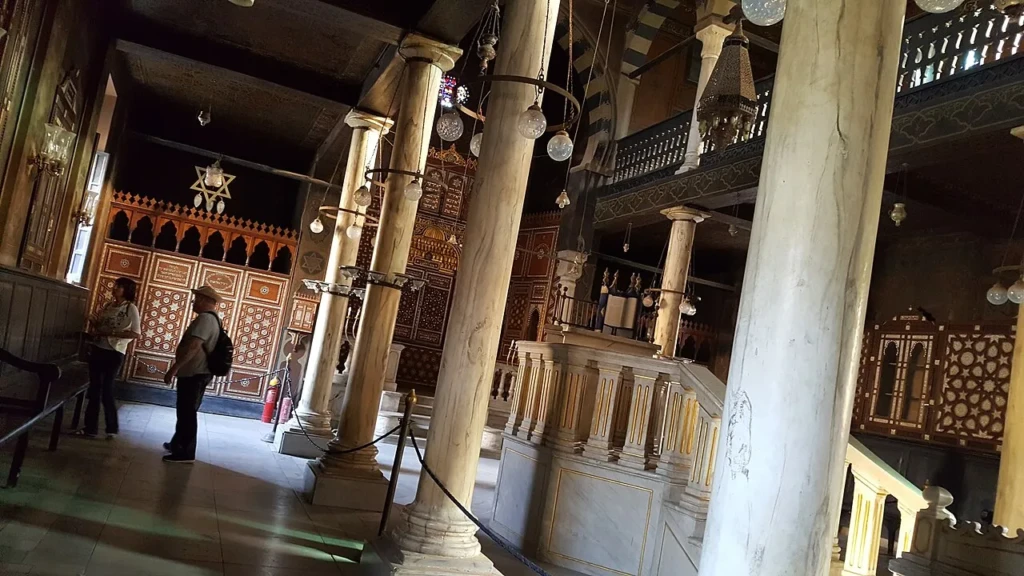
The bimah
In the center of the prayer hall stands the bimah, the raised platform from which prayers were read. Stand beside it first: from here you can take in the whole hall and see how the room was arranged around the reading of the Torah.
The hekhal
The hekhal is the ark that faces the direction of prayer and held the Torah scrolls. The Ministry describes it as decorated in an arabesque style and inlaid with mother-of-pearl, and it carries the Ten Commandments in Hebrew. The mix of Islamic-style ornament with Jewish text is a good example of how local craft traditions shaped every faith’s buildings in Cairo.
The upper gallery and the geniza opening
An upper gallery runs around the hall. In the 1890s, the geniza chamber could be reached only from the galleries. Ask your guide to point out where the chamber sat in relation to the gallery so you can picture how the papers were stored.
The courtyard well
Behind the building, a fenced and grilled well sits in a small courtyard. Local tradition says this is where the infant Moses was found among the reeds. Christian tradition in Old Cairo also links the spot to Mary drawing water during the Holy Family’s stay in Egypt. Treat these as folklore, but they show how many communities have shared this small corner of the city.
A door now in the USA
One piece of the synagogue lives across the Atlantic. A carved wooden Torah ark door attributed to Ben Ezra is jointly owned by the Walters Art Museum in Baltimore and the Yeshiva University Museum in New York. Radiocarbon testing dates its wood to the 11th century. American visitors may want to look for it before or after their trip.
Opening Hours, Tickets and Visitor Rules
The official Ministry of Tourism and Antiquities page lists the Ben Ezra Synagogue as open from 9:00 am to 4:00 pm, seven days a week, as listed on the official Ministry of Tourism and Antiquities site in October 2026; check before you go. The page shows no ticket price for foreign visitors, so we have not listed one. Hours can change for holidays or special events, so confirm on the day.
Practical points:
- Dress: This is a religious building. Cover shoulders and knees as a courtesy. The UK government’s Egypt advice asks visitors to respect local customs when visiting religious areas.
- Security: Egypt has extra security measures at tourist sites, and police may ask to see ID. Expect security checks and carry your passport or a copy.
- Photography: We could not find an official photography policy for the synagogue. Follow any signs and ask the staff before taking pictures.
- Quiet: The hall is small and sound carries. Keep group commentary low.
How to Get There and Best Time to Visit
The synagogue stands in Old Cairo, within Fustat, which the Ministry describes as Egypt’s first Islamic capital, founded by the general Amr ibn al-As after the Arab conquest of 641. Most visitors arrive by private car or taxi and walk the last stretch through the lanes of the old Christian quarter. Travel time depends heavily on Cairo traffic and where you are staying, so your driver or guide will confirm timing.
Go early. Opening time at 9:00 am is usually the calmest moment before tour groups arrive. Because the site closes at 4:00 pm, an afternoon start leaves little time for the rest of Old Cairo. Weekdays tend to suit a quiet visit better than public holidays.
What to Combine With the Ben Ezra Synagogue
Ben Ezra sits within walking distance of some of Cairo’s oldest Christian sites. The Ministry’s Fustat page notes more than seven old churches in the area, as well as the Mosque of Amr ibn al-As. A typical morning links:
- The remains of the Roman fort of Old Cairo, known as the Babylon Fortress.
- The Hanging Church, which takes its name from being built over the ruins of that Roman fort.
- The Church of Saints Sergius and Bacchus (Abu Serga), associated with the Holy Family’s journey through Egypt.
- The Coptic Museum, for Egypt’s early Christian art.
- The Mosque of Amr ibn al-As, the first building of Fustat, known as “the Old Mosque.”
With these, a full Old Cairo visit takes most of a morning. Many travelers then head across town to the Egyptian Museum in Tahrir; see our Egyptian Museum Cairo guide. For the bigger picture of the city, read our Cairo travel guide, and for the pharaonic side, our Giza Pyramids complex guide and Grand Egyptian Museum guide.
If you would like Old Cairo as part of a set itinerary, our Old Cairo & Citadel day tour starts from $100 per person, and the Taste of Egypt – 4 Days (Cairo) package starts from $535 per person. Ask us if you want Ben Ezra confirmed as a stop. You can also browse all our private Cairo day tours.
Visit the Ben Ezra Synagogue With Delta Tours Egypt
We do not sell a fixed tour built around the Ben Ezra Synagogue. We can arrange a private visit on request, with an Egyptologist guide who can explain the Geniza, the Fustat story and the neighboring churches in one connected morning. Tell us your interests through our tailor-made Egypt tours page, and our Cairo office will build the day around them.
Frequently Asked Questions
Is the Ben Ezra Synagogue still used for prayer?
No. Egypt’s Jewish community is now very small, and the synagogue functions as a heritage site rather than an active congregation. It is open to visitors daily.
Can I see the Cairo Geniza documents at the synagogue?
Not in any real quantity. Most fragments were removed in the 1890s and are now in libraries abroad, led by Cambridge University Library. Many can be viewed online through Cambridge’s digital library.
How much is the ticket for the Ben Ezra Synagogue?
The official Ministry site lists opening hours but no ticket price for foreign visitors. Check the current situation on arrival or with your guide.
What are the Ben Ezra Synagogue opening hours?
The Ministry lists 9:00 am to 4:00 pm every day, as of October 2026. Hours can change on holidays, so confirm before you go.
Is the synagogue linked to Moses?
Only by local folklore. Tradition places the finding of the infant Moses at the well behind the building. There is no historical evidence for this, but the story has been told here for centuries.
How long should I spend at the Ben Ezra Synagogue?
Plan on 30 to 45 minutes for the synagogue itself. Add two to three hours if you want to see the nearby churches and the Coptic Museum in the same visit.
Ben Ezra is small, but few buildings anywhere have told historians as much about ordinary medieval life. Pair it with the rest of Old Cairo on one of our private Cairo day tours, or ask us to add it to a tailor-made Egypt itinerary.
Featured image: Interior of the Ben Ezra Synagogue. Photo: Ovedc / Wikimedia Commons, CC BY-SA 4.0