Dahab and the Blue Hole: A Practical Guide
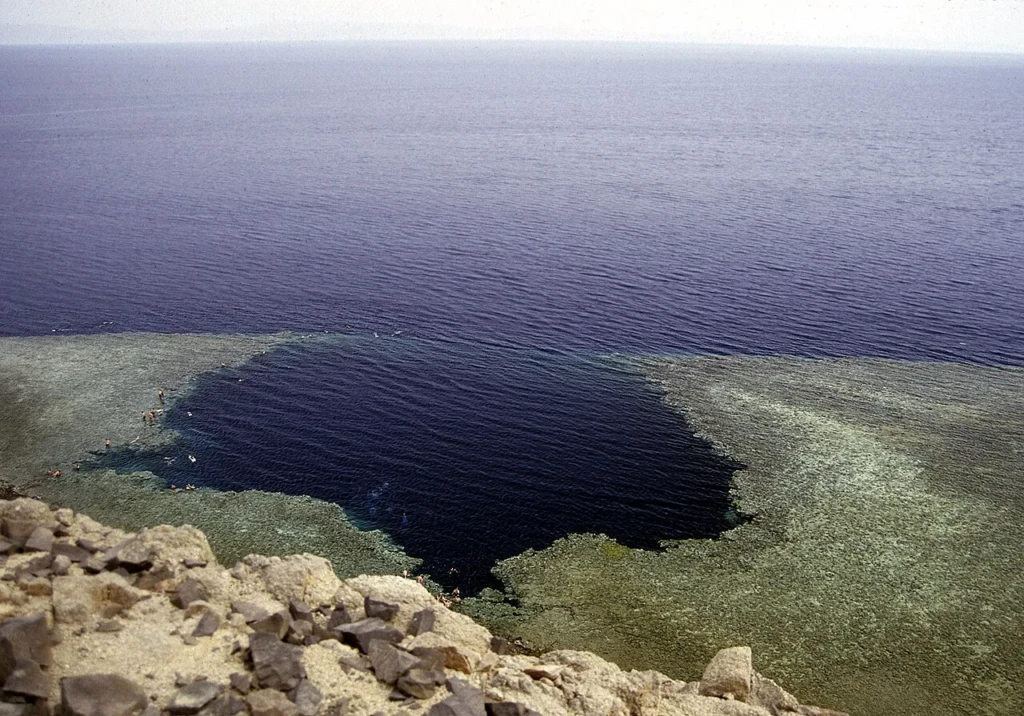
Dahab is a small, relaxed town on the Gulf of Aqaba coast of South Sinai, and the Dahab Blue Hole is its most famous site: a deep sinkhole in the reef a few kilometers north of town. Snorkelers can float over its rim and the shallow reef around it. Recreational divers enjoy the outer reef wall, but the deep tunnel known as the Arch is strictly for trained technical divers.
Below we cover what the Blue Hole actually is, how to see it at a level that suits you, what else Dahab offers, how to reach it from Sharm El Sheikh, and the safety points every visitor should know before getting in the water.
Dahab and the Blue Hole at a Glance
| Fact | Details |
|---|---|
| Location | Southeast coast of the Sinai Peninsula, on the Gulf of Aqaba, South Sinai Governorate |
| Distance | Dahab is about 80 km north-east of Sharm El Sheikh; the Blue Hole is a few kilometers north of Dahab (per Wikipedia) |
| What it is | A marine sinkhole with a maximum depth of just over 100 m, ringed by shallow reef |
| Entry | From the shore |
| Suits | Snorkelers, recreational divers (outer reef), freedivers, technical divers (the Arch) |
| Time needed | Our planning suggestion: half a day at the Blue Hole; two or more nights in Dahab |
| Nearby protected area | Ras Abu Galum protectorate, declared in 1992 |
What Is the Blue Hole?
A blue hole is a vertical cave or sinkhole in a reef that looks deep blue from above. Dahab’s example sits right next to the shore. According to Wikipedia, the hole is just over 100 meters deep at its deepest point.
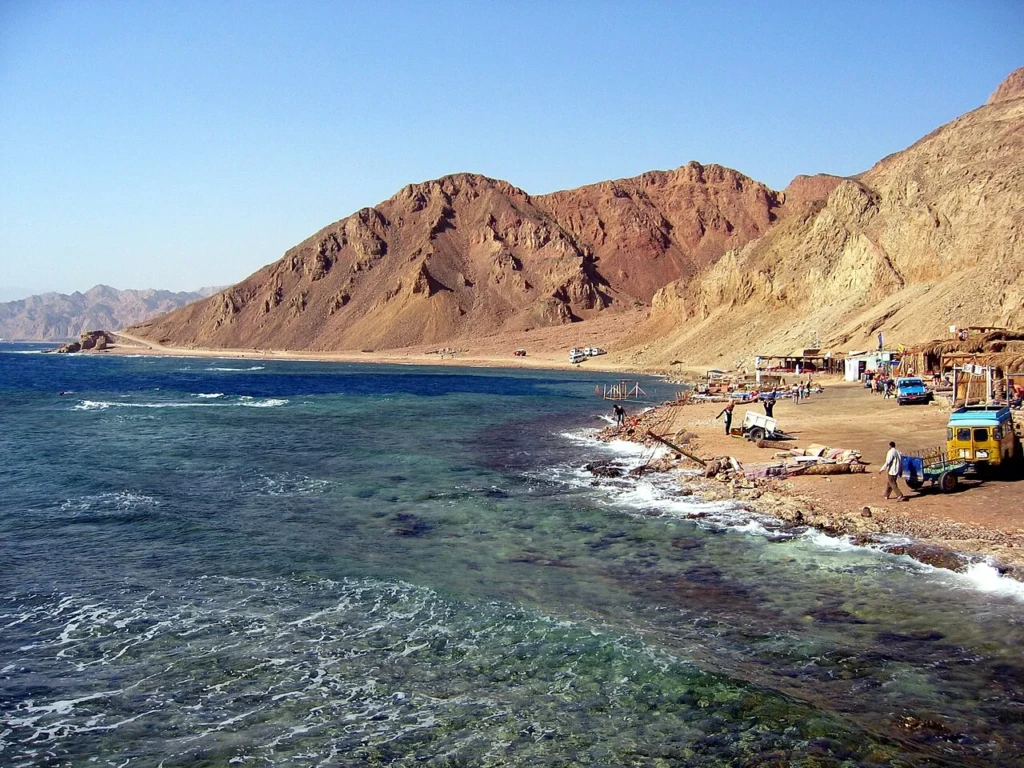
Two features connect it to the open sea. The first is “the Saddle,” a shallow gap in the reef about 6 meters deep. The second is “the Arch,” a tunnel about 26 meters long whose ceiling sits at roughly 55 meters. On the seaward side, the floor below the Arch falls away to around 120 meters, and the slope beyond drops past 1,000 meters.
The water inside the hole is usually still. That calm, plus great depth directly from the shore, is why freedivers train here. It also means snorkelers and divers can often get in on windy days when other sites are too rough.
Why the Blue Hole has a dangerous reputation
The Blue Hole itself is not unusually dangerous. The problem is the Arch, which tempts people to go far deeper than their training allows. Most recreational dive training stops at around 40 meters, while the Arch starts at about 55. At that depth, nitrogen narcosis clouds judgment, air runs out far faster, and the clear water makes the tunnel look shorter than it is.
No official death toll exists. Tarek Omar, a Dahab technical diver who has recovered bodies from the site, estimated in 2012 that more than 130 divers had died there in the previous 15 years, as reported by Der Spiegel and cited on Wikipedia. Memorial plaques left at the site by families and friends are a sober reminder to dive within your limits.
How to See the Blue Hole at Your Level
Snorkeling
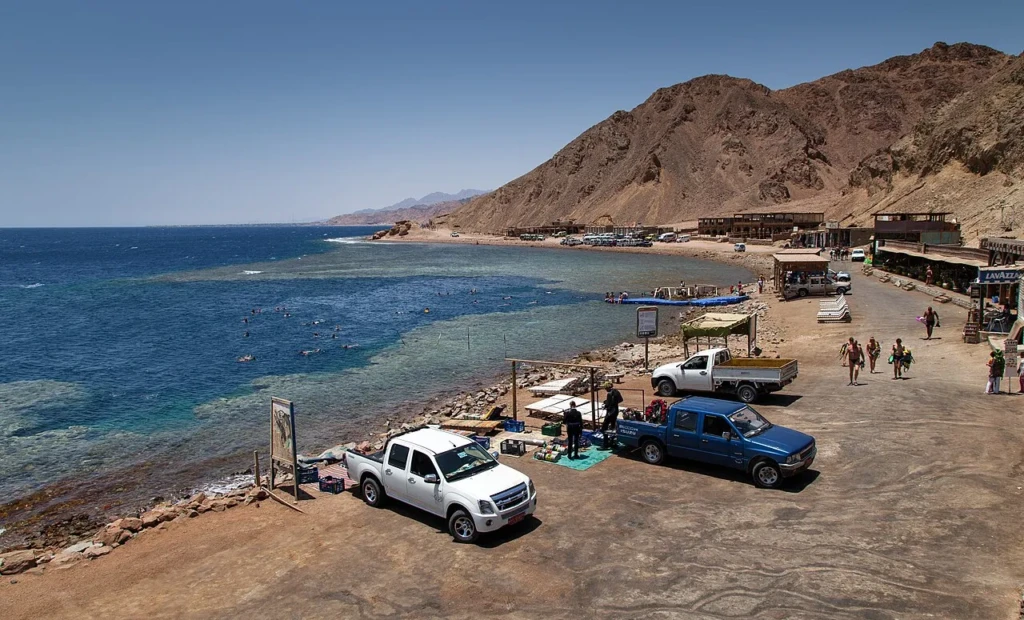
Snorkelers float along the rim and over the Saddle, where the coral and reef fish are at their best. Look down and the reef wall disappears into blue. Stay close to the edge, where you have the reef to look at and a quick way out. Wear a lifejacket or snorkel vest if you are not a strong swimmer.
Recreational diving: the Bells to the Blue Hole
The classic recreational dive starts at a site called the Bells, a short way along the shore from the Blue Hole. Divers drop through a narrow crack in the reef, follow the outer wall, then finish by crossing the Saddle into the Blue Hole at about 7 meters. Local dive centers take suitably qualified divers to around 30 meters here. You will not see the Arch on this dive, and that is the point.
Freediving
With deep, calm water right off the shore, the Blue Hole is a well-known freediving training spot. Only freedive with a qualified instructor and a buddy who is trained in rescue. Never freedive alone.
Technical diving through the Arch
The Arch is a technical dive that needs specialist certification, staged gas and careful decompression planning. Wikipedia reports that local dive operations require a Tech 60 qualification as a minimum. If you are not already a technical diver, this is not something to try on holiday.
What Else to Do in Dahab
Dahab means “gold” in Arabic. Wikipedia describes three main areas: Masbat in the north, which includes the Bedouin village of Asalah; Mashraba to the south of it; and Medina in the south-west. The seafront promenade runs through Masbat and Mashraba, where most cafes and dive centers are.
- Town reef snorkeling: Several reefs start close to the promenade, so you can snorkel without a boat.
- Windsurfing and kitesurfing: Dahab is well known for windsurfing, and several schools around the southern lagoon teach all levels.
- Ras Abu Galum: North of the Blue Hole, the coast belongs to the Ras Abu Galum protectorate. Egypt’s Nature Conservation Sector lists it as declared in 1992 for the sustainable use of natural resources, with an area of 425.7 square kilometers. There is no road along this coast, so visitors reach it on foot, by camel or by boat.
- Desert evenings: Short jeep or camel outings into the mountains behind town are popular for sunset and dinner.
How to Get to Dahab and the Blue Hole
Most international travelers fly into Sharm El Sheikh and continue by road. Dahab is about 80 km north-east of Sharm, according to Wikipedia. A private transfer is the simplest option, and your driver will confirm the timing for your hotel and flight. Travelers already in Egypt can also take long-distance buses from Cairo, but the journey is long.
From Dahab town, the Blue Hole is a short drive north along the coast. Many people go with a dive center, which handles transport, kit and guiding together. If you go independently, arrange your return ride before you leave town.
Entry Fees and Opening Hours
The Blue Hole is a natural site, not an antiquities site, so it does not appear on the Ministry of Tourism and Antiquities ticketing site. We could not find an entry fee or opening hours published by an official body in October 2026, so we do not quote any. Confirm any charge locally, or ask your dive center whether it is included in the trip price.
Best Time to Visit
Dahab is a year-round destination, but comfort varies. The climate table on Wikipedia shows average daytime highs of about 21°C (70°F) in January rising to nearly 36°C (97°F) in August. Sea temperatures listed there range from about 21°C in February and March to 28°C from July to September.
- Spring and autumn: The most comfortable mix of warm sea and pleasant air.
- Summer: The warmest water, but strong midday heat on land. Plan water time for the morning.
- Winter: Mild, sunny days but cooler water. Most divers want a full wetsuit.
For conditions across the rest of the country, see our month-by-month guide to the best time to visit Egypt.
Safety Tips for the Blue Hole
- Dive within your training and your insurance. The UK FCDO warns that diving below your policy’s depth limit will invalidate your cover.
- Use a reputable operator. The FCDO notes recent incidents involving British nationals on diving boats and tours in the Red Sea, and says some watersports operators may not meet adequate safety and insurance standards.
- Snorkel with a buddy and a flotation vest. Some deaths recorded at the site involved snorkelers at the surface, not deep divers.
- Protect the reef. Do not stand on or touch coral, and enter and exit only at the marked points.
- Respect local customs in town. Swimwear is normal on the beach and at dive sites; cover up when you walk into town. Our Egypt packing and dress guide has more detail.
Official travel advice
The UK FCDO advises against all travel to North Sinai and against all but essential travel to the northern part of South Sinai beyond the St Catherine to Nuweiba road. It makes an exception for the coastal areas on the west and east of the peninsula. Dahab and the Blue Hole are on the east coast, south of that road. The FCDO also notes that your insurance could be invalidated if you travel against its advice. US travelers should read the State Department’s Egypt advisory too. Our guide on whether it is safe to travel to Egypt right now gives the wider picture.
Combining Dahab With the Rest of Your Trip
Dahab works best as two or three slow days at the end of a classic itinerary. Many travelers pair a Sharm El Sheikh stay with a night or two in Dahab. Our Red Sea Egypt travel guide compares the coast’s resort areas, and the Egypt and Red Sea tours page shows how beach days fit around Cairo and the Nile.
These packages already end with beach time in Sharm El Sheikh. Dahab and the Blue Hole are not listed as included visits, but we can add a day there on request:
- King Tut Dive: Cairo, Nile cruise and Sharm El Sheikh, 10 Days / 09 Nights, from $1,570 per person
- Hatshepsut Dive: luxury Cairo, Nile cruise and Sharm El Sheikh, 10 Days / 09 Nights, from $3,160 per person
- Royal Egypt Tour: Nile cruise, Abu Simbel and the Red Sea, 14 Days / 13 Nights, from $7,597 per person
Planning a couple’s trip? Our Egypt honeymoon packages page shows how a quiet coastal stay can close a longer journey.
Visit With Delta Tours Egypt
We do not offer a fixed Dahab or Blue Hole tour. We can arrange a private visit on request, with a driver from Sharm El Sheikh and, if you dive or snorkel, a properly licensed local dive center chosen for your level. Tell us your certification, how confident you are in open water, and how many nights you want on the coast. Start the conversation through our tailor-made Egypt tours.
Frequently Asked Questions
How deep is the Dahab Blue Hole?
The hole is just over 100 meters deep at its deepest point. Its shallow Saddle is about 6 meters deep. The Arch tunnel starts at about 55 meters, far below recreational limits.
Can beginners snorkel at the Blue Hole?
Yes, if they stay near the reef edge and wear a flotation vest. The water inside the hole is usually calm. Go with a guide or a buddy rather than alone.
Can I dive the Blue Hole with an Open Water certificate?
You can dive the shallow parts with a guide, within the depth your certificate and insurance allow. The well-known Bells to Blue Hole route is offered to suitably qualified divers. The Arch is a technical dive only.
How far is the Blue Hole from Sharm El Sheikh?
Dahab is about 80 km north-east of Sharm El Sheikh, and the Blue Hole is a few kilometers north of Dahab. Many travelers visit on a day trip from Sharm. Staying a night or two in Dahab makes the day far more relaxed.
Is Dahab safe for tourists?
The UK FCDO’s Sinai warnings cover North Sinai and the inland north of South Sinai, with an exception for the coastal areas. Dahab lies on the east coast. Check the latest official advice before you book.
What is the best month to visit Dahab?
Spring and autumn offer the best balance of warm sea and comfortable air. Summer brings the warmest water but very hot days. Winter is mild and sunny, with cooler water.
The Blue Hole is at its best when you treat it with respect and give Dahab a little time. If you would like it woven into a wider Egypt trip, our planners can build the route with you through our tailor-made tours.
Featured image: The Blue Hole near Dahab seen from above. Photo: S. Ellermann / Wikimedia Commons, CC BY-SA 3.0