Ras Mohammed National Park: Snorkeling and Diving Guide
Ras Mohammed National Park covers the southern tip of the Sinai Peninsula, where the Gulf of Suez and the Gulf of Aqaba meet. It protects fringing coral reefs, a small mangrove stand and desert headlands, and it is one of the best-known snorkeling and diving areas in the Red Sea. Most travelers visit on a day trip by boat or road from Sharm El Sheikh, a short distance to the north-east.
This guide explains what the park protects, which parts of it you can actually see as a snorkeler or diver, how a visit usually works from Sharm, and what the official travel advice says about the area today.
Ras Mohammed at a Glance
| Fact | Details |
|---|---|
| Location | Southern tip of the Sinai Peninsula, South Sinai Governorate |
| Status | National Park, declared in 1983 under Egypt’s Law No. 102 of 1983 on natural protectorates |
| Area | 778.2 square kilometers, land and sea, per Egypt’s Nature Conservation Sector |
| Nearest city | Sharm El Sheikh, about 12 km away according to Wikipedia |
| Main activities | Snorkeling, boat diving, beach time, short walks to the mangroves and earthquake cracks |
| Time needed | Our planning suggestion: a full day by boat, or 5 to 6 hours by road |
| Best base | Sharm El Sheikh |
What Is Ras Mohammed and Why Does It Matter?
Ras Mohammed is a headland that pushes south into the Red Sea at the point where the two gulfs part. The name means “Cape of Muhammad.” A local story says the cliff line resembles the profile of a bearded face, with hard rock layers forming the nose and chin. In the ancient world, the cape was known as Poseidion, which points to a shrine to the Greek sea god Poseidon.
After Sinai returned to Egypt, the area was set aside to stop damaging fishing methods, including dynamite fishing, and to keep coastal development from spreading south from Sharm. Egypt’s Nature Conservation Sector lists Ras Mohammad as a National Park declared in 1983 by Prime Ministerial Decree No. 1068, later amended in 1996, with a total area of 778.2 square kilometers. Older sources quote smaller figures, because the boundaries have changed over the years.
The islands of Tiran and Sanafir were once part of the park. They were removed when sovereignty over them passed to Saudi Arabia, so tours today focus on the Egyptian mainland coast and its reefs.
Why the reefs are special
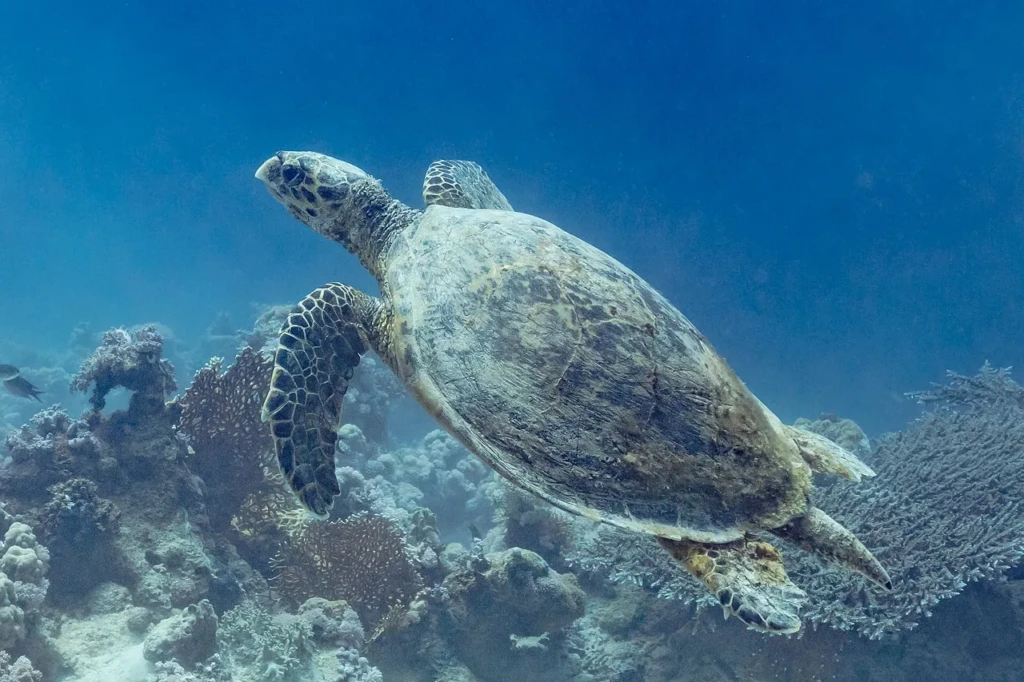
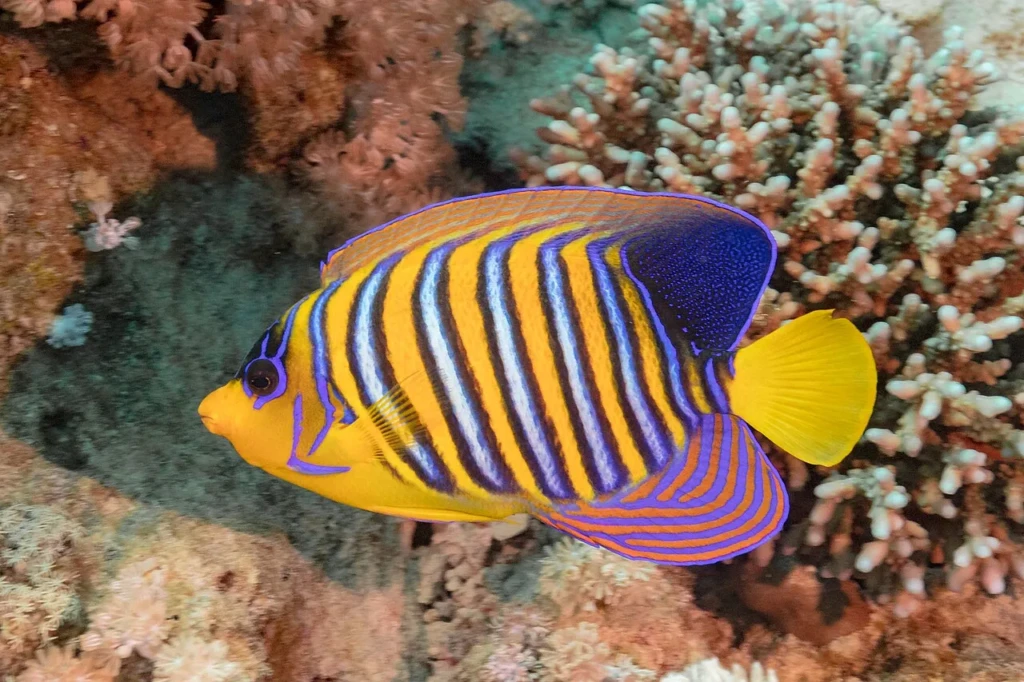
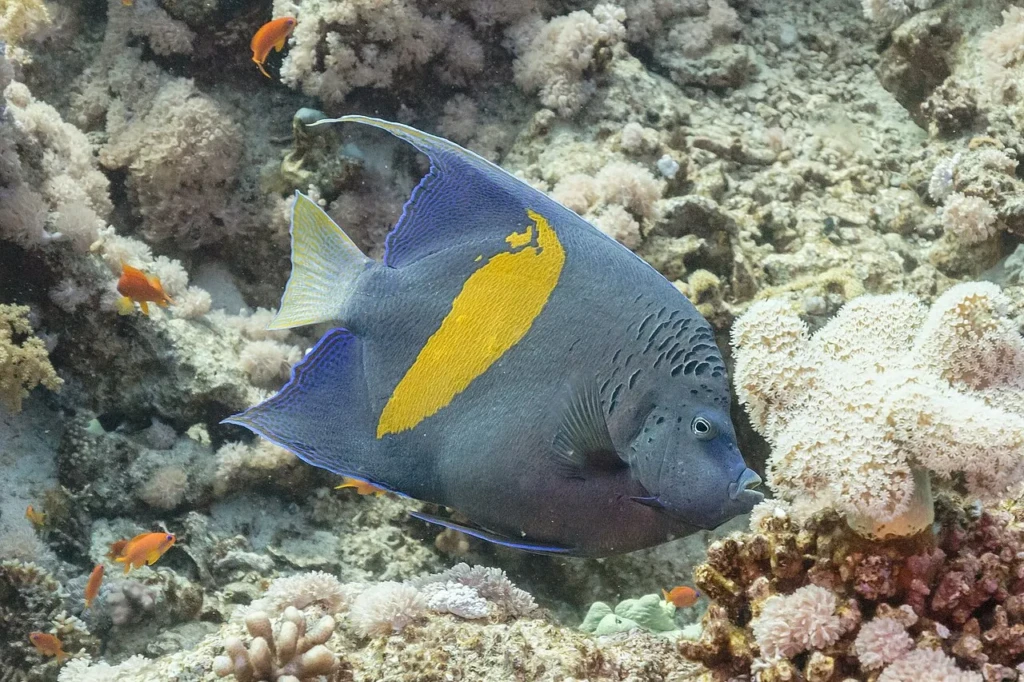
The coral grows close to the shore as fringing reef, so good snorkeling often starts a few strokes from the beach or boat. According to Wikipedia’s summary of the scientific literature, more than 220 coral species are recorded in the area, 125 of them soft corals. The same source lists more than 1,000 fish species, along with green and hawksbill turtles, which appear regularly.
The park also sits where the African and Arabian plates and the Sinai subplate meet. That tectonic setting explains the steep walls that drop away from the reef edge and the cracks you can see on land.
What to See in Ras Mohammed
You will not see the whole park in one day. Boat trips usually stop at two or three reef sites, while road trips link a few beaches and viewpoints. The exact plan depends on wind, current and which permits the operator holds that day.
Shark Reef and Yolanda Reef
Wikipedia names these two reefs as the park’s main hotspots for divers. They lie off the tip of the peninsula, where the reef edge gives way to deep open water. Conditions here change from day to day, so the boat crew decides whether a dive or snorkel stop is possible and briefs you on currents before anyone gets in.
If you are a newer diver, say so when you book. A good crew will match the site to your experience rather than to the itinerary.
Shark Observatory, Old Quay and South Bereika
Wikipedia also lists Shark Observatory, Old Quay and South Bereika among the park’s other reef sites. Operators pick between them by wind direction and sea state. You will rarely visit all of them on one day, and that is fine: the coral and fish life are rich across the whole coast.
Marsa Bareika and Marsa Ghozlani
Marsa Bareika is a small bay inside the park, and Marsa Ghozlani is a little inlet across from the visitors center. Bays like these are useful when the open reef is rough, and they are often the gentlest places for families and newer snorkelers to start.
The mangroves and the earthquake cracks
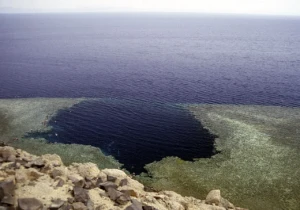
At the southern end of the peninsula, about 0.9 hectares of mangrove line a shallow channel roughly 1.16 km long. About 150 meters inland are open cracks in the ground caused by earthquakes. The largest is around 40 meters long and filled with water more than 14 meters deep in places. These stops take only a few minutes each, but they explain the geology better than any reef.
The Thistlegorm wreck, nearby
Many divers combine Ras Mohammed with the SS Thistlegorm, a British cargo ship sunk by German bombers on 6 October 1941. Its wreck lies near the park and holds trucks, motorcycles and two steam locomotives that were meant for Egyptian railways. The deepest part is around 30 meters. This is a separate full-day boat trip, and it suits certified divers rather than snorkelers.
Snorkeling vs. Diving: Which Visit Suits You?
The right trip depends on your swimming confidence and your certification. A short comparison helps.
| Option | Who it suits | What to expect |
|---|---|---|
| Snorkeling boat trip | Confident swimmers, families with older children | Typically two or three reef stops; ask about lifejackets and lunch |
| Road trip with beach stops | Non-swimmers, travelers prone to seasickness | Viewpoints, mangroves, the cracks and sheltered bays for a swim |
| Day-boat diving | Certified divers | Usually two dives on reef walls; drift diving is common |
| Liveaboard | Experienced divers | Several days covering Ras Mohammed, the Thistlegorm and other wrecks |
Whatever you choose, check your travel insurance first. The UK FCDO reminds divers not to go below their policy’s depth limit, because doing so can invalidate cover.
How to Get to Ras Mohammed
Almost all visitors come from Sharm El Sheikh. There are two ways in.
- By boat: Day boats from Sharm sail south along the coast to the reef sites. This is the most direct way to reach the reefs off the tip.
- By road: A car or minibus drives south from Sharm to the park gate, then on to the beaches and viewpoints. This suits people who prefer to stay on land for most of the day.
Wikipedia puts the park about 12 km from Sharm El Sheikh. Driving and sailing times depend on your hotel’s location and the sites chosen, so your driver or boat crew will confirm timing. Carry your passport on any road trip in Sinai.
Opening Hours and Entry Fees
Ras Mohammed is a nature protectorate, not an antiquities site, so it is not listed on the Ministry of Tourism and Antiquities ticketing site. We could not find current opening hours or a foreigner entry fee published by an official body in October 2026. For that reason we do not quote figures here. If you book a boat or road trip, ask whether the park fee is included, and check the amount at the gate or with your operator before you go.
Best Time to Visit
The water is warm enough to snorkel all year, but the air temperature changes a lot. Wikipedia notes summer highs that often pass 40°C (104°F), while winter days average around 23°C (73°F). Spring and autumn give the best balance of warm sea and comfortable air. In winter, many snorkelers wear a wetsuit or shorty, and the boat ride back can feel cool in the wind.
On the day itself, ask your crew which sites suit the forecast wind. For month-by-month weather across the country, see our guide to the best time to visit Egypt.
Practical Tips and Safety
Protect the reef
- Do not stand on, touch or kick the coral. Practice floating before you reach the reef.
- Do not feed fish or collect shells, coral or anything else from the park.
- Use a rash vest and hat to reduce how much sunscreen you need.
Choose your operator with care
The UK FCDO notes recent incidents involving British nationals on diving boats in the Red Sea. It also warns that some watersports operators may not meet adequate safety and insurance standards. It recommends booking liveaboards only through reputable vendors. Ask about lifejackets, a first-aid kit and oxygen on board, and the ratio of guides to swimmers.
Marine life
The FCDO says shark attacks are rare, but there have been attacks on tourists in the Red Sea region. Follow your guide’s briefing and any closure of a site. Watch out for lionfish and stonefish, and keep your hands to yourself.
Official travel advice for South Sinai
The UK FCDO advises against all travel to North Sinai. It advises against all but essential travel to the northern part of South Sinai beyond the St Catherine to Nuweiba road, except for the coastal areas on the peninsula’s west and east coasts. Ras Mohammed and Sharm El Sheikh lie at the southern tip, well south of that road. US travelers should also read the State Department’s Egypt advisory. For a wider view, see our guide to whether it is safe to travel to Egypt right now.
Combining Ras Mohammed With the Rest of Egypt
Ras Mohammed works best as part of a beach stay in Sharm El Sheikh at the end of a trip that starts in Cairo and the Nile Valley. Our Red Sea Egypt travel guide compares the main resort areas, and our Egypt and Red Sea tours page shows how the beach fits around the sights.
Several of our packages already finish in Sharm El Sheikh. They do not list Ras Mohammed as an included visit, but a trip to the park can be added on request during your beach days:
- King Tut Dive: Cairo, Nile cruise and Sharm El Sheikh, 10 Days / 09 Nights, from $1,570 per person
- Hatshepsut Dive: Cairo, Nile cruise and Sharm El Sheikh, 10 Days / 09 Nights, from $3,160 per person
- Royal Egypt Tour with Abu Simbel and the Red Sea, 14 Days / 13 Nights, from $7,597 per person
- 14-day Egypt family tour with dahabiya cruise and Red Sea, 14 Days / 13 Nights, from $7,600 per person
If you are deciding how long to stay overall, our 14-day Egypt tours page shows how two weeks can split between history and the sea.
Visit With Delta Tours Egypt
We do not sell a fixed Ras Mohammed product. We can arrange a private visit on request, by boat or by road, as part of a stay in Sharm El Sheikh or a longer Egypt itinerary. Tell us your swimming level, whether anyone dives, and the ages of any children, and we will plan around that. Start with our tailor-made Egypt tours.
Frequently Asked Questions
How far is Ras Mohammed from Sharm El Sheikh?
Wikipedia places the park about 12 km from Sharm El Sheikh, at the southern tip of Sinai. Most visitors arrive by day boat from a Sharm marina or by car to the park gate. Your driver or crew will confirm the travel time on the day.
Can non-swimmers enjoy Ras Mohammed?
Yes. A road trip covers the clifftop viewpoints, the mangroves and the earthquake cracks without getting in the water. Sheltered bays also allow paddling in shallow water with a lifejacket.
Is Ras Mohammed good for snorkeling or only for diving?
It is good for both. The reefs grow close to the surface, so snorkelers see healthy coral and reef fish. The deep walls at Shark and Yolanda Reefs are where divers get the most from the park.
How much does it cost to enter Ras Mohammed?
We could not find a current foreigner fee published by an official body in October 2026, so we do not quote one. Many boat and road trips include the park fee. Confirm the amount with your operator or at the gate.
Is the Thistlegorm inside Ras Mohammed National Park?
The wreck lies near the park rather than at its main reef sites. Diving it is a separate full-day boat trip from Sharm El Sheikh. It is suited to certified divers, with a maximum depth of around 30 meters.
Is it safe to visit Ras Mohammed?
The UK FCDO’s warnings for Sinai cover North Sinai and the inland north of South Sinai, not the southern tip around Sharm. At sea, the main risks are currents, sun and choosing a poor operator. Check the latest official advice before you travel.
Ras Mohammed rewards a calm, well-planned day on the water. If you would like it built into a wider journey through Egypt, our team can shape the route with you through our tailor-made tours.
Featured image: Hawksbill turtle in Ras Mohammed National Park. Photo: Diego Delso / Wikimedia Commons, CC BY-SA 4.0