Valley Temple of Khafre: The Granite Temple Beside the Sphinx
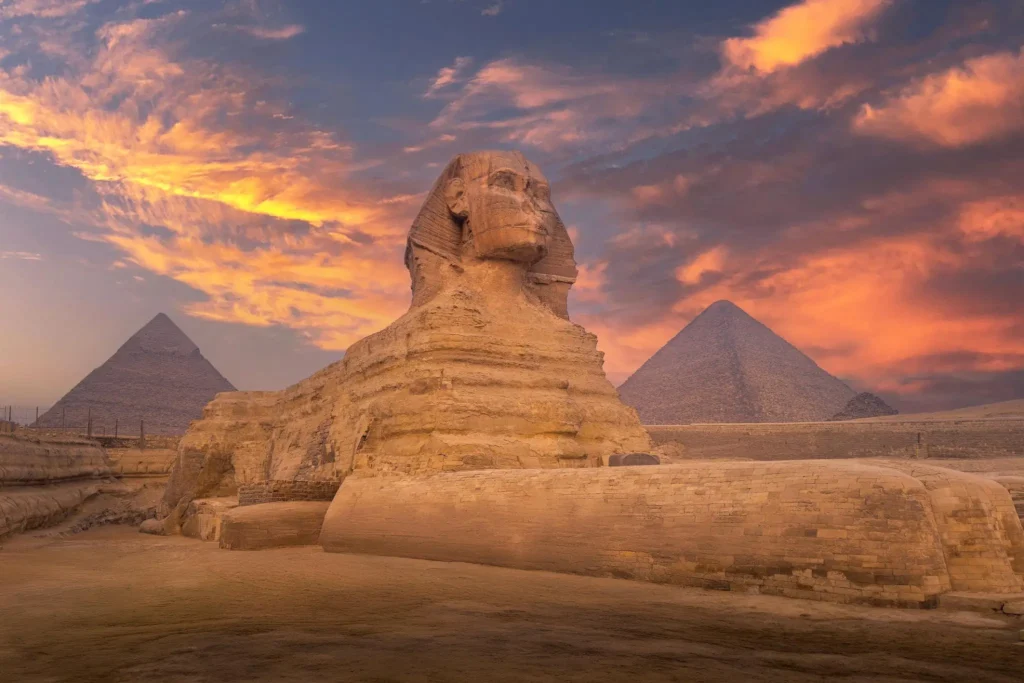
Right beside the Great Sphinx, at the lower end of the causeway that climbs to the second pyramid, stands the Valley Temple of Khafre. Built for King Khafre (c. 2558–2532 BC), it is made of massive limestone blocks faced with granite, with an alabaster floor and square granite pillars. It is one of the best-preserved temples of the Old Kingdom and the place where Khafre’s famous seated statue was found.
This guide covers what the temple was for, what to look for as you walk through it, how it relates to the Sphinx, and what the official site says about tickets and hours.
Valley Temple of Khafre: Key Facts
| Fact | Details |
|---|---|
| Location | Eastern edge of the Giza Plateau, next to the Great Sphinx and the Sphinx Temple |
| Period | Old Kingdom, 4th Dynasty; reign of Khafre, c. 2558–2532 BC |
| Built for | The funerary cult of King Khafre, builder of the second Giza pyramid |
| Materials | Limestone core blocks faced with granite; alabaster floor; monolithic granite pillars |
| Connected to | Khafre’s mortuary temple and pyramid by a causeway of about 495 m (1,620 ft) |
| Time needed | 20–30 minutes, usually combined with the Sphinx viewing area (our planning suggestion) |
| Ticket | Part of a Giza Plateau visit; the official area ticket does not list it among the separately ticketed sites |
What Was the Valley Temple For?
Every king’s pyramid at Giza was only one part of a larger complex. The Ministry of Tourism and Antiquities explains that each complex had two temples joined by a causeway. The valley temple stood at the low end, on or near water where boats could dock, and served as the entrance to the whole complex. The upper, or mortuary, temple stood against the pyramid.
In these temples, priests maintained the king’s cult after his death. They presented offerings to his soul and honored his divine aspect. The valley temple was the threshold of that ritual landscape, the first building you entered on the route up to the king’s tomb.
Khafre’s valley temple is the one that best shows what these entrance temples looked like. Khufu’s temples survive in far worse condition, and Menkaure’s were finished in mud brick after his death. Khafre’s still has its granite-faced walls and pillars standing.
Why This Temple Matters
According to the Ministry, Khafre’s mortuary and valley temples were larger than any built for earlier pyramids. They are also among the best preserved from the entire Old Kingdom. Their layout introduced a new level of complexity, and the plan of his mortuary temple became the model for later kings.
The temple is also a rare chance to stand inside a 4th Dynasty building rather than look at one from outside. Most monuments of this age survive as pyramids, tombs or ruins. Here you can walk through doorways, along corridors and into a pillared hall that has kept its original shape for more than 4,500 years.
No inscriptions, all architecture
Do not expect carved scenes or painted walls. The interior has no decoration. Its impact comes from the scale and precision of the stone and the contrast between red granite and pale alabaster. It is an exercise in pure architecture, and that is its appeal.
What to See, in Walking Order
Your guide will confirm the walking route on the day, but most visits move from the entrance on the east toward the causeway on the west.
1. The exterior walls
Before you go in, look at the outside. The core is built of huge limestone blocks, some estimated at more than 100 tonnes. The outer limestone surfaces are far more weathered than the granite inside. The contrast shows how much protection the stone facing once gave.
2. The entrances and vestibule
Two doorways lead into the temple, and both open into a vestibule before the main hall. Take a moment here to look at how cleanly the granite facing blocks are fitted against one another.
3. The pillared hall
The heart of the temple is a T-shaped hall. Its square pillars are each cut from a single block of granite and support granite beams. The floor is paved in alabaster. The Ministry describes the hall as wide and lined with granite pillars, and the effect when you step in is one of quiet weight and order.
4. The statue niches
Along the walls, symmetrically arranged niches and sockets in the floor once held statues of the king. Scholars estimate the hall held about 23 of them. All are gone from the temple now, but one of them is world famous. More on that below.
5. The passage to the causeway
From the hall, a corridor leads toward the causeway that climbed the slope to Khafre’s mortuary temple and pyramid. Standing at the start of this route helps you understand the complex as a single procession, from riverside temple to royal tomb.
The Seated Statue of Khafre
The Valley Temple is where the most celebrated statue of Khafre was found. The king sits on a throne, calm and upright. Behind his head, the god Horus in falcon form spreads his wings around the king in protection. The sides of the throne bear the symbol for the union of Upper and Lower Egypt.
The French archaeologist Auguste Mariette partly excavated the temple in 1853 and found the statue in 1858 while finishing its clearance. The Ministry calls it one of the masterpieces of ancient Egyptian art, and the official collection listing places it in the Egyptian Museum. Seeing the statue and then the hall it came from makes both more meaningful. Our Egyptian Museum Cairo (Tahrir) guide will help you plan that visit.
The Valley Temple and the Great Sphinx
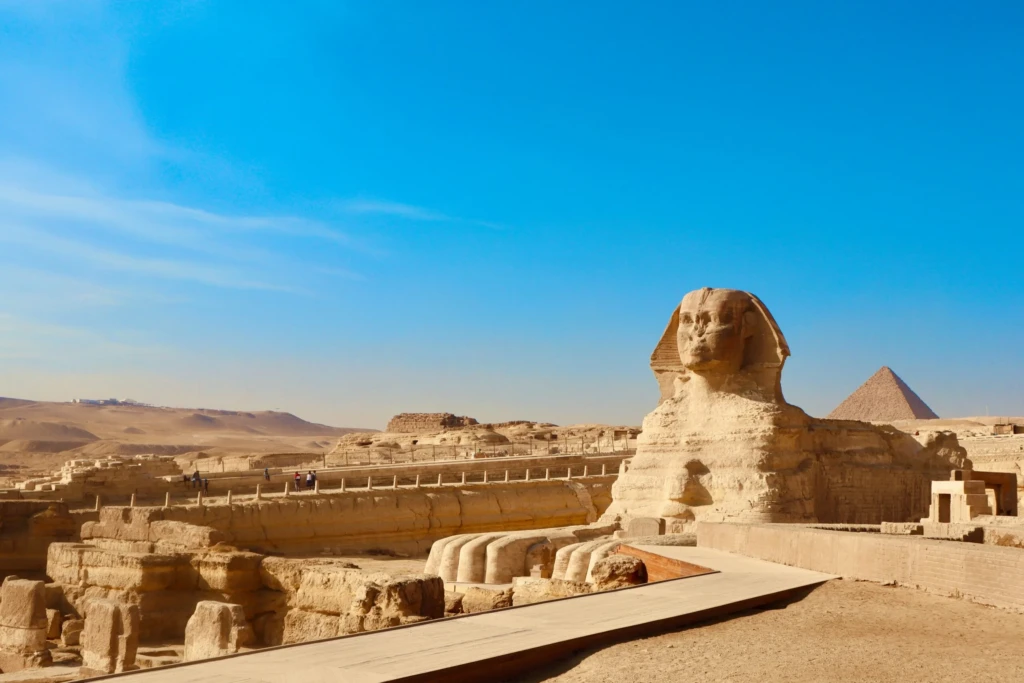
The temple and the Sphinx sit side by side, and their relationship is one of the most interesting questions at Giza. The Ministry’s Great Sphinx page says archaeological analysis shows the valley temple was finished before work began on the Sphinx and the temple in front of it. It also notes that the Sphinx’s face shares features with Khafre’s statues.
Together, these points support the view that the Sphinx was carved in Khafre’s reign as part of his complex. The Ministry describes the colossal statue beside the valley temple as a feature unique to Khafre’s complex.
Right next to the Valley Temple lies the Sphinx Temple. It is not inscribed with any king’s name, but its design closely resembles Khafre’s temples, which points to him as its builder. For the full story of the Sphinx itself, read our Great Sphinx of Giza guide.
Tickets and Opening Hours
The Valley Temple is visited as part of the Giza Plateau. The following details are as listed on the official Ministry of Tourism and Antiquities site in October 2026; check before you go.
| Item | Official listing |
|---|---|
| Giza Plateau area entry, foreign adult | EGP 700 |
| Giza Plateau area entry, foreign student | EGP 350 |
| Sites excluded from area entry | Great Pyramid, Pyramid of Khafre, Pyramid of Menkaure, Tomb of Meresankh III, Workers’ Cemetery |
| Plateau opening hours | Daily, 8:00 AM to 4:00 PM |
| Great Sphinx (close access) | Private visits only, plus site opening fees |
The official site does not publish a separate ticket for the Valley Temple, and it is not on the list of sites excluded from area entry. The Ministry does not list a separate opening time for it either. Ask your guide to confirm access on your date.
How to Get There
The Valley Temple is at the eastern, lower edge of the Giza Plateau, near the Sphinx. You enter the plateau through one of its main gates with an area ticket. There is no separate gate for the temple.
How long the drive takes from your hotel depends on where you stay and the traffic; your driver or guide will confirm timing.
Best Time to Visit and Practical Tips
Arriving early gives you a calmer walk through the temple, softer light on the granite and cooler temperatures before the midday heat.
- Wear shoes with grip. The alabaster floor is smooth and the ground outside is uneven.
- Bring sun protection for the Sphinx viewing area, where there is little shade.
- Ask your guide to show you the floor sockets where the king’s statues once stood.
For seasonal planning, see our guide to the best time to visit Egypt.
Combining the Valley Temple With Nearby Sites
The Valley Temple works best as the final chapter of a Giza visit. See the Great Pyramid, the Pyramid of Khafre and the Pyramid of Menkaure first. Then come down to the temple and the Sphinx, where the story of Khafre’s complex comes together. Our Giza Pyramids Complex guide gives you the full map, history and ticket overview for the whole plateau.
If you have more time in Cairo, the earlier pyramids at Saqqara and Dahshur show how royal tombs evolved before Khafre. Start with our Saqqara visitor guide.
Visit With Delta Tours Egypt
The Valley Temple is part of every complete Giza visit, and our Giza Pyramids Complex guide shows how it fits with the rest of the plateau. To see it with a private guide, the private Giza pyramids tour with guide and car starts from $55 per person. The Grand Egyptian Museum and pyramids tour, from $95 per person, pairs the plateau with the museum. For a full day that adds Saqqara and Dahshur, see the Giza, Saqqara and Dahshur pyramids day tour, from $105 per person. You can return in the evening for the Pyramids Sound and Light Show, from $53 per person, which is staged in front of the Sphinx.
Frequently Asked Questions
What is the Valley Temple of Khafre?
It is the lower temple of King Khafre’s pyramid complex at Giza, built around 2558–2532 BC. It served as the entrance to the complex and was linked by a causeway to his mortuary temple and pyramid. It is one of the best-preserved temples of the Old Kingdom.
Why is it called the Granite Temple?
The nickname reflects its most striking material. Its massive limestone blocks are faced with granite, and its pillars are single blocks of granite. The floor, by contrast, is pale alabaster.
Is the Valley Temple older than the Sphinx?
According to the Ministry of Tourism and Antiquities, careful archaeological analysis shows the valley temple was finished before work started on the Sphinx and its temple. Both belong to Khafre’s reign, so the gap between them is small.
Do I need a separate ticket for the Valley Temple?
The official site does not publish a separate ticket for it, and it is not among the sites excluded from the Giza area ticket. Confirm access with your guide or at the gate on your visit date.
Where is the statue of Khafre found in the Valley Temple?
Auguste Mariette found it in 1858 while clearing the temple. The official collection listing places it in the Egyptian Museum. It shows Khafre enthroned with the falcon god Horus behind his head.
How long does it take to visit?
Our planning suggestion is 20 to 30 minutes for the temple itself. Most visitors combine it with the Sphinx viewing area, which adds a little more time.
The Valley Temple is where Khafre’s story begins and where the Sphinx enters it, so give it more than a passing glance. To plan a Giza day with time for every part of the complex, explore our private Cairo day tours.