Tombs of the Nobles in Luxor: The Most Colorful Tombs
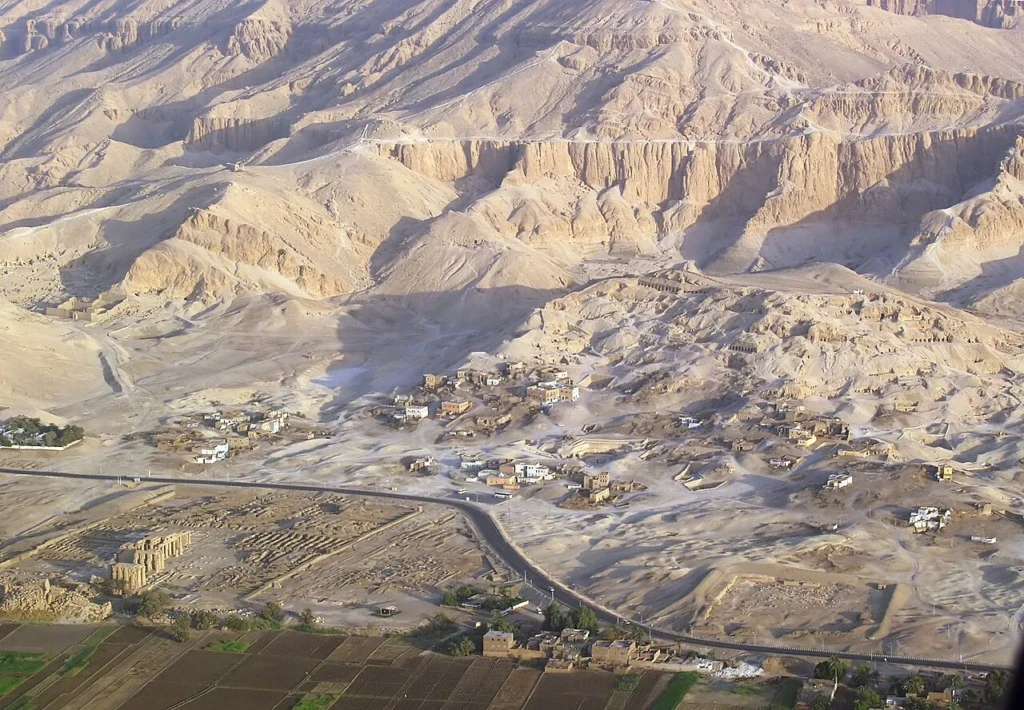
Kings in the Valley of the Kings filled their tombs with gods and the underworld; the officials who served them painted their own tombs with farming, feasts, fishing trips and family life. These private burials on Luxor’s West Bank, known together as the Tombs of the Nobles, hold some of the best-preserved color in Egypt. Most are cut into the hill of Sheikh Abd el-Qurna, a short drive from the Temple of Hatshepsut.
This guide explains who the “nobles” were, which tombs are worth your time, what to look for inside each one, and how to plan a visit around the rest of the West Bank.
Tombs of the Nobles: Quick Facts
| Fact | Details |
|---|---|
| Location | West Bank of the Nile, Luxor, mainly the hillside of Sheikh Abd el-Qurna, with more tombs at neighboring el-Khokha |
| Main period | New Kingdom (about 1550 to 1069 BC), mostly the 18th Dynasty; the hillside was used from the Middle Kingdom into Ramesside times |
| Built for | High officials of Thebes: viziers, mayors, scribes, priests and estate managers |
| World Heritage status | Part of “Ancient Thebes and its Necropolis,” UNESCO World Heritage List, 1979 |
| Best-known tombs | Rekhmire (TT100), Sennefer (TT96), Nakht (TT52), Menna (TT69), Ramose (TT55) |
| Time needed | Our planning suggestion: 1.5 to 2 hours for three or four tombs |
| Official hours and tickets | Not listed on the Ministry of Tourism and Antiquities website as of October 2026 (see below) |
Who Were the “Nobles” of Thebes?
“Nobles” is a convenient label rather than an ancient title. The people buried here were the men who ran the Egyptian state when Thebes was its religious capital. They included viziers, the king’s chief ministers; mayors of Thebes; scribes; and the officials who managed the vast farms, granaries and herds of the temple of Amun.
These officials could not be buried in the royal valleys, so they cut their tombs into the hills facing the river and the temples of the East Bank. Sheikh Abd el-Qurna holds the largest concentration of private tombs on the West Bank. It takes its name from the domed tomb of a local saint on the hilltop.
Egyptologists number the private tombs of the area with the prefix “TT,” for Theban Tomb. You will see these numbers on signs and tickets, so it helps to know a few of them before you go.
Why Are These Tombs So Colorful?
The nobles’ tombs were built for a different purpose from the royal ones. A king’s tomb was a magical machine for his journey through the underworld. An official’s tomb was also a place his family visited, especially during the yearly Beautiful Festival of the Valley, when Thebans brought food and drink to their ancestors’ tombs.
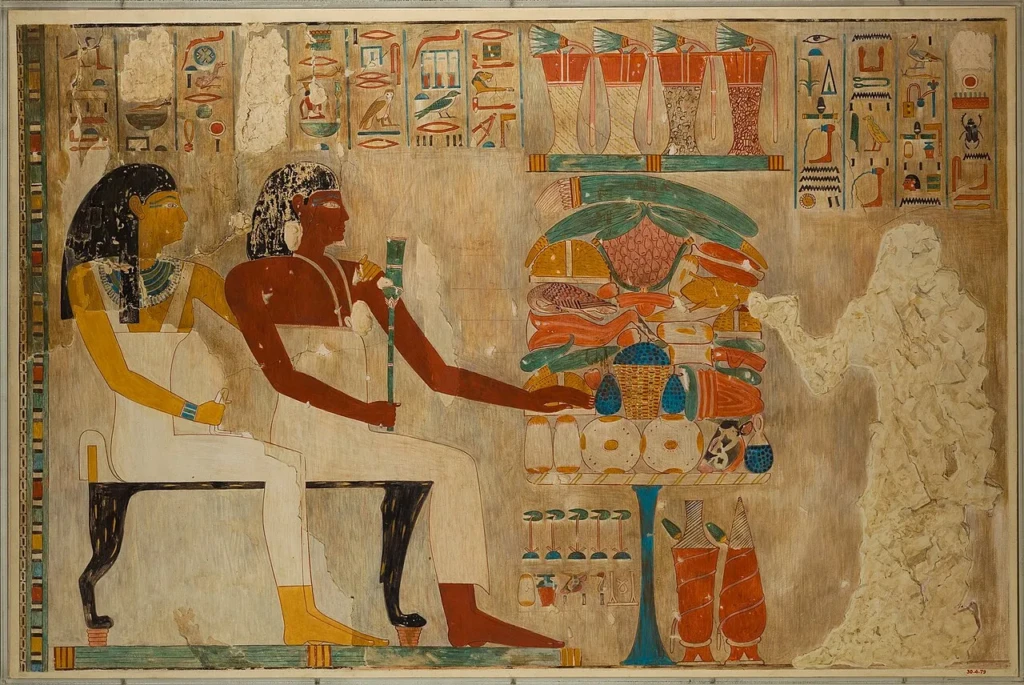
So the walls show the life the owner wanted to keep forever: his career, his estates, his banquets and his family. Many of these scenes are painted rather than carved, and in the best tombs the colors are still strong after more than 3,000 years.
The result is the closest look you will get at everyday life in New Kingdom Egypt. You see people plowing, harvesting grain, playing music, bringing offerings and hunting birds in the marshes.
Which Tombs of the Nobles Should You See?
Not every tomb is open at any one time, and the selection changes as tombs close for conservation. The five below are the best known. Your guide will confirm which are open on the day of your visit.
Tomb of Rekhmire (TT100)
Rekhmire was governor of Thebes and vizier under Thutmose III and Amenhotep II, around 1400 BC. His tomb is one of the most important for historians. It contains a full copy of the text known as the “Installation of the Vizier,” which sets out the duties of Egypt’s highest official.
The walls are crowded with lively scenes of daily work in the New Kingdom. One of the best-known shows foreign delegations, including Syrians, bringing gifts and tribute to Egypt. Rekhmire himself seems to have fallen from favor later in life, and the reason is still unclear.
Tomb of Sennefer (TT96)
Sennefer was mayor of Thebes during the reign of Amenhotep II. He was also overseer of the granaries, fields, gardens and cattle of Amun, and a cousin of the king’s vizier. His small tomb is often called the “Tomb of the Vineyards” after its decoration.
A steep tunnel leads down into a low chamber, and then through a doorway guarded by jackals into the pillared burial chamber. Here the walls show Sennefer and his wife Meryt together, including scenes of Meryt offering him myrrh, food and lotus flowers. The steep descent makes this tomb less suitable for anyone with mobility or knee problems.
Tomb of Nakht (TT52)
Nakht was a scribe and astronomer of Amun, probably under Thutmose IV. His tomb is small, but its paintings are among the best known on the West Bank. A banquet scene shows Nakht and his wife Tawy with musicians and dancers. Nearby, workers plow, sow and harvest under his eye.
On another wall, Nakht and his family hunt fish and birds in the marshes. Look for the couple offering to the sun god Ra on the wall beside the entrance, placed where real sunlight would fall through the doorway.
Tomb of Menna (TT69)
Menna was “Overseer of Fields of Amun,” and his tomb is decorated accordingly. A detailed farming scene follows grain from plowing to harvest and winnowing, with Menna watching each stage. It is traditionally dated to Thutmose IV, though recent studies suggest most of it was painted under Amenhotep III.
The inner hall has one of the earliest known versions of the Weighing of the Heart, the judgment scene from the Book of the Dead. Do not miss the marsh scene. Among the birds, fish, butterflies and a crocodile, a small cat creeps up on a nest of eggs.
Tomb of Ramose (TT55)
Ramose was vizier at the very start of Akhenaten’s reign, and his tomb records a moment of change in Egyptian art. The large hall once had 32 columns. Its east wall has fine, unpainted reliefs in the traditional style, with Ramose, his wife and relatives shown with calm, elegant faces.
On the west wall, the style shifts. The king appears under his early name, Amenhotep IV, and in another scene he and Nefertiti reward Ramose with gold from a palace balcony in the new Amarna style. Parts of these scenes were never finished, so you can see the sketched outlines the artists left behind. Ramose’s tomb is close to the tombs of Userhat (TT56) and Khaemhat (TT57), which are often seen with it.
Tomb of Neferhotep in el-Khokha
On the neighboring hill of el-Khokha, the tomb of Neferhotep, a scribe of Amun-Re, was opened to visitors in February 2024 after a restoration project, at a ceremony attended by Argentina’s ambassador to Egypt. The Ministry of Tourism and Antiquities announcement describes its painted scenes and inscriptions as a new addition to the West Bank. Ask your guide whether it is open during your visit.
Opening Hours and Ticket Prices
The official Ministry of Tourism and Antiquities website did not publish opening hours or a foreign visitor ticket price for the Tombs of the Nobles in October 2026. Which private tombs are open, and how their tickets are sold, changes as tombs close for conservation and reopen.
We prefer not to quote unofficial figures. Your guide or our team will confirm which tombs are open and the current ticket prices before you travel. For a sense of costs on the West Bank, the official site lists the Temple of Hatshepsut at Deir el-Bahari at EGP 360 for foreign adults and EGP 180 for foreign students, open 6:00 AM to 5:00 PM daily, as of October 2026; check before you go.
How to Get to the Tombs of the Nobles
The tombs are on the West Bank, across the Nile from Luxor’s hotels and cruise moorings. Sheikh Abd el-Qurna is part of the same archaeological area as Deir el-Bahari, home of the Temple of Hatshepsut, so the tombs fit easily into a day with the Valley of the Kings and Hatshepsut’s temple.
Most visitors come by private car with a guide. Travel time depends on where you start, how you cross the river and the order of your other stops, so your driver or guide will confirm timing for the day. Paths between tombs involve short uphill walks on uneven ground and some steep steps inside.
Best Time to Visit
Go early in the day. The tombs are small, and they become warm and stuffy as more visitors arrive. An early start also means fewer people in the narrow chambers, which makes it easier to see the paintings.
The cooler months, roughly October to April, are generally the most comfortable time for the West Bank. In summer, plan the tombs for the first hours after opening and keep the hottest part of the day for indoor sites or a rest at your hotel. Our month-by-month guide to the best time to visit Egypt has the details.
Practical Tips
- Combine three or four tombs. More than that in one go tends to blur together. Choose a mix: one large tomb such as Ramose or Rekhmire, plus smaller painted tombs such as Nakht or Menna.
- Ask about photography before you go in. Rules for cameras and phones vary between sites and change over time, so check with your guide or the ticket office on the day.
- Never touch the walls. The paint sits on thin plaster, and skin oils and moisture damage it.
- Wear comfortable, closed shoes. The paths are dusty and some entrances are steep.
- Bring water and sun protection. There is little shade on the hillside between tombs.
For more on what to bring, see what to pack and wear in Egypt.
How to Combine the Tombs of the Nobles with Nearby Sites
The Tombs of the Nobles work best as part of a full West Bank morning. A practical pairing is the Valley of the Kings first, then Hatshepsut’s temple, then two or three noble tombs on the way back toward the river.
- Valley of the Kings shows the royal side of the same period.
- Hatshepsut Temple lies in the same archaeological area as Sheikh Abd el-Qurna.
- Valley of the Queens holds Nefertari’s tomb, another highlight of painted color.
- Medinet Habu, the temple of Ramesses III, is known for its deep, painted reliefs.
For a bigger picture of the city, read our Luxor travel guide. If you want to see the West Bank from the air before your tomb visits, our Luxor hot air balloon guide explains how sunrise flights work.
Visit with Delta Tours Egypt
We do not currently publish a set tour built around the Tombs of the Nobles. We can arrange a private visit on request, with your own Egyptologist guide and driver, and fit it into a West Bank day that suits your pace. Tell us which tombs interest you through our tailor-made Egypt tours page.
If you are building a Luxor stay, these published tours are a good base to work from: the Valley of the Kings private tour from Luxor, from $150 per person; the Luxor East and West Bank full-day tour, from $128 per person; the Luxor hot air balloon ride, from $120 per person; and the 4 Day Cairo and Luxor Tour, from $570 per person. More options are on our private Luxor day tours page.
Frequently Asked Questions
What are the Tombs of the Nobles in Luxor?
They are the decorated tombs of senior officials of ancient Thebes, cut into the hills of Luxor’s West Bank, mainly at Sheikh Abd el-Qurna. Most date to the 18th Dynasty, and their paintings show daily life, work and family rather than the underworld scenes of royal tombs.
Are the Tombs of the Nobles worth visiting?
Yes, especially if you enjoy art or social history. They are smaller and usually quieter than the Valley of the Kings, and the painted scenes of farming, banquets and hunting are some of the liveliest in Egypt.
Which noble tomb is the best?
It depends on what you like. Nakht and Menna are small and richly painted, Rekhmire is the most informative about how Egypt was governed, and Ramose shows the shift into Amarna-style art.
How much does it cost to visit the Tombs of the Nobles?
The Ministry of Tourism and Antiquities website did not list a price for these tombs in October 2026. Ask your guide or our team to confirm the current price and which tombs are open before your visit.
How long should I spend at the Tombs of the Nobles?
Our planning suggestion is one and a half to two hours for three or four tombs. That leaves time for the Valley of the Kings and Hatshepsut’s temple on the same morning.
Can I visit the Tombs of the Nobles on a Nile cruise?
Cruise excursion programs vary by ship, so check whether the noble tombs are included. If not, a private visit can be added during free time in Luxor, and we can help arrange it.
If the royal valleys show how pharaohs hoped to live forever, the Tombs of the Nobles show how ordinary Egyptian life looked to the people who lived it. Share your dates and interests on our tailor-made tours page, and we will plan a West Bank day that includes them.
Featured image: Tombs of the Nobles hillside on the West Bank of Luxor. Photo: Raimond Spekking / Wikimedia Commons, CC BY-SA 4.0