Rosetta Egypt (Rashid): The Town Behind the Rosetta Stone
The Rosetta Stone has been in London since 1802, but the town that gave it its name is still on the Nile. Rosetta, called Rashid in Arabic, is a port town in Egypt’s Beheira Governorate, about 65 km (40 miles) east of Alexandria, where the western branch of the Nile reaches the Mediterranean. Travelers come for its Ottoman-era brick houses, its old riverside mosques and the Qaitbay fort where French soldiers found the stone in 1799, and most see it as a day trip from Alexandria.
Rosetta is not a big-ticket monument. It is a working Delta town with a remarkable past, and it rewards people who enjoy architecture, history and a slower pace. This guide explains what the town is, what to see in a sensible order, what the official tickets cost and how to fit it into an Egypt itinerary.
Rosetta at a Glance
| Fact | Details |
|---|---|
| Location | West bank of the Rosetta branch of the Nile, near the Mediterranean coast, Beheira Governorate |
| Arabic name | Rashid (رشيد) |
| Distance from Alexandria | About 65 km (40 miles) east |
| Main periods | Medieval town founded around a 9th-century fort; most surviving houses and mosques are Ottoman era |
| Famous for | The Rosetta Stone (found at the nearby fort in 1799), Ottoman houses, the 1807 defeat of a British expedition |
| Official hours | 8:30 am – 4:00 pm for the town monuments and the Qaitbay fort (official list; check before you go) |
| Time needed | Our planning suggestion: 4 to 5 hours in town, plus the drive |
| Best base | Alexandria |
Why Rosetta Matters
Rosetta sits on the site of Bolbitine, a town of the Ptolemaic era near one of the Nile’s ancient mouths. The medieval town grew around a fort that the Abbasid caliph al-Mutawakkil ordered built in the 850s. For centuries it lived in Alexandria’s shadow, guarding the river mouth more than trading.
That changed after the Ottoman conquest of Egypt in 1517. As Alexandria declined, Rosetta became one of the main gateways between the Mediterranean and the Nile. Merchants built tall brick houses, and the town gained the mosques and storehouses you see today. Its fortunes fell again after the Mahmoudiyah Canal opened in 1820 and revived Alexandria’s port.
The Rosetta Stone Connection
The stone itself is a fragment of a granodiorite stele carved with a decree issued in 196 BC for King Ptolemy V. The same text appears three times: in hieroglyphs, in Demotic script and in ancient Greek. Because scholars could read the Greek, the stone became the key to deciphering Egyptian writing. Jean-François Champollion announced his breakthrough in Paris in 1822.
The stele was probably first set up in a temple farther inland, possibly at Sais. Centuries later it was reused as building material in the fort north of Rosetta. In July 1799, French officer Pierre-François Bouchard spotted it while soldiers were repairing the fort’s defenses. After the French surrender in 1801 it went to Britain, and the British Museum has displayed it almost continuously since 1802.
The 1807 Battle
In 1807 a British force under General Alexander Mackenzie-Fraser took Alexandria and then tried to push inland. It was defeated twice at Rosetta, by Ottoman troops and armed local people, and the British soon left Egypt. Beheira Governorate’s national day still commemorates this victory, according to the Ministry of Tourism and Antiquities. Many displays in the town museum tell this story.
What to See in Rosetta, in Visiting Order
The historic center is compact and best seen on foot, with a short drive out to the fort. The order below works well for a day trip from Alexandria. Your guide may adjust it depending on which buildings are open that day.
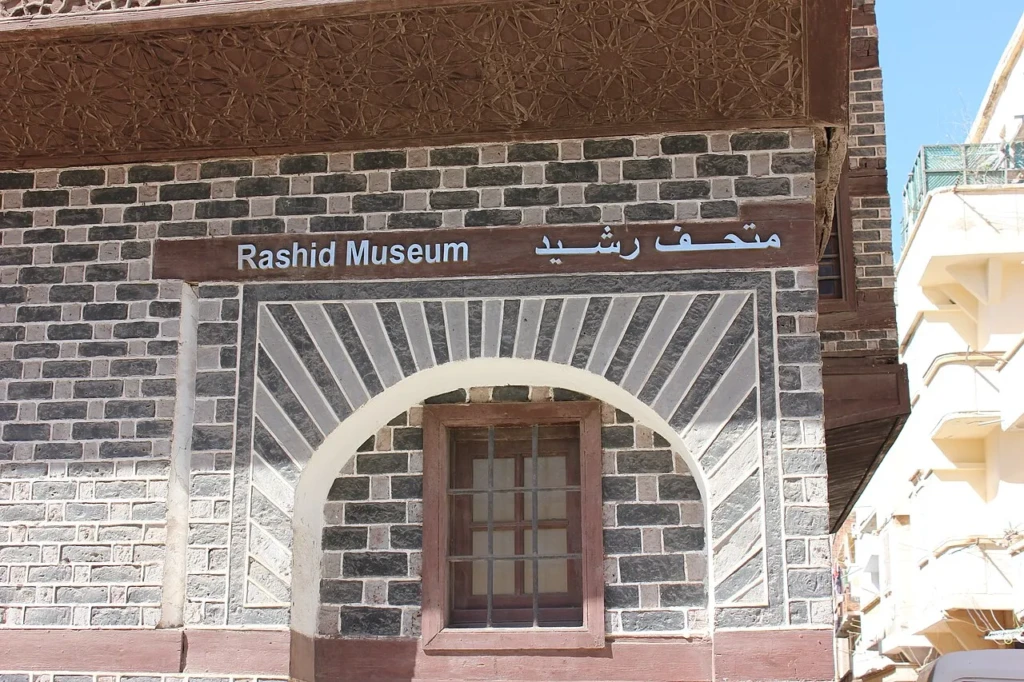
1. Rashid National Museum (Arab Killi House)
Start here for context. The museum occupies the three-story house of Arab Killi Hussein Bey, an Ottoman-era governor of the town. It opened as a military museum in 1959 and was reworked in 1986 to cover Rosetta’s wider history.
Inside you will find weapons, documents and scenes from the 1807 resistance, along with crafts, manuscripts and objects from daily life. The building itself, a large Ottoman townhouse, is as much a part of the visit as the displays. In 2005 the British Museum gave Egypt a full-size replica of the Rosetta Stone, which was first shown in this museum.
2. The Ottoman Houses
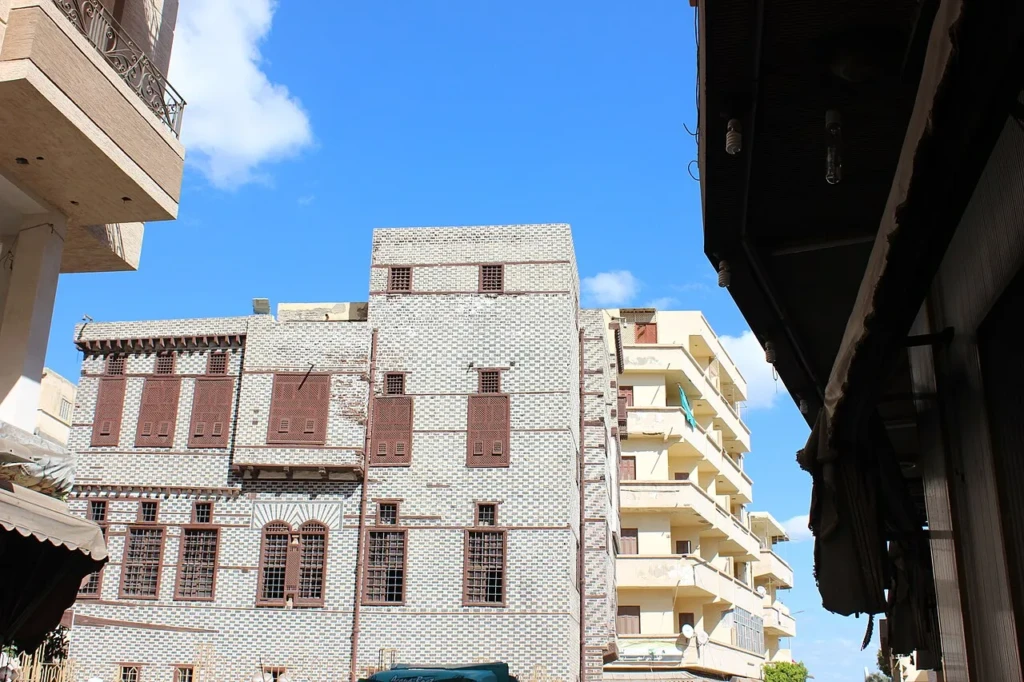
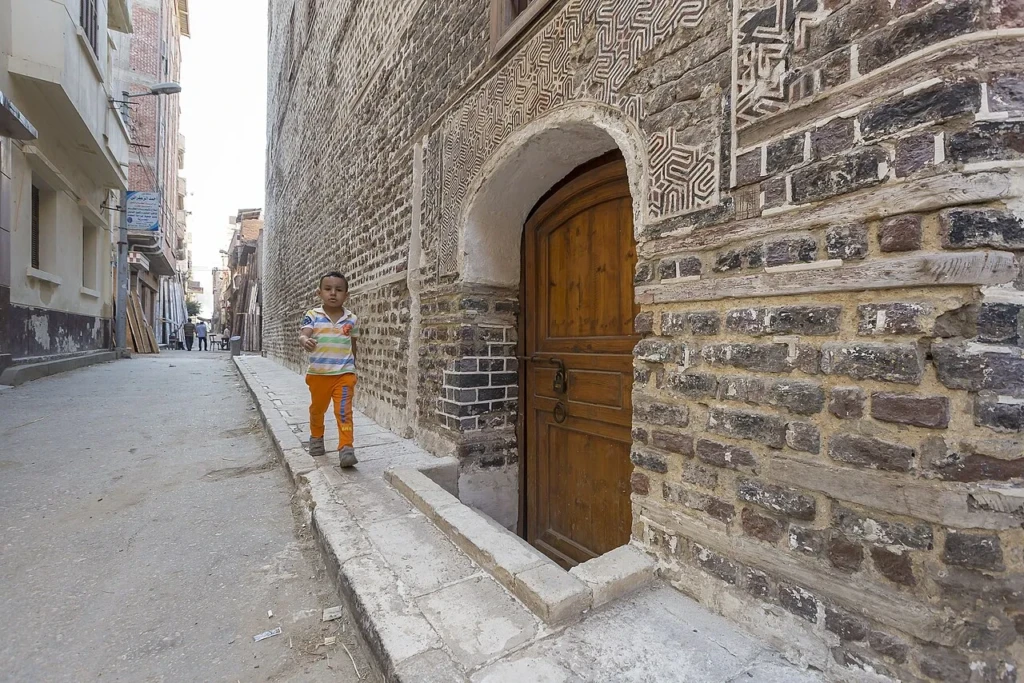
Rosetta’s signature is its Ottoman merchant houses. Like the town’s mosques, they are built of small local bricks, often called Rashidi brick, and many have decorative brickwork on their facades. Walking past them gives you a sense of how prosperous the town was under Ottoman rule.
According to the American Research Center in Egypt (ARCE), the town was still full of Ottoman houses until the 1940s, but only 22 survive today. Look in particular for the Amasyali House, which ARCE helped conserve between 2019 and 2020. The project replaced its rotten roof timbers and re-plastered the top floor with a lime-based mix suited to the damp Delta climate.
3. The Riverside Mosques
Rosetta’s mosques use the same local brick as its houses, which gives the town a coherent look. Three are worth knowing:
- Al-Abbasi Mosque: built in 1809 near the Nile, with a carved brick facade, a single-level octagonal minaret and a domed tomb decorated with glazed tiles.
- Zaghloul Mosque: often described as the oldest mosque in Rosetta, and one of the main stops on a walk through the center.
- Aly al-Mahaly Mosque: reopened by the Supreme Council of Antiquities after a restoration that began in 2017 and cost about EGP 105 million, including work to lower the groundwater level.
These are places of worship. Dress modestly, remove your shoes where asked, and avoid visiting during Friday midday prayers.
4. Qaitbay Fort (Fort Julien)
Finish at the fort where the stone was found. It stands on the west bank of the Nile about 5 km (3 miles) north-west of town, overlooking the last stretch of river before the sea. The Mamluk sultan Qaitbay built it around 1470, the same ruler who built the better-known citadel in Alexandria.
The French took over the fort on 19 July 1799, rebuilt it and renamed it Fort Julien. The Egyptian government restored it in the 1980s and reopened it in 1985. Today it is a low, square fort with a central blockhouse, and it makes a quiet end to the day with views over the river.
Opening Hours and Ticket Prices
As listed on the official Ministry of Tourism and Antiquities ticket price list in October 2026 (the latest version we could find is dated November 2024); check before you go:
| Site | Foreign adult | Foreign student | Hours |
|---|---|---|---|
| Rosetta City Monuments | EGP 120 | EGP 60 | 8:30 am – 4:00 pm |
| Qaitbay Citadel in Rosetta | EGP 30 | EGP 15 | 8:30 am – 4:00 pm |
The official list does not say which buildings the “Rosetta City Monuments” ticket covers, and it does not give a separate current price for the Rashid National Museum. Your guide will confirm what is open and which tickets you need on the day. Bring Egyptian pounds and a card, as payment methods vary by site.
How to Get to Rosetta
Most visitors come by private car from Alexandria, about 65 km (40 miles) away. The road runs east along the coastal side of the Delta. Your driver or guide will confirm timing, since traffic leaving Alexandria varies a lot by day and hour.
Rosetta has a railway station, but we could not verify current train times from Alexandria. A private car is simpler because the fort lies outside the town center. Coming from Cairo is possible in a long day, but it makes more sense to stay a night or two in Alexandria and visit from there.
Best Time to Visit
Rosetta has a mild Mediterranean-influenced climate. Average daily highs run from about 18°C (64°F) in January to around 29°C (84°F) in August and September, with high humidity year-round. Most of the rain falls between November and January, so pack a light rain layer in winter.
Spring and autumn are the most comfortable seasons for walking the old streets. In any season, arrive in the morning so you have time for the museum, the houses and the fort before the 4:00 pm closing. For a month-by-month view of the whole country, see our guide to the best time to visit Egypt.
Practical Tips
- Manage expectations about the stone. The original is in London. What you see in Rosetta is the setting of its discovery and a replica.
- Wear comfortable shoes. Streets in the old center can be uneven, and some houses have steep wooden stairs.
- Dress for a conservative town. Cover shoulders and knees, and women should carry a scarf for mosque visits.
- Carry small notes. Useful for tickets, tips and tea.
- Read up before you go. Our page on what to pack and wear in Egypt covers clothing and daily practicalities.
Rosetta is in the Nile Delta, outside the areas where the UK Foreign Office advises against travel. For a broader view of current conditions, read our guide on whether it is safe to travel to Egypt right now.
Combining Rosetta With Alexandria
Rosetta pairs naturally with Alexandria. A good pattern is two nights in Alexandria: one day for the city’s museums, catacombs and seafront, and a second day for Rosetta. Our Alexandria travel guide covers what to see in the city and where to stay.
If you care about the Rosetta Stone’s story, end your trip in Cairo with a visit to the Egyptian Museum in Tahrir, where you can see the scripts it helped decode on original monuments. To see how a coastal stop fits into a longer route, browse our 7, 10 and 14-day Egypt itineraries.
Visit With Delta Tours Egypt
We do not currently sell a set Rosetta tour. We can arrange a private visit on request, with a car, driver and guide, as part of a tailor-made Egypt tour. Most guests add it as an extra day while based in Alexandria.
For time in Alexandria itself, our private Alexandria Over Day trip from Cairo starts from $130 per person. Longer packages that include Alexandria are the 4 Days Egypt Budget Tour – Cairo & Alexandria from $390 per person, the Cleopatra 10-day Cairo, Nile cruise and Alexandria tour from $1,190 per person and the Alexander the Great 10-day tour from $1,310 per person. You can see them all on our Egypt packages with Alexandria page.
Frequently Asked Questions
Is the real Rosetta Stone in Rosetta?
No. The original has been in the British Museum in London since 1802. A full-size replica given by the British Museum in 2005 was first displayed in the Rashid National Museum in town.
Where exactly was the Rosetta Stone found?
It was found in July 1799 at the fort north-west of town, later called Fort Julien and also known as the Qaitbay fort. The stone had been reused as building material in the fort’s walls.
Is Rosetta the same as Rashid?
Yes. Rashid is the Arabic name, and Rosetta is the European form used by the French during Napoleon’s campaign. You will see both on maps and road signs.
How far is Rosetta from Alexandria?
About 65 km (40 miles) east. Most visitors go by private car, and your driver will confirm the timing on the day.
How much time do I need in Rosetta?
Our planning suggestion is four to five hours in town, plus the drive. That covers the museum, a walk past the Ottoman houses and mosques, and the fort.
Is Rosetta worth visiting?
It is worth it if you enjoy historic architecture and want a day away from big monuments. If you only have a day or two in Egypt, the Giza pyramids and Cairo’s museums should come first.
Rosetta is a small detour with a large footnote in history. If you would like us to build it into a relaxed Alexandria stay, start with our tailor-made Egypt tours.
Featured image: Historic Ottoman-era house in Rosetta (Rashid). Photo: لا روسا / Wikimedia Commons, CC BY-SA 4.0