Luxor Travel Guide | Things to Do, Temples & Travel Tips
Luxor does not reveal itself through a single monument. It unfolds across an entire landscape. On the Nile’s East Bank, immense temples rise within the living city. Across the river, green fields end abruptly at a desert edge filled with royal tombs, workers’ villages, mortuary temples, and limestone cliffs. Karnak, Luxor Temple, the Valley of the Kings, and the Temple of Hatshepsut may be the famous names, but they are only the beginning.
The modern city occupies part of ancient Thebes, one of Egypt’s most powerful political and religious centers. UNESCO describes Ancient Thebes and its Necropolis as a serial World Heritage property incorporating Karnak and Luxor temples on the East Bank and a vast archaeological zone on the West Bank. That geography still determines how a visit works today.
This Luxor travel guide is designed to help you make choices. It explains the best places to visit in Luxor, what to prioritize with one, two, or three days, how ticketing works at the Valley of the Kings, when to schedule the East and West Banks, and whether you should arrive from Cairo, continue by Nile cruise, or combine Luxor with the Red Sea. It also distinguishes the sites that every first-time visitor should see from the quieter monuments that reward a longer stay.
Luxor at a Glance
| Planning question | Quick answer |
|---|---|
| Why visit Luxor? | It contains the temples and necropolises of ancient Thebes, including some of Egypt’s most important New Kingdom monuments. |
| Minimum stay | Two full sightseeing days: one for the West Bank and one for the East Bank. |
| Ideal first visit | Three nights or more, allowing two full days plus an optional balloon, museum, or quieter West Bank sites. |
| Essential attractions | Karnak, Luxor Temple, Valley of the Kings, Temple of Hatshepsut, and Medinet Habu. |
| Best months | October through April for milder sightseeing weather; December and January have cooler mornings and evenings. |
| Best bank to stay on | East Bank for transport and city convenience; West Bank for quiet, landscape, and slower stays. |
| Best evening experience | Luxor Temple around sunset and after illumination. |
| Best lesser-visited site | Medinet Habu for preservation, reliefs, scale, and generally lighter crowds. |
| Best cultural extension | Dendera; combine Dendera and Abydos when you have a long day and serious historical interest. |
| Best onward journey | A Nile cruise between Luxor and Aswan or a private transfer toward Hurghada and the Red Sea. |
Why Is Luxor So Important?
Ancient Egyptians knew the city as Waset. Greek writers called it Thebes. The modern Arabic name, al-Uqsur, means “the palaces” or “the fortifications,” a reflection of how later visitors interpreted its enormous ruins.
Thebes rose to particular prominence when rulers from Upper Egypt reunified the country at the beginning of the Middle Kingdom. During the New Kingdom, roughly 1550–1070 BCE, it became the religious heart of an empire. The local god Amun developed into Amun-Ra, and his priesthood presided over a temple network of enormous wealth and influence. Pharaohs built, erased, restored, and expanded monuments here for centuries because architecture was also a declaration of divine legitimacy.
Karnak functioned as the principal sacred complex. Luxor Temple played a central role in festivals and the renewal of kingship. The processional route now known as the Avenue of Sphinxes connected them. On the West Bank, rulers created tombs hidden in desert valleys while their memorial temples stood closer to the cultivation, where offerings and rituals could continue.
Luxor is sometimes simplified as the East Bank for the living and the West Bank for the dead because the sun rises in the east and sets toward the necropolis. That symbolism is helpful, but think of the river as an organizing axis, not a rigid border between two worlds.
Understanding the Luxor Map: East Bank and West Bank
The Nile runs through modern Luxor, dividing most visitor experiences into two logical zones.
East Bank
The East Bank contains Luxor’s main city infrastructure, railway station, airport access, many hotels, cruise moorings, restaurants, and shops. Its principal ancient attractions are:
- Karnak Temple Complex
- Luxor Temple
- Avenue of Sphinxes
- Luxor Museum
- Mummification Museum
Karnak stands north of the city center. Luxor Temple occupies a central position close to the Corniche. The two temples were linked by a processional avenue approximately 2.7 kilometers long.
West Bank
The West Bank combines cultivated land, villages, desert, and the Theban mountains. Its archaeological sites are spread across a much wider area:
- Valley of the Kings
- Valley of the Queens
- Temple of Hatshepsut at Deir el-Bahari
- Medinet Habu
- Deir el-Medina
- Tombs of the Nobles
- Ramesseum
- Colossi of Memnon and the Temple of Amenhotep III area
Crossing by local ferry is useful for independent travelers moving between the central riverfronts. It does not solve an entire West Bank sightseeing day: the monuments are separated by roads and desert distances, so a private vehicle, licensed taxi, or organized tour is far more practical.
Best Places to Visit in Luxor
Karnak Temple Complex
Karnak is not one temple built by one pharaoh. It is a vast sacred landscape developed over many centuries, with precincts associated principally with Amun-Ra, Mut, and Montu. Most visitors enter the Precinct of Amun-Ra, where the Great Hypostyle Hall, Hatshepsut’s obelisk, the Sacred Lake, and the Festival Hall of Thutmose III are the main highlights.
Allow at least two hours for a first visit; three hours is better for travelers who want interpretation rather than photographs alone. Start early. Shade is limited, and the complex becomes physically demanding in heat.
For the full history and a visitor plan, see our Karnak Temple guide.
Luxor Temple
The temple of Luxor Egypt occupies the center of the modern city. Amenhotep III was responsible for much of the surviving core, including the elegant colonnade and solar court, while Ramesses II built the great first court, pylon, statues, and obelisks at the northern end. Traces of Roman transformation, early Christian reuse, and the still-active Mosque of Abu al-Haggag show how the temple has remained embedded within a living city.
The best time to visit is late afternoon, continuing through sunset as the columns and statues are illuminated. Allow 60–90 minutes. A focused Luxor Temple tour should explain its relationship with Karnak and the Opet Festival. Our Luxor Temple guide covers its history and highlights in full.
Luxor Museum
Luxor Museum is smaller than Cairo’s major museums, but its focused display makes it one of Egypt’s most rewarding collections. It presents objects from the Theban region with clear visual space rather than overwhelming density.
Highlights can include royal sculpture, material connected with Tutankhamun, blocks from Akhenaten’s dismantled monuments, and statues found concealed within Luxor Temple. Displays and galleries can change.
The museum’s split opening schedule makes it useful either before lunch or in the evening. Allow 60–90 minutes.
Mummification Museum
The Mummification Museum explains the materials, beliefs, tools, and processes connected with preserving human and animal bodies in ancient Egypt. Its smaller scale makes it manageable for families and travelers who want context before entering the royal tombs.
Allow roughly 45–60 minutes. Check current operating hours because museum schedules can differ from those of the outdoor archaeological sites.
Avenue of Sphinxes
The ceremonial avenue linking Karnak and Luxor temples was known in antiquity as a processional way. Its surviving statues include human-headed sphinxes and ram-related forms associated with Amun.
The avenue is most meaningful when understood as part of the Opet Festival landscape. Priests, sacred barques, royal participants, musicians, and crowds transformed the space into a route of public ritual. It reopened as a fully presented ceremonial route in 2021 after decades of excavation and conservation. Walking its full length is not obligatory for most visitors, particularly in warm weather.
Valley of the Kings
The Valley of the Kings was the principal royal burial ground for many New Kingdom pharaohs. The standard admission ticket normally includes entry to three general-access tombs selected from those open that day, and tombs rotate. Premium tombs—including Tutankhamun, Seti I, or Ramesses V and VI when offered—require separate tickets. Do not choose solely by fame: Tutankhamun’s KV62 is historically exceptional but relatively small.
Allow two to three hours for a thoughtful visit. Some tombs have steep steps, low passages, and limited airflow, so discuss tomb choices with your guide if mobility is a concern. Our Valley of the Kings guide explains the tombs and tickets in detail.
Valley of the Queens
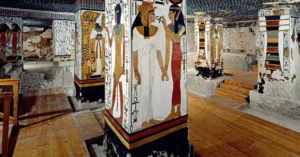
The Valley of the Queens contains burials of queens, princes, princesses, and other royal family members. Its most famous tomb is QV66, the tomb of Nefertari, Great Royal Wife of Ramesses II, whose paintings are famous for their color, draftsmanship, and intimate scale.
As of September 20, 2026, the official Egyptian ticket platform lists general admission to the Valley of the Queens but does not offer a separate QV66 ticket. Treat the Tomb of Nefertari as unavailable to ordinary visitors unless the official platform or the Ministry of Tourism and Antiquities confirms a reopening. The valley remains worthwhile for tombs associated with royal children and queens.
Our Valley of the Queens guide covers the tombs in detail.
Temple of Hatshepsut at Deir el-Bahari
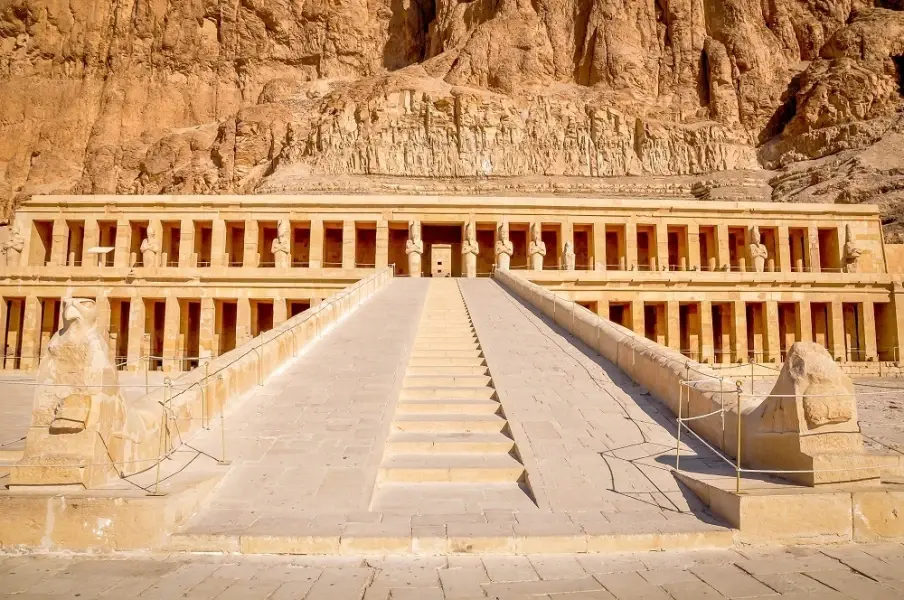
Hatshepsut’s mortuary temple appears to rise from the cliffs in a sequence of terraces, colonnades, and ramps, shaped by the dramatic bay of Deir el-Bahari. Reliefs present Hatshepsut’s divine birth, the expedition to Punt, offerings to the gods, and chapels associated with Hathor and Anubis.
The temple becomes extremely hot because of its open terraces and reflected heat from the cliffs. Schedule it after the Valley of the Kings but still within the morning. Allow about one hour, longer for close study. Read the full story in our Hatshepsut Temple guide.
Medinet Habu
Medinet Habu is the name commonly used for the mortuary temple complex of Ramesses III. Its towering entrance, courts, columns, royal palace remains, and extensive reliefs—including military scenes associated with the so-called Sea Peoples—make it one of the West Bank’s strongest sites.
Medinet Habu is often quieter than Karnak or the Valley of the Kings. Allow 75–90 minutes. If you have only one “extra” West Bank monument beyond the standard circuit, choose this one. See our Medinet Habu guide for the full visit.
Deir el-Medina
Deir el-Medina was home to the community of skilled workers who cut and decorated royal tombs. The settlement, its records, and the workers’ own tombs allow visitors to move beyond the biographies of pharaohs.
Ostraca, papyri, houses, chapels, and burials have preserved evidence about wages, work rotas, family relationships, legal disputes, religion, illness, food, and one of history’s earliest recorded labor stoppages. The painted workers’ tombs are smaller than royal tombs but can be exceptionally vivid.
This is one of the best things to see in Luxor Egypt for returning visitors, families with older children, and anyone interested in daily life rather than royal propaganda alone.
Tombs of the Nobles
Hundreds of elite tombs are distributed across several West Bank areas. Their paintings often show agriculture, hunting, craft production, banquets, foreign delegations, and family life—subjects that appear differently from the funerary books dominating royal tombs.
Tickets are generally organized by small tomb groups rather than one universal pass to every monument. Access changes, and the distances between groups make a guide and vehicle useful. Sennefer, Rekhmire, Nakht, Menna, and Ramose are among the famous names, but not all will necessarily be open under the same ticket or on the same day.
The Ramesseum
The Ramesseum was the memorial temple of Ramesses II. Although less complete than Medinet Habu, it preserves monumental courts, columns, reliefs, storerooms, and the fragments of a colossal fallen statue. Its later association with “Ozymandias”—the Greek form of part of Ramesses II’s throne name—adds a literary afterlife to the ancient monument.
The site rewards travelers who prefer ruins that require interpretation. Allow approximately one hour.
Colossi of Memnon
The two seated statues known as the Colossi of Memnon originally guarded the entrance to the enormous memorial temple of Amenhotep III. Their isolated appearance today is misleading: excavations and conservation continue across the wider complex.
In the Roman era, one damaged colossus became famous for a sound reported around dawn, leading visitors to identify it with the mythic Memnon. The sound ceased after ancient restoration. Most modern itineraries stop for 15–20 minutes.
Things to Do in Luxor Beyond the Major Temples
Travelers asking what to do in Luxor should leave space between archaeological visits. The city is more rewarding when the Nile, markets, food, and rural landscape are part of the experience.
Take a Sunrise Hot-Air Balloon Flight
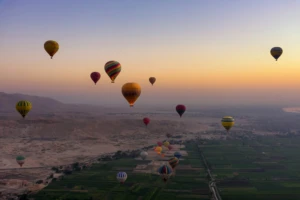
Balloons usually launch from the West Bank around dawn, subject to weather, wind, visibility, and aviation authorization. From the air, the line between cultivation and desert becomes extraordinarily clear. Depending on flight direction, passengers may see temple sites, villages, fields, mountains, and the Nile Valley.
Use a licensed operator with established safety procedures and transfers. Schedule the flight for your first available morning so another day remains if operations are cancelled. A balloon should not be placed immediately before a nonrefundable departure with no time buffer. Our Luxor hot air balloon tour starts from $120.
Sail the Nile by Felucca
A private felucca around late afternoon offers a quieter perspective on the river. Wind determines the route and duration, so this is not precision transport. Treat it as an experience rather than a way to reach a timed attraction.
Walk the Corniche and Visit the Souq
The East Bank Corniche links hotels, cruise moorings, the museum zone, and central Luxor. The market offers spices, textiles, household goods, souvenirs, and everyday commerce. Ask before photographing people and negotiate respectfully where bargaining is expected.
Visit Luxor Temple After Dark
Artificial lighting reveals the profiles of statues, columns, and pylons, while the active city remains visible beyond the walls. Check the current last-entry time rather than assuming the site remains open late in every season or during Ramadan.
Explore the West Bank Countryside
Staying or dining on the West Bank can bring travelers closer to fields, palms, villages, and the desert edge. Choose walking or cycling routes carefully; traffic, heat, unlit roads, and site distances make independent movement less simple than it appears on a map.
Current Luxor Tickets and Opening-Hour Snapshot
The following official prices and last-entry times were checked on September 1, 2026 through Egypt’s official monument ticket platform. They apply to adult visitors of other nationalities and are quoted in Egyptian pounds. Prices, tomb inclusion, access, student eligibility, Ramadan hours, photography rules, and closing times may change without notice.
| Site | Adult ticket | Published hours or last entry |
|---|---|---|
| Karnak Temple | EGP 600 | Opens 6:00 AM; last entry 4:00 PM |
| Luxor Temple | EGP 500 | Opens 6:00 AM; last entry 7:00 PM |
| Valley of the Kings | EGP 750 | Opens 6:00 AM; last entry 5:00 PM in summer, 4:00 PM in winter |
| Temple of Hatshepsut | EGP 440 | Opens 6:00 AM; last entry 5:00 PM in summer, 4:00 PM in winter |
| Luxor Museum | EGP 400 | Split schedule: summer 9:00 AM–12:00 PM and 5:00–7:00 PM last entry; winter 9:00 AM–1:00 PM and 5:00–8:00 PM last entry |
| Medinet Habu | EGP 220 | Opens 6:00 AM; last entry 5:00 PM in summer, 4:00 PM in winter |
| Valley of the Queens | EGP 220 | Opens 6:00 AM; last entry 5:00 PM in summer, 4:00 PM in winter |
| Ramesseum | EGP 220 | Confirm current hours during booking |
Check these figures on Egypt’s official monument ticket platform shortly before you travel. Additional Valley of the Kings tomb tickets can materially change the day’s cost.
Luxor ticket strategy
- Decide which premium tomb matters most before reaching the ticket window.
- Confirm the standard tombs open that morning; rotation makes fixed online “best three” lists unreliable.
- Do not overload the day with every available tomb. Heat, stairs, and visual fatigue reduce enjoyment; select tombs that differ in plan, period, decoration, or historical meaning.
- Carry a payment card and keep some Egyptian pounds for unrelated small expenses; payment procedures can change by site.
- Retain tickets until the visit is complete because checks may occur near individual entrances.
- Treat photography as a current site rule, not an assumed right. Never use flash where prohibited.
Best Time to Visit Luxor
Luxor has a hot desert climate. Weather determines not only comfort but also how much history a traveler can absorb.
October to April
This is the main sightseeing season, and November through February offers the mildest general conditions. Days are usually more manageable, but winter mornings can feel cool—especially during balloon transfers, open-vehicle rides, and Nile sailing. December and January attract high demand, so strong hotels, guides, and cruise cabins can sell early.
May and September
These shoulder periods can offer value and fewer visitors, but midday temperatures are often high. Begin outdoor sites at opening time, rest after lunch, and return for Luxor Temple or museums later.
June to August
Summer is intensely hot. A successful schedule requires early starts, air-conditioned transport, hydration, shade, shorter site combinations, and a long midday break.
The best time of day is usually early morning for the West Bank and Karnak. Luxor Temple is the important exception because sunset and evening illumination are part of its appeal.
How Many Days Do You Need in Luxor? Suggested Itineraries
Two full days is the practical minimum, and three is ideal for most first visits. Longer stays allow Dendera and Abydos, museum time, quieter tomb groups, a balloon flight with a weather buffer, and afternoons beside the Nile.
One day in Luxor: highlights only
One day is possible but rushed. Use private transport and resist unnecessary stops. This day works for a flight-based Luxor tour from Cairo, a Red Sea excursion, or a tightly scheduled Egypt itinerary.
6:00–8:30 AM: Valley of the Kings. Choose three standard tombs and one premium tomb only if it genuinely matters to you.
9:00–10:00 AM: Temple of Hatshepsut.
10:15–10:35 AM: Colossi of Memnon.
11:00 AM: Karnak, well before the 4:00 PM last entry listed in the ticket table below. Allow at least two hours.
Lunch and rest: Take a proper air-conditioned break.
Around sunset: Luxor Temple.
The exact clock must change by season. The sequence matters more than the stated minutes: West Bank early, Karnak before final admission, Luxor Temple late. Medinet Habu fits better into the two-day plan. To cover both banks in a single guided day, see our Luxor East and West Banks tour (from $128).
Two days in Luxor: the practical minimum
Day 1: Royal West Bank
- Optional balloon at sunrise
- Valley of the Kings
- Temple of Hatshepsut
- Colossi of Memnon
- Lunch
- Medinet Habu
- Relaxed Nile evening
Day 2: Temples and museums
- Karnak at opening
- Luxor Museum
- Lunch and hotel break
- Felucca near sunset
- Luxor Temple after sunset
Two days answers the core Luxor what to see question without turning every hour into a race. Guided options for each day are our West Bank of the Nile tour (from $150) and our Luxor & Karnak Temples tour (from $70).
Three days in Luxor: ideal for most first visits
Add a third day focused on the people behind the monuments:
- Deir el-Medina and workers’ tombs
- Tombs of the Nobles
- Valley of the Queens if access aligns
- Ramesseum
This route transforms the narrative from “pharaohs and monuments” into a fuller picture of Theban society. Alternatively, dedicate the third day to Dendera if temple architecture and later Egyptian history are priorities.
Prefer to have each day arranged for you? Our Luxor tours and excursions include the East and West Banks, a sunrise balloon flight, and Dendera and Abydos, and can be built around any of the itineraries above.
Day Trips from Luxor
Dendera Temple
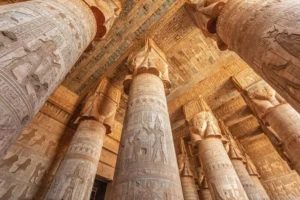
The Temple of Hathor at Dendera is one of the strongest additions to a Luxor itinerary. Much of the visible complex dates to the Ptolemaic and Roman periods, offering a striking contrast with the New Kingdom monuments of Thebes.
Highlights include Hathor-headed columns, an astronomical ceiling, crypts where accessible, rooftop chapels, and reliefs associated with royal and divine ritual. Allow half a day from Luxor, depending on traffic and visit depth.
Abydos and the Temple of Seti I
Abydos was an ancient sacred center associated with Osiris and royal ancestry. The Temple of Seti I is admired for exceptionally refined reliefs, seven sanctuaries, and the Abydos King List. The Osirion lies behind the main temple, but access conditions may limit how closely it can be seen.
Combining Dendera and Abydos creates a long day. It is worthwhile for Egyptology enthusiasts but less suitable for small children, travelers who dislike road time, or anyone already fatigued by consecutive temple days. Our Dendara and Abydos Temples day tour from Luxor starts from $150.
Esna
Esna lies south of Luxor and is known for the Temple of Khnum, whose surviving hall stands below the level of the modern town. It can be included in a road journey or encountered as part of Nile-cruise routing, depending on the itinerary.
Getting to Luxor
Luxor tours from Cairo by air
Domestic flights make a Luxor tour from Cairo possible in one day, and our Luxor Over Day By Air tour is built around that flight. The flight itself is short, but the real calculation includes Cairo hotel pickup, airport time, arrival transfer, sightseeing distances, and the return process.
Most Luxor tours from Cairo should therefore be two or three days if the schedule allows; an overnight stay creates space for Luxor Temple after dark. For a one-day tour Cairo to Luxor, use the earliest practical outbound flight and a late return. Flight times change, so the order of visits is set once your flights are confirmed.
Cairo to Luxor by train
Day and overnight trains connect Cairo and Luxor. Journey time, carriage quality, ticket eligibility, and service type vary. The train can suit travelers who value rail travel or want to avoid an additional flight, but it consumes significantly more time than flying. Check official schedules and ticket rules close to travel.
Luxor from Aswan
Train and road connections link Aswan with Luxor. The most rewarding route for many first-time visitors is a Nile River cruise stopping at Kom Ombo and Edfu. Official Egyptian tourism information notes that Luxor–Aswan cruises commonly last four or five days depending on direction and itinerary.
Luxor from Hurghada and the Red Sea
Private road transfers connect Luxor with Hurghada and other mainland Red Sea resorts. Exact time depends on the hotel, route, rest stops, convoy or road procedures where applicable, and traffic. From Hurghada, travelers should generally expect a substantial half-day journey rather than a quick transfer.
A Red Sea day trip to Luxor is possible but very long. Staying at least one night creates a far better experience. Readers planning the combination can continue to our Red Sea Egypt travel guide.
Where to Stay: East Bank or West Bank?
East Bank hotels
Choose the East Bank for airport and station access, restaurants, city energy, cruise embarkation, and easy evening visits to Luxor Temple. It offers the broadest range from simple city hotels to historic and luxury properties. Our guide on where to stay in Luxor compares specific hotels on both banks.
This is usually best for first-time visitors, short stays, solo travelers who want services nearby, and guests boarding a Nile cruise.
West Bank hotels
Choose the West Bank for quieter surroundings, smaller guesthouses, agricultural views, and proximity to the necropolis. It can feel calmer and more personal, especially for longer stays.
The tradeoff is that every East Bank dinner, museum visit, flight, or train involves crossing the river or driving via the bridge. West Bank properties also vary greatly in access, so verify the exact road and transfer plan.
Choosing by travel segment
| Traveler | Best approach |
|---|---|
| Luxury | High-service East Bank or Nile-view property, private vehicle, private Egyptologist, premium tomb choices, and unhurried pacing. |
| Classic | Two or three nights plus a Nile cruise, covering both banks and one lesser-visited site. |
| Budget | Modest East Bank hotel or reputable West Bank guesthouse, local ferry where practical, and selectively guided archaeology days. |
| Family | Private transport, early starts, shorter explanations, museum breaks, and no attempt to enter every tomb. |
| Solo | Central East Bank for convenience or a reviewed West Bank guesthouse; join small activities while keeping transfers established. |
| Senior or limited mobility | Private vehicle, careful tomb selection, midday rest, and extra time for uneven surfaces and stairs. |
Practical Luxor Travel Tips
- Carry water, a sun hat, sunglasses, sunscreen, and breathable, modest clothing.
- Wear secure shoes. Temple paving is uneven, and tomb entrances may involve steep steps.
- Never touch reliefs or painted tomb walls.
- Obey photography signs and staff instructions; avoid flash even where casual mobile photography is allowed.
- Ask before photographing residents, workers, or market vendors.
- Agree transport prices in advance when not using a prearranged service.
- Verify current official travel advice, flight or rail schedules, and site rules before departure.
Planning Luxor Tours with Delta Tours Egypt
The value of well-designed Luxor tours is not simply transport between famous sites. A private Egyptologist can connect the Opet Festival at Karnak and Luxor Temple, explain how royal tomb decoration changed across dynasties, select open tombs that are genuinely different, and adjust the day around temperature and mobility.
Delta Tours Egypt has arranged travel across Egypt since 1974. Private Egypt tours can combine Cairo, Luxor, Aswan, a Nile cruise, and the Red Sea with one coordinated itinerary. Luxury travelers can explore private luxury Egypt tours, while classic and value-focused travelers can compare classic Egypt tours and budget Egypt tours.
An Egypt Luxor tour should reflect the traveler. The best program is not the one with the longest monument list; it is the one whose timing allows each place to remain memorable.
Every Nile cruise between Luxor and Aswan spends time in the city, and an evening on the East Bank can include our Sound & Light Show Luxor (from $80).
Frequently Asked Questions About Luxor
Is Luxor worth visiting?
Yes. Luxor contains the principal monuments of ancient Thebes and is essential for travelers interested in New Kingdom history, temple architecture, royal tombs, and the Nile landscape.
What are the best things to do in Luxor Egypt?
For the essential things to see Luxor visitors should prioritize both banks: Karnak and Luxor Temple on the East Bank, then the Valley of the Kings, Hatshepsut Temple, and Medinet Habu on the West Bank. Add Luxor Museum, a sunset felucca, a sunrise balloon, Deir el-Medina, or Dendera when time permits.
How many days or nights do I need in Luxor?
One day covers only highlights. Two full days is the practical minimum, and three nights works well for most first-time visitors; see the itineraries above.
Which is better, Karnak Temple or Luxor Temple?
Karnak is larger and more complex; Luxor Temple is more compact, centrally located, and especially atmospheric at night. They serve different historical roles and should be visited together if possible.
Can I walk from Karnak to Luxor Temple?
The temples are linked by the Avenue of Sphinxes, approximately 2.7 kilometers long. Walking is possible where access permits, but a vehicle is more practical for many travelers.
What does the Valley of the Kings ticket include?
The base ticket normally includes three standard tombs from those open on the day. Premium tombs require separate tickets, and availability changes.
Is Tutankhamun’s tomb worth the extra ticket?
It is worth it for historical significance and the experience of entering KV62. Travelers seeking the most elaborate decoration may prefer another premium tomb.
Is Nefertari’s tomb open?
At the time of checking on September 20, 2026, Egypt’s official ticket platform did not list a public QV66 ticket. Treat the tomb as closed or unavailable unless the Ministry of Tourism and Antiquities or the official booking platform confirms otherwise for your visit date.
Can I take a day trip from Cairo to Luxor?
Yes, by air, but Cairo to Luxor tours are far better with one or two nights.
Should I visit Luxor before or after a Nile cruise?
Either can work. Cruise sightseeing can cover only the standard highlights at fixed times, so adding two or three hotel nights before embarkation gives the most control over premium tombs, museums, Dendera, Abydos, and evening visits. Cruise itineraries vary by sailing direction and schedule.
Do I need a guide in Luxor?
You can visit independently, but a qualified Egyptologist adds substantial value at sites that are difficult to interpret from signage alone.
Final Thoughts
The central question is not simply what to see in Luxor. It is how to see enough without losing the meaning of what surrounds you. Karnak becomes more powerful when you understand its relationship with Luxor Temple. The Valley of the Kings becomes more than a collection of painted corridors when an Egyptologist explains how royal beliefs changed. Deir el-Medina reminds us that these extraordinary monuments were made by skilled people with families, wages, illnesses, disputes, and ambitions of their own.
Plan by bank, begin early, protect the middle of the day from heat, and choose depth over a breathless checklist. With two days, Luxor is impressive. With three or more, ancient Thebes begins to feel like a city again.
Thinking of seeing the West Bank from the air? Read our Luxor hot air balloon guide on timing, safety and the best months to fly.
One of the best day trips from Luxor is the Temple of Hathor; see our Dendera Temple guide.