Giza Travel Guide 2026: Where to Stay, Eat and Plan Your Days
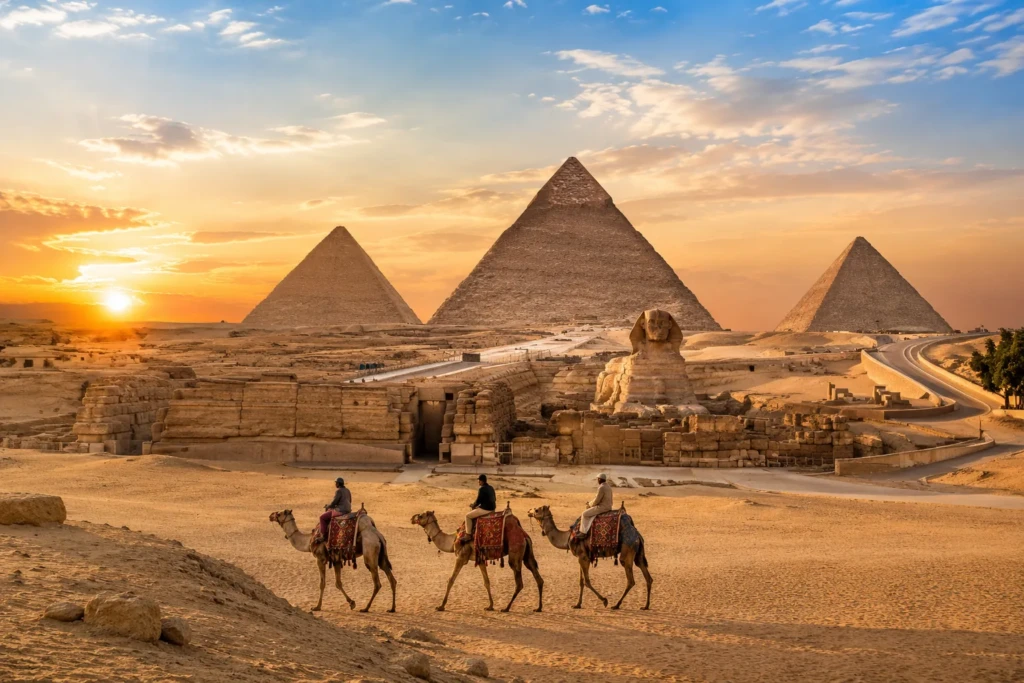
There are a few places on Earth that instantly capture the imagination like Giza.
Home to the last surviving Wonder of the Ancient World, Giza is where history, mystery, and human achievement come together in one extraordinary destination. Every year, millions of travelers visit this remarkable corner of Egypt to stand before the Great Pyramids, meet the timeless Great Sphinx, and discover treasures that have inspired explorers for thousands of years.
This complete Giza Travel Guide will help you plan every aspect of your visit, from choosing the best time to travel and deciding where to stay to discovering hidden viewpoints, practical travel tips, and the experiences that make Giza unforgettable.
If you’re also planning to explore the rest of the country, start with our Egypt Travel Guide, then continue with our Cairo Travel Guide to see how Giza fits into a wider Egypt itinerary.
Why Visit Giza?
Ask anyone to picture Egypt, and chances are they imagine the skyline of Giza.
For more than 4,500 years, the Great Pyramids have stood on the edge of the desert, surviving the rise and fall of civilizations while continuing to amaze visitors from around the world. They are among the most recognizable landmarks on the planet and remain one of the greatest architectural achievements in human history.
Within a short distance, you can walk through one of the world’s newest museums, enjoy lunch overlooking the pyramids, watch the sunset over the pyramids from a hotel garden or terrace, or stay in luxury hotels where your morning view includes the Great Pyramid itself.
Giza at a Glance
| Information | Details |
|---|---|
| Country | Egypt |
| Governorate | Giza |
| Distance from Downtown Cairo | Approximately 20 km (12 miles) |
| Closest Airport | Sphinx International Airport (most international flights use Cairo International Airport) |
| Best Time to Visit | October to April |
| Recommended Stay | 1–2 Days |
| Currency | Egyptian Pound (EGP) |
| Language | Arabic |
| Famous For | Great Pyramids, Great Sphinx, Grand Egyptian Museum |
Where Is Giza?
Although many travelers think Giza is simply a neighborhood of Cairo, it is actually its own governorate located on the west bank of the Nile River.
Together with Cairo and Qalyubia, it forms the Greater Cairo metropolitan area, one of the largest urban regions in Africa.
Its location makes Giza incredibly convenient. The pyramids are within easy reach of Downtown Cairo, making it possible to combine both destinations in a single trip.
Because of this strategic location, Giza is also the perfect starting point for journeys to Saqqara, Dahshur, Memphis, Luxor, Aswan, and the Red Sea.
A Brief History of Giza
The story of Giza begins during Egypt’s Old Kingdom, often called the “Age of the Pyramid Builders.” Around 2580 BC, Pharaoh Khufu ordered the construction of what would become the Great Pyramid, a monument so ambitious that it remained the tallest man-made structure in the world for nearly 3,800 years.
His son, Pharaoh Khafre, continued this remarkable building tradition by constructing the second pyramid and the Great Sphinx, while Pharaoh Menkaure completed the famous trio with the smallest of the three principal pyramids.
The Giza Plateau was far more than a burial ground. It was a carefully designed royal complex that included temples, causeways, workers’ villages, ceremonial structures, and tombs belonging to members of the royal court.
Best Time to Visit Giza
Giza is open throughout the year, but the experience varies depending on the season.
October to April
This is considered the best time to visit.
Cooler temperatures make walking around the archaeological site much more comfortable, and the softer light is ideal for photography.
Because this is Egypt’s busiest travel season, booking hotels and guided tours in advance is highly recommended.
May to September
Summer temperatures can become very high, especially in the afternoon.
If you visit during these months, arrive early in the morning, wear lightweight clothing, stay hydrated, and take breaks in shaded areas whenever possible.
The reward is fewer crowds and quieter monuments.
Is Giza Safe for Tourists?
Yes.
Tourism police are present throughout the archaeological zone, security checks are carried out at the entrances, and the main visitor areas are well organized.
Like any major destination, a few simple precautions help: use licensed guides and transportation, keep valuables secure, and buy tickets only through official sources or trusted tour operators.
For the current official travel advice for Egypt as a whole, read our guide Is it safe to travel to Egypt right now?
What to See and Do in Giza
The Giza Plateau is far more than a collection of ancient monuments. It is an entire archaeological landscape where every structure tells part of the story of ancient Egypt’s greatest builders.
While most visitors come to see the pyramids, those who take the time to explore the surrounding temples, viewpoints, museums, and local experiences discover why Giza deserves at least a full day—if not two. For the full history, map and ticket details of each monument, see our Giza Pyramids Complex guide.
The Great Pyramid of Khufu
The Great Pyramid of Khufu is the main reason millions of travelers visit Giza every year. Built around 2560 BC during Egypt’s Fourth Dynasty, it remains the only surviving Wonder of the Ancient World. Originally standing 146.6 meters (481 feet) tall, its scale is difficult to comprehend until you stand at its base.
A separate ticket lets you climb through narrow ascending passages to the Grand Gallery and the King’s Chamber, where the granite sarcophagus still rests. The interior is plain, and the passageways may not suit visitors with claustrophobia or mobility concerns.
The Great Sphinx
Just a short walk from the pyramids stands one of the world’s most recognizable monuments—the Great Sphinx. It measures approximately 73 meters (240 feet) in length and 20 meters (66 feet) in height and is widely believed to represent Pharaoh Khafre.
The viewing platform directly in front of the Sphinx offers the classic perspective, while another angle near the Valley Temple creates the famous image of the Sphinx appearing to “kiss” the Great Pyramid through camera perspective. Our Great Sphinx guide covers its history, the missing nose and the mysteries around it.
The Pyramids of Khafre and Menkaure
Although many visitors assume it is the tallest pyramid, the Pyramid of Khafre only appears larger because it stands on slightly higher ground. Its most distinctive feature is the original polished limestone casing that still survives near the summit.
The smallest of the three principal pyramids, the Pyramid of Menkaure, stands approximately 65 meters (213 feet) tall. Because most visitors spend the majority of their time near the Great Pyramid, this area is usually quieter and offers excellent opportunities for photography.
The Valley Temple
Located beside the Great Sphinx, the Valley Temple of Khafre is one of the best-preserved granite temples from Egypt’s Old Kingdom. Take your time here. While many visitors pass through in just a few minutes, it provides valuable insight into the religious beliefs that shaped pyramid construction.
Hidden Gems Most Visitors Miss
Queens’ Pyramids: Located beside the Great Pyramid, these smaller pyramids were built for queens and royal family members. They attract fewer visitors and offer a quieter atmosphere.
Workers’ Village: Excavations south of the plateau revealed the settlement where many of the skilled workers who built the pyramids lived, showing that a well-organized workforce, not enslaved people, carried out the construction.
Solar Boat Museum Area: Near the Great Pyramid, archaeologists discovered ceremonial boat pits used in the king’s journey to the afterlife. One of these cedar boats was rebuilt after excavation and is now displayed in Khufu’s Boats Museum at the Grand Egyptian Museum.
The Grand Egyptian Museum
Only minutes from the Giza Plateau, the Grand Egyptian Museum (GEM) is one of the most significant cultural projects of the 21st century and perfectly complements a visit to the pyramids.
Highlights include the monumental statue of Ramses II, the Grand Staircase lined with colossal statues, and the complete treasures of Tutankhamun displayed together for the first time.
We recommend visiting the pyramids first. Seeing the monuments in person creates a deeper appreciation for the artifacts you’ll encounter in the museum, and the museum then provides the historical context that brings the archaeological site to life. Allow at least three to four hours for your visit.
The Sound & Light Show
As darkness falls, the pyramids become the stage for one of Egypt’s oldest evening attractions. The Sound & Light Show combines dramatic lighting, music, and narration to tell the story of the pharaohs and the construction of the pyramids.
Although opinions differ on the show itself, many travelers enjoy seeing the monuments illuminated against the night sky. Our Pyramids Sound & Light Show tour includes the evening show.
Camel and Horse Rides
A camel ride near the pyramids is one of Egypt’s most iconic experiences. While it isn’t essential for every visitor, a short ride into the surrounding desert offers breathtaking panoramic views that cannot be seen from the main visitor paths. Horseback rides are also available and are often preferred by experienced riders seeking a faster and more comfortable experience.
Before booking, use licensed operators, agree on the total price and the duration before the ride begins, and choose operators who treat their animals responsibly.
Where to Stay in Giza
Choosing where to stay can completely change your experience in Giza. Those who stay overnight are rewarded with quieter mornings, pyramid views at sunrise from their hotel, and the opportunity to enjoy the monuments after the day-trippers have left.
Should You Stay in Giza or Cairo?
Stay in Giza for easy access to the pyramids, pyramid-view rooms, and early entry before the crowds arrive; stay in Cairo for more restaurants, nightlife, museums, and historic districts. For first-time visitors spending one or two nights, we often recommend combining both. Stay in Giza for the pyramid experience, then move to Cairo if your itinerary includes Islamic Cairo, Coptic Cairo, or downtown attractions. Our Cairo Travel Guide covers where to stay in the city.
Marriott Mena House
Few hotels anywhere in the world can match the setting of Marriott Mena House. Located just steps from the Giza Plateau, this historic hotel has welcomed royalty, presidents, celebrities, and explorers for more than a century.
Highlights include direct views of the Great Pyramid, beautiful gardens, fine dining restaurants, an outdoor swimming pool, and a short drive to the main visitor entrance on the Cairo-Fayoum road.
Boutique Hotels with Pyramid Views
Travelers wanting something more intimate will find several boutique hotels offering rooftop terraces and impressive pyramid views.
These properties often provide personalized hospitality, smaller guest numbers, and rooftop breakfast overlooking the pyramids.
Many boutique hotels are located within a few minutes of the Giza Plateau entrance, making them ideal for photographers planning early morning visits.
Budget-Friendly Hotels
Giza also offers a wide range of affordable accommodations suitable for independent travelers and families.
Many provide complimentary breakfast, airport transfers, and rooftop terraces.
While luxury hotels offer unmatched comfort, budget hotels can still provide excellent access to the pyramids at a fraction of the cost.
For a detailed comparison of the hotels facing the plateau, read our guide to the best hotels with a pyramid view in Cairo and Giza.
If You Prefer to Stay in Central Cairo
The following hotels are in central Cairo rather than Giza and do not have pyramid views, but they suit travelers who want a city base and a private day trip to the pyramids:
- Four Seasons Hotel Cairo at Nile Plaza: spacious rooms, exceptional dining, Nile views, a luxury spa, and family-friendly services.
- The St. Regis Cairo: butler service, spacious suites, multiple restaurants, a luxury spa, and easy access to Giza via private transfer.
- Kempinski Nile Hotel: smaller than some international brands, with personalized service and excellent dining.
Getting to and Around Giza
Reaching Giza is straightforward, especially if you’re arriving through Cairo International Airport.
From Cairo International Airport
The airport is approximately 45–50 kilometers (28–31 miles) from Giza, typically a 45–60 minute drive depending on traffic.
Options include private airport transfers, ride-hailing services, licensed taxis, and hotel transfers. For most visitors, arranging a private transfer is the most comfortable and stress-free option, particularly after a long international flight.
Travel Times Between Cairo and Giza
Although Cairo and Giza are neighboring cities, traffic can be heavy during peak hours.
Average travel times:
| Route | Approximate Time |
|---|---|
| Downtown Cairo → Giza Plateau | 30–45 minutes |
| Cairo Airport → Giza | 45–60 minutes |
| Grand Egyptian Museum → Pyramids | 5–10 minutes |
| Giza → Saqqara | 35–45 minutes |
| Giza → Dahshur | 45–60 minutes |
Planning your visits outside rush hour can save considerable travel time.
The Best Way to Explore Giza
The Giza Plateau is much larger than many visitors expect. Walking is essential once inside the archaeological site, but reaching the various viewpoints is easier with transportation.
Private Guided Tour (Recommended)
This is the most comfortable way to explore Giza, with a licensed Egyptologist guide, an air-conditioned vehicle, a flexible itinerary, and hotel pickup and drop-off.
You can explore Giza independently, but a licensed Egyptologist explains how the pyramids were built, the religious beliefs behind their design, and the stories of Khufu, Khafre, and Menkaure. This is the option we recommend for first-time visitors.
Taxi or Ride-Hailing Apps
Services such as Uber and local ride-hailing apps are widely available in Greater Cairo and offer transparent pricing.
Public Transportation
While buses and the Cairo Metro connect different parts of Greater Cairo, they are generally less convenient for visitors carrying luggage or traveling on a tight schedule.
Why Trust Delta Tours Egypt?
For more than 50 years, Delta Tours Egypt has been helping travelers discover Egypt through carefully designed private journeys.
Our local Egyptologists, experienced drivers, and travel specialists know Giza beyond the guidebooks. From private guided visits and hotel bookings to personalized itineraries across Egypt, we focus on careful planning and attentive service.
Where to Eat in Giza
Several restaurants and hotel terraces provide uninterrupted views of the pyramids, allowing visitors to enjoy Egyptian cuisine while looking out over one of humanity’s greatest monuments.
Khufu’s Restaurant
Located beside the Giza Plateau, Khufu’s Restaurant has quickly become one of Egypt’s most celebrated dining destinations.
Its modern interpretation of traditional Egyptian cuisine, combined with spectacular pyramid views, makes it one of the most sought-after reservations in the country.
Signature dishes: slow-cooked lamb, stuffed pigeon, grilled kebabs, molokhia, and traditional Egyptian desserts.
Best for: Luxury travelers, couples, special occasions, and sunset dining.
139 Pavilion – Marriott Mena House
Dining in the gardens of the historic Marriott Mena House while looking directly at the Great Pyramid is an experience unlike any other. 139 Pavilion offers:
- International cuisine
- Fresh seafood
- Egyptian specialties
- Excellent breakfast buffet
- Elegant afternoon tea
It is one of the finest places in Egypt for a relaxed lunch after exploring the pyramids. Reservations are recommended at both restaurants, especially around sunset when these venues are at their busiest.
Local Egyptian Restaurants
For a more authentic experience, venture beyond the hotel restaurants and discover local favorites.
Popular dishes include:
- Koshary: Egypt’s national dish made with rice, pasta, lentils, chickpeas, crispy onions, and tomato sauce.
- Foul Medames: slow-cooked fava beans served with olive oil, lemon, and warm Egyptian bread.
- Taameya: Egyptian-style falafel made from fava beans rather than chickpeas.
- Mixed Grill: kofta, kebab, chicken, and lamb served with fresh salads and rice.
- Mahshi: vegetables such as zucchini, peppers, or vine leaves stuffed with seasoned rice and herbs.
Trying traditional Egyptian food is one of the easiest ways to connect with the country’s culture beyond its monuments.
Cafés with Pyramid Views
Sometimes the perfect experience is simply enjoying a coffee while admiring the Great Pyramid.
Several rooftop cafés around the plateau, including those near the main entrance, offer stunning panoramic views and are ideal for coffee or a casual lunch, particularly during sunrise and sunset.
Shopping in Giza
Shopping in Giza ranges from modern boutiques to traditional markets where local artisans continue centuries-old crafts.
If you’re looking for meaningful souvenirs, prioritize handmade products rather than imported mass-produced items.
Popular purchases include:
- Hand-painted papyrus artwork
- Alabaster sculptures
- Handcrafted jewelry
- Traditional Egyptian cotton
- Scarab replicas
- Miniature pyramids
- Handwoven scarves
- Spices and herbal teas
When purchasing antiques, remember that authentic archaeological artifacts cannot legally be exported. Buy only from reputable shops that provide clear information about their products.
How to Shop Like a Local
In traditional markets, friendly bargaining is part of the shopping experience.
Be polite, take your time, compare prices between shops, and don’t feel pressured into buying; if you’re not interested, a polite “No, thank you” is perfectly acceptable. Remember that bargaining should remain respectful and enjoyable for both buyer and seller.
Photography and Sunset Tips
Giza is one of the most photographed destinations in the world, but timing makes a huge difference.
The Panoramic Viewpoint
One of the best places in Egypt for photography lies just southwest of the pyramids. From the Panoramic Viewpoint, visitors can see all three pyramids aligned against the desert, creating the classic image found on postcards and travel magazines.
The viewpoint is particularly beautiful during the late afternoon, when the warm desert light enhances the colors of the limestone.
Note that the Panoramic Viewpoint is inside the ticketed plateau, so you can only visit it during opening hours. Sunrise and sunset over the pyramids happen outside opening hours for much of the year and can only be seen from viewpoints outside the site, such as hotel gardens, restaurant terraces, and rooftops facing the plateau.
For photography inside the site, come as soon as the plateau opens or in the late afternoon, when the light is softer, visitors are fewer, and temperatures are more comfortable.
The Great Sphinx viewing platform and the desert road behind the pyramids are also excellent photo spots.
Wide-angle lenses work particularly well for capturing the scale of the monuments.
Sunset in Giza
As the afternoon sun begins to set, the limestone pyramids gradually change from pale gold to deep orange before taking on soft pink tones.
Our favorite sunset locations include:
- Marriott Mena House gardens.
- Khufu’s Restaurant.
- Rooftop terraces overlooking the plateau.
Accessibility at the Giza Plateau
The Giza Plateau is an ancient archaeological site, which means accessibility varies depending on the area.
Families with children, seniors with moderate mobility, and wheelchair users can manage selected areas, with stroller access near the visitor center and museum. Entering the Great Pyramid, the desert viewpoints, rocky pathways, and camel riding areas are more challenging.
The Grand Egyptian Museum offers significantly better accessibility, with elevators, ramps, and modern visitor facilities.
If accessibility is a priority, arranging a private tour allows the itinerary to be adapted to individual needs.
How to Avoid Tourist Scams
Like many famous destinations around the world, Giza has unofficial vendors and individuals offering unsolicited services.
The vast majority are friendly, but it’s wise to be prepared:
- Purchase tickets only from official ticket offices or authorized tour operators.
- Politely decline unwanted offers if you’re not interested.
- Agree on prices before accepting any service.
- Use licensed guides and reputable transportation providers.
- Avoid following strangers to “secret viewpoints” that require additional payments.
Booking through an established travel company eliminates most of these concerns and allows you to focus on enjoying your visit.
What to Wear and Pack
Comfort is more important than formality. We recommend lightweight, breathable clothing, comfortable walking shoes, sunglasses, sunscreen, a wide-brimmed hat, and a light jacket during winter evenings.
Egypt is welcoming to international visitors, and there is no strict dress code for tourists. However, modest clothing is appreciated, particularly when visiting religious sites elsewhere in your itinerary.
Before heading to the Giza Plateau, also pack your passport or a copy of your identification, your entrance tickets, a portable phone charger, and cash for small purchases and tips.
Packing thoughtfully helps you spend more time enjoying the site and less time searching for essentials.
Local Customs & Etiquette
Egyptians are known for their hospitality and friendliness toward visitors.
A few cultural customs can make your experience even more enjoyable.
Photography
Always ask permission before photographing individuals, especially in villages or markets.
Most people are happy to help when approached respectfully.
Tipping
Tipping, known locally as baksheesh, is customary throughout Egypt.
Many service providers—including guides, drivers, hotel staff, and restaurant employees—appreciate small gratuities for good service.
While tipping is voluntary, it is a well-established part of Egyptian hospitality.
Local Expert Tips
A few simple decisions can dramatically improve your visit:
- Arrive when the site opens to enjoy cooler temperatures, fewer crowds, and the best light for photography. Many visitors reach the pyramids around midday, when temperatures and crowds are at their highest.
- Visit the pyramids first, then spend the afternoon inside the Grand Egyptian Museum, where the air-conditioned galleries provide valuable context for what you’ve just explored.
- Don’t rush through the plateau, and don’t spend all your time at the Great Pyramid—each monument on the plateau has its own story.
- Choose a private Egyptologist guide for a richer understanding of the history, architecture, and symbolism behind the monuments.
- Don’t leave immediately after the pyramids. Saqqara, Memphis, and Dahshur are all nearby and provide a much richer understanding of ancient Egypt.
Stay at Least One Night in Giza
By staying overnight, you can visit the plateau shortly after opening, enjoy breakfast with uninterrupted pyramid views, explore the Grand Egyptian Museum without rushing, and see the illuminated pyramids after dark.
These are the moments that transform a sightseeing stop into a truly memorable journey.
Suggested Giza Itineraries
Whether you have just a few hours or several days, planning your time well allows you to experience Giza beyond simply taking photos of the pyramids.
One full day is enough to experience the highlights and suits travelers staying in Cairo. Two days (recommended) allow you to enjoy Giza without feeling rushed and provide better opportunities for photography and nearby attractions such as Saqqara or Dahshur.
The Perfect 1-Day Giza Itinerary
If you only have one day, focus on the highlights while allowing enough time to appreciate each site rather than rushing between attractions.
Morning (7:00 AM): Start your day as soon as the Giza Plateau opens; check the hours on the official ticket platform for your date. Visit the Great Pyramid of Khufu, the Pyramid of Khafre, and the Pyramid of Menkaure. Early morning offers cooler temperatures, softer light, and fewer crowds.
Mid-Morning: Continue to the Great Sphinx and the Valley Temple.
Lunch: Enjoy lunch at Khufu’s Restaurant or 139 Pavilion at Marriott Mena House while overlooking the pyramids.
Afternoon: Visit the Grand Egyptian Museum. Allow at least three to four hours to explore the galleries, monumental statues, and the complete treasures of Tutankhamun.
Evening: If you’re staying overnight, finish the day with dinner overlooking the illuminated pyramids, the Sound & Light Show, or a rooftop café with panoramic views.
The Ideal 2-Day Giza Itinerary
Two days provide a much more relaxed experience and allow you to appreciate Giza’s history without feeling rushed.
Day One
Follow the 1-day plan above for the pyramids, the Great Sphinx, the Valley Temple, and a pyramid-view lunch, then use the afternoon for a camel ride or the panoramic viewpoint and a photography session, and end with sunset over the pyramids and fine dining.
Day Two
Spend the morning at the Grand Egyptian Museum, relax over lunch at a nearby café, then choose one nearby destination for the afternoon: Saqqara, Memphis, or Dahshur.
This combination offers a deeper understanding of how pyramid construction evolved before reaching its peak at Giza.
The Ultimate 3-Day Cairo & Giza Itinerary
For many first-time visitors, three days provide the perfect introduction to Egypt.
- Day One: Discover the Giza Plateau.
- Day Two: Grand Egyptian Museum, Saqqara, and Memphis.
- Day Three: Explore Cairo: the Egyptian Museum or NMEC, Islamic Cairo, Khan El Khalili, the Cairo Citadel, and Coptic Cairo.
For a ready-made Cairo-based program, see our Taste of Egypt – 4 Days (Cairo) tour.
Best Day Trips from Giza
Because of its central location, Giza makes an excellent base for exploring northern Egypt, and it is often the beginning of a much larger adventure across the country.
Saqqara
Approximately 40 minutes away. Highlights include:
- The Step Pyramid of Djoser, the world’s first pyramid and one of the greatest milestones in architectural history
- Tombs with remarkable wall reliefs
- Imhotep Museum
Dahshur
Home to the Bent Pyramid and the Red Pyramid. These monuments reveal the evolution of pyramid construction before the Great Pyramid was built.
Memphis
Egypt’s first ancient capital offers:
- Colossal Statue of Ramses II
- Alabaster Sphinx
- Open-air museum
Luxor and Aswan
Continue to Egypt’s greatest open-air museum in Luxor, including Karnak Temple, Luxor Temple, and the Valley of the Kings. In Aswan, relax beside the Nile, visit Philae Temple, and discover the breathtaking temples of Abu Simbel.
Together, these destinations tell the complete story of ancient Egypt—from its earliest kings to the height of the pharaohs’ civilization.
Travel Responsibly
As a visitor, you can help preserve this World Heritage Site by staying on designated pathways, respecting barriers and protected areas, avoiding climbing on monuments, disposing of waste responsibly, and supporting licensed guides and ethical local businesses.
For Giza with your own guide and car, see our Pyramids Day Tour and Grand Egyptian Museum and Pyramids tour, and for hotels facing the plateau read our guide to hotels with a Pyramid view.
Frequently Asked Questions
Which pyramid should I enter?
If you’re visiting only one, the Great Pyramid of Khufu offers the most iconic experience due to its historical significance.
If you’ve visited pyramids before or prefer fewer crowds, the Pyramid of Menkaure can also be a rewarding option when open to visitors.
Can I pay with a credit card?
Most hotels, restaurants, museums, and official ticket offices accept major credit cards.
Carrying a small amount of Egyptian currency is useful for tips, local vendors, and smaller purchases.
Quick Planning Checklist
Before traveling to Giza, make sure you’ve arranged:
✔ Passport valid for at least six months.
✔ Egyptian visa (if required for your nationality).
✔ Hotel reservation.
✔ Airport transfer.
✔ Tickets or guided tour.
✔ Travel insurance.
✔ A full day—or preferably two—to explore without rushing.
Why Book Your Giza Tour with Delta Tours Egypt?
When you travel with us, you benefit from:
- Private licensed Egyptologists who bring ancient history to life.
- Carefully selected hotels, including properties with stunning pyramid views.
- Flexible itineraries tailored to your interests, pace, and travel style.
- Seamless connections to Cairo, Luxor, Aswan, Alexandria, the Red Sea, and Nile cruises.
- Transparent pricing with no hidden costs.
Whether you’re planning a one-day visit to the Giza Plateau or a luxury journey across Egypt, our team is committed to helping you experience the country’s extraordinary heritage with confidence and comfort.
Explore our Luxury Egypt Tours to discover handcrafted itineraries that include Giza, Cairo, Luxor, Aswan, Abu Simbel, and the finest Nile cruises, all designed to provide an unforgettable Egyptian adventure.
Final Thoughts
Giza is more than the home of the Great Pyramids—it is a place where the story of one of the world’s greatest civilizations unfolds before your eyes.
We look forward to welcoming you to Egypt and helping you create a journey filled with unforgettable moments.