
Who Was Imhotep? The World’s First Architect, Physician & Genius of Ancient Egypt (2026 Guide)
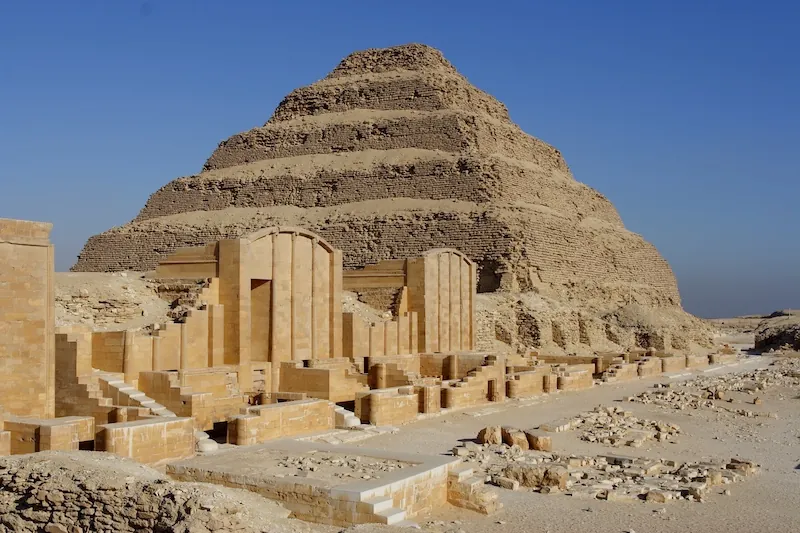
More than 4,600 years ago, one man changed the course of human history—not through conquest or kingship, but through knowledge, innovation, and extraordinary vision.
His name was Imhotep.
Widely regarded as the world’s first named architect, Imhotep was a brilliant engineer, physician, high priest, astronomer, and royal advisor who served Pharaoh Djoser during Egypt’s Third Dynasty. His greatest achievement—the design of the Step Pyramid of Djoser at Saqqara—transformed architecture forever by creating the world’s first monumental stone building.
Yet Imhotep’s influence extended far beyond architecture. Over the centuries, he became a symbol of wisdom and healing, eventually being worshipped as a god by the ancient Egyptians and later identified with the Greek god of medicine, Asclepius.
Today, Imhotep remains one of the most celebrated figures in ancient history, and his legacy continues to inspire architects, engineers, doctors, and historians around the world.
Quick Facts About Imhotep
| Fact | Information |
|---|---|
| Full Name | Imhotep |
| Meaning of Name | “The One Who Comes in Peace” |
| Period | Third Dynasty of Egypt (c. 27th century BC) |
| Served Under | Pharaoh Djoser |
| Occupation | Architect, Engineer, Physician, High Priest, Royal Chancellor |
| Greatest Achievement | Designing the Step Pyramid of Djoser |
| Burial Place | Unknown (believed to be near Saqqara) |
| Later Worshipped As | God of Wisdom and Medicine |
Why Is Imhotep Famous?
Few individuals from the ancient world have influenced so many different fields.
Imhotep is remembered for introducing revolutionary building techniques, advancing medical knowledge, and serving as one of the most trusted officials in Pharaoh Djoser’s court. His achievements were so remarkable that, unlike most non-royal Egyptians, his name survived for thousands of years.
His fame rests on several extraordinary accomplishments:
- Designing the world’s first pyramid.
- Leading the construction of the first monumental stone complex.
- Serving as the chief advisor to Pharaoh Djoser.
- Becoming one of history’s earliest known architects.
- Earning a reputation as a gifted physician.
- Being deified centuries after his death.
While many ancient monuments have anonymous creators, the Step Pyramid has a known mastermind—Imhotep.
That alone makes him one of the most remarkable figures in architectural history.
Ancient Egypt Before Imhotep
To understand why Imhotep’s achievements were so revolutionary, it’s important to look at Egypt before his lifetime.
For centuries, Egyptian rulers were buried in rectangular tombs known as mastabas. These structures, built from mudbrick, were relatively simple compared to the monumental pyramids that would later dominate the landscape.
Although mastabas served their purpose, they lacked the permanence and grandeur desired by the increasingly powerful pharaohs of the Old Kingdom.
Stone was used sparingly for temples and decorative elements, but no one had yet imagined constructing an entire royal monument from carefully cut limestone.
It was during this period of experimentation that Imhotep introduced an idea that would forever change architecture.
Imhotep’s Early Life
Despite his fame, surprisingly little is known about Imhotep’s childhood.
Unlike kings, whose lives were carefully documented, officials of the Third Dynasty left behind relatively few records. Historians therefore rely on inscriptions, later writings, and archaeological evidence to reconstruct his biography.
Most scholars believe Imhotep was born into a respected but non-royal family in ancient Memphis, then the capital of Egypt.
Rather than inheriting power through royal blood, he appears to have risen through education, talent, and exceptional ability.
His knowledge of mathematics, engineering, religion, and administration suggests he received one of the finest educations available in ancient Egypt.
This background prepared him for an extraordinary career at the royal court.
Serving Pharaoh Djoser
Imhotep reached the height of his career during the reign of Pharaoh Djoser, the second king of Egypt’s Third Dynasty.
Djoser ruled during a period of political stability and economic prosperity, creating the ideal conditions for ambitious building projects.
Recognizing Imhotep’s exceptional abilities, the king entrusted him with responsibilities rarely given to a single individual.
Rather than acting solely as an architect, Imhotep became one of the most influential officials in Egypt.
His close relationship with Djoser allowed him to oversee some of the most significant state projects of the Old Kingdom.
The Many Titles of Imhotep
Ancient inscriptions reveal that Imhotep held numerous prestigious positions, reflecting the remarkable range of his expertise.
Among his titles were:
- Chancellor of the King of Lower Egypt.
- First After the King.
- High Priest of Heliopolis.
- Chief Builder.
- Overseer of Sculptors.
- Administrator of the Great Palace.
- Royal Seal Bearer.
Each title represented immense responsibility.
Together, they show that Imhotep was not simply an architect but one of the most powerful and trusted figures in Djoser’s government.
His authority extended across religion, engineering, administration, and royal affairs.
A Genius Ahead of His Time
Modern historians often describe Imhotep as one of history’s first true polymaths—a person whose expertise spans multiple disciplines.
His understanding of architecture required advanced knowledge of mathematics, geometry, astronomy, logistics, and construction techniques.
At the same time, his religious duties demanded a deep understanding of Egyptian theology, rituals, and sacred traditions.
Balancing these responsibilities required exceptional intelligence and organizational skill.
Few individuals in any civilization have combined such diverse talents with such lasting influence.
Was Imhotep Really the World’s First Architect?
Many historians consider Imhotep to be the first architect in recorded history whose name is known.
Earlier builders undoubtedly existed, but their identities have been lost over time.
Imhotep is different.
His name appears in inscriptions associated with Djoser’s reign, and later generations celebrated him as the visionary behind one of humanity’s greatest architectural achievements.
This distinction makes him unique.
He is not simply remembered because he built an extraordinary monument—he is remembered because his individual contribution was recognized and preserved.
More Than an Architect
Although the Step Pyramid defines Imhotep’s legacy, reducing him to an architect alone would overlook the breadth of his accomplishments.
Ancient sources portray him as:
- A master engineer.
- A gifted physician.
- A respected scholar.
- A religious leader.
- A trusted political advisor.
- A teacher of wisdom.
Over the centuries, these achievements transformed Imhotep into a legendary figure whose reputation extended far beyond Egypt’s borders.
His name became synonymous with intelligence, creativity, and innovation.
Why Imhotep Still Matters Today
More than four millennia after his lifetime, Imhotep continues to inspire people around the world.
Architects admire his revolutionary use of stone construction.
Engineers study the planning behind the Step Pyramid complex.
Medical historians recognize him as one of the earliest figures associated with scientific healing.
Travelers visit Saqqara to see the monument that began the age of pyramids.
His story reminds us that history is shaped not only by kings and conquerors but also by visionaries whose ideas transform civilizations.
Imhotep was one such visionary.
How Imhotep Built the World’s First Pyramid
If Imhotep had achieved nothing beyond designing the Step Pyramid of Djoser, his name would still be remembered as one of the greatest innovators in human history.
Like previous kings, Djoser would have been buried in a mastaba. Instead, Imhotep stacked increasingly smaller mastabas on top of each other, expanding and redesigning the monument in several stages until it became a six-tier pyramid approximately 60 meters (197 feet) high. Building almost entirely with limestone rather than mudbrick gave the monument permanence, and the surrounding ceremonial complex of approximately 15 hectares (37 acres), with its Heb-Sed Court and underground galleries, turned a royal tomb into a symbolic city dedicated to Djoser’s eternal kingship.
By replacing temporary materials with enduring stone, Imhotep established principles that influenced Egyptian builders for centuries and eventually led to the pyramids of Dahshur and Giza. For the construction phases, the complex and its underground chambers, read our full guide to the Step Pyramid of Djoser.
Imhotep the Physician, Scholar, High Priest & God of Healing
Imhotep’s reputation extends far beyond the construction of the Step Pyramid.
While history remembers him as the architect who revolutionized monumental stone building, later generations admired him for something even greater—his extraordinary wisdom.
Over the centuries, Imhotep became known as a physician, philosopher, astronomer, priest, mathematician, and scholar. His achievements were so exceptional that nearly two thousand years after his death, the ancient Egyptians elevated him to the status of a deity.
Very few non-royal individuals in Egyptian history received such an honor.
His transformation from royal official to god of healing is one of the most remarkable stories of the ancient world.
Imhotep the Physician
Although no medical writings signed by Imhotep have survived, ancient Egyptian tradition consistently remembers him as one of the country’s greatest physicians.
Centuries after his lifetime, doctors and priests regarded him as the founder of Egyptian medicine.
Ancient texts describe Imhotep as a healer whose knowledge combined careful observation with religious understanding.
Rather than relying solely on magic, Egyptian medicine often included:
- Physical examinations.
- Diagnosis based on symptoms.
- Surgical treatments.
- Herbal remedies.
- Bone setting.
- Wound care.
- Hygiene practices.
This balanced approach made Egyptian medicine among the most advanced medical systems of the ancient world.
Because of his reputation, Imhotep eventually became the patron of physicians throughout Egypt.
The Edwin Smith Papyrus
One of the most famous medical documents from ancient Egypt is the Edwin Smith Papyrus, a surgical text dating to around 1600 BC but believed to preserve knowledge from much earlier traditions.
Although modern historians cannot confirm that Imhotep personally wrote the original work, later Egyptian tradition associated him with its remarkable medical knowledge.
The papyrus contains detailed descriptions of:
- Head injuries.
- Broken bones.
- Spinal trauma.
- Wound treatment.
- Medical diagnosis.
- Patient prognosis.
What makes this document extraordinary is its logical approach.
Rather than attributing every illness to supernatural causes, many cases are examined through careful observation and practical treatment.
This scientific mindset contributed greatly to Imhotep’s legendary reputation as the father of Egyptian medicine.
A Scholar Without Equal
Imhotep’s responsibilities extended into nearly every field of knowledge available during the Old Kingdom.
He mastered subjects including:
- Architecture.
- Engineering.
- Mathematics.
- Astronomy.
- Religion.
- Administration.
- Literature.
This broad expertise allowed him to oversee enormous state projects while serving as one of Pharaoh Djoser’s closest advisors.
Today, historians often describe him as one of history’s earliest recorded polymaths—a person whose mastery spans multiple disciplines.
His ability to combine technical skill with religious knowledge made him indispensable to the royal court.
High Priest of Heliopolis
One of Imhotep’s most prestigious titles was High Priest of Heliopolis.
Heliopolis was among the most important religious centers in ancient Egypt and served as the principal center for the worship of the sun god Ra.
As High Priest, Imhotep was responsible for:
- Supervising major religious ceremonies.
- Advising the king on sacred matters.
- Preserving religious traditions.
- Managing temple activities.
- Interpreting divine rituals.
His position demonstrates that religion and government were deeply connected in ancient Egypt.
Architecture itself was considered a sacred act, and every royal monument reflected religious beliefs about kingship, creation, and eternity.
Why Was Imhotep Worshipped?
For more than a thousand years after his death, Imhotep remained respected as an exceptional historical figure.
Then something extraordinary happened.
During the Late Period of ancient Egypt, his reputation grew so dramatically that he was worshipped as a divine being.
Temples dedicated to Imhotep appeared across Egypt.
People traveled long distances seeking:
- Healing.
- Medical advice.
- Fertility blessings.
- Wisdom.
- Protection.
Pilgrims left offerings, prayers, and inscriptions asking Imhotep to cure illnesses and provide guidance.
Unlike many Egyptian gods who had always been divine, Imhotep began life as a human being.
His deification reflects the immense admiration Egyptians held for his achievements.
Imhotep and the Greek God Asclepius
After Alexander the Great conquered Egypt in 332 BC, Greek culture merged with Egyptian traditions.
The Greeks quickly recognized similarities between Imhotep and their own god of medicine, Asclepius.
Both figures were associated with:
- Healing.
- Medical knowledge.
- Wisdom.
- Temples visited by the sick.
- Divine guidance.
As a result, Greek visitors identified Imhotep with Asclepius, helping spread his reputation throughout the Mediterranean world.
This cultural connection ensured that Imhotep’s legacy survived well into the Roman period.
Temples Dedicated to Imhotep
Several temples honoring Imhotep existed during the Late Period and the Ptolemaic era.
Visitors came hoping to receive miraculous healing.
Many spent the night inside temple sanctuaries, believing that Imhotep would appear in dreams and reveal treatments for their illnesses.
This practice, known as dream incubation, was also associated with Asclepius in the Greek world.
Archaeologists have discovered inscriptions recording prayers of gratitude from individuals who believed they had been cured through Imhotep’s intervention.
These discoveries illustrate the extraordinary transformation of a royal architect into one of Egypt’s most beloved healing deities.
The Imhotep Museum at Saqqara
Today, visitors can continue exploring Imhotep’s remarkable legacy at the Imhotep Museum, located near the entrance to the Saqqara archaeological site.
Opened in 2006, the museum serves as an introduction to the history of Saqqara and the achievements of its greatest architect.
Its carefully curated galleries display artifacts discovered during excavations across the necropolis, offering valuable context before visiting the Step Pyramid complex.
Highlights include:
- Statues of Imhotep.
- Stone vessels from Djoser’s complex.
- Architectural fragments.
- Ancient tools.
- Relief carvings.
- Funerary objects.
- Sculptures from nearby tombs.
- Models illustrating the evolution of the Step Pyramid.
For anyone interested in understanding how Imhotep transformed architecture and influenced Egyptian civilization, the museum is an essential stop.
How the Museum Complements the Step Pyramid
Many travelers visit the Step Pyramid without fully appreciating the genius behind its construction.
The Imhotep Museum bridges that gap.
Rather than focusing solely on the monument, it explains:
- How the pyramid was designed.
- How limestone was quarried and transported.
- The evolution from mastaba to pyramid.
- The religious symbolism of the complex.
- Daily life during the Third Dynasty.
- The archaeological discoveries that reshaped our understanding of Saqqara.
Visiting the museum before exploring the pyramid allows travelers to recognize details they might otherwise overlook.
Together, the museum and the Step Pyramid provide one of the most complete introductions to the beginnings of monumental architecture.
Imhotep’s Influence Beyond Egypt
Imhotep’s achievements inspired generations far beyond the borders of ancient Egypt.
Historians, architects, physicians, and engineers continue to study his work because it represents one of humanity’s earliest examples of innovation across multiple disciplines.
His legacy can be seen in:
- Monumental architecture.
- Urban planning.
- Project management.
- Engineering.
- Medical ethics.
- Scientific observation.
- Historical scholarship.
Few individuals from the ancient world have left such a broad and enduring impact.
More than four and a half millennia after he lived, Imhotep remains a symbol of creativity, intelligence, and the pursuit of knowledge.
Why Imhotep Is Still Celebrated Today
Unlike many historical figures remembered only through monuments, Imhotep’s influence continues to resonate because his achievements crossed the boundaries of architecture, science, medicine, and religion.
He demonstrated that great civilizations are built not only by powerful rulers but also by visionary thinkers capable of solving complex problems and inspiring future generations.
Whether admired as the architect of the Step Pyramid, honored as a healer, or celebrated as one of history’s greatest scholars, Imhotep’s story remains one of the most inspiring chapters in ancient Egyptian history.
Imhotep: Myths, Facts & His Enduring Legacy
Few figures from the ancient world have inspired as much admiration—and as many legends—as Imhotep.
Over nearly five thousand years, his remarkable achievements have been celebrated, exaggerated, and sometimes misunderstood. Historical records, archaeological discoveries, and later religious traditions have blended together, making it difficult to separate the man from the myth.
Yet one fact remains undisputed: Imhotep was a real historical figure whose influence on architecture, engineering, medicine, and Egyptian civilization continues to be felt today.
Understanding what is historically supported—and what belongs to legend—allows us to appreciate his accomplishments even more.
Myth vs. Fact
Myth 1: Imhotep Built the Great Pyramid of Giza
Fact
No.
This is one of the most common misconceptions.
Imhotep designed the Step Pyramid of Djoser at Saqqara during the Third Dynasty, around 2650 BC.
The Great Pyramid of Khufu was constructed approximately a century later during the Fourth Dynasty.
Although Imhotep did not build the pyramids at Giza, his revolutionary ideas made their construction possible.
Without the architectural breakthroughs introduced at Saqqara, the smooth-sided pyramids at Dahshur and Giza may never have been developed.
Myth 2: Imhotep Invented Pyramid Construction Overnight
Fact
The Step Pyramid was the result of experimentation and continuous refinement.
Archaeological evidence suggests the monument evolved through several construction phases.
Rather than appearing fully formed, it gradually transformed from a traditional mastaba into the six-tiered Step Pyramid we see today.
This process highlights Imhotep’s willingness to innovate, revise, and improve his designs—qualities shared by the greatest engineers throughout history.
Myth 3: Imhotep Was Only an Architect
Fact
Architecture was only one aspect of Imhotep’s extraordinary career.
Ancient inscriptions identify him as:
- Chancellor to Pharaoh Djoser.
- High Priest of Heliopolis.
- Chief Builder.
- Overseer of Sculptors.
- Royal Seal Bearer.
- Scholar.
- Administrator.
Later traditions also celebrated him as a physician and philosopher.
His legacy rests on the rare combination of technical expertise, political leadership, religious authority, and intellectual achievement.
Myth 4: Imhotep Was Born into the Royal Family
Fact
There is no evidence that Imhotep was of royal blood.
Most historians believe he came from a respected but non-royal family and rose through merit, education, and exceptional talent.
His career is one of the earliest recorded examples of an individual achieving extraordinary influence through knowledge rather than inheritance.
Myth 5: Imhotep Was a Fictional Character
Fact
Unlike many legendary figures, Imhotep is well documented.
His name appears in inscriptions dating to the reign of Djoser, and numerous later texts refer to him as an important historical figure.
Archaeological discoveries at Saqqara and elsewhere continue to support his historical existence.
While later stories embellished his life, the man himself was real.
Where Is Imhotep Buried?
One of archaeology’s greatest mysteries is the location of Imhotep’s tomb.
Despite decades of excavations at Saqqara, archaeologists have never conclusively identified his burial place.
Most scholars believe his tomb lies somewhere within the Saqqara necropolis because:
- He served Pharaoh Djoser.
- He supervised construction at Saqqara.
- Later generations worshipped him there.
- Pilgrims visited the area seeking his blessing.
Several possible locations have been proposed, but none has been confirmed.
The discovery of Imhotep’s tomb would rank among the most significant archaeological finds of the century.
Could Imhotep’s Tomb Still Exist?
Many Egyptologists believe the answer is yes.
Saqqara remains one of the world’s most active archaeological sites, with new discoveries announced almost every year.
Large sections of the necropolis remain unexplored, buried beneath sand or hidden beneath later structures.
Recent excavations have uncovered:
- Previously unknown tombs.
- Ancient burial shafts.
- Mummies.
- Statues.
- Ritual objects.
- Hidden chambers.
These discoveries demonstrate that Saqqara still holds countless secrets.
Finding Imhotep’s final resting place would transform our understanding of one of history’s greatest minds.
Why Historians Admire Imhotep
Imhotep’s significance lies not only in what he built but also in how he approached problems.
He combined observation, planning, creativity, and practical engineering in ways rarely seen during the ancient world.
Historians often highlight his ability to integrate multiple disciplines.
He successfully united:
- Architecture.
- Mathematics.
- Engineering.
- Astronomy.
- Religion.
- Administration.
- Art.
This multidisciplinary approach allowed him to create monuments that were not only structurally impressive but also deeply symbolic.
His work demonstrates that the greatest achievements often emerge when different fields of knowledge come together.
Imhotep’s Influence on Architecture
The architectural principles introduced by Imhotep influenced Egyptian builders for centuries.
His innovations included:
- Large-scale limestone construction.
- Monumental architectural planning.
- Integrated ceremonial complexes.
- Precise geometric alignment.
- Long-term structural durability.
Every major royal pyramid built after Djoser owes something to Imhotep’s pioneering vision.
Even today, architects study the Step Pyramid as one of humanity’s earliest examples of monumental design.
Imhotep’s Legacy in Medicine
Although archaeology cannot confirm every medical achievement attributed to Imhotep, his reputation as a healer endured for more than two thousand years.
This alone is remarkable.
Doctors throughout ancient Egypt regarded him as a model of wisdom and compassion.
His association with careful diagnosis and practical treatment influenced Egyptian medical tradition long after his lifetime.
Because of this enduring reputation, he eventually became the patron deity of physicians.
Few historical figures have inspired both engineers and doctors across so many centuries.
Imhotep in Modern Popular Culture
Imhotep’s name continues to appear in books, documentaries, museums, and films.
However, many fictional portrayals bear little resemblance to the historical individual.
Perhaps the best-known example is the The Mummy film series, where a character named Imhotep is depicted as an undead high priest possessing supernatural powers.
While entertaining, this portrayal is entirely fictional.
The real Imhotep was neither a villain nor a sorcerer.
He was an architect, scholar, engineer, and royal official whose achievements were grounded in knowledge and innovation.
Separating historical fact from cinematic fiction helps us appreciate the remarkable accomplishments of the real man.
To see Imhotep’s Step Pyramid in person, join our private Giza, Saqqara and Dahshur tour, or browse all our Cairo tours and excursions.
Frequently Asked Questions
Who was Imhotep?
Imhotep was a Third Dynasty official who served Pharaoh Djoser as architect, engineer, high priest, royal advisor, and administrator. He designed the Step Pyramid of Saqqara, the world’s first monumental stone building.
Why is Imhotep important?
He transformed architecture by pioneering monumental stone construction, influenced Egyptian medicine through his later reputation as a healer, and became one of the few non-royal Egyptians to be worshipped as a god.
Did Imhotep build the Great Pyramid?
No.
He designed the Step Pyramid of Djoser approximately one century before the Great Pyramid of Khufu was built.
His innovations, however, laid the foundations for later pyramid construction.
Was Imhotep a real doctor?
Ancient Egyptian tradition revered Imhotep as a physician, and later generations worshipped him as the god of medicine. Although direct contemporary medical writings by him have not survived, his reputation as a healer became firmly established over the centuries.
Where is Imhotep buried?
His tomb has never been conclusively discovered, though many archaeologists believe it remains hidden somewhere within the Saqqara necropolis.
Why was Imhotep worshipped?
Centuries after his death, Egyptians admired his wisdom, medical reputation, and extraordinary achievements so deeply that they elevated him to divine status as a god of healing and knowledge.
Why Imhotep’s Story Still Inspires the World
Imhotep’s life demonstrates that lasting influence is not measured by military victories or political power alone.
His achievements were built on curiosity, learning, and innovation.
He solved problems that no one had solved before, challenged established traditions, and created ideas that transformed civilization.
More than four and a half millennia later, his legacy remains visible in the pyramids of Egypt, the history of architecture, and the enduring admiration of scholars around the world.
His story reminds us that some of history’s greatest builders leave behind more than monuments—they leave behind ideas that shape humanity for generations.
Explore the Legacy of Imhotep in Egypt Today
More than 4,600 years after he designed the Step Pyramid of Djoser, Imhotep’s legacy remains remarkably alive.
Visitors to Saqqara can still walk through the architectural masterpiece he created, explore the vast ceremonial complex he planned, and visit the museum dedicated to preserving his achievements. Few historical figures allow travelers to experience their work so directly.
Unlike many great thinkers whose contributions survive only in written records, Imhotep’s greatest accomplishment still dominates the Saqqara plateau, standing as the world’s oldest monumental stone building and the foundation of pyramid architecture.
For anyone interested in history, architecture, engineering, or ancient Egypt, following in Imhotep’s footsteps is one of the most rewarding experiences the country has to offer.
Visit Imhotep’s Greatest Achievement
The best way to understand Imhotep’s genius is to explore the places where his ideas became reality.
Step Pyramid of Djoser
The centerpiece of any visit is the Step Pyramid of Djoser, the monument that forever changed architecture.
Here, visitors can:
- Walk through the monumental Entrance Colonnade.
- Explore the Heb-Sed Court.
- View the reconstructed southern courtyard.
- Enter the pyramid (when open to visitors).
- Discover the world’s first monumental stone complex.
Seeing the monument in person makes it easy to understand why Imhotep is remembered as one of history’s greatest architects.
Imhotep Museum
Located beside the entrance to the Saqqara archaeological site, the Imhotep Museum offers valuable insight into the life and work of its namesake.
Its galleries display:
- Original statues.
- Excavated artifacts.
- Stone vessels from Djoser’s complex.
- Architectural fragments.
- Ancient tools.
- Relief carvings.
- Models of the Step Pyramid.
- Archaeological discoveries from Saqqara.
The museum provides essential context before exploring the archaeological site itself.
Explore the Saqqara Necropolis
Imhotep’s influence extends well beyond the Step Pyramid.
Nearby monuments reveal how his innovations shaped later generations.
Highlights include:
- Pyramid of Unas.
- Pyramid of Teti.
- Serapeum of Saqqara.
- Mastaba of Mereruka.
- Mastaba of Kagemni.
- Mastaba of Ankhmahor.
- Sacred Animal Necropolis.
Together, these monuments tell the story of the evolution of ancient Egyptian religion, architecture, and royal burial traditions.
Suggested Full-Day Imhotep Itinerary
Visitors wishing to explore Imhotep’s legacy can comfortably combine the major monuments into a full-day private tour.
| Time | Attraction |
|---|---|
| 08:00 | Depart Cairo |
| 09:00 | Imhotep Museum |
| 09:45 | Step Pyramid of Djoser |
| 11:00 | Heb-Sed Court & South Tomb |
| 11:45 | Serapeum of Saqqara |
| 12:45 | Pyramid of Unas |
| 01:15 | Pyramid of Teti |
| 02:00 | Mastaba of Mereruka |
| 03:00 | Lunch |
| 04:00 | Memphis |
| 05:00 | Return to Cairo |
This itinerary provides a comprehensive introduction to the beginnings of monumental architecture and the remarkable achievements of Imhotep.
Why Visit with Delta Tours Egypt?
Understanding Imhotep’s legacy requires more than simply seeing ancient stones.
The Step Pyramid complex is filled with architectural symbolism, religious meaning, and engineering innovations that are easy to overlook without expert interpretation.
At Delta Tours Egypt, our private Egyptologist-led tours help visitors appreciate the full story behind Imhotep’s achievements.
Our experiences include:
- Private hotel pickup and return.
- Comfortable air-conditioned transportation.
- Licensed Egyptologist guide.
- Flexible private itinerary.
- Visits to Saqqara’s major monuments.
- Time for photography.
- Optional extensions to Memphis and Dahshur.
Whether you are a first-time visitor or an experienced traveler, our guides bring Imhotep’s remarkable story to life through engaging historical context and personalized exploration.