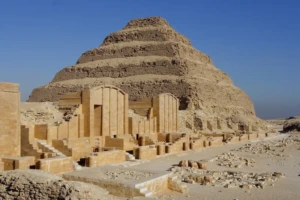
The Pharaohs Golden Parade: A majestic journey that history will forever record
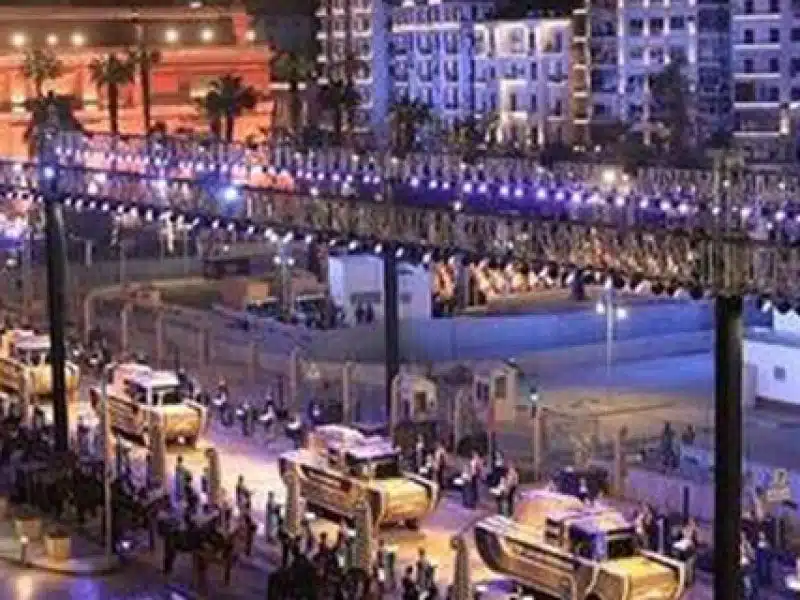
The Pharaohs’ Golden Parade was a televised procession on the evening of 3 April 2021 that moved 22 royal mummies, 18 kings and 4 queens, from the Egyptian Museum in Tahrir Square to the National Museum of Egyptian Civilization (NMEC) in Fustat, Cairo. The royal mummies are still at NMEC today, and 20 of them are displayed in the museum’s Royal Mummies Hall, which opened to the public on 18 April 2021.
This page explains what happened on the night, which pharaohs and queens were moved, why Egypt moved them, and how to see them on a visit to Cairo.
The Royal Mummies Parade at a Glance
| Question | Answer |
|---|---|
| Date | Saturday 3 April 2021, in the evening |
| From | The Egyptian Museum, Tahrir Square |
| To | The National Museum of Egyptian Civilization, Fustat |
| Who moved | 22 royal mummies (18 kings, 4 queens), plus 17 royal coffins |
| Oldest mummy | Seqenenre Tao, of the late 17th Dynasty |
| Youngest mummy | Ramesses IX, of the 20th Dynasty |
| Where they are now | The Royal Mummies Hall at NMEC, open since 18 April 2021 |
What Happened on 3 April 2021
The mummies left the Egyptian Museum after dark and travelled a few kilometers through central Cairo, circling Tahrir Square on the way south to Fustat. Each mummy rode in its own vehicle, decorated to look like an ancient Egyptian funerary boat and carrying the king’s or queen’s name. Inside, the bodies lay in sealed cases filled with nitrogen to protect them from changes in temperature and humidity on the way.
The procession moved in chronological order, oldest ruler first. It was broadcast live in Egypt and around the world, with a full ceremony at the destination. The music was composed by Hesham Nazih and played by the United Philharmonic Orchestra under conductor Nader Abbassi. The most widely shared moment was soprano Amira Selim singing a hymn to the goddess Isis in ancient Egyptian, using words taken from inscriptions at the temple of Deir el-Shelwit near Luxor.
Which Royal Mummies Were Moved
All but one of the 22 belong to the New Kingdom, Egypt’s imperial age, roughly 1550 to 1070 BC. In parade order they were:
- Seqenenre Tao, the Theban king who began the war to expel the Hyksos
- Queen Ahmose-Nefertari, wife of Ahmose I and later honored as a goddess at Thebes
- Amenhotep I
- Queen Meritamun
- Thutmose I
- Thutmose II
- Hatshepsut, the female pharaoh who built the terraced temple at Deir el-Bahari
- Thutmose III, the great military king of the 18th Dynasty
- Amenhotep II
- Thutmose IV, who set up the Dream Stela between the paws of the Sphinx
- Amenhotep III, builder of Luxor Temple and the Colossi of Memnon
- Queen Tiye, wife of Amenhotep III and mother of Akhenaten
- Seti I, whose tomb is among the finest in the Valley of the Kings
- Ramesses II, who ruled for about 66 years and built Abu Simbel
- Merenptah
- Seti II
- Siptah
- Ramesses III, builder of Medinet Habu
- Ramesses IV
- Ramesses V
- Ramesses VI
- Ramesses IX
Tutankhamun was not part of the parade. His mummy remains in his tomb in the Valley of the Kings, while his treasures are now displayed at the Grand Egyptian Museum near Giza.
Where the Mummies Were Found
Most of these rulers were not found in their own tombs. Around 1000 BC, priests worried about tomb robbers gathered royal bodies from the Valley of the Kings and reburied them in hidden groups. Two of these caches supplied most of the parade:
- The Royal Cache at Deir el-Bahari (DB320), in the cliffs of Luxor’s West Bank, found in 1881.
- The tomb of Amenhotep II (KV35) in the Valley of the Kings, opened in 1898, which held a second group of kings.
To learn more about the tombs they came from, see our Valley of the Kings guide and the Temple of Hatshepsut guide, which covers the Deir el-Bahari area.
Why the Mummies Were Moved
The Egyptian Museum in Tahrir, opened in 1902, had kept the royal mummies for over a century, but its rooms were crowded and the mummies had limited space. NMEC was built to tell the story of Egyptian civilization from prehistory to the present, and it was given a purpose-built hall with modern climate control for the royal bodies. The move was also part of a wider reorganization of Cairo’s museums, which later saw the Tutankhamun collection go to the Grand Egyptian Museum, officially opened on 1 November 2025.
The government presented the parade as a show of national heritage and a signal to international travelers at a time when tourism had been hit hard by the pandemic.
Where to See the Royal Mummies Now
The mummies are in the Royal Mummies Hall at the National Museum of Egyptian Civilization in Fustat, Old Cairo, beside the lake of Ain el-Sira. Each king and queen lies in an individual climate-controlled case, displayed with information about their reign.
The main exhibition hall upstairs covers Egyptian history from prehistoric times to the modern era, so allow at least two hours for the whole museum.
Mummies Worth Looking For
- Seqenenre Tao: His skull still shows the wounds that killed him, most likely in battle against the Hyksos, which makes him the most vivid link to the wars that founded the New Kingdom.
- Hatshepsut: Her mummy was identified in 2007, partly by matching a loose tooth found in a box bearing her name.
- Ramesses II: In 1976 his mummy was flown to Paris for conservation treatment, and it remains one of the best-known faces from ancient Egypt.
- Ramesses III: A CT scan published in 2012 found a deep cut to his throat, evidence linked to the palace plot against him recorded in ancient trial papyri.
How to Visit NMEC
- Location: Al-Fustat, Old Cairo. The nearest metro station is Mar Girgis, which also serves Coptic Cairo.
- Opening hours: The museum opens daily, with longer hours on some evenings. Check the official NMEC website for current hours and ticket prices before you go, as both change.
- Combine it with: Coptic Cairo and the Hanging Church are a short ride away, which makes a natural half-day. Our private Old Cairo and Citadel tour covers that district, and you can ask to add NMEC.
- Plan around Giza: If you have two days in Cairo, spend one at the pyramids and the Grand Egyptian Museum and the other in Old Cairo with NMEC. The Cairo travel guide helps with the rest.
Many of the parade’s kings left monuments you can visit further south, from Karnak to Medinet Habu and Abu Simbel. Seeing the mummy of Ramesses II in Cairo and then his temples in Upper Egypt is a good way to connect the trip.
FAQ
When was the Pharaohs’ Golden Parade?
On the evening of Saturday 3 April 2021.
How many mummies were in the royal mummies parade?
Twenty-two: 18 kings and 4 queens, moved together with 17 royal coffins.
Where are the royal mummies now?
In the Royal Mummies Hall of the National Museum of Egyptian Civilization in Fustat, Cairo.
Is Tutankhamun’s mummy at NMEC?
No. Tutankhamun’s mummy stays in his tomb in the Valley of the Kings in Luxor.
Can I see Ramesses II’s mummy?
Yes. Ramesses II is one of the mummies on show in the Royal Mummies Hall.
How long should I spend at NMEC?
About two hours covers the Royal Mummies Hall and the main gallery without rushing.
The royal mummies are one of Cairo’s most moving sights and easy to fit into a city stay. Browse our Cairo tours and excursions to find a day that fits your plans.