Tell el Amarna: Akhenaten’s Capital and How to Visit
Tell el-Amarna is the site of Akhetaten, the capital that Pharaoh Akhenaten built around 1346 BC for his sun god, the Aten, and that was abandoned within a few years of his death. It lies on the east bank of the Nile in Minya Governorate, about 60 km (37 miles) south of Minya city. Most visitors come on a full day from Minya to see the North Tombs, the Royal Tomb, a boundary stela and the outlines of palaces and temples. Foreign adults pay EGP 200 for the main site, as listed on the official Ministry of Tourism and Antiquities site in October 2026; check before you go.
This guide explains who built the city and why it matters, what to see in a sensible order, how to get there, and what tickets, hours and facilities to expect.
Tell el-Amarna at a Glance
| Fact | Details |
|---|---|
| Location | East bank of the Nile, Minya Governorate, opposite the town of Deir Mawas |
| Ancient name | Akhetaten, “the Horizon of the Aten” |
| Date | Founded around 1346 BC; abandoned soon after Akhenaten’s death, under Tutankhamun |
| Built by | Akhenaten (formerly Amenhotep IV), 18th Dynasty |
| Dedicated to | The Aten, the sun disk |
| Distances | About 60 km from Minya, 310 km from Cairo, 75 km from Asyut and 400 km from Luxor, per the Amarna Project |
| Foreigner tickets | Main site EGP 200 (students EGP 100); Royal Tomb EGP 120 (students EGP 60) |
| Time needed | Our planning suggestion: a full day for the main highlights; two days to add the South Tombs |
Why Tell el-Amarna Matters
Few places in Egypt are tied so closely to one person. Akhenaten came to the throne as Amenhotep IV in the 14th century BC. Early in his reign he raised the Aten, the disk of the sun, above all other gods. Temples to other gods were closed, and the name of Amun, the great god of Thebes, was erased in many places. In his fifth year he took the name Akhenaten and chose a stretch of empty desert in Middle Egypt for a new capital.
A city built from scratch
Akhenaten marked the city’s limits with large inscriptions cut into the cliffs on both sides of the river, now called the Boundary Stelae. In them he declared that the site belonged to the Aten and that he, Nefertiti and their eldest daughter would be buried in the eastern hills. Builders worked quickly, mostly in mud brick, and the city had a clear plan: palaces and temples lined a long north to south avenue that archaeologists call the Royal Road.
An abandoned capital
After Akhenaten died, the court left under his young successor, Tutankhamun, and returned to the old gods. Later kings took the stone buildings apart for reuse elsewhere, erased Akhenaten’s name and left him out of the official king lists. Because the city was largely deserted and never rebuilt, its layout survived unusually well. The Amarna Project calls the Central City the only royal center from ancient Egypt that has been brought to light.
Discoveries that made it famous
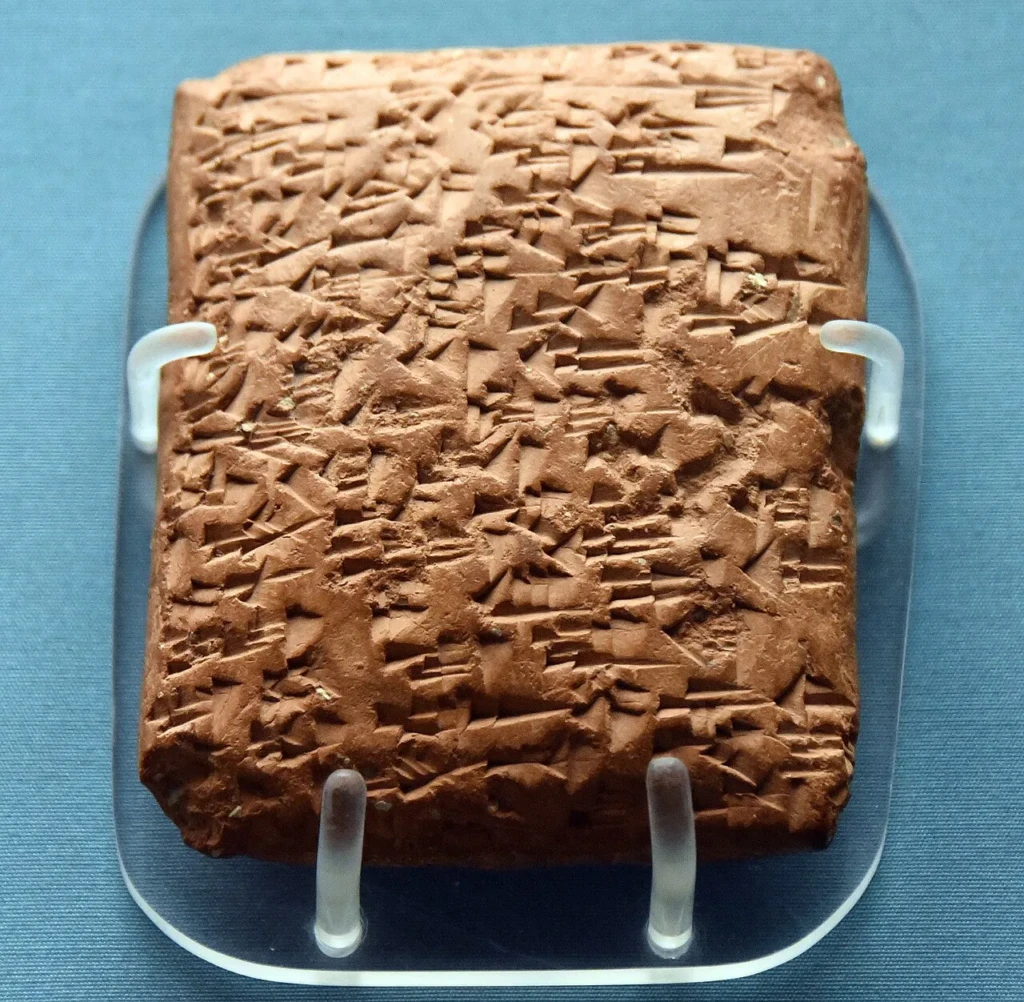
- The Amarna Letters. In 1887, a local woman digging for sebakh, crumbled ancient mud brick used as fertilizer, found more than 300 clay tablets written in cuneiform. They are diplomatic letters between the pharaoh and rulers across the Near East.
- The bust of Nefertiti. German excavators found it in 1912 in the workshop of the sculptor Thutmose. It is now in the Neues Museum in Berlin.
- A new art style. Amarna art showed the royal family in relaxed, affectionate scenes, a sharp break from earlier conventions.
Excavation continues today under the Amarna Project, which has worked here almost every year for decades.
What to See at Tell el-Amarna, in Visiting Order
The site is huge. The Amarna Project describes the sacred territory as about 13 km from north to south, and says it is far too large to walk around, so you will need a vehicle all day. Its suggested one-day plan covers the North Palace, the Small Aten Temple area, the North Tombs, Boundary Stela U and the Royal Tomb. That is the route we describe here.
1. The Visitor Centre at El-Till
Start in the village of El-Till, beside the Nile. The Amarna Visitor Centre, run by the Ministry of Tourism and Antiquities, has panels in English and Arabic, models of famous Amarna objects and a full-size replica of an official’s house you can walk through. It gives you a picture of the city before you see the bare foundations.
2. The North Palace
This rectangular palace stood between the northern suburb and the North City. Its plan has been partly rebuilt in low walls. Look for the stone feeding troughs carved with oxen and desert animals in one court, a sign that animals were kept here.
3. The North Tombs
The North Tombs are the main reason most people come. They are cut into a cliff about 85 meters high, and a path with modern steps and benches leads up to them. Tombs 3 to 5 form a compact group, and tomb 6 has its own path. They belonged to senior figures at Akhenaten’s court:
- Tomb 4, Meryra. High priest of the Aten. One scene shows the royal princesses riding in chariots.
- Tomb 6, Panehsy. A chief servant of the Aten. In late antiquity a Christian community turned it into a church and added an apse.
- Tombs 3 and 5, Ahmes and Penthu. A royal steward and the chief of physicians.
Tombs 1 and 2, for Huya and Meryra II, lie farther north. The walls show the royal family under the rays of the Aten, the temples and the city itself, which makes them a guide to the ruins below.
4. The Central City and the Small Aten Temple
Back on the plain, the Central City held the two Aten temples and the main state palace. The Great Aten Temple enclosure measured about 800 by 300 meters. The stone was carried off long ago, but the Small Aten Temple area gives a good sense of scale. The Bureau of Correspondence, where the Amarna Letters were found, stood in this part of the city.
5. Boundary Stela U
The boundary stelae are rectangular inscriptions with rounded tops, carved into the cliffs and often flanked by statues of the royal family. Stela U, which the Amarna Project lists for one-day visitors, is flanked by statues of the royal family. It sits high in the cliff and is reached by a long staircase.
6. The Royal Tomb
The Royal Tomb lies about 6 km up the Royal Wadi, east of the city, and you reach it by road. It was made for Akhenaten, with extra chambers for other members of the family, including his daughter Meketaten. The rock is poor, so most decoration was cut into plaster and much of it is lost. The best surviving scenes are in the Meketaten chambers. Fragments of Akhenaten’s granite sarcophagus, now restored, are in the Egyptian Museum in Cairo. The Royal Tomb needs a separate ticket.
If you have a second day: the South Tombs
The South Tombs are the larger group, with 19 numbered tombs for a wider range of officials, from the chief of police, Mahu, to Ay, who later became king. Ay’s tomb (South Tomb 25) holds the long version of the Great Hymn to the Aten, the best-known text of Akhenaten’s religion. Kom el-Nana, a temple enclosure in the south, can be added on the same day.
How to Get to Tell el-Amarna
According to the Amarna Project’s visitor page, most visitors arrive by car from the Eastern Desert Highway, taking the turnoff for Mallawi. The entrance is on the left just before the bridge over the Nile, and you enter through the North City. From the west bank, you cross by the bridge between Deir Mawas and Mallawi, or by ferry.
Travel by train or public bus is possible but harder. The nearest stations are Mallawi and Deir Mawas, where you would need to hire a car for the whole day. Some Nile cruises also stop at Amarna.
The Amarna Project puts Minya about 1.5 hours’ drive north of the site, Asyut about 1.5 hours south, and Mallawi around 20 minutes away. There are no hotels at Amarna itself, so most visitors stay in Minya. From Cairo, at about 310 km, a same-day return is a very long day; your driver or guide will confirm timing.
Opening Hours and Tickets
As listed on the official Ministry of Tourism and Antiquities site in October 2026 (its ticket price list, dated November 2024, the latest version we could find); check before you go:
| Ticket | Foreign adult | Foreign student | Hours |
|---|---|---|---|
| Tell al-Amarna (main site) | EGP 200 | EGP 100 | 8:00 am to 5:00 pm |
| The Royal Tomb | EGP 120 | EGP 60 | 8:00 am to 5:00 pm |
The Amarna Project’s own visitor page gives slightly shorter hours, 8:00 am to 4:00 pm daily, and says the Visitor Centre keeps the same hours. Plan to finish by 4:00 pm to be safe. Tickets for the main monuments are sold at the ticket office on the road to the North Tombs.
Facilities, Access and Safety
A Rest House opposite the ticket office sells drinks, and there are toilets there and at the Visitor Centre. Small shops in El-Till sell drinks and snacks. Many hotels in the region will pack a lunch box if you ask.
Amarna is hard going for visitors with limited mobility. The site is mostly unpaved desert with little shade or seating. The North Tombs and Stela U are reached by high staircases, and the Royal Tomb involves a stair and ramp with handrails. The Visitor Centre has wheelchair access, though not through the replica house.
Middle Egypt sees fewer foreign visitors than Luxor or Cairo. Wikivoyage reports that foreign visitors may be accompanied by tourist police at the site and when leaving hotels in Minya. A licensed driver or guide will handle any such arrangements. At the time of writing, the UK FCDO’s list of areas it advises against does not include the Nile Valley around Minya. Check the current advice before you go, and see our guide on whether it is safe to travel to Egypt right now.
Best Time to Visit and Practical Tips
The cooler months, from late autumn to early spring, are best, because you spend most of the day outdoors on open desert. Arrive close to opening time; the Amarna Project stresses that an early start is needed to fit in a one-day plan. Our guide to the best time to visit Egypt covers the seasons month by month.
- Keep your car all day. The monuments are kilometers apart.
- Bring water, sun protection and closed shoes. Paths are stony and the stairs to the North Tombs are long.
- Carry small Egyptian pounds. They are useful for drinks and snacks in El-Till.
- Read up first. The Amarna Project recommends its guidebook, Amarna: A Guide to the City of Akhetaten (AUC Press, 2021). New information panels in English and Arabic stand at key monuments.
- Know what is closed. The Workmen’s Village, the Stone Village and the non-elite cemeteries are not open to visitors.
For dress and packing advice for the whole trip, see our Egypt packing and what to wear guide.
Combining Tell el-Amarna With Other Sites
Nearby in Minya
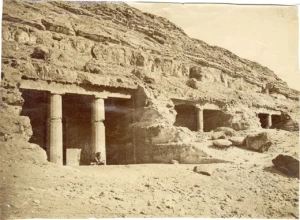
The rock tombs of Beni Hasan, on the east bank south of Minya city, make a strong partner for Amarna. The Ministry’s Beni Hasan page describes 39 rock-cut tombs in the upper cemetery, 12 of them painted with scenes of daily life, from the Middle Kingdom. Foreign adults pay EGP 200, and the site opens 8:00 am to 5:00 pm, as listed on the official site in October 2026. Tuna al-Gabal, also in Minya Governorate, has its own EGP 200 ticket on the official list. With a base in Minya, two days cover Amarna and Beni Hasan comfortably.
The Amarna story elsewhere in Egypt
Akhenaten’s era is easier to understand once you have seen it in context. Before he moved north, he built temples to the Aten at Karnak; our Karnak Temple guide explains the site. The Egyptian Museum in Tahrir displays restored fragments from the Royal Tomb, including the sarcophagus; see our Egyptian Museum Cairo guide. Tutankhamun, who left Amarna as a boy king, was buried in the Valley of the Kings, and many of his treasures are covered in our Grand Egyptian Museum guide.
These Delta tours do not include Amarna, but they show the places at both ends of Akhenaten’s story:
- Karnak and Luxor Temple private tour, 1 Day, from $70 per person
- Valley of the Kings private tour from Luxor, 1 Day, from $150 per person
- Grand Egyptian Museum private tour with the Giza Pyramids, 1 Day, from $95 per person
- Dendera and Abydos day tour from Luxor, 1 Day, from $150 per person
Visit With Delta Tours Egypt
We do not sell a fixed Tell el-Amarna tour. On request, we can arrange a private visit with a licensed driver and an Egyptologist, usually with a night in Minya and Beni Hasan on the same trip. Tell us your dates and interests through our tailor-made Egypt tours page and we will suggest a route that fits the rest of your journey.
Frequently Asked Questions
Where is Tell el-Amarna?
It lies on the east bank of the Nile in Minya Governorate, Middle Egypt, opposite Deir Mawas. The Amarna Project puts it about 60 km south of Minya and 310 km south of Cairo. Mallawi, on the west bank, is about 20 minutes away.
How much is the Tell el-Amarna ticket?
The official Ministry list shows EGP 200 for foreign adults and EGP 100 for students for the main site. The Royal Tomb costs an extra EGP 120, or EGP 60 for students. Prices change, so check before you go.
Can I visit Amarna as a day trip from Cairo?
It is possible but very long, since the site is about 310 km from Cairo and large in itself. Most visitors stay in Minya, about 1.5 hours away by road. That leaves a full day for the site.
What is the most important thing to see?
For most visitors, the North Tombs. Their reliefs show Akhenaten, Nefertiti and their daughters under the Aten’s rays, and the city as it looked. Add the Royal Tomb if you have time.
Where is the bust of Nefertiti?
It was found at Amarna in 1912, in the workshop of the sculptor Thutmose. Today it is displayed in the Neues Museum in Berlin. Amarna itself shows you where it was made.
Is Amarna suitable for people with limited mobility?
It is difficult. The site is unpaved and spread out, and the North Tombs and Stela U are reached by high staircases. The Visitor Centre at El-Till is wheelchair accessible.
Tell el-Amarna rewards travelers who want to go beyond the usual Cairo and Luxor circuit. If you would like to see Akhenaten’s city with a guide who knows its story, start with our tailor-made tours.
Featured image: Amarna letter clay tablet found at Tell el-Amarna (British Museum). Photo: Osama Shukir Muhammed Amin FRCP(Glasg) / Wikimedia Commons, CC BY-SA 4.0