Gebel el-Silsila: The Quarry Shrines Only Small Boats Reach
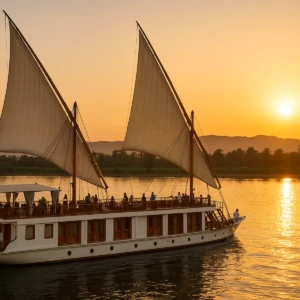
Most Nile cruise passengers only see Gebel el-Silsila from the sun deck, as their ship passes between two sandstone cliffs north of Kom Ombo. Here the ancient Egyptians quarried the stone for Karnak, Luxor Temple and many other temples, and carved rock shrines into the cliff above the river. The easiest way to go ashore is on a dahabiya, a small sailing boat that can moor where large cruise ships do not stop.
This guide explains what Gebel el-Silsila is, what you will see along the west bank, how to get there, the official hours and ticket price, and how a visit fits into a slow sail between Esna and Aswan.
| Quick facts | Details |
|---|---|
| Location | Both banks of the Nile between Edfu and Kom Ombo, Aswan Governorate |
| Distance from Aswan | About 70 km north of Aswan (Ministry of Tourism and Antiquities guide to Aswan) |
| Name | Arabic for “Mountain of the Chain”; the ancient name Kheny is usually translated “Place of Rowing” |
| Period of use | Quarried from the Middle Kingdom (c. 2034 to 1650 BC) until the 20th century |
| Main monuments | The Speos of Horemheb, New Kingdom rock chapels, royal shrines and stelae |
| Local god | Sobek, the crocodile god |
| Opening hours | 7:00 AM to 4:00 PM daily (official listing, October 2026) |
| Foreigner ticket | EGP 100 adult, EGP 50 student (official listing, October 2026) |
| Time needed | Our planning suggestion: one and a half to two hours on the west bank |
What is Gebel el-Silsila?
Gebel el-Silsila is a stretch of the Nile where sandstone hills close in on both banks. Wikipedia describes it as one of the narrowest points along the whole river. It sits between Edfu to the north and Kom Ombo, about 15 km to the south.
For ancient builders, this was the most important sandstone source in Egypt. The Ministry of Tourism and Antiquities says more than a hundred quarries were worked here, from the Middle Kingdom until the 20th century. Tool marks and inscriptions left by the workers can still be seen on the rock.
The stone traveled by river. Blocks cut here were floated downstream to Thebes and other sites. Wikipedia lists Karnak, Luxor Temple, the Ramesseum, Medinet Habu and Kom Ombo among the temples built with Silsila sandstone. When you stand in the hypostyle hall at Karnak, you are looking at stone from these cliffs.
A sacred landscape as well as a quarry
Gebel el-Silsila was never only an industrial site. Because the river was central to its work, the gods worshipped here were mostly linked to the Nile. The Ministry names Hapy, god of the flood; Taweret, the hippopotamus goddess; Khnum, the ram-headed god; and Sobek, the crocodile god of Silsila itself. Isis, Horus, Min and the Theban triad of Amun, Mut and Khonsu also appear.
Officials who ran the quarries carved chapels and memorials into the rock. Kings marked the place with shrines and large inscribed stelae. The result is a riverside gallery of monuments spanning more than a thousand years, with graffiti continuing into Roman times and later.
Research still going on
Gebel el-Silsila is an active research site. A joint project of the Ministry of Tourism and Antiquities and Lund University in Sweden has worked here since 2012, led by Maria Nilsson. Wikipedia reports that the team counted more than 120 separate quarries and rediscovered a lost temple of Sobek on the east bank in 2015.
What to see on the west bank, in walking order
Most visits by boat focus on the west bank, where the best-known monuments line the cliff above the water. The route below runs roughly from north to south, matching the order in which the Ministry describes the site.
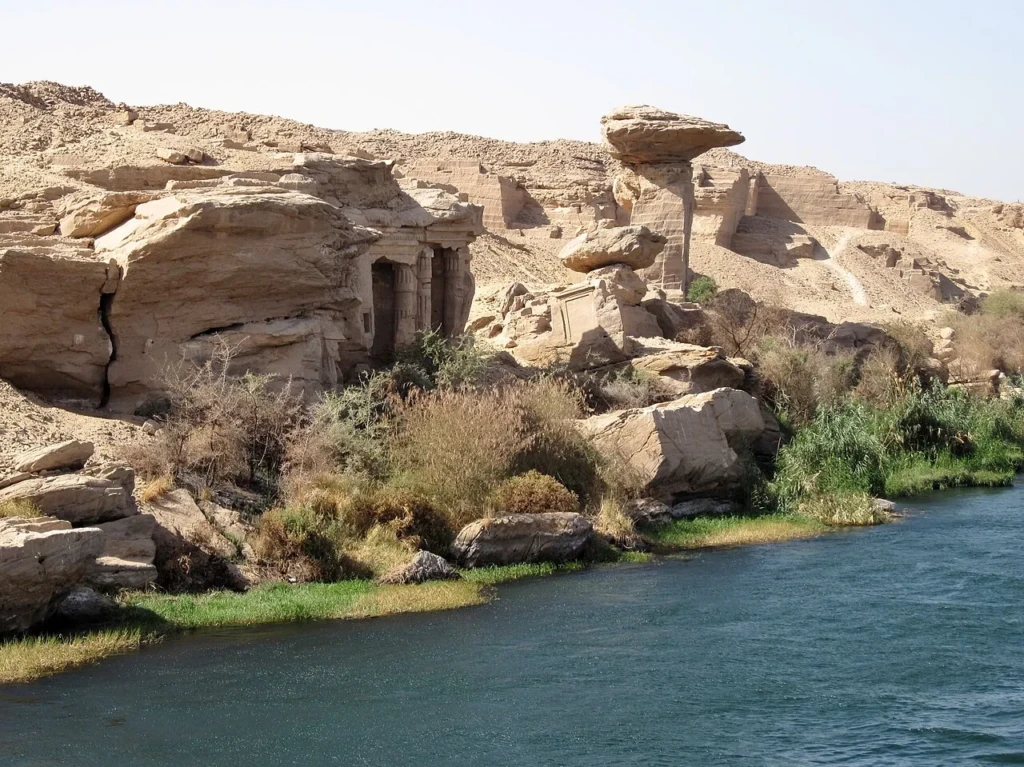
1. The Speos of Horemheb
The largest monument at Silsila is a rock-cut temple, or speos, dug into the cliff. The Ministry dates it to the reign of Horemheb (c. 1323 to 1295 BC) and says it was dedicated to seven deities, whose statues can still be seen in the sanctuary. Two temples once stood on this bank, but only this one survives.
Recent research adds a twist. Wikipedia cites work by the Lund team suggesting that the temple was first cut earlier, under Hatshepsut, and later recarved in the Ramesside period. Either way, the facade carries scenes added by later kings. They include Ramesses III offering to Amun-Re, Mut, Khonsu and Sobek.
Look at the two small chapels at the ends of the facade. Wikipedia attributes them to two viziers: Paser, who served Ramesses II, and Panehesy, who served Merenptah. Inside the temple, notice that some images of Sobek have been deliberately damaged.
2. The rock chapels of New Kingdom officials
South of the speos, the Ministry counts 32 rock chapels cut into the cliff face above the Nile. They belonged to high officials, mostly from the time of Hatshepsut and Thutmose III (c. 1479 to 1425 BC). Many are small rooms cut straight into the rock, set close together along the cliff.
One chapel is especially interesting. Wikipedia notes that the shrine of Senenmut, Hatshepsut’s famous steward, shows her change in status: she is called the king’s daughter, but she is depicted striding like a pharaoh. Ask your guide to point it out.
3. The royal shrines and the great stela
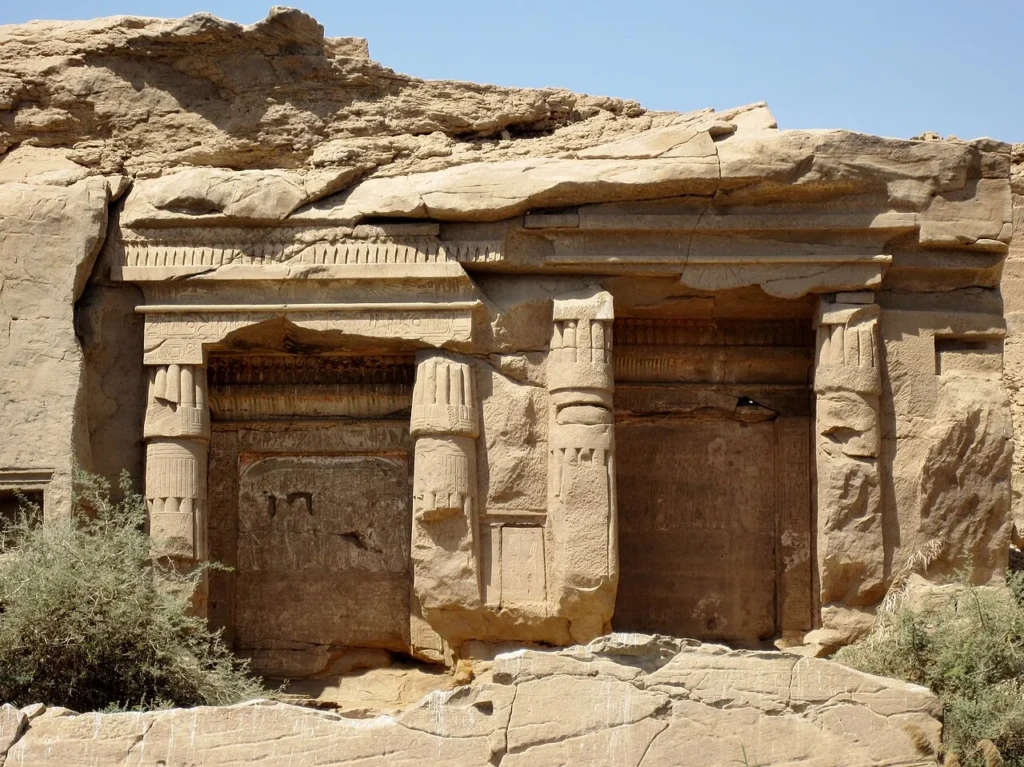
Further south are three porch-like rock shrines carved for Seti I, Ramesses II and Merenptah, along with a large stela of Ramesses III. The Ministry dates these kings from about 1294 to 1153 BC. Wikipedia notes that this area was known in ancient times as “The Pure Water.”
These are the monuments you see in many photographs of Silsila: carved doorways and inscribed panels set into the rock right at the river’s edge. One stela shows Ramesses III offering to Amun-Re, Re-Harakhty and Hapy, the god of the flood, according to Wikipedia.
4. The quarries themselves
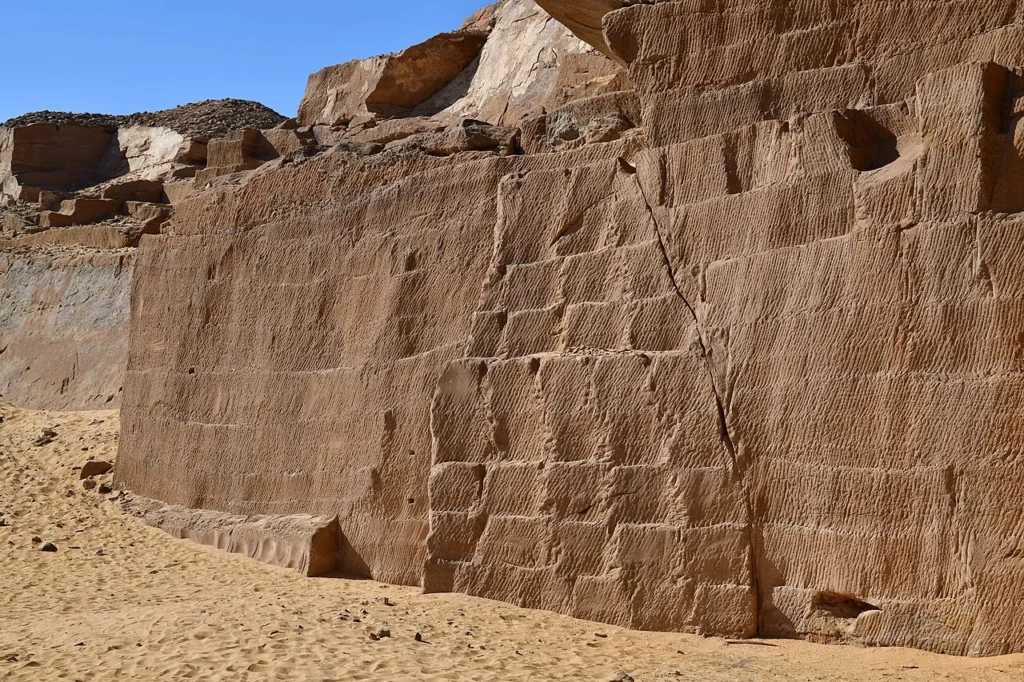
Do not leave without walking into at least one quarry. The walls show long rows of chisel marks where blocks were cut out one by one. You can read the scale of ancient construction straight from the rock: these vertical faces supplied whole temples.
Look for workers’ marks and small inscriptions on the quarry faces. The Ministry notes that such marks survive across the site. Wear closed shoes, as the ground is uneven and rocky.
What is on the east bank?
The east bank holds the larger quarries, including one the research team calls Quarry 34. According to Wikipedia, there are stelae of Amenhotep III, a stela of Akhenaten recording stone cut for a monument at Thebes, two unfinished ram-headed sphinxes, and the rediscovered Temple of Sobek of Kheny, measured at about 80 by 40 meters. We could not confirm which of these are currently open to visitors, so ask your guide before planning a crossing.
How do you get to Gebel el-Silsila?
By dahabiya
This is how most visitors reach the site. Dahabiyas sail between Esna and Aswan over several days and moor at riverbanks and small sites along the way. The published itinerary of the Nour El Nil dahabiyas, for example, ties up below the temple in the evening and visits the Speos of Horemheb and the quarries the next morning.
The same itinerary states that large Nile cruise ships are not allowed to stop at Gebel el-Silsila. That is why the site stays quiet, and why it is a regular stop on dahabiya routes rather than on standard cruises.
On a standard Nile cruise
Large cruise ships between Luxor and Aswan sail past Silsila, usually between the stops at Edfu and Kom Ombo. You can watch the cliffs and the riverside shrines from the deck, but you will not land. If seeing the site up close matters to you, choose a dahabiya. Our guide to dahabiya vs Nile cruise compares the two.
By road
Visiting by car is possible but less common. The site is spread across both banks, and reaching the west bank monuments may involve a local boat. We could not verify current road access or a crossing arrangement, so your driver or guide will confirm the route and timing if you want to go overland from Aswan or Kom Ombo.
Opening hours and ticket price
As listed on the official Ministry of Tourism and Antiquities site in October 2026, Gebel el-Silsila opens daily from 7:00 AM to 4:00 PM. Foreign visitors pay EGP 100 per adult and EGP 50 per student. Egyptian visitors pay less. Check before you go, because prices and hours can change.
Bring small notes in Egyptian pounds. We could not confirm whether card payment is available at this small rural site.
Best time to visit
Early morning is ideal. The air is cooler, the light is softer for photos, and the official opening time of 7:00 AM suits boats that moored the night before. By late morning the open quarries get hot.
Seasonally, the cooler months between late autumn and early spring are the most comfortable for walking around the quarries. See our guide to the best time for a Nile cruise for month-by-month conditions on the river.
Practical tips
- Wear sturdy shoes. Paths between the chapels and quarries are rocky and uneven.
- Carry water and sun protection. There is little shade along the cliff.
- Bring a small flashlight or use your phone light for the darker chapel interiors, where allowed.
- A guide makes a big difference here. Many chapels are small and similar, and the inscriptions are hard to read without context.
- Take your time on the water. The view of the riverside shrines from a small boat is part of the experience.
How to combine Gebel el-Silsila with nearby sites
Silsila sits in the middle of the Upper Egypt temple route, so it pairs naturally with the sites on either side.
- Edfu Temple, to the north, is one of the best-preserved temples in Egypt. Read our Edfu Temple guide.
- Kom Ombo Temple, to the south, was also dedicated to Sobek, which makes it a good follow-up. See our Kom Ombo Temple guide.
- Aswan is the usual end point for dahabiyas sailing south. Our Aswan travel guide covers what to do there.
- Karnak is built from Silsila stone. Seeing it before or after the quarries adds meaning to both. Start with our Karnak Temple guide.
For the classic cruise route and how each day unfolds, see Nile cruise Luxor to Aswan, day by day.
Visit with Delta Tours Egypt
If Gebel el-Silsila is on your list, a dahabiya is the way to go. Our dahabiya Nile cruise page outlines the route from Esna to Aswan, with stops that include Gebel el-Silsila. We offer three boats on this route, each a 6-day, 5-night sailing from $3,500 per person: the Nour El Nil dahabiya, the Meroe dahabiya and the Malouka dahabiya. Confirm the current stops for your dates when you book.
Prefer a larger ship? A 4-night Nile cruise from Luxor to Aswan follows the same stretch of river, so you will see Silsila’s cliffs from the deck. You can also ask us to build a tailor-made Egypt tour around a dahabiya.
Frequently Asked Questions
Do Nile cruise ships stop at Gebel el-Silsila?
Generally no. The Nour El Nil dahabiya itinerary states that large Nile cruise ships are not allowed to stop there. Standard cruises sail past the site between Edfu and Kom Ombo.
How much is the ticket for Gebel el-Silsila?
As listed on the official Ministry of Tourism and Antiquities site in October 2026, foreign adults pay EGP 100 and students EGP 50. Check the official site before you go.
What does Gebel el-Silsila mean?
The Arabic name means “Mountain of the Chain.” Its ancient Egyptian name, Kheny, is usually translated as “Place of Rowing,” a reminder of the boats that carried stone downstream.
Which temples were built with stone from Gebel el-Silsila?
Many of Egypt’s best-known sandstone temples. Wikipedia lists Karnak, Luxor Temple, the Ramesseum, Medinet Habu and Kom Ombo among them.
How long do I need at Gebel el-Silsila?
Our planning suggestion is one and a half to two hours for the west bank. That covers the Speos of Horemheb, the officials’ chapels, the royal shrines and a walk into a quarry.
Is Gebel el-Silsila worth visiting?
Yes, if you enjoy quiet sites and ancient engineering. It shows where Egypt’s temples came from, and you will often share it with few or no other visitors.
Gebel el-Silsila is the kind of stop that makes a slow river journey worthwhile. Explore our dahabiya Nile cruises to sail from Esna to Aswan and step ashore where the big ships cannot.
Featured image: Rock-cut shrines at Gebel el-Silsila on the Nile. Photo: Olaf Tausch / Wikimedia Commons, CC BY 3.0