Camel Ride at the Pyramids: Prices, Welfare and Scams to Avoid
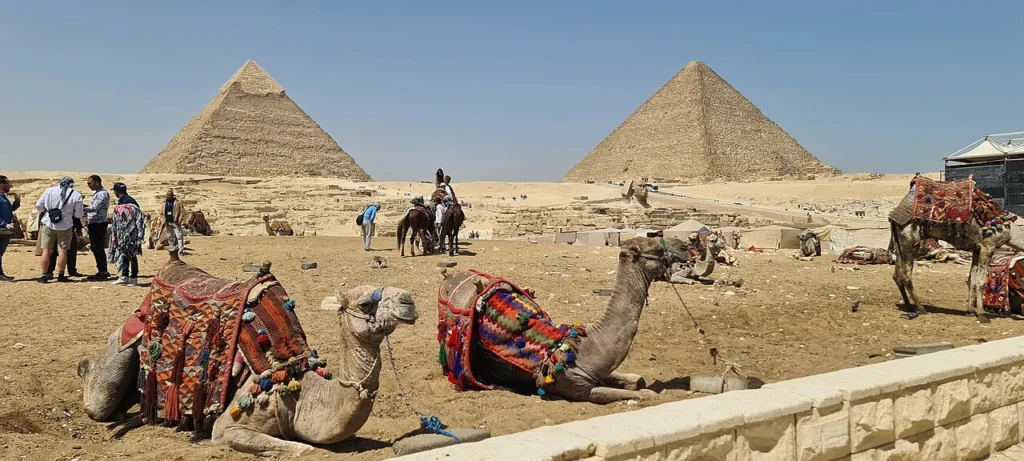
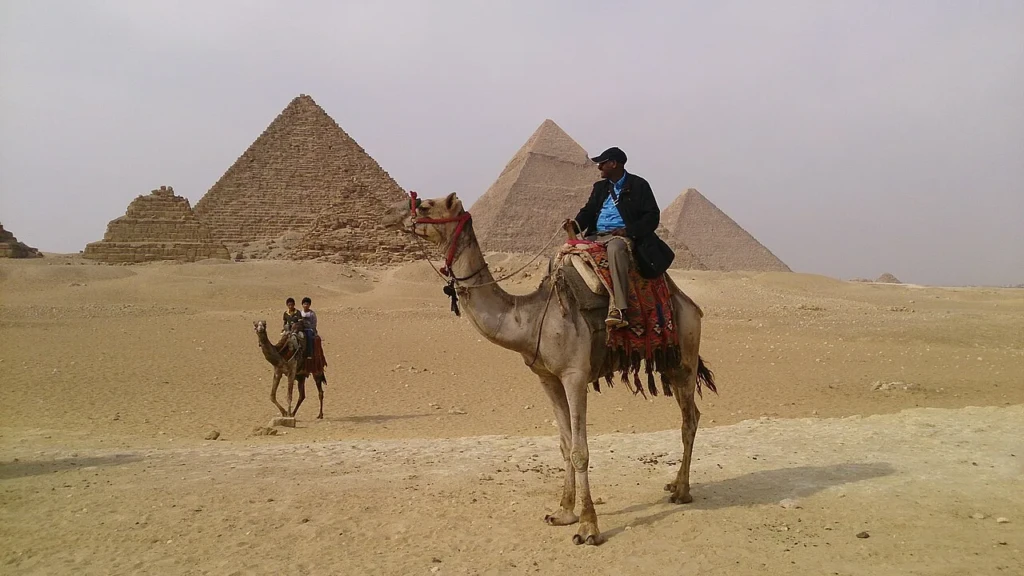
Camel and horse rides are still offered to visitors at the Giza Pyramids, but there is no official price list for them, and handlers have been moved to designated zones under the plateau’s 2025 revamp. Animal welfare groups have documented serious abuse of working animals at Giza. If you decide to ride, agree every detail before you mount; if you would rather not, there are good alternatives.
This guide gives you the honest picture: what has changed at Giza, what welfare groups and officials have said, how pricing works in practice, the tactics to watch for, and how to see the pyramids well without an animal ride.
| Quick facts | Details |
|---|---|
| Are rides still offered? | Yes, by independent handlers; Newsweek reported camel and horse rides on offer in April 2025 |
| Official ride prices | None published by the Ministry; prices are set by each handler |
| Where handlers operate | Designated “parking zones” on the plateau, introduced in 2025 |
| Welfare program | National program for horses and camels at archaeological sites, launched at Giza in October 2024 |
| Giza Plateau hours | 8:00 AM to 4:00 PM daily (official listing, October 2026) |
| Foreigner area ticket | EGP 700 adult, EGP 350 student; pyramid interiors extra (official listing, October 2026) |
| Main entrance | New entrance on the Fayoum Highway, south of the pyramids |
| Our suggestion | Walk and use the site shuttles; if you ride, keep it short and agree terms first |
Can you still ride a camel at the Pyramids?
Yes. Rides have not been banned, despite years of headlines suggesting otherwise. In October 2020, PETA reported that Egypt’s tourism ministry had announced plans to ban camel and horse rides around the Giza pyramids and replace them with electric vehicles. That plan was not carried out as a ban.
What changed instead is where the handlers work. In April 2025, Orascom Pyramids Entertainment, the company running the plateau’s new visitor services, began trial operations of a new entrance on the Fayoum Highway. Ahram Online reported that horse and camel owners were relocated to new parking zones on the plateau. Some owners protested, blocking tour buses, because they said the zones were too far from where visitors arrive.
Newsweek, reporting on the protests in April 2025, noted that tourists are still offered horse-drawn carriage rides, camel tours and horseback trips, with pricing typically unregulated and set by each provider. Officials told local media the relocation was not meant to push the handlers out.
What do animal welfare groups say?
This is the part many travelers do not hear until they arrive, so we will be direct about it.
PETA’s investigations at Giza reported working horses and camels carrying visitors in extreme heat without food, water or shade. Its footage showed animals slipping and falling, and handlers whipping a horse that had collapsed from exhaustion. In a release tied to the official opening of the Grand Egyptian Museum, PETA Asia published footage of dead horses dumped just beyond the museum’s walls, and described many animals as severely emaciated with untreated wounds. PETA says more than 50 tour operators and travel companies, including Airbnb and Marriott, have stopped offering camel rides in front of the pyramids.
PETA is a campaigning organization and its framing reflects that. Still, the concern is not PETA’s alone: the German news agency dpa reported that Egypt’s own welfare program at Giza came in response to ongoing criticism from activists and tourists.
What has the Egyptian government done?
On 26 October 2024, the Ministry of Tourism and Antiquities and the Ministry of Agriculture launched a national program for the care and protection of horses, camels and pets at archaeological sites. The launch took place on the Giza Plateau. Egyptian Streets reported that it includes a dedicated veterinary unit at Giza, regular veterinary care and vaccinations, and a training center to teach owners good animal-care practices. The agriculture minister said services would be free and would extend to Nazlet El-Samman, Saqqara, Luxor and Aswan.
The same dpa report added that designated areas for camel and horse rides were planned. The 2025 parking zones followed. These are real steps, but they do not guarantee that every animal you meet is healthy, so your own judgment still matters.
How much does a camel ride at the Pyramids cost?
We cannot give you a reliable figure, and we would be wary of any site that does. The Ministry of Tourism and Antiquities lists ticket prices for the plateau, its pyramids and tombs, but it does not publish a tariff for camel or horse rides. Rides are a private arrangement between you and the handler.
Ahram Online reported back in 2014 that the authorities planned to post signs with ride prices, because touts were pressuring tourists in the absence of fixed rates. In 2025, Newsweek still described pricing as unregulated. In practice, that means the price is whatever you agree, so the agreement needs to be clear.
What to agree before you get on
- The total price in one currency. Confirm whether it is in Egyptian pounds, US dollars or British pounds, and say the number back.
- Per person or per animal. Make sure a price quoted for “one” is not later applied to each rider or each camel.
- Duration and route. Agree how long the ride lasts and where it ends, ideally in sight of where you started.
- Photos. Ask whether taking pictures, or having the handler take them, costs extra.
- Getting down. Confirm that the agreed price covers getting off the animal, with nothing added at the end.
- Payment at the end. Pay once the ride is finished, with the exact amount ready in small notes.
If a handler will not agree terms clearly, walk away. There will be others, and you lose nothing by saying no.
How to judge whether an animal is fit to work
You do not need to be a vet to notice obvious warning signs. If you see any of the following, do not ride that animal:
- Ribs, hip bones or spine clearly visible through the skin
- Open sores, especially under the saddle, girth or nose rope
- Limping, stumbling or reluctance to move
- No water or shade nearby, particularly in the middle of the day
- A handler hitting or whipping the animal
Keep your ride short, avoid the hottest hours, and do not ride double on one animal. If you witness cruelty, tell your guide and leave. Choosing not to pay for a ride on a suffering animal is the clearest signal a visitor can send.
Common tactics to watch for
The UK Foreign, Commonwealth and Development Office advises travelers to be cautious in tourist areas in Egypt, where scammers and touts sometimes target foreign nationals. At Giza, pressure around rides usually follows a few predictable patterns. Knowing them in advance makes it easy to stay calm and polite.
- The “free” offer. Someone offers a free photo on a camel or a short free ride, then asks for money once you are up. Nothing is free; decline or agree a price first.
- The closed-road story. You may be told the path you want is closed and that an animal is the only way through. Check with your guide or the official staff.
- The price that grows. A low starting price becomes a higher one partway through, or at the end. A clear upfront agreement is your protection.
- The “official” guide. People near the entrance may present themselves as official. Licensed guides you have booked will meet you as arranged.
- Currency confusion. A figure agreed in pounds becomes dollars or British pounds at payment. Name the currency every time.
A firm, friendly “no, thank you” and continuing to walk is usually enough. Traveling with a private guide also removes most of this pressure, since your guide handles conversations for you.
Better ways to see the Giza Pyramids
You do not need an animal to enjoy the plateau. These options give you the views and photos most people want from a camel ride.
Use the site shuttles and walk
Under the 2025 system, private vehicles and tour buses no longer drive onto the plateau. Visitors and their guides use shuttle vehicles operated by Orascom Pyramids Entertainment, which told Euronews it had 45 electric buses running every five minutes. Arrangements were still being adjusted after the launch, so your guide will confirm how the shuttles work on your date. Between stops, the walking is manageable for most people.
Head to the desert viewpoint
The classic photo of all the pyramids lined up is taken from the high desert to the southwest of the monuments. Ask your guide how to reach it under the current shuttle arrangements; they will also know the best angle for the time of day.
Book a private visit
A private guide sets the pace, finds the quieter corners and keeps touts at a distance. Our guide to a private visit to the Giza Pyramids and Sphinx explains what that experience includes.
See the pyramids lit up at night
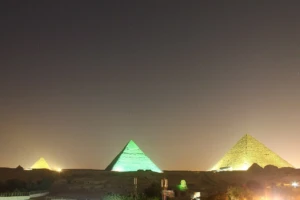
For a different view without animals, the Pyramids Sound and Light Show starts from $53 per person. The show is staged in front of the Great Sphinx, with the pyramids lit after dark.
Giza Plateau hours, tickets and access
The Giza Plateau is open daily from 8:00 AM to 4:00 PM. The foreigner area ticket costs EGP 700 for adults and EGP 350 for students. It does not cover entry to the Great Pyramid, the Pyramid of Khafre, the Pyramid of Menkaure, the Tomb of Meresankh III or the Workers’ Cemetery, which are ticketed separately. These figures are as listed on the official Ministry of Tourism and Antiquities site in October 2026; check before you go.
The main visitor entrance moved in 2025 from the historic gate near the Marriott Mena House to a new site on the Fayoum Highway, south of the pyramids. Your driver will drop you at the entrance, and the shuttles take over from there.
For a full overview of the monuments, read our Giza Pyramids Complex guide and our guide to the Great Sphinx of Giza. For hotels and dining nearby, see the Giza travel guide.
Best time of day to visit
Arrive at opening time. The plateau is cooler and quieter in the first hours, which is better for you and for any working animals around you. Midday in the warmer months is hard on people and animals alike, so if you do choose a ride, keep it to the early morning.
Visit with Delta Tours Egypt
Our private Giza tours are built around a licensed guide and a private car, so you see the pyramids at your own pace and skip the pressure at the entrance. The Private Giza Pyramids Tour starts from $55 per person, the Grand Egyptian Museum and Pyramids tour from $95 per person, and the Giza, Saqqara and Dahshur pyramids day tour from $105 per person. Browse all our private Cairo day tours to find the right fit. We are a family-run, Ministry-licensed operator (licence No. 121), based in Cairo since 1974.
Frequently Asked Questions
Are camel rides banned at the Giza Pyramids?
No. Egypt announced plans to ban them in 2020, but rides are still offered. Since 2025, handlers have been moved to designated zones on the plateau.
Is there an official price for camel rides at the Pyramids?
The Ministry of Tourism and Antiquities does not publish one. Prices are set by each handler, so agree the total, the currency and the duration before you mount.
Is it ethical to ride a camel at the Pyramids?
Welfare groups have documented abuse at Giza, and many travel companies no longer sell these rides. If you choose to ride, pick a healthy-looking animal, keep it short and avoid the midday heat.
What has Egypt done to protect the animals?
In October 2024, the government launched a national program with a veterinary unit at Giza, free care and vaccinations, and training for owners. Designated riding and parking zones followed in 2025.
Do I need a camel to get around the Giza Plateau?
No. Shuttle buses run between the main stops, and the rest is walkable for most visitors. A private guide makes the logistics easier still.
What should I do if a handler overcharges me?
Stay calm, pay only what you agreed, and involve your guide or the site staff if needed. A clear agreement before the ride is the best way to avoid the problem.
Want to see the pyramids at your own pace, with someone on your side at the gate? Explore our private Cairo and Giza day tours and choose the one that fits your trip.
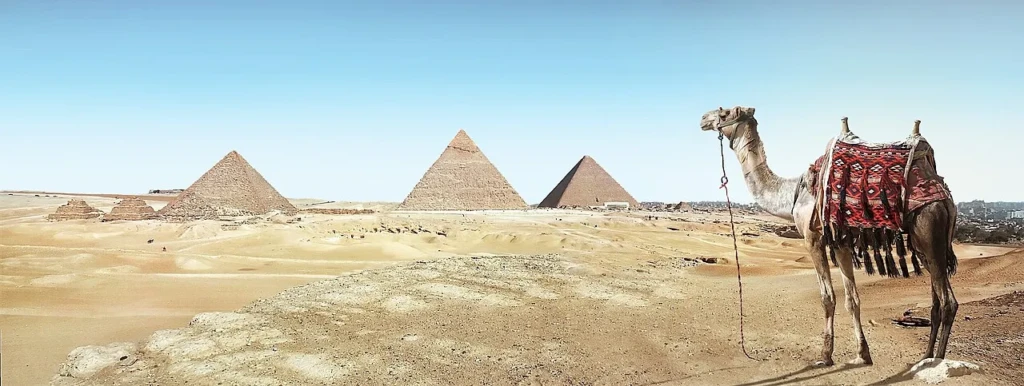
Featured image: Camels resting at the Pyramids of Giza. Photo: Caoimheen3 / Wikimedia Commons, CC BY-SA 4.0