Luxor Museum and the Mummification Museum: Are They Worth It?
Yes, for most travelers both are worth it. The Luxor Museum is a small, carefully lit collection of the finest statues and objects found around ancient Thebes, and it rewards an hour or two. The Mummification Museum, a short walk away on the same Nile corniche, explains how Egyptians preserved the dead in under an hour, which makes the tombs you see on the West Bank far easier to understand.
This guide covers what each museum holds, the highlights in a sensible visiting order, official hours and tickets where they are published, and how to fit both into a day on Luxor’s East Bank.
| Quick facts | Luxor Museum | Mummification Museum |
|---|---|---|
| Location | Nile corniche, East Bank of Luxor | Nile corniche, north of Luxor Temple, in front of the Mina Palace Hotel |
| Opened | 1975 (new wing added in 2004) | 1997, in a former visitor center |
| Focus | Masterpieces found in and around Thebes, including the 1989 Luxor Temple statue cache and Tutankhamun objects | The tools, materials, rituals and gods of mummification, plus human and animal mummies |
| Opening hours | No current official listing found; your guide will confirm | 9:00 AM to 2:00 PM daily, ticket window closes 1:00 PM; evening hours 5:00 PM to 9:00 PM, ticket window closes 8:00 PM (official listing, October 2026) |
| Foreigner ticket | No current official figure found | EGP 220 adult, EGP 110 student (official listing, October 2026) |
| Time needed | Our planning suggestion: 1.5 to 2 hours | Our planning suggestion: 45 minutes to 1 hour |
Are the Luxor Museum and the Mummification Museum worth visiting?
Luxor’s temples and tombs are open-air, and many of their best objects were removed long ago for safekeeping. These two museums bring some of that material back into view, close to where it was found.
The Luxor Museum is worth it if you enjoy sculpture, or if you want to see top-quality pieces without the crowds and scale of a national museum. Wikipedia notes that its small size is deliberate. The curators chose fewer objects, spaced them generously and labeled them clearly.
The Mummification Museum is worth it if you plan to visit the Valley of the Kings or other tombs. It answers the questions most travelers have after seeing a burial chamber: what happened to the body, how long it took, and why it mattered. It is also a good choice for families, because the displays are concrete and easy to follow.
If you have only one free hour on the East Bank, choose the Luxor Museum. If tombs are the focus of your trip, the Mummification Museum earns its place too.
Who might skip them
Travelers who have just spent a full day at the Grand Egyptian Museum or the Egyptian Museum in Tahrir may feel they have seen enough statues for one trip. Even so, the Luxor Museum’s local finds have a different character. Here you see objects a short drive from the temples they came from.
The Luxor Museum: history and what makes it different
The Luxor Museum was inaugurated in 1975. According to Wikipedia’s entry on the museum, Egypt’s Ministry of Culture commissioned the Egyptian architect Mahmud El Hakim to draw up the plans in 1962. The galleries were installed between 1972 and 1975.
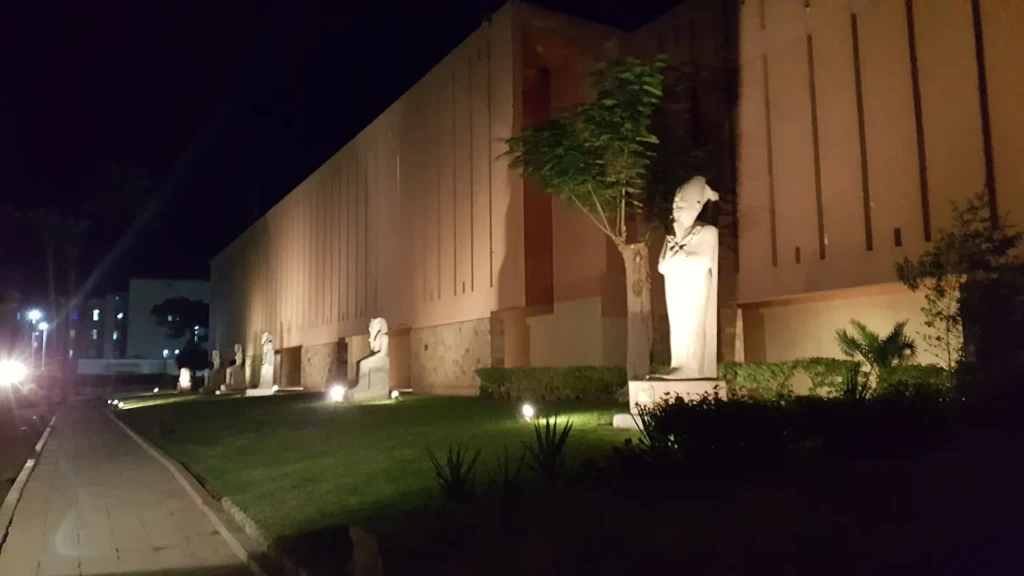
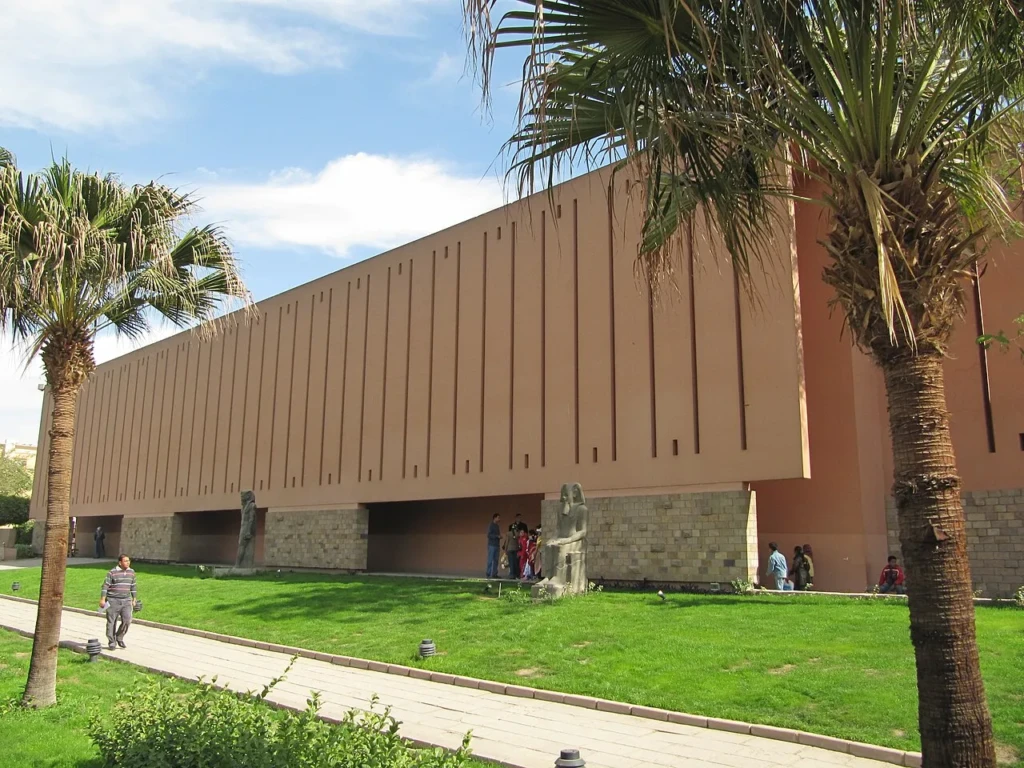
The museum stands on the corniche overlooking the Nile, between Luxor Temple and Karnak. It is a two-story building, with a newer wing that opened in 2004 and focuses on Thebes in the New Kingdom.
The Ministry of Tourism and Antiquities describes the collection as rare artifacts discovered in Luxor, including statues of kings and gods, and some objects from the tomb of Tutankhamun found in 1922.
What to see in the Luxor Museum, in visiting order
The layout below follows the route most visitors take. Room arrangements can change, so your guide may adjust the order.
Ground floor of the main building
The ground floor holds several of the museum’s best sculptures. Look for a greywacke statue of Thutmose III from Karnak Temple, a portrait of one of Egypt’s great warrior kings. Nearby is a limestone relief of the same king.
Do not miss the calcite statue of Amenhotep III standing beside the crocodile god Sobek. The god towers over the king in a gesture of protection. It is one of the museum’s best-known pieces.
The New Kingdom wing and the royal mummies
The 2004 extension tells the story of Thebes at the height of its power. According to Lonely Planet, its centerpiece is a pair of royal mummies shown without wrappings in dim rooms. One is Ahmose I, the king who expelled the Hyksos and founded the New Kingdom. The other is a mummy that some scholars identify as Ramesses I, founder of the 19th Dynasty.
The same wing displays chariots, weapons and scenes of daily life, including papyrus-making and the tools of a scribe. Its upper floor continues the daily-life theme.
Upper floor: the Akhenaten wall and Tutankhamun objects
A ramp leads to the first floor of the old building. The highlight here is a reconstructed wall from a temple that Akhenaten built at Karnak. It is assembled from talatat, the small standard-sized sandstone blocks his builders used. After his reign the temple was dismantled and the blocks were reused as filling, which is why so many survived.
On the same floor you will find a seated granite statue of Amenhotep son of Hapu, the celebrated official of Amenhotep III. There are also objects from Tutankhamun’s tomb, such as shabti figures and model boats.
The cachette hall
Leave time for the gallery near the exit. It displays statues from the Luxor Temple cache. The Ministry of Tourism and Antiquities records that archaeologist Mohammed el-Saghir found these statues by chance on January 22, 1989, while clearing the court of Amenhotep III at Luxor Temple. Most of the statues of gods and kings from that find are now in the Luxor Museum.
The star of the room is a quartzite statue of Amenhotep III, about 2.45 meters tall. Its surface is so well preserved that the pleats of the king’s kilt still look crisp. Seeing it after a visit to Luxor Temple links the object directly to the courtyard where it lay hidden for centuries.
The Mummification Museum: what you will learn
The Mummification Museum opened in 1997 in a building that had served as a visitor center. Wikipedia gives its area as 2,035 square meters. It is compact, and you can see it properly in under an hour.
The official museum page summarizes the process the displays explain. Mummification took around 70 days and came with many rituals. Embalmers removed the internal organs through a cut of about 10 cm in the left side and stored them in canopic jars. The body was then dried in natron salt from Wadi el-Natrun for about 40 days and wrapped in linen, with amulets placed among the bandages for protection.
Anubis, the jackal god, presided over the whole process, and he appears throughout the galleries.
The entrance corridor
The visit begins along a sloping corridor lined with ten panels. They are drawn from the funerary papyri of Ani and Hunefer, which are now in the British Museum. Together they follow the journey from death to burial and set the scene for what follows.
The main hall
At the end of the corridor, more than sixty objects are arranged in 19 cases. Wikipedia lists the themes they cover:
- The gods connected with death and embalming
- Embalming materials, organic materials and embalming fluid
- The tools embalmers used
- Canopic jars and shabti figures
- Protective amulets
- The coffin of Padiamun
- The mummy of Masaharta
- Mummified animals
The animal mummies often surprise visitors. The ancient Egyptians embalmed cats, crocodiles, fish and other creatures as well as people. Some were pets, and others were offerings to the gods.
Opening hours and tickets
For the Mummification Museum, the official Ministry of Tourism and Antiquities page lists daily hours of 9:00 AM to 2:00 PM, with the ticket window closing at 1:00 PM. The same page also lists evening hours of 5:00 PM to 9:00 PM, with the ticket window closing at 8:00 PM. The foreigner ticket is EGP 220 for adults and EGP 110 for students. These figures are as listed on the official Ministry of Tourism and Antiquities site in October 2026; check before you go.
For the Luxor Museum, we could not find a current official listing of hours or foreigner ticket prices on the Ministry’s site. Rather than repeat unconfirmed figures, we suggest asking your guide or checking at the ticket office on arrival.
Museum rules worth knowing
The official Mummification Museum page sets out rules that apply in most Egyptian state museums:
- Personal photography is allowed once you have paid for entry, but flash is not.
- Tripods and monopods are not allowed unless you hold a commercial permit.
- Bags or parcels larger than 40 x 40 cm go to the cloakroom.
- Food and drink are not allowed in the galleries, except small water bottles.
- Visitors are asked to dress appropriately.
How to get there
Both museums sit on the East Bank corniche, the riverside road that runs through central Luxor. The Mummification Museum is north of Luxor Temple, facing the Mina Palace Hotel. The Luxor Museum is farther north along the same road, toward Karnak.
Many East Bank hotels and Nile cruise moorings line the same riverfront. With a private car, the drive between the two museums is short. Your driver or guide will confirm timing from your hotel or ship.
Best time to visit
Both museums are indoors and out of the sun, which makes them a useful break during the hottest part of the day. A practical plan is to visit open-air temples early, then move indoors around midday.
The Mummification Museum’s listed evening session is helpful if your days are full. You could tour the West Bank tombs in the morning, then see the museum after sunset.
How to combine the museums with nearby sites
The museums fit naturally into an East Bank day. A sensible order is:
- Start early at Karnak Temple, before the heat builds.
- Drive south along the corniche to the Luxor Museum.
- Continue to the Mummification Museum.
- Finish at Luxor Temple in the late afternoon, when the light is warm and the cachette statues are fresh in your mind.
If you plan the Valley of the Kings for the next day, the Mummification Museum makes good preparation. Our Luxor travel guide has more ideas for building a two- or three-day stay.
Delta’s own Luxor day tours can form the backbone of that plan. The private Karnak and Luxor Temple tour runs from $70 per person. The Luxor East and West Bank full-day tour runs from $128 per person, and the Valley of the Kings private tour from $150 per person. For an evening at Karnak, the Karnak Sound and Light Show runs from $80 per person. You can browse every option on our Luxor tours and excursions page.
Visit with Delta Tours Egypt
Delta does not list a dedicated tour for the Luxor Museum or the Mummification Museum. We can arrange a private visit to either or both on request as part of a tailor-made Egypt tour, with your own Egyptologist guide and car. Delta Tours Egypt is a family-run, Ministry-licensed operator (licence No. 121), based in Cairo since 1974. Tell us how many days you have in Luxor, and we will place the museums where they make the most sense in your plan.
Frequently Asked Questions
How long do you need at the Luxor Museum?
Our planning suggestion is 1.5 to 2 hours. That allows time for the cachette hall, the royal mummies and the Akhenaten wall without rushing.
Is the Mummification Museum good for children?
It is one of the more approachable museums in Egypt for families. The displays are compact, and the animal mummies tend to hold children’s attention. The official listing includes children under 6 among those admitted free.
Can you see real mummies at the Luxor Museum?
Yes. The New Kingdom wing displays the mummy of Ahmose I and a mummy that some scholars identify as Ramesses I. The Mummification Museum also displays the mummy of Masaharta and several animal mummies.
Can you take photos inside?
At the Mummification Museum, the official page allows personal photography after you pay for entry, without flash. For the Luxor Museum, ask at the entrance, since rules can change.
Are the two museums close to each other?
Yes. Both are on the East Bank corniche in central Luxor. With a car, moving between them takes only a few minutes, and many travelers see both on the same morning.
Which should I choose if I only have time for one?
Choose the Luxor Museum for its sculpture and royal mummies. Choose the Mummification Museum if your trip centers on tombs and you want to understand burial practices in depth.
Planning more than a quick stop in Luxor? Start with our tailor-made Egypt tours, and we will build a private day that includes both museums.
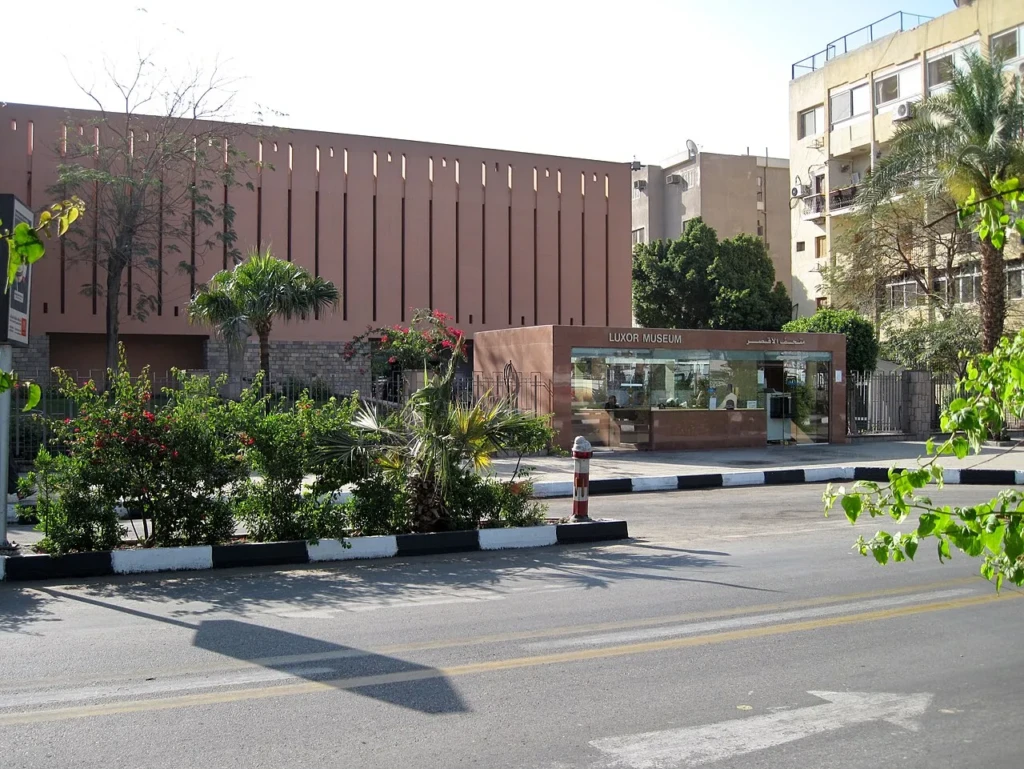
Featured image: Luxor Museum on the Corniche. Photo: Michiel1972 / Wikimedia Commons, CC BY-SA 3.0