Kalabsha Temple: Aswan’s Rescued Nubian Temple Guide
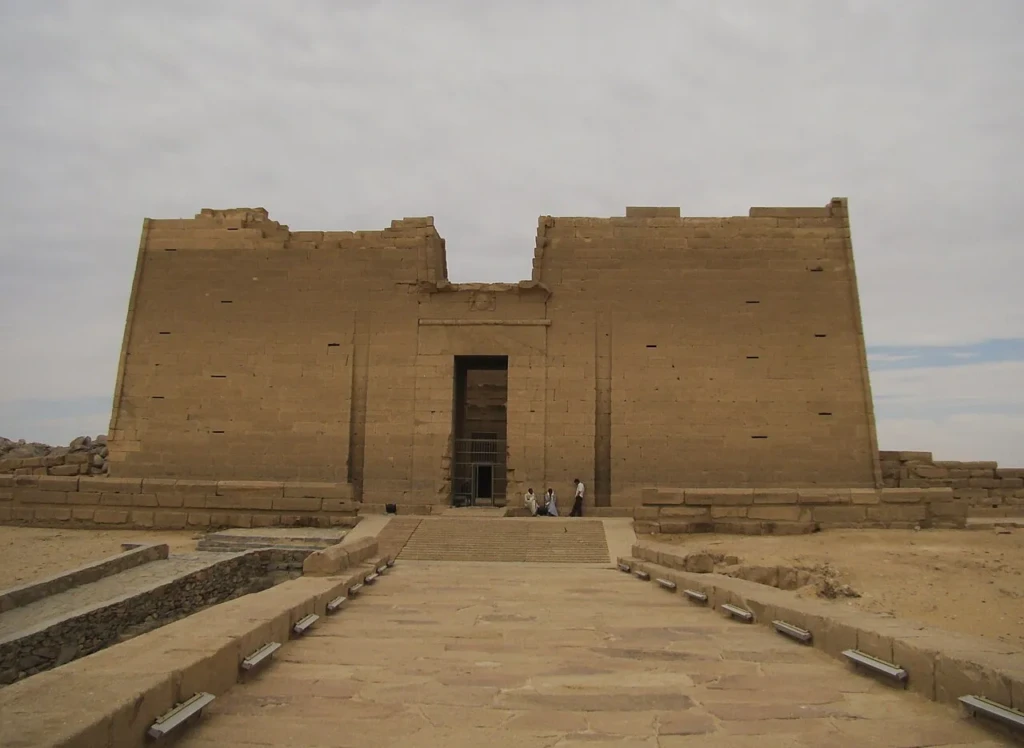
Kalabsha Temple is a Roman-era temple to the Nubian god Mandulis, rebuilt in the early 1960s on the site called New Kalabsha beside the Aswan High Dam. It is the largest free-standing temple in Lower Nubia, and you reach it by a short boat trip across the water. It shares the site with three smaller relocated monuments and sees far fewer visitors than Philae or Abu Simbel.
This guide explains the temple’s history and its rescue from Lake Nasser, what to see in visiting order, how to get there, official hours and tickets, and how to fit it into a day in Aswan.
| Quick facts | Details |
|---|---|
| Location | New Kalabsha, about 1 km from the Aswan High Dam, south of Aswan city |
| Original site | Bab al-Kalabsha, about 50 km south of Aswan, now under Lake Nasser |
| Date | Begun around 30 BC under Augustus, the first Roman emperor; never fully finished |
| Dedicated to | Mandulis, a Nubian sun god; Isis and Osiris were also worshipped here |
| Size | About 76 m long and 22 m wide |
| Relocated | 1961 to 1963, in about 13,000 numbered blocks, funded by West Germany |
| Also on site | Beit el-Wali, the Kiosk of Qertassi, and part of the Gerf Hussein temple |
| UNESCO | Part of the Nubian Monuments from Abu Simbel to Philae, inscribed 1979 |
| Opening hours | 7:00 AM to 4:00 PM daily (official listing, October 2026) |
| Foreigner ticket | EGP 200 adult, EGP 100 student (official listing, October 2026) |
| Time needed | Our planning suggestion: about half a day from Aswan, including the boat |
What is Kalabsha Temple?
Kalabsha was a temple town in Lower Nubia, the stretch of the Nile valley between Aswan and the Sudanese border. Its main temple was built for Mandulis, a sun god worshipped by the Nubian people of the region. The Ministry of Tourism and Antiquities describes it as the largest free-standing temple in Lower Nubia and notes how well preserved it is.
Construction began around 30 BC, early in the reign of Augustus. Rome had only just taken control of Egypt, yet the temple was designed in the traditional Egyptian style. The work was never completed, so some walls carry finished reliefs while others stop at the outline stage.
The Roman temple replaced an older sanctuary. Wikipedia notes that it stands on the site of a shrine built by Amenhotep II in the New Kingdom. Blocks from a Ptolemaic phase were found reused inside the walls during the move and were later rebuilt on Elephantine Island in Aswan.
A temple shaped by several cultures
Kalabsha is a good place to see how many peoples passed through Nubia. The god is Nubian, the architecture is Egyptian, and the slender, widely spaced columns show Greco-Roman influence. Inscriptions appear in Meroitic, the script of the Nubian kingdom of Meroe, and in Greek.
Later visitors added their own layer. Crosses carved on the walls show that the sanctuary was used as a church once Christianity reached the region. An inscription carved here records Silko, a 5th-century Christian king of the Nubian kingdom of Nobatia, celebrating a victory over the Blemmyes, a desert people. He is shown on horseback dressed as a Roman soldier.
Why was Kalabsha Temple moved?
When Egypt built the Aswan High Dam in the 1960s, the rising waters of Lake Nasser threatened every monument in Lower Nubia. UNESCO launched an international campaign in 1960 to save them. Many countries contributed money; West Germany chose instead to fund and run the rescue of Kalabsha directly.
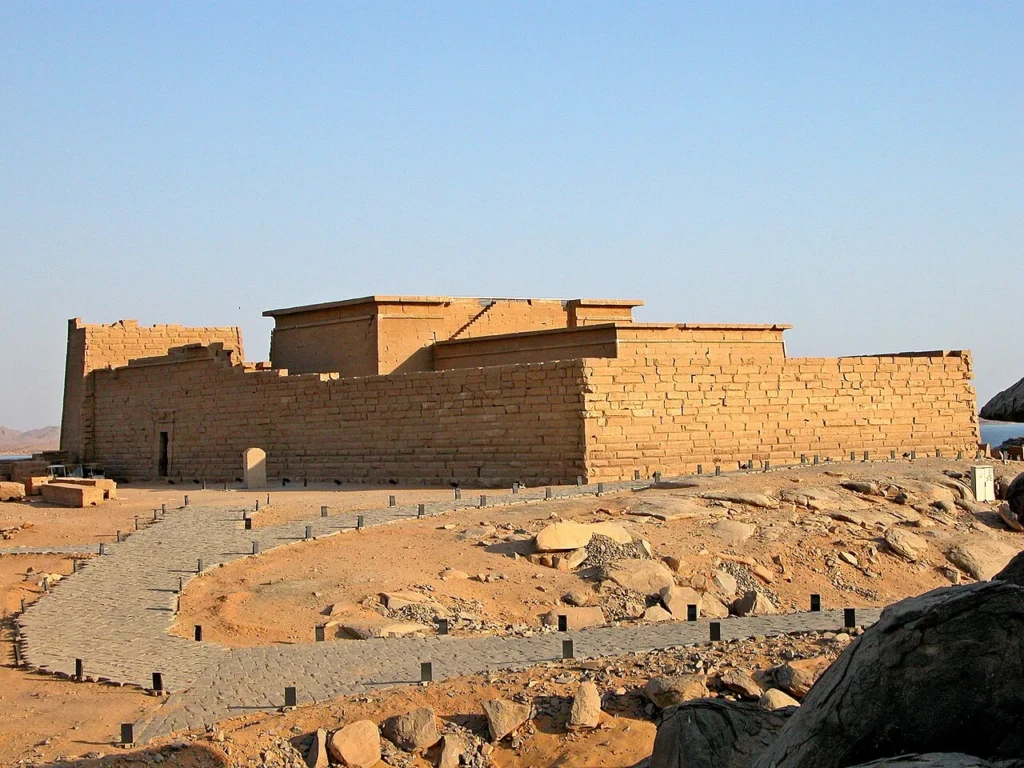
The German construction firm Hochtief won the contract in August 1961 and worked with German archaeologists. The team recorded and numbered about 13,000 blocks before taking the temple apart. High water kept parts of the building submerged until May 1962, so dismantling took longer than planned.
The blocks traveled north by barge to a site called Khor Ingi, later renamed New Kalabsha, about 50 km from the original location. Reconstruction ran from October 1962 to October 1963. The Ministry gives the relocation dates as 1962 to 1963.
In 1971, Egypt gave one of the temple’s gateways to West Germany in thanks for its help. It has been displayed in Berlin since 1977. If you visit Berlin’s museums, you can see a piece of Kalabsha far from the Nile.
What to see at New Kalabsha
The site is compact. Most visitors start with the main temple, then walk to the smaller monuments around it. Your guide may change the order depending on light and heat.
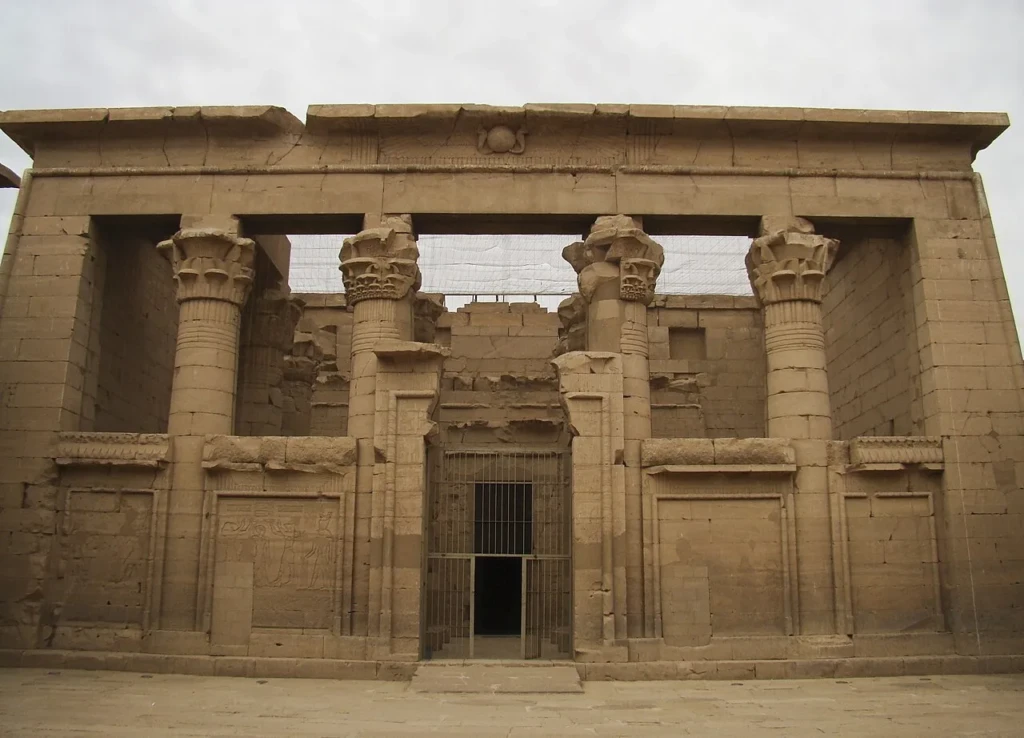
1. The main Temple of Mandulis
The temple follows a classic Egyptian plan. A monumental gateway, or pylon, opens into an open-air forecourt. Next comes a columned hypostyle hall, then two cross-wise chambers used as offering halls. The sanctuary at the far end once held the god’s cult image.
Take time in the forecourt and hall to look for the Meroitic and Greek inscriptions, the carved Christian crosses and the Silko text. Ask your guide to show you where finished reliefs give way to unfinished outlines. It is a rare chance to see how Egyptian carvers worked in stages.
2. The side chapels
Two small chapels stand inside the temple grounds. To the southwest is a partly rock-cut chapel to Dedwen, a Nubian god. To the northeast is a small chapel likely built by Ptolemy IX in the 2nd century BC. Both were moved along with the main temple.
3. Beit el-Wali
This small rock-cut temple was made for Ramesses II by his viceroy in Nubia. A Polish team moved it to New Kalabsha. Wikipedia notes that much of its original color was lost when 19th-century copyists took paper “squeezes” of the reliefs; those copies are now in the British Museum.
4. The Kiosk of Qertassi
This small, unfinished Roman kiosk has four papyrus-style columns and two columns at the entrance topped with the face of the goddess Hathor. It is probably close in date to Trajan’s Kiosk at Philae, and it makes a good photo with the lake behind it.
5. Gerf Hussein
Gerf Hussein was a temple to Ramesses II built by Setau, his viceroy of Nubia. Only its free-standing front section was rebuilt here. The rock-cut inner rooms were left behind and lie under Lake Nasser.
How to get to Kalabsha Temple
New Kalabsha sits beside the High Dam, south of Aswan city, and you reach it by boat. A traveler’s account on Against the Compass describes boats leaving from a small harbor just past the far end of the High Dam, after the security checkpoints. Boat time and the drive from your hotel depend on traffic and the checkpoints, so your driver or guide will confirm timing on the day.
Bring your passport, since checkpoints on the dam road can ask for it. If you go independently, agree the boat fare and waiting time before you set off. With a private driver and guide, these details are arranged for you.
Opening hours and tickets
Kalabsha Temple is open daily from 7:00 AM to 4:00 PM. The foreigner ticket is EGP 200 for adults and EGP 100 for students. These figures are as listed on the official Ministry of Tourism and Antiquities site in October 2026; check before you go.
The boat to the site is a separate cost and is not covered by the monument ticket.
Best time to visit
Go early. The site opens at 7:00 AM, and the morning hours are cooler and quieter, with softer light on the sandstone. There is little shade between the monuments, and the lake reflects the sun, so midday visits in summer are hard work.
The cooler months are the most comfortable for exploring Aswan in general. Our guide to the best season to visit Egypt explains how the weather changes through the year in the south.
Practical tips
- Sun protection: bring a hat, sunscreen and plenty of water.
- Footwear: wear closed shoes for sand, stone and the walk between monuments.
- Passport: carry it for the High Dam checkpoints.
- Cash: have small notes for tickets, the boat and tips.
Is Kalabsha Temple worth visiting?
Yes, if you have a spare half day in Aswan and enjoy temples. You get a large, well-preserved temple with very few other visitors, plus three extra monuments in one stop. The lake setting is peaceful, and the mix of Nubian, Egyptian, Roman and Christian features tells the region’s story in a single site.
It is less essential if your time in Aswan is very short. Philae and Abu Simbel come first for most travelers. Kalabsha is ideal on a second or third day, or for repeat visitors who have already seen the headline sites.
How to combine Kalabsha with other Aswan sights
Because it sits at the High Dam, Kalabsha fits neatly into a morning with the dam itself and then Philae, which also sits in the dam area south of the city. Our private Aswan Day Tour, from $85 per person, covers Philae Temple; we can add Kalabsha to a private day on request. Read our Philae Temple guide to see how the two islands compare.
In the afternoon, cross the river for the Nubian Village Tour from Aswan by boat, from $50 per person. It pairs well with Kalabsha, since both tell the story of Nubia and the communities affected by the dam. Our Nubian village guide covers that side of the history.
If you are heading south, Kalabsha also makes a good warm-up for Abu Simbel, the most famous of the rescued Nubian temples. Delta runs Abu Simbel by private car from $120 per person and Abu Simbel by flight from $360 per person. For the full picture of the city, see our Aswan travel guide.
Visit with Delta Tours Egypt
Delta does not currently list a dedicated Kalabsha tour, but we can arrange a private visit on request as part of a tailor-made Egypt tour. We are a family-run, Ministry-licensed operator (licence No. 121), based in Cairo since 1974. Tell us how long you have in Aswan, and we will build Kalabsha, the High Dam and the sites around it into your plan with a private car and guide.
Frequently Asked Questions
Where is Kalabsha Temple?
It stands at New Kalabsha, beside the Aswan High Dam, south of Aswan city. The temple originally stood about 50 km farther south at Bab al-Kalabsha, which is now under Lake Nasser.
How much is the Kalabsha Temple ticket?
The official Ministry of Tourism and Antiquities listing shows EGP 200 for foreign adults and EGP 100 for foreign students, as of October 2026. The boat to the site costs extra.
What are Kalabsha Temple’s opening hours?
The site is listed as open every day from 7:00 AM to 4:00 PM. Arrive early for cooler weather and better light.
Who was Mandulis?
Mandulis was a sun god of Lower Nubia. Kalabsha was his main temple, and Isis and Osiris were also honored there.
Can you visit Kalabsha and Philae on the same day?
Yes. Both are near the dams south of Aswan, so they fit comfortably into one day with a private driver. Many travelers see Kalabsha first, then Philae.
Is Kalabsha Temple part of a UNESCO World Heritage Site?
Yes. The monuments at New Kalabsha belong to the Nubian Monuments from Abu Simbel to Philae, inscribed on the World Heritage List in 1979.
Want to see the quieter side of Aswan? Start with our tailor-made Egypt tours, and we will plan a private day that includes Kalabsha Temple.
Featured image: Temple of Kalabsha near Aswan. Photo: isawnyu / Wikimedia Commons, CC BY 2.0