El Kab Egypt: Tombs and Temples Between Esna and Edfu
Most large Nile cruise ships sail past El Kab without stopping, which is exactly why it rewards the travelers who do. El Kab is the site of ancient Nekheb, a walled town on the east bank of the Nile between Esna and Edfu, about 80 km south of Luxor. It is best known for painted New Kingdom rock tombs, including the tomb of Ahmose, son of Ebana, whose wall inscription is a first-hand account of the war that drove the Hyksos out of Egypt.
| Quick facts | El Kab (ancient Nekheb) |
|---|---|
| Location | East bank of the Nile, opposite Hierakonpolis (ancient Nekhen), between Esna and Edfu |
| Distance | About 80 km south of Luxor, per the Royal Museums of Art and History, Brussels |
| Period | Monuments from the Predynastic Period to the Graeco-Roman Period |
| Dedicated to | Nekhbet, the vulture goddess and protector of Upper Egypt |
| Best known for | New Kingdom tombs of Paheri, Ahmose son of Ebana, Ahmose Pennekhbet and others; the mudbrick town wall |
| Opening hours | Daily, 7:00 am to 5:00 pm |
| Foreigner ticket | EGP 200 adult, EGP 100 student |
| Time needed | 2 to 3 hours for the tombs, town wall and desert temples (our planning suggestion) |
Hours and prices are as listed on the official Ministry of Tourism and Antiquities site in October 2026; check before you go.
What Is El Kab and Why Does It Matter?
El Kab was the home of Nekhbet, the vulture goddess who stood for Upper Egypt. She and the cobra goddess Wadjet of Lower Egypt were the two protective goddesses of the king, and you will see Nekhbet’s spread wings painted above doorways and ceilings in temples all over the country. This riverside town was where her cult began.
Across the river stood Nekhen, known to the Greeks as Hierakonpolis. The two towns faced each other across the water and are often described as a twin city. That is one reason El Kab matters to archaeologists. According to the Royal Museums of Art and History in Brussels, settlement here goes back to the 5th millennium BC and continued into the Coptic period, which makes it one of the earliest town sites in the Nile Valley.
Belgian teams have worked at El Kab since 1937, when Jean Capart began excavating the temples and cemeteries. Since 2009, their research has shifted to the settlement itself. Their finds include obsidian brought from Ethiopia and an intact copper-working crucible from around 2900 BC, described as the oldest complete example found in Egypt.
The Soldier Who Wrote His Own War Story
El Kab’s most famous resident is Ahmose, son of Ebana. He was a soldier and later a naval officer who served three kings in the 16th century BC: Ahmose I, Amenhotep I and Thutmose I. His father had joined the fleet in the war against the Hyksos, the foreign rulers of northern Egypt, and Ahmose followed him into service.
The inscription in his tomb lists his campaigns in his own voice. He fought at the siege of Avaris, the Hyksos capital in the Delta, and was twice awarded the “gold of valor.” He took part in a three-year siege of Sharuhen in southern Canaan, fought in Nubia under three kings, and was made admiral under Thutmose I. Historians still use this text as a key source for the late 17th and early 18th Dynasties.
Paheri, the Mayor Who Built the Family Tomb
Ahmose’s grandson Paheri was mayor of El Kab and of Esna, and tutor to a royal prince. He supervised the building of his grandfather’s tomb, and his own tomb next door is one of the best-preserved private tombs of the early 18th Dynasty. It was rediscovered in 1799 and published by the British traveler James Burton in 1825.
What to See at El Kab, in Visiting Order
The site spreads across a sandstone hill, a walled town on the flat ground near the river and a desert valley behind. A typical visit starts at the rock tombs, moves to the town wall and temple remains, and ends at the small desert temples if time and access allow. Conservation work sometimes closes individual tombs, so ask your guide which ones are open on the day.
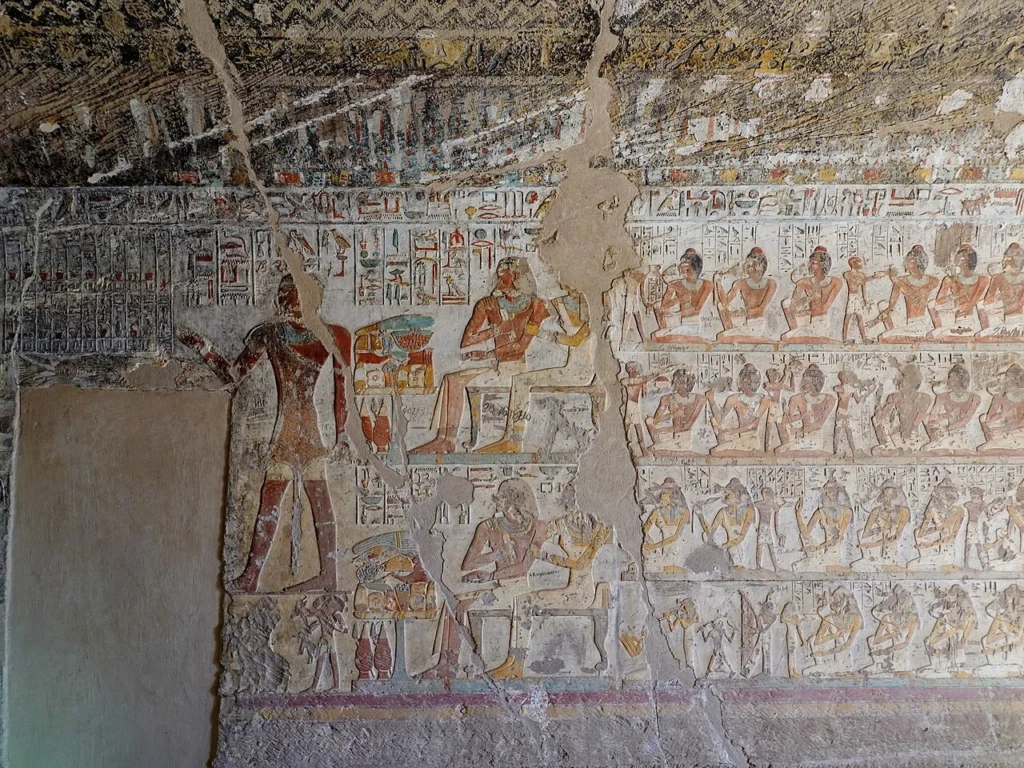
The New Kingdom Rock Tombs
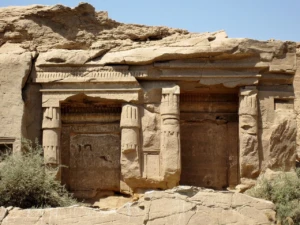
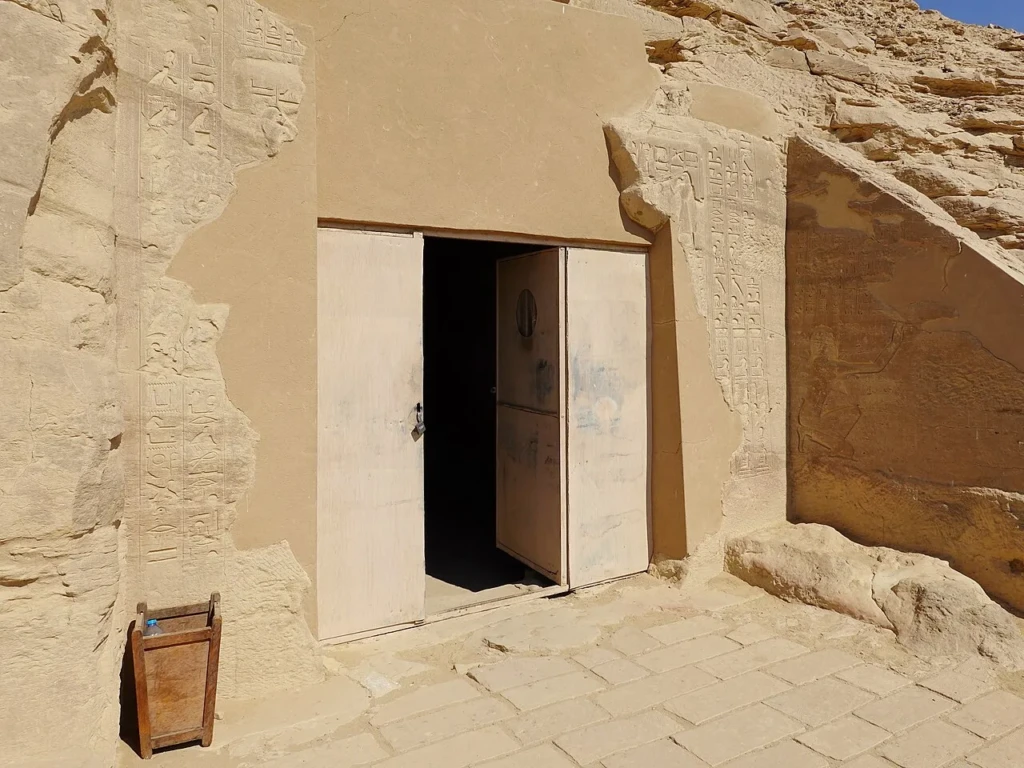
The decorated tombs are cut into the hill east of the town wall. The official Ministry description highlights the biographical inscriptions of Paheri, Ahmose Pennekhbet and Ahmose, son of Ebana. The Brussels museum also names the tombs of the officials Reni and Setau.
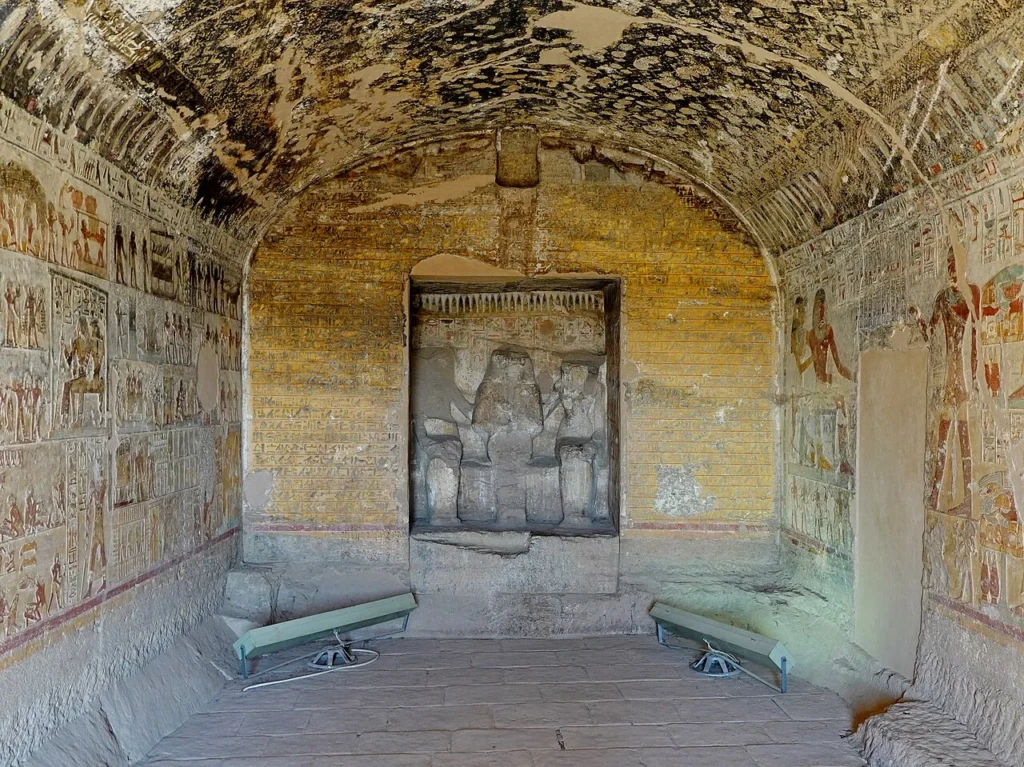
Paheri’s tomb, numbered EK3, is the one most visitors remember. Its western wall shows farm work and funeral rites, while the eastern wall shows a large banquet with guests. A niche at the back holds three seated statues of Paheri, his wife Henuterneheh and his mother Kemi. Archaeology magazine’s writer also pointed out painted pigs, which are rarely shown in Egyptian tombs.
In the tomb of Ahmose, son of Ebana, the text matters more than the pictures. Ask your guide to read sections aloud. Hearing a soldier describe the river battles against the Hyksos, in the place where he was buried, is the heart of an El Kab visit.
Look out, too, for names scratched by 19th-century travelers and explorers on some tomb walls. They show how long El Kab has been on the route of curious visitors.
Older Tombs on the Hill
Higher on the same hill are older tombs of the high priests of Nekhbet, dating to the end of the 6th Dynasty, and a large 3rd Dynasty mastaba on top of the rock necropolis. They are less decorated, but they show that El Kab’s leading families were buried on this hill for many centuries.
The Town Wall
Down toward the river, a massive mudbrick enclosure wall dominates the site. It is about 10 meters (roughly 33 feet) high and encloses the temple area and part of an old cemetery. Its sheer bulk is easiest to appreciate from a distance.
The Temples of Nekhbet and Thoth
Inside the wall are the remains of temples to Nekhbet and to Thoth, the god of wisdom. Little stands above foundation level, so this part of the visit is about layout rather than carved walls. Your guide can help you picture the sacred lake and temple courts that once filled the space.
The Rock of the Vultures and the Desert Temples
Between the temples stands a lone outcrop known as the Rock of the Vultures. It is covered with thousands of prehistoric drawings and Old Kingdom inscriptions. Farther into the desert, two small temples complete the picture:
- The temple of Amenhotep III: a richly decorated New Kingdom temple dedicated to Hathor and Nekhbet.
- The Ptolemaic rock-cut temple: a temple cut into the rock for the goddess Shesmetet.
Both lie out in the desert, away from the tombs and the town wall. Access can vary, so confirm with your guide in advance.
How to Get to El Kab
There are two practical ways to reach El Kab.
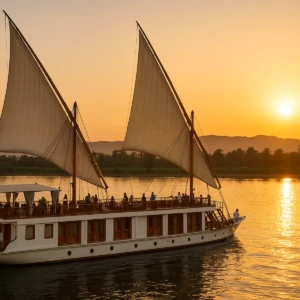
By dahabiya. This is the most relaxed option. Small sailing boats can moor at quiet stretches of the riverbank where big cruise ships cannot. On our five-night dahabiya Nile cruise from Esna toward Aswan, El Kab is the first visit on day two, with the Temple of Horus at Edfu in the afternoon.
By private car. You can drive from Luxor or include El Kab on a private road journey between Luxor and Aswan. It pairs naturally with Esna on the way south or Edfu just beyond. Drive times depend on traffic, checkpoints and your start point, so your driver or guide will confirm timing.
Standard 3 and 4 night cruise ships between Luxor and Aswan do not usually include El Kab. If you are booked on one, it is still possible to see the site with a separate private excursion arranged around the ship’s schedule.
Opening Hours and Ticket Prices
As listed on the official Ministry of Tourism and Antiquities site in October 2026, El Kab is open every day from 7:00 am to 5:00 pm. Check before you go.
| Ticket | Adult | Student |
|---|---|---|
| Foreigners | EGP 200 | EGP 100 |
| Egyptians | EGP 10 | EGP 5 |
The prices are on the official El Kab page of the Ministry. Student rates normally require a valid student card. The official listing does not mention separate tickets for individual tombs or the desert temples.
Best Time to Visit and Practical Tips
Go early. The tombs face open desert, and there is little shade between them. In the cooler months from October to April, mornings are comfortable for walking. In summer, aim to arrive close to the 7:00 am opening and finish before midday. Our best time to visit Egypt guide explains the seasons month by month.
- Bring supplies: El Kab is a quiet, rural site. Do not count on shops or cafés, and carry water, sun protection and a snack.
- Wear solid shoes: expect sand and uneven desert ground between the tombs.
- Carry a small flashlight: it helps you see painted details in the back of the tombs. Ask the guard before using it near the walls.
- Dress modestly: covered shoulders and knees are respectful at rural sites and protect you from the sun.
- Read ahead: a short look at the story of the Hyksos war makes the tomb inscriptions far more rewarding.
How to Combine El Kab With Nearby Sites
El Kab sits in the middle of a stretch of river packed with temples. On a dahabiya or a private drive, these are the natural pairings:
- Edfu: the Temple of Horus, a short distance upriver and the usual afternoon stop after El Kab. See our Edfu Temple guide.
- Kom Ombo: the double temple of Sobek and Horus the Elder, farther south toward Aswan. Our Kom Ombo Temple guide covers it.
- Luxor: most El Kab trips start or end here. Our Luxor travel guide covers the temples and tombs of both banks.
- The full river route: our Luxor to Aswan Nile cruise guide shows how the main temples line up between the two cities.
Visit With Delta Tours Egypt
The easiest way to see El Kab with us is on a dahabiya. Our dahabiya Nile cruise page explains the five-night route from Esna toward Aswan and compares it with a standard cruise ship. You can choose between three boats:
- Nour El Nil Dahabiya Nile Cruise: 06 Days / 05 Nights, Esna and Aswan, from $3,500 per person.
- Malouka Dahabiya Nile Cruise: 06 Days / 05 Nights, Esna and Aswan, from $3,500 per person.
- Meroe Dahabiya Nile Cruise: 06 Days / 05 Nights, Esna and Aswan, from $3,500 per person.
Families who want a dahabiya inside a longer trip can look at A Family Egyptian Adventure: From Pyramids to Reefs, 14 Days / 13 Nights from $7,600 per person. If you are traveling on a cruise ship or by road and want El Kab added, we can arrange a private visit on request through our tailor-made tours service.
Frequently Asked Questions
Where is El Kab in Egypt?
El Kab is on the east bank of the Nile in southern Upper Egypt, between Esna and Edfu. It lies about 80 km south of Luxor, directly across the river from the ancient town of Hierakonpolis.
How much is the El Kab ticket for foreigners?
The official Ministry site listed EGP 200 for foreign adults and EGP 100 for foreign students in October 2026. The site is open daily from 7:00 am to 5:00 pm.
What is El Kab famous for?
It was the cult center of Nekhbet, the vulture goddess of Upper Egypt. Visitors come mainly for the painted New Kingdom tombs, above all those of Paheri and of Ahmose, son of Ebana, and for the massive mudbrick town wall.
Do Nile cruises stop at El Kab?
Standard cruise ships between Luxor and Aswan do not usually stop there. Dahabiyas do, because their small size lets them moor along quiet stretches of the bank.
How long should I spend at El Kab?
We suggest two to three hours to see the main tombs, the town wall and, if open, the desert temples. With limited time, one hour is enough for the tombs of Paheri and Ahmose.
Is El Kab worth visiting?
Yes, if you enjoy quieter sites and real ancient stories. The tombs are smaller than those in Luxor, but the inscriptions are among the most important historical texts of the period, and the site sits off the main cruise-ship circuit.
El Kab is the kind of stop that turns a Nile journey from a list of famous temples into a story about the people who lived along the river. To include it, start with our dahabiya Nile cruise options or ask us to build it into your route.
Featured image: Painted rock tomb of Paheri at El Kab. Photo: Olaf Tausch / Wikimedia Commons, CC BY 3.0