
White Desert Egypt: Camping Among the Chalk Formations
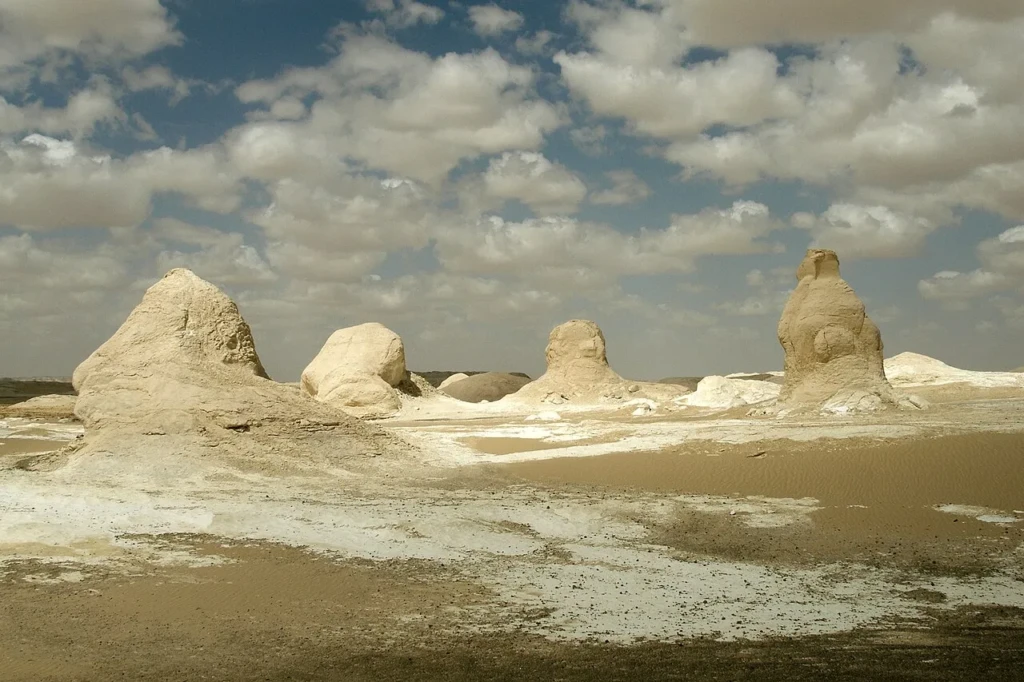
Reaching the White Desert takes most of a day from Cairo, which is why most people who make the trip spend the night there. The White Desert in Egypt is a protected area of wind-carved chalk and limestone in the Farafra depression of the Western Desert, about 45 km (28 miles) north of Farafra town. Visitors explore it by 4×4 with a licensed operator, usually from Bahariya Oasis, and camp overnight at designated sites among the formations.
This guide explains what the White Desert is, how the landscape formed, what you see on a typical trip, how to get there and when to go. It also covers current UK government travel advice for the area and the park rules that keep it intact.
White Desert at a Glance
| Fact | Details |
|---|---|
| Official name | White Desert Protected Area (Sahara el-Beida) |
| Location | Farafra depression, New Valley Governorate, Western Desert |
| Protected since | 2002, by Prime Minister’s Decree No. 1220 of 2002 |
| Category | Landscape protected area, managed under Egypt’s nature protectorates system |
| Area | 3,133.5 km² (about 1,210 sq miles), per the official protectorates list |
| Distance | About 45 km (28 miles) north of Farafra town; Bahariya Oasis, the usual base, is about 370 km (230 miles) from Cairo |
| How to visit | By 4×4 with a licensed local operator |
| Time needed | Our planning suggestion: 2 days and 1 night from Cairo at minimum; 3 days and 2 nights is more relaxed |
What Is the White Desert?
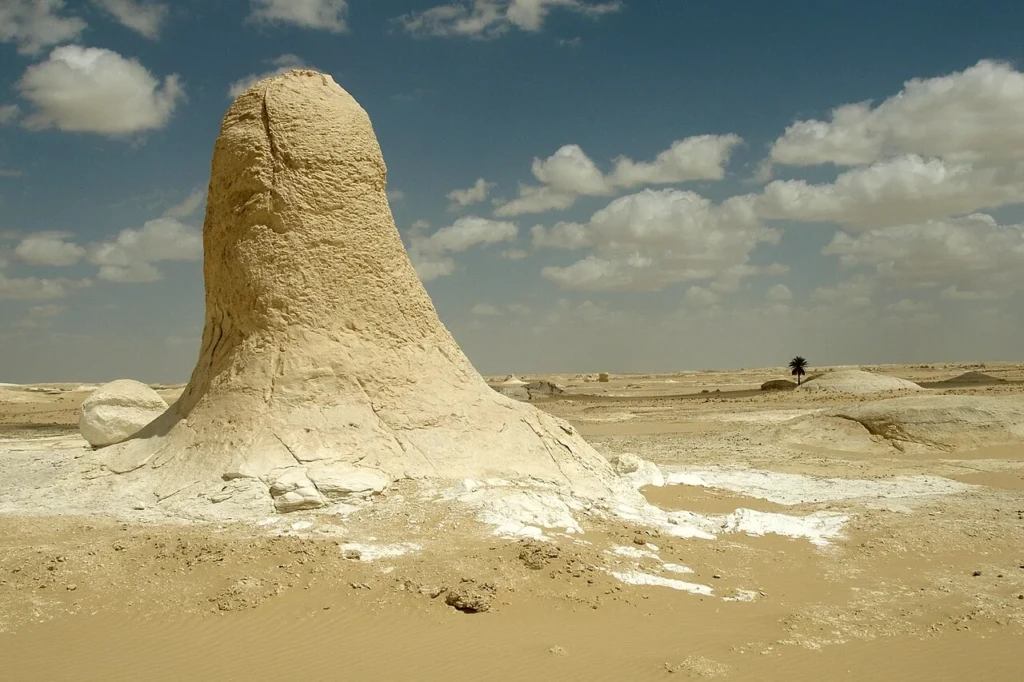
Picture a flat, pale plain scattered with white rock towers of every size, from knee-high knobs to tall pillars. Wind and sand have cut the softer layers away and left harder caps on top, so many formations look like mushrooms, columns or crouching animals. Between them lie open sand, low cliffs and a few green springs.
The Egyptian government declared the area protected in 2002. On the official list of protectorates kept by the Egyptian Environmental Affairs Agency, it is classed as a landscape protected area covering 3,133.5 km². You will often see it called “White Desert National Park,” which is the common name in English.
How the Formations Were Made
The white rock is chalk and limestone, laid down as sediment when this part of North Africa lay under the sea. After the sea retreated, the desert wind went to work. Sand carried by the wind scours rock near the ground faster than rock higher up, which is how the mushroom shapes form. Geologists call wind-carved rocks like these ventifacts.
Not everything here is white. The park also includes cliffs at the northern edge of the Farafra depression, sand dunes on the fringe of the Great Sand Sea and the dry valley of Wadi Hennis, its lowest point at about 32 m (105 ft) above sea level.
Wildlife
The springs and scattered plants support more life than you might expect. The park is a refuge for the endangered rhim gazelle and the dorcas gazelle, as well as Barbary sheep, jackals and three kinds of fox, including the fennec. The sand cat also lives here. You are more likely to see their tracks around camp in the morning than the animals themselves.
What You See on a Typical Trip
Most trips run north to south from Bahariya Oasis along the desert highway toward Farafra, with stops on the way. The order below follows that route. Your operator will choose exact stops based on time, light and park conditions.
1. Bahariya Oasis
Bahariya is the closest of the Western Desert oases to Cairo and the usual starting point. Its main village is El Bawiti. The oasis has a long history, with a Greco-Roman burial ground known as the Valley of the Golden Mummies, where excavations began in 1999. An asphalt road has linked Bahariya to Cairo since the early 1970s.
2. The Black Desert
South of Bahariya, the road crosses a band of dark, cone-shaped hills about 30 km (19 miles) long. Their tops are capped with basalt and other dark rock, which gives the area its name. Some mounds reach about 100 m (330 ft) high, and they stand out sharply against the lighter sand around them.
3. Crystal Mountain
Farther south, just east of the highway, is Crystal Mountain, a small ridge and natural arch studded with crystals. Many sources call them quartz, but studies show they are mainly barite and calcite. The crystals are soft and easily scratched, so look but do not chip or take any.
4. The Aqabat Pass
Near the northern end of the park, the highway crosses the Aqabat Pass (Naqb el-Aqabat) on its way down into the Farafra depression. The park’s northernmost entrance lies just south of the pass. From here on, the color of the land starts to change from tan to white.
5. The Chalk Formations and Camp
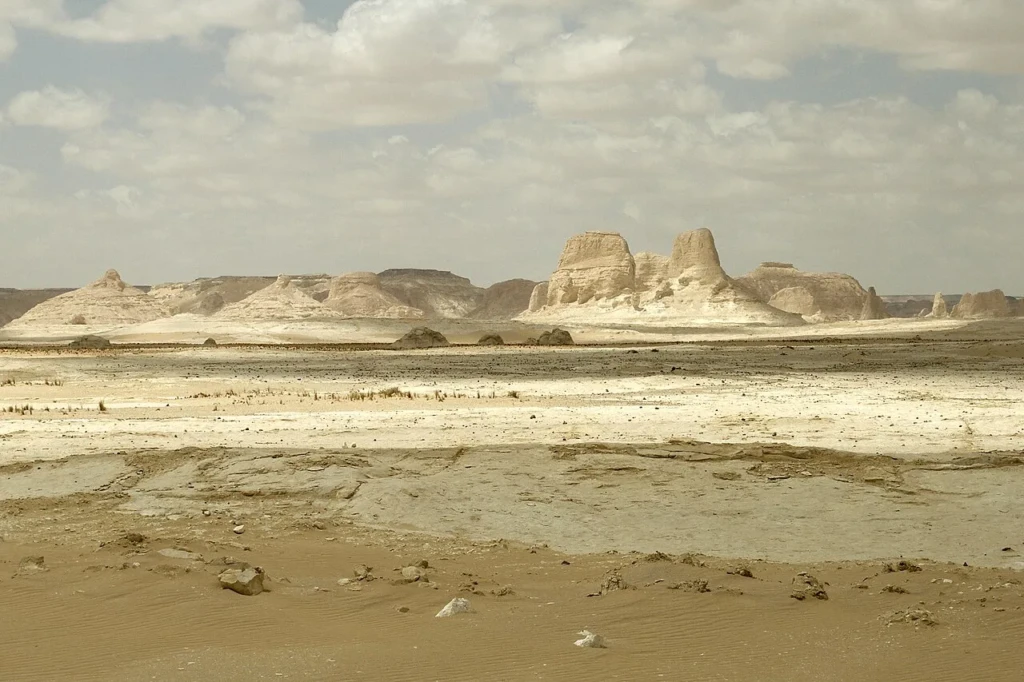
The main field of white formations lies east of the highway. Vehicles follow marked tracks between them, stopping for short walks and photographs. In the late afternoon, operators head to one of the designated camping areas, set up camp and cook dinner. Camps are simple, with no electricity or running water, so ask your operator exactly what bedding and shelter they provide.
The next morning you can walk among the rocks at first light before driving on to Farafra or back toward Bahariya and Cairo.
How to Get to the White Desert
The usual route from Cairo is the paved highway to Bahariya Oasis, about 370 km (230 miles). From Bahariya, the White Desert is roughly 100 km farther south. You need a 4×4 inside the park, because the tracks between the formations are unpaved.
We do not quote driving times, because they depend on traffic leaving Cairo, checkpoints and stops. Your driver or guide will confirm timing. What matters for planning is that the drive takes up a large part of the first day, so most itineraries arrive at the rocks in the afternoon and camp.
Independent self-driving is not the norm here. Travel with a licensed operator who knows the tracks, carries recovery gear and handles any permits or checkpoint paperwork.
Entry Fees and Opening Hours
We could not find a current official entrance fee or opening hours for the White Desert Protected Area on an Egyptian government website. Fees for visitors and vehicles may apply, so ask your operator whether they are included in your quote. Camping is only allowed at designated sites.
Best Time to Visit
The cooler months, roughly October to April, are the best time to go. Summer temperatures in the Farafra area can pass 40°C (104°F), which makes daytime exploring hard and camp uncomfortable.
Winter brings the opposite problem. Daytime is pleasant, but nights in the open desert get cold, with winter temperatures around 10°C (50°F) in Farafra and colder on the open plain before dawn. Bring warm layers, a hat and a sleeping bag liner if you feel the cold. Rain is close to zero all year.
The most rewarding hours are early morning and late afternoon, when the low sun brings out the texture of the rock. A clear, moonless night is the best time for stargazing. For timing the rest of your trip, see our month-by-month guide to the best time to visit Egypt.
Is the White Desert Safe to Visit?
The UK Foreign, Commonwealth and Development Office (FCDO) advises against all but essential travel to most of Egypt west of the Nile Valley and Delta. However, its current Egypt travel advice (updated 4 August 2026 and still current in October 2026) lists several exceptions. These include the White Desert and Black Desert, the oasis towns of Bahariya and Farafra, and the road between Giza and Farafra with 50 km on either side of it.
In other words, the classic Cairo–Bahariya–White Desert route sits within the areas the FCDO does not advise against. The FCDO does advise against all but essential travel on the road between Bahariya and Siwa, so do not plan to link the two oases overland. Check the latest advice before you book, because travel insurance may be affected if you travel against it. Our guide on whether it is safe to travel to Egypt right now gives the wider picture.
Park Rules and Responsible Camping
The White Desert is fragile. The chalk crumbles easily, and stray tire tracks, graffiti and litter spoil the landscape for everyone who comes after you. Good operators follow these rules, and you should too:
- Stay on marked tracks and camp only at designated sites.
- Do not climb on fragile formations or carve into them.
- Take nothing: no rocks, crystals, fossils or archaeological finds.
- Bring your own fuel for fires; do not burn local plants or wood.
- Carry out all rubbish, including food waste and tissues.
- Keep your distance from wildlife and never feed animals.
What to Pack
- Warm layers and a hat for the night, even after a hot day
- Sun protection: sunglasses, sunscreen and a wide-brimmed hat
- A headlamp or flashlight
- Closed shoes for walking on rock and sand
- A scarf or buff against blowing sand
- Any personal medication, plus wet wipes and hand sanitizer
- A power bank, since there is no electricity at camp
Our page on what to pack and wear in Egypt covers the rest of your trip.
Combining the White Desert With Cairo and Giza
Because the trip starts and ends in Cairo, it fits well before or after your days at the pyramids and museums. Many travelers do Cairo first, head into the desert for two or three days, then return for a Nile cruise or the coast. Our Cairo travel guide and Giza travel guide help you plan the city days.
To see how an extra desert stretch changes the overall length of a trip, compare our 7, 10 and 14-day Egypt itineraries.
Visit With Delta Tours Egypt
We do not currently sell a set White Desert tour. We can arrange a private desert trip on request, working with licensed local operators, as part of a tailor-made Egypt tour. Tell us your dates, how many nights you would like to camp and how comfortable you are with basic conditions, and we will plan around that.
For your Cairo days around the desert trip, our private Pyramids Day Tour starts from $55 per person, and our Grand Egyptian Museum and pyramids day starts from $95 per person. If you prefer a short package, the Taste of Egypt – 4 Days (Cairo) starts from $535 per person. For a dedicated Egyptologist throughout your stay, see our private guide tours.
Frequently Asked Questions
Where is the White Desert in Egypt?
It lies in the Farafra depression in the Western Desert, in New Valley Governorate, about 45 km (28 miles) north of Farafra town. Most trips reach it from Bahariya Oasis, about 370 km (230 miles) from Cairo.
Can you visit the White Desert as a day trip from Cairo?
It is not practical. The drive takes up most of a day each way, so you would see little in daylight. Plan at least one night, ideally camping inside the protected area.
Is camping in the White Desert safe?
The UK FCDO does not advise against travel to the White Desert, Black Desert, Bahariya or Farafra, as of its advice updated in August 2026. Go with a licensed operator, camp at designated sites and check the latest advice before you travel.
What is the difference between the White Desert and the Black Desert?
The White Desert is a field of pale chalk and limestone formations carved by wind. The Black Desert, farther north toward Bahariya, is a stretch of cone-shaped hills capped with dark rock such as basalt.
When is the best time to visit the White Desert?
October to April is the most comfortable period. Summer heat can pass 40°C (104°F), while winter nights are cold, so pack warm layers in the cooler months.
Is there an entrance fee?
We could not confirm a current official fee on a government website. Ask your operator whether protected-area fees are included in the price.
A night among the chalk towers is one of the most memorable additions to an Egypt trip, and it needs careful planning. If you would like us to arrange it around your Cairo days, start with our tailor-made Egypt tours.
Featured image: Chalk rock formations in the White Desert. Photo: Vyacheslav Argenberg / Wikimedia Commons, CC BY 4.0