Manial Palace: Prince Mohamed Ali’s Garden Palace
Built between 1900 and 1929 for Prince Mohamed Ali Tawfik, Manial Palace is a walled royal residence on Roda Island in central Cairo, now run as a museum by the Ministry of Tourism and Antiquities. Its halls mix Mamluk, Ottoman, Persian, Moroccan, Andalusian and Syrian design, and they still hold the prince’s carpets, furniture, manuscripts and hunting trophies. It opens daily from 9:00 am to 5:00 pm, and foreign adults pay EGP 220, as listed on the official Ministry site in October 2026.
This guide covers who built the palace and why, the order in which to see its buildings, ticket and timing details, and how to pair it with other stops in southern Cairo.
Manial Palace Quick Facts
| Fact | Details |
|---|---|
| Official name | Manial Palace Museum (Museum of Prince Muhammad Ali’s Palace) |
| Location | Northern part of Roda Island, El-Manial district, central Cairo, facing a small branch of the Nile opposite Qasr El-Aini |
| Built | 1900 to 1929 (1319 to 1348 AH), per the Ministry of Tourism and Antiquities |
| Built for | Prince Mohamed Ali Tawfik, son of Khedive Tewfik and brother of Khedive Abbas Hilmi II |
| Site area | About 61,711 square meters, of which around 5,000 are buildings |
| Opening hours | Daily 9:00 am to 5:00 pm; ticket window closes at 4:00 pm (official site, October 2026) |
| Ramadan hours | 9:00 am to 3:00 pm; ticket window closes at 2:00 pm (official site, October 2026) |
| Foreigner ticket | Adult EGP 220, student EGP 110 (official site, October 2026) |
| Time needed | Our planning suggestion: 1.5 to 2 hours |
Who Was Prince Mohamed Ali Tawfik?
Prince Mohamed Ali was born in Cairo in 1875, the second son of Khedive Tewfik and a grandson of Khedive Ismail. He studied in Switzerland and at the Theresianum military academy in Austria, then returned to Egypt after his father died in 1892. He developed a lifelong interest in science, literature and, above all, Islamic art.
He stood next in line to the throne three separate times. He was heir under his brother, Khedive Abbas Hilmi II, until Abbas had a son. After Abbas was deposed, British authorities required the prince to leave Egypt, and he lived for a time in Montreux, Switzerland. Back in Cairo, he became heir again under Sultan Fuad until the birth of Farouk. When Fuad died, he served as one of three regents until the young King Farouk came of age, and he was later named crown prince again until Farouk’s son was born.
He died in Lausanne in 1954, after the 1952 revolution had swept away the monarchy’s power. He had asked that his palace become a museum after his death so the public could enjoy it.
Why the Palace Matters
Manial is not an ancient monument, and that is exactly why it is worth a visit on a Cairo trip dominated by pharaohs. It shows how one of Egypt’s most cultured royals wanted to live, and what he thought Islamic art could look like in a modern home.
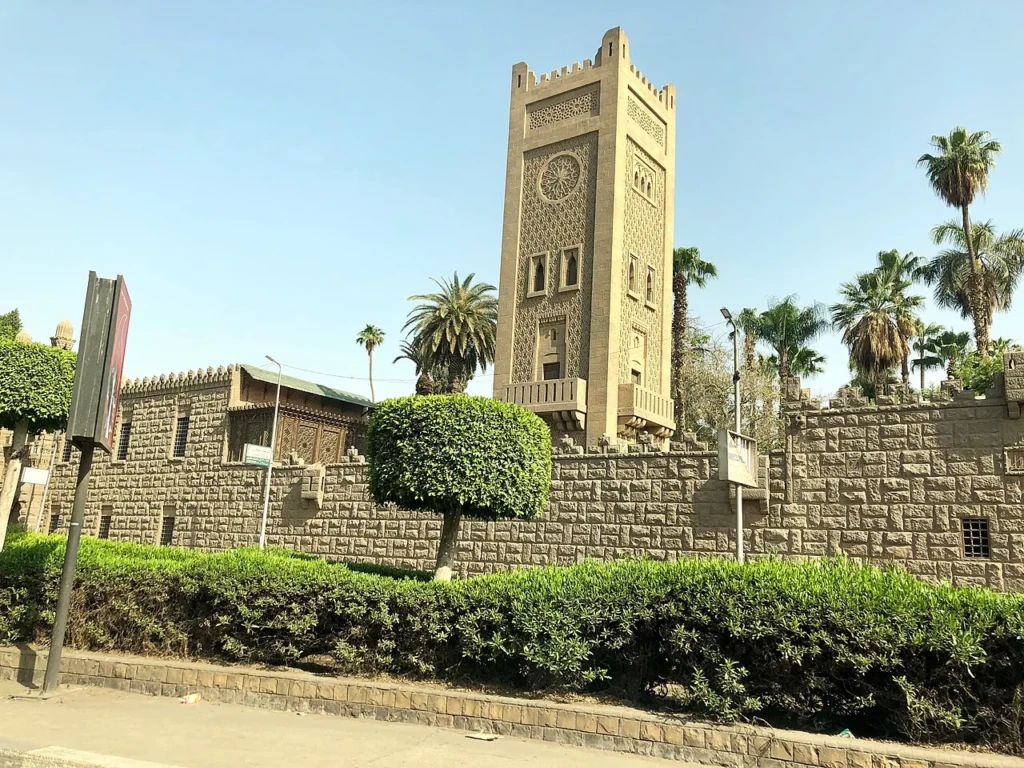
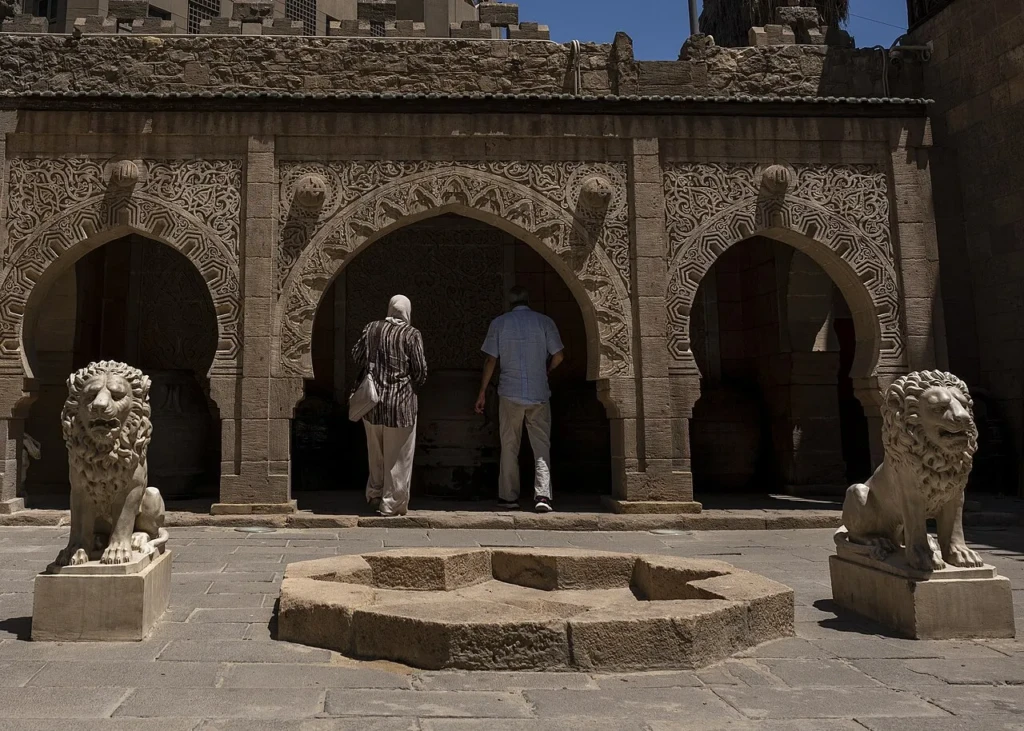
The prince chose the site, designed the buildings and their decoration himself, and oversaw every stage. The work was carried out by a master builder, Mohamed Afifi. An inscription at the entrance records that the prince built the palace to revive and honor Islamic arts, and that Afifi executed it in 1348 AH (1929). The result borrows freely from many traditions: Mamluk and Ottoman forms, Persian tilework, Moroccan mirror rooms, Syrian painted wood and Andalusian towers, all inside a wall styled after a medieval fortress.
The palace had a difficult 20th century. After 1952, the state took over the royal family’s property. In 1964 a hotel company built a hotel of wooden chalets in the gardens, which were later removed to protect the site. The palace itself closed for restoration in 2005 and reopened in 2015, after work that included reinstalling the collapsed ceiling of the Throne Hall.
What to See, in Visiting Order
The complex is made up of separate pavilions set around gardens, so you walk from building to building rather than through one long house. A sensible route follows the order in which visitors usually meet them, from the entrance inward.
1. The outer wall and entrance
The fortress-style wall sets the tone, and the entrance carries the inscription naming the prince and his builder. Stop to read the gate before you go in; it explains the purpose of everything you are about to see.
2. The Reception Pavilion
This building received official guests. The ground floor holds the ceremonial hall where the prince met ministers and ambassadors. Upstairs are two of the most photographed rooms in the palace: a Moroccan-style hall covered in mirrors and ceramic tiles, and a Syrian-style hall lined with painted wood, geometric and floral patterns, Qur’anic verses and poetry.
3. The Clock Tower
The tower copies the shape of Andalusian and Moroccan watchtowers, which once sent fire signals at night and smoke signals by day. Look up at the clock face: its hands are shaped like snakes, a playful detail that most visitors miss.
4. The Mosque
The palace mosque is small but richly finished in an Ottoman style. One of its two halls has a ceiling of small yellow glass domes, and the other is decorated with sun-ray patterns. The walls carry Iznik tiles, and both the pulpit and prayer niche are gilded. Dress modestly and follow any instructions from staff.
5. The Residence Pavilion
This was the first building on the site and the prince’s actual home. Its two floors hold a fountain hall, a mirror room, a blue salon, a mother-of-pearl salon, a dining room, a fireplace room, and the prince’s office and library. The building is often described as a museum of Turkish ceramic tiles in its own right, so take time with the walls as well as the furniture. A tower on this pavilion was built for views over Cairo and Giza.
6. The Throne Pavilion
The ground-floor Throne Hall is lined with gilded sofas and chairs and large portraits of rulers of the Muhammad Ali dynasty. Upstairs, the Aubusson Room is covered wall to wall in French Aubusson weaving and holds belongings of Ibrahim Ilhami Pasha, the prince’s maternal grandfather.
7. The Golden Hall
This hall has no furniture, yet it is one of the highlights. Every surface is covered in gilded floral and geometric ornament in an Ottoman Rococo style, with columns shaped like palm trees. The prince had it moved here from his grandfather’s residence, where it had been built for a visit by the Ottoman Sultan Abdulmejid I.
8. The Private Museum
On the southern side, the private museum wraps around a small courtyard garden. Its halls display rare manuscripts and calligraphy, writing sets, swords and daggers, textiles, porcelain, silver and the prince’s jeweled personal items. The largest hall is devoted to carpets. Hall 12, the Summer Hall, has marble lion heads that once spouted water.
9. The Hunting Museum
Added in 1963 along the northern wall, this long gallery holds 1,180 preserved animals, birds and butterflies from the hunting collections of King Farouk, Prince Mohamed Ali and Prince Yusuf Kamal. It also shows the skeletons of a camel and a horse that carried the Kaaba covering in the Mahmal procession. Some visitors find taxidermy uncomfortable; you can skip this wing without missing the palace’s main story.
A note on the garden
The prince collected trees and plants from around the world, including cacti, Indian fig trees, royal palms and bamboo, across a garden of about 34,000 square meters. However, the official museum page notes that the garden is not part of the visit route. You will see planting between the pavilions, but do not plan your visit around a garden walk.
How to Get There
The palace sits in the north of Roda Island, an island neighborhood in the Nile in central Cairo. It faces Qasr El-Aini across a narrow branch of the river. By car or taxi it is a straightforward drop-off, and your driver will confirm timing from your hotel, since Cairo traffic varies widely by hour.
If you use the metro, the nearest station is Sayyida Zeinab, followed by a short walk across to the island. Travelers staying near the Nile in Garden City or downtown are relatively close; those based in Giza should allow more time.
Opening Hours, Tickets and House Rules
The official Ministry of Tourism and Antiquities listing for October 2026 gives these details. Check before you go, as they can change.
- Hours: daily, 9:00 am to 5:00 pm. The ticket window closes at 4:00 pm.
- Ramadan: 9:00 am to 3:00 pm, with the ticket window closing at 2:00 pm.
- Foreigners: adult EGP 220, student EGP 110.
- Children: the official free-entry list includes children under 6.
- Photography: phone photography is free. Flash, tripods and monopods are not allowed, and you should not photograph other visitors or staff without consent.
- Bags: large bags, large backpacks and parcels over 40 x 40 cm go to the cloakroom, as do umbrellas and sharp items.
- Behavior: do not touch exhibits, and food and drink are not allowed in the galleries apart from small water bottles. The museum asks for appropriate attire.
The official page also lists toilets, an ATM, parking, a gift shop and a ramped entrance among its services.
Best Time to Visit
Go in the morning. You need time to walk between pavilions, and the last tickets are sold an hour before closing, so an afternoon arrival can feel rushed. A morning visit also leaves the afternoon free for another part of the city.
The palace suits any season, because most of the visit is indoors. It works especially well as a break on a hot day between outdoor sites. For weather by month, see our guide to the best season to visit Egypt.
Who Will Enjoy Manial Palace Most
- Repeat visitors to Egypt who have done Giza and Luxor and want a different period of history.
- Design and interiors fans, who will find more variety in tilework, woodwork and gilding here than in almost any single building in Cairo.
- Travelers interested in modern Egyptian history, since the palace tells the story of the Muhammad Ali dynasty in its final decades.
- Families looking for a calm, compact museum with room to move between buildings.
How to Combine Manial Palace with Nearby Sites
Roda Island has a second historic monument at its southern tip: the Rawda Island Nilometer, built in 861 under the Abbasid caliph al-Mutawakkil to measure the Nile flood. It is listed as open daily from 9:00 am to 5:00 pm, with a foreign adult ticket of EGP 120 on the official site in October 2026. Together the two make a neat half day on the island.
From Roda it is a short hop to Old Cairo and its churches, and the Nile Corniche is close for an evening sail. Our Cairo travel guide helps you group these neighborhoods into sensible days. If you want to end on the water, consider our Cairo Nile felucca sail, from $45 per person.
For the ancient side of Cairo, most travelers set aside separate days for the Giza Pyramids and the Grand Egyptian Museum.
Visit with Delta Tours Egypt
We do not offer a set tour dedicated to Manial Palace, but we can arrange a private visit with a guide and driver on request as part of our tailor-made Egypt tours. It pairs well with the Nilometer, Old Cairo or an afternoon on the Nile.
Among our ready-made options, the Old Cairo and Citadel private tour starts from $100 per person, and the Taste of Egypt 4-day Cairo tour starts from $535 per person. If you have a long layover, our Cairo airport stopover tour starts from $180 per person. Browse the full list on our Cairo day tours page.
Frequently Asked Questions
How much is the Manial Palace ticket for foreigners?
The official Ministry of Tourism and Antiquities site lists EGP 220 for foreign adults and EGP 110 for foreign students in October 2026. Children under 6 are on the free-entry list. Check the official page before you go.
What are Manial Palace’s opening hours?
It opens daily from 9:00 am to 5:00 pm, and the ticket window closes at 4:00 pm. During Ramadan the hours are 9:00 am to 3:00 pm, with last tickets at 2:00 pm.
Can I take photos inside Manial Palace?
Yes, phone photography is free under the official policy. Flash, tripods and monopods are not allowed. Commercial filming needs prior permission and a fee.
Is the Manial Palace garden open to visitors?
The official museum page states that the garden is not within the tour. You will pass planting between the buildings, but the wider garden is not part of the standard visit.
How long do I need at Manial Palace?
We suggest 1.5 to 2 hours to see the main pavilions, the Golden Hall and the private museum at an easy pace. Add 30 minutes if you want to include the Hunting Museum in detail.
Is Manial Palace worth visiting?
Yes, if you enjoy architecture, interiors or modern history. It offers a side of Egypt that the pharaonic sites do not, and it is usually much calmer than the big museums.
Want a Cairo day that goes beyond the classic sights? Tell us your interests and we will design a private route through our tailor-made tours.
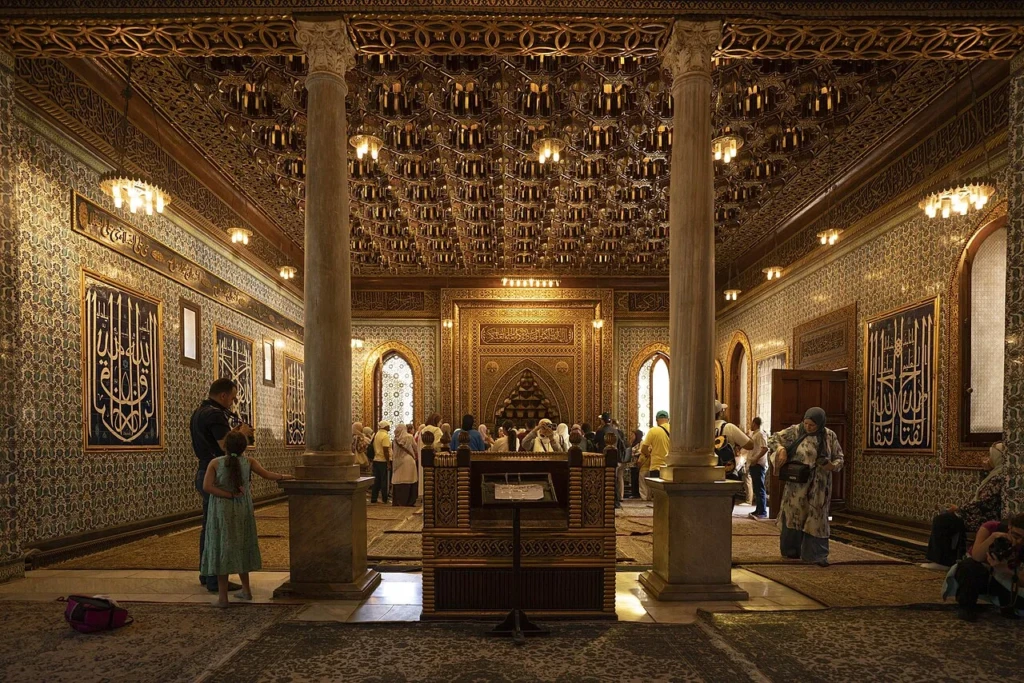
Featured image: Reception hall in Manial Palace, Cairo. Photo: Summering2018 / Wikimedia Commons, CC BY-SA 4.0