The Monastery of St Simeon in Aswan: History & Visiting

The Monastery of St Simeon is a ruined medieval Coptic monastery on the West Bank of the Nile at Aswan, about 1 km inland from the river. Its proper name is the Monastery of Anba Hadra, after a 4th to 5th century monk who became bishop of Aswan. Religious life here is attested from the 6th to the early 14th century, and its church, cave chapel and two-story monks’ quarters are some of the best-preserved monastic buildings in Egypt.
From the city side of the river, the monastery is easy to overlook. This guide explains the name puzzle, what each part of the complex was used for, the official ticket and hours, and how to add it to an Aswan itinerary.
Monastery of St Simeon at a Glance
| Fact | Details |
|---|---|
| Location | West Bank of the Nile at Aswan, about 1 km inland, on a sandstone bluff above a dry valley |
| Official name | Monastery (Dayr) of Anba Hadra; widely known as the Monastery of St Simeon |
| Dedicated to | Anba Hadra (Apa Hatre), monk and later Bishop of Aswan, late 4th to early 5th century AD |
| Period of use | Religious activity from the 6th to the early 14th century AD |
| Type | Coenobitic (communal) monastery of stone and mud brick, inside a high enclosure wall |
| Opening hours | Daily, 7:00 AM to 5:00 PM |
| Foreign ticket | EGP 150 adult, EGP 50 student |
| Time on site | Our planning suggestion: 1 to 1.5 hours, plus the river crossing and approach |
Who Was St Simeon? The Name Question
Here is the odd part. Almost every map, sign and guidebook calls this place the Monastery of St Simeon, yet the official Ministry of Tourism and Antiquities description says nobody knows which Simeon is meant, or how he was ever linked to the site.

The saint who does belong here is Anba Hadra, known in Coptic as Apa Hatre. He lived in the late 4th and early 5th centuries. He began as a monk and ended his life as Bishop of Syene, the ancient name of Aswan. Local tradition places his hermitage on this spot, and the monastery grew up around it. That is why scholars and the Ministry use the name Dayr Anba Hadra.
His memory is still active. Every year on 21 December, which is 12 Kiahk in the Coptic calendar, a religious festival is held at the site on the anniversary of his death.
Why the Monastery Matters
Egypt has many monasteries, but most active ones have been rebuilt again and again over the centuries. Dayr Anba Hadra was gradually abandoned instead. Its original stone and mud-brick buildings decayed slowly but were not replaced. As a result, the complex still shows how a large communal monastery in medieval Upper Egypt was organized: where the monks prayed, slept, ate, stored food and worked.

The site also carries a long written record. A German Archaeological Institute project that began in 2013 has been documenting its building history, wall paintings and inscriptions. The inscriptions run from the 7th to 8th century through the Mamluk period. They include Christian texts in Coptic and Arabic, and visitor graffiti left by Muslims, which shows the ruins were a place people kept coming to long after monastic life ended.
What to See, in Visiting Order
The monastery is built on two levels: a lower terrace and an upper terrace, separated by a rocky escarpment. A high enclosure wall with two gates surrounds both. Most visits move from the gate to the church and cave on the lower level, then climb to the living and working areas above.
1. The Enclosure Wall and Gate
The approach gives you the first clear view of the outer wall. Its height and solid construction give the whole complex the look of a fortress from a distance. Take a moment outside to see how the monastery sits on its bluff above the dry valley before you go in.
2. The Church
The church stands on the lower terrace. It is the spiritual center of the complex and one of the two places where colored wall paintings survive on walls and ceilings. Look closely at the wall surfaces as well. Parts of the church walls carry graffiti in Coptic and Arabic, written by monks and by visitors over the centuries.
3. The Cave of Anba Hadra
Beside the church is a series of small cave-like spaces that were later absorbed into the monastery. The most important is the grotto traditionally linked with Anba Hadra himself. Research published in 2022 identifies it as a small ancient quarry at the north-western end of the church, partly demolished but still painted.
The paintings are believed to date from the end of the 7th or the start of the 8th century. A row of standing saints lines the remaining rock faces: monks, hermits, bishops, apostles and evangelists, with one figure from the Old Testament. The ceiling carries a geometric pattern of squares and octagons framing busts of Christ and saints. It is a small space, so give your eyes time to adjust to the low light.
4. The Monks’ Residence
Climb to the upper terrace to reach the most striking structure on the site: a two-story residential building with communal cells. This layout is typical of a coenobitic monastery, where monks lived and worked as one community rather than as scattered hermits. Some of the cells keep the graffiti of their former occupants and of later visitors.
5. Refectory, Stores and Workshops
The upper terrace also holds the practical heart of the monastery. You can trace a refectory where the community ate, rooms for food storage, oil presses, ovens and a large workshop area. Together, these let the monks support themselves without leaving the walls. Walking through them is the best way to understand the monastery as a working village, not just a church.
Opening Hours and Ticket Prices
As listed on the official Ministry of Tourism and Antiquities site in October 2026, the monastery is open daily from 7:00 AM to 5:00 PM. The ticket price for foreign visitors is EGP 150 per adult and EGP 50 per student. Prices change from time to time, so check before you go. You can see the current listing on the Ministry’s official page for the monastery.
The ticket covers entry to the monastery only. The boat across the river and any transport on the West Bank are separate costs, which a private tour normally arranges for you.
How to Get to the Monastery
The monastery lies on the West Bank opposite Aswan, about 1 km inland from the Nile. Visitors cross the river by boat from the Aswan side and then go up to the site from the landing on the far bank. The last stretch is over open desert ground, so the approach involves some uphill walking on sand and rock.
Travel guidebooks note that camel rides are often offered at the landing for the trip up to the monastery. Whether you walk or ride, the time needed depends on the crossing point and your pace, so your guide will confirm timing on the day. If you are on a Nile cruise, ask your guide to fit the crossing into your free time in Aswan.
Best Time to Visit
There is very little shade on the approach or inside the walls. Aim for the first hours after opening at 7:00 AM, or the later afternoon before closing. From October to April the climate is far more comfortable. In the summer months, an early start is essential. Our guide to the best season to visit Egypt explains how Aswan’s heat compares across the year.
Late afternoon has an extra benefit: the light across the West Bank desert and the river below is softer for photographs, if photography is allowed at the time of your visit.
Practical Tips
- Dress respectfully. This is a Christian monastic site and still the focus of an annual feast. Covered shoulders and knees are a sensible choice.
- Wear closed shoes. The approach is sandy and the upper terrace has uneven floors and steps.
- Carry water, a hat and sunscreen. Shade is scarce from the landing to the upper buildings.
- Ask about photography. Rules can change, so check at the gate before photographing the paintings. Never use flash on painted surfaces.
- Bring small Egyptian pounds. They are useful for tips and for any camel ride you choose to take.
- Go with context. Without explanation, the ruins can look like empty mud-brick rooms. A guide who can point out the refectory, the ovens and the inscriptions makes the visit far richer.
How to Combine It With Other Aswan Sights
The monastery fits well into a half day on the West Bank or a river-based morning. Because you are already on a boat, it is easy to pair with other Nile-side stops. Our Aswan travel guide sets out how to structure two or three days in the city.
- Philae Temple: the island temple of Isis, a classic Aswan visit. Pairing it with the monastery shows two very different chapters of the region’s religious history in one day.
- Nubian village: a boat trip along the West Bank to a colorful Nubian community, a natural add-on for an afternoon on the water.
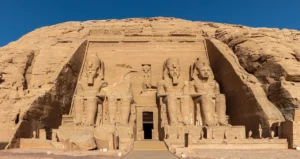
- Abu Simbel temples: a separate full-day or early-morning trip south, best kept to its own day.
If you are arriving or leaving by river, our Luxor to Aswan Nile cruise guide shows where free time in Aswan usually falls in a 3 or 4 night itinerary. That free time is often when a monastery visit fits best.
Visit With Delta Tours Egypt
Delta Tours Egypt does not offer a set tour of the Monastery of St Simeon. We can arrange a private visit on request as part of our tailor-made tours, with the boat crossing, an Egyptologist guide and timing planned around your other Aswan plans.
These existing Aswan products are a good base for building that day. Ask us about adding the monastery when you enquire:
- Philae Temple private tour, Aswan day tour, 1 day, from $85 per person
- Nubian Village tour from Aswan by boat, 1 day, from $50 per person
- Abu Simbel by private car from Aswan, 1 day, from $120 per person
- Jewels of Egypt, 6 day luxury journey, 6 days / 5 nights, from $1,075 per person
For more options in the city, see our private Aswan day tours.
Frequently Asked Questions
Why is it called the Monastery of St Simeon?
No one is sure. The Ministry of Tourism and Antiquities notes that the identity of this Simeon and his link to the site remain unknown. The monastery is properly named after Anba Hadra, a local monk who became Bishop of Aswan.
How old is the Monastery of St Simeon?
Anba Hadra lived in the late 4th and early 5th centuries AD. Religious activity at the monastery is attested from the 6th century to the beginning of the 14th century, and the paintings in the saint’s cave date to around 700 AD.
How much is the ticket to the Monastery of St Simeon?
The official Ministry listing in October 2026 gives EGP 150 for foreign adults and EGP 50 for foreign students. Opening hours are 7:00 AM to 5:00 PM daily. Check the current listing before you go.
How do you get to the Monastery of St Simeon?
Cross the Nile by boat to the West Bank opposite Aswan, then go about 1 km inland to the site on foot or by camel. A private guide can arrange the boat and the approach for you.
Is the Monastery of St Simeon worth visiting?
Yes, if you have some free time in Aswan and an interest in history beyond the pharaohs. Its original buildings are unusually well preserved for a historic Egyptian monastery. Visitors with limited mobility should note the sandy, uphill approach.
Is the monastery still active?
No community lives there now, and the buildings are a protected ruin. However, a religious festival is still held at the site every 21 December to mark the anniversary of Anba Hadra’s death.
If you are spending more than a day in Aswan, the monastery is one of the most rewarding ways to use a quiet morning. Tell us your dates and interests, and we will build it into a private itinerary through our tailor-made Egypt tours.
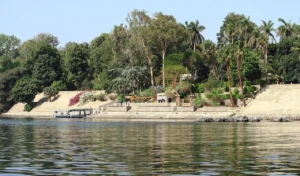
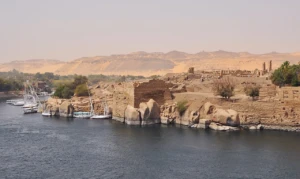
Featured image: Monastery of St Simeon on the desert edge west of Aswan. Photo: Olaf Tausch / Wikimedia Commons, CC BY 3.0