Al-Azhar Park: Cairo’s Best Sunset View
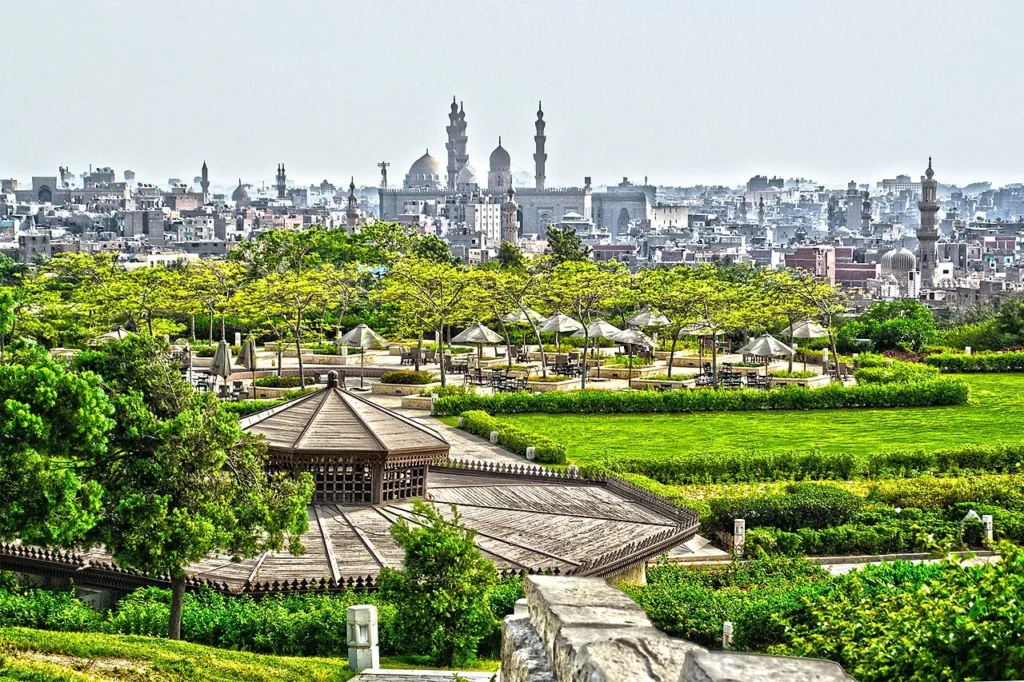
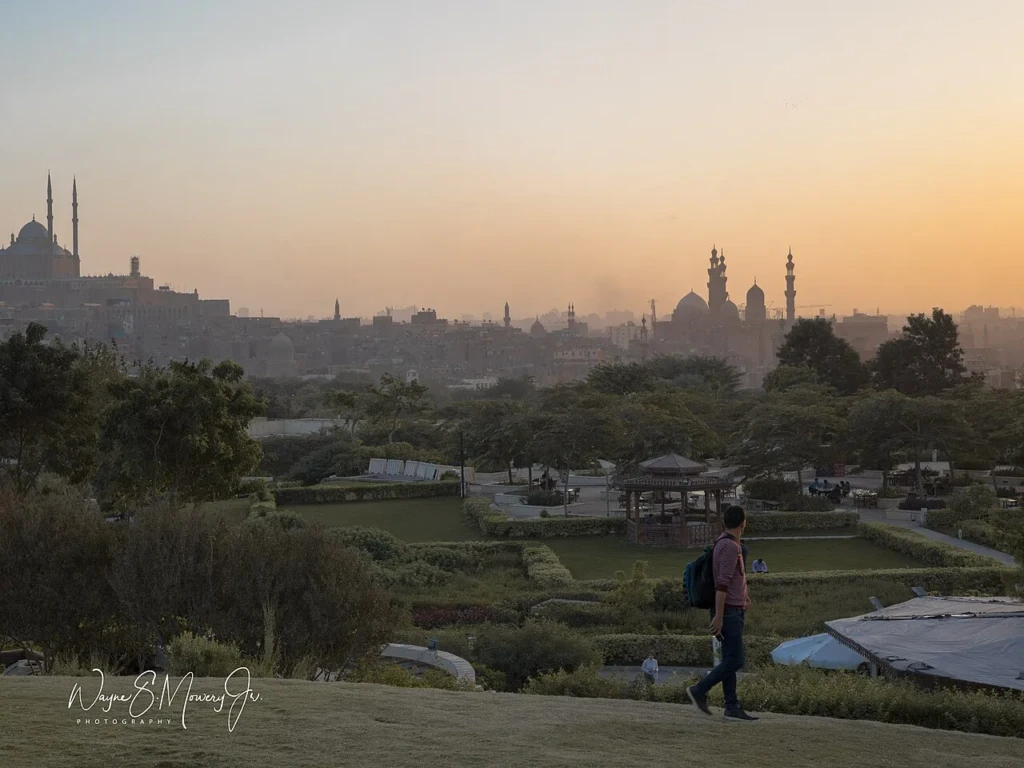
For a sunset over medieval Cairo, go to Al-Azhar Park, a 30-hectare (74-acre) public garden on the eastern edge of the historic city. Its hilltop paths look west over the domes and minarets of Islamic Cairo, with the Citadel to the south. Plan to arrive about an hour before sunset, walk the gardens and the old Ayyubid wall, then stay for the light to fade.
This guide covers the park’s unusual history, the route we suggest through it, how to fit it into a Cairo day, and the practical points that help a first visit go smoothly.
| Quick facts | Details |
|---|---|
| Location | Eastern edge of historic Cairo, between the Darb al-Ahmar district and the Mamluk cemeteries |
| Size | 30 hectares (74 acres) |
| Created by | The Aga Khan Trust for Culture, as a gift from the Aga Khan to the people of Cairo |
| Built | Designed 1995 to 1996, constructed 1997 to 2004, inaugurated 25 March 2005 |
| Historic feature | About 1,500 m of the Ayyubid city wall, begun under Salah al-Din in 1176 |
| Best time | Late afternoon into sunset (our planning suggestion) |
| Time needed | 1.5 to 2.5 hours, longer with a meal (our planning suggestion) |
| Tickets and hours | Not published on an official source we could verify; confirm at the gate |
What is Al-Azhar Park?
Al-Azhar Park is a landscaped public park built on what was, for centuries, Cairo’s rubbish heap. The Aga Khan Development Network describes the site as a 500-year accumulation of fill and debris, transformed into leisure space for one of the world’s most crowded cities. Today it is one of the largest green areas in central Cairo.
The park is not a museum or a monument in itself. It is a place to walk, sit, eat and look out over the old city. That is exactly why it works so well in a sightseeing day. After hours of mosques, bazaars and traffic, it gives you open sky, lawns and quiet.
From debris mound to garden
Debris began piling up outside Cairo’s eastern wall, probably from the 15th-century Mamluk period onward. Over time the mounds grew into hills that cut the old city off from the desert edge. According to Archnet, the project removed more than one million cubic meters of fill to reshape the ground before planting could begin.
The Aga Khan donated the site to Cairo’s citizens in 1984. Design work followed in the mid-1990s, and building ran from 1997 to 2004. The park opened on 25 March 2005. It is run as a partnership between the Aga Khan Trust for Culture and the Cairo Governorate.
Why it matters beyond the gardens
The park was planned to help the neighborhood next to it, not only to add greenery. When it opened, the Aga Khan Development Network said the project would affect the roughly 200,000 residents of Darb al-Ahmar, the low-income historic district just west of the park. Gate and restaurant receipts cover the park’s running costs, and Archnet notes that surpluses support restoration and social projects in Darb al-Ahmar.
For visitors, that means the park is part of a wider story about keeping historic Cairo lived in, not frozen. Housing repairs, restored monuments and training programs in the district grew out of the same initiative.
What to see in Al-Azhar Park, in a sensible order
The park is easy to explore without a map, but following a loop helps you finish at the best viewpoint as the sun goes down. Here is the order we suggest.
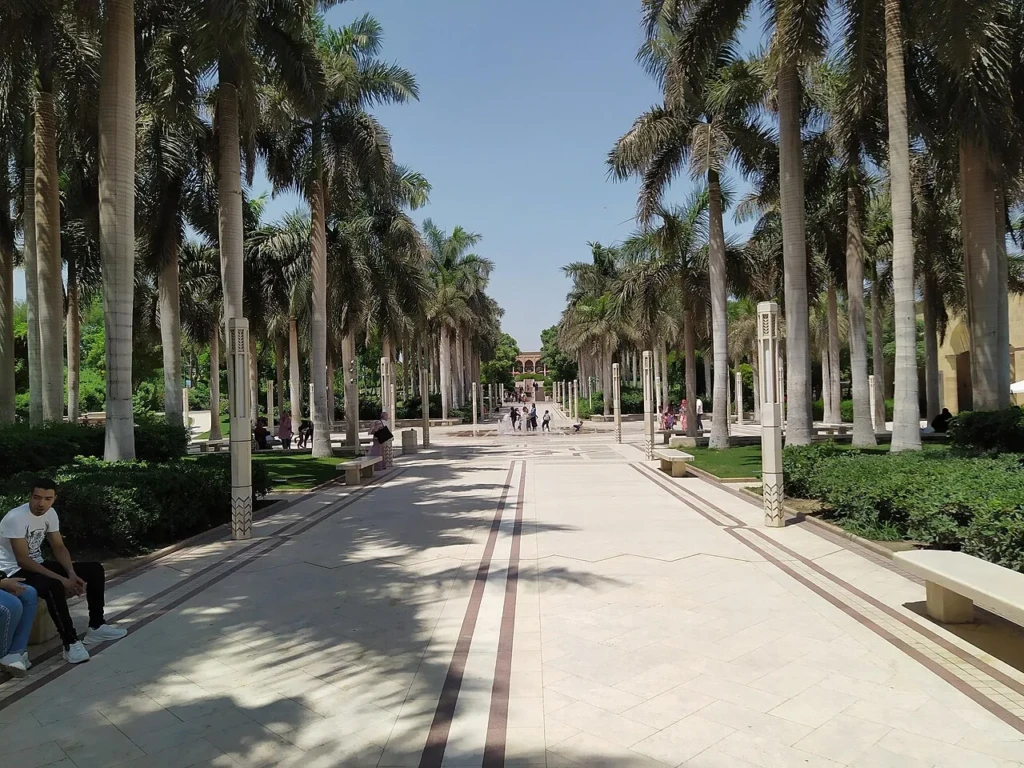
1. The formal central axis
The heart of the design is a long formal spine with a water channel and fountains. The design draws on historic Islamic gardens, with straight paths, shaded walks and running water. The axis points toward the Citadel, so the fortress frames your view as you walk.
2. The Ayyubid wall promenade
The most important historic feature sits along the park’s western edge. When the ground was graded, workers exposed most of the surviving Ayyubid city wall. Salah al-Din, known in English as Saladin, began these fortifications in 1176 to bring Cairo, Fustat and the older capitals inside one defensive system.
Archnet gives the exposed stretch as about 1,500 meters, running from Bab al-Wazir to al-Azhar Street. The wall now forms the boundary between the park and Darb al-Ahmar. A pedestrian promenade runs along its base, and you can see the stone courses and defensive details up close. It is one of the few places in Cairo where you can walk beside a long run of medieval city wall.
3. The southern lake
At the south end of the central axis, the water channel leads to a small lake. The Art Newspaper reported that the lake also works as a reservoir for irrigating the gardens. A lakeside café sits at the water’s edge, and it is a pleasant place for a drink before you climb toward the viewpoints.
4. Meadows, orchards and planted slopes
Away from the formal axis, the planting becomes looser. Archnet describes succulent gardens on the western slopes, grassy meadows with shade trees and orchard-style areas. Specialist nurseries were set up during construction to find plants that suit Cairo’s soil and climate. These quieter corners are where local families picnic, especially on weekends.
5. The hilltop viewpoint at sunset
Finish on the high ground near the hilltop restaurant. From here the view runs west across the rooftops of Darb al-Ahmar and Islamic Cairo. As the sun drops, minarets and domes turn to silhouettes, and the Citadel stands out on its ridge to the south. On clear evenings you hear the call to prayer roll across the old city from many mosques at once.
If you want dinner with the view, the hilltop restaurant is the obvious choice. We cannot confirm current opening times or whether it takes bookings, so ask your guide or hotel to check on the day.
How to get to Al-Azhar Park
The park lies on the eastern side of historic Cairo, next to Darb al-Ahmar and within sight of the Citadel. Most visitors arrive by car, either with their own driver or by taxi or ride-hailing app. Travel time depends heavily on Cairo traffic and on where you are staying, so your driver or guide will confirm timing for your hotel.
If you are staying in Giza near the pyramids, expect the drive across the city to take longer than from downtown. Late afternoon is often busy, so leave a margin if you are aiming for sunset.
Walking in from the old city
Some travelers combine the park with a walk through Darb al-Ahmar. This is a working, residential district with narrow lanes, workshops and restored monuments. It is best done with a guide who knows the area and can find the right route to a park entrance.
Opening hours and ticket prices
Al-Azhar Park is not an antiquities site, so it does not appear on the Ministry of Tourism and Antiquities ticket listings. We could not verify current opening hours or entrance fees on an official source in October 2026. Please confirm the current fee at the gate or with your hotel before you go.
Meals and drinks at the restaurants and café are paid separately from the entrance fee.
Best time to visit
Time of day
Late afternoon is the best time for most travelers. The heat eases, the light turns warm, and you can time your walk to reach the hilltop for sunset. Mornings are quieter and good for photography of the gardens, but you lose the evening view that makes the park special.
Season
Cairo’s cooler months make long walks more comfortable. Summer afternoons can be very hot, so in those months arrive closer to sunset and carry water. For month-by-month weather, see our guide to the best time to visit Egypt.
Weekdays versus weekends
The park is a favorite outing for Cairo families, couples and groups of friends. Expect more local visitors on Fridays, Egypt’s main weekly day off, and on public holidays. If you prefer quiet paths, choose a weekday visit.
Practical tips for your visit
- Dress: casual, comfortable clothes are fine. Modest dress, with shoulders and knees covered, fits in easily with local visitors.
- Shoes: wear flat shoes. Paths include slopes and some uneven ground near the wall.
- Sun: bring a hat and water in warmer months. Shade is good in some areas and thin in others.
- Cash: carry some Egyptian pounds for the entrance and small purchases.
- Respect: many families visit to relax. Ask before photographing people, especially women and children.
- Combine wisely: the park works best as the last stop of a sightseeing day, not the first.
For broader advice on money, clothing and etiquette, read what you need to know before your trip to Egypt.
How to combine Al-Azhar Park with nearby sites
The park sits among some of Cairo’s richest historic districts. That makes it an easy add-on to an Islamic Cairo day.
- Cairo Citadel: visible from the park and close by. Many travelers see the Citadel in the morning or early afternoon, then move to the park for sunset.
- Al-Azhar Mosque and Khan el-Khalili: the old Fatimid core lies just west of the park. A late lunch in the old city, then the park at dusk, makes a balanced afternoon.
- Darb al-Ahmar: the neighborhood beside the park holds restored mosques and houses. A guided walk shows how the park and district fit together.
- Mamluk cemeteries: the historic cemeteries lie east of the park. They are a separate visit that suits travelers with a deep interest in Islamic architecture.
Our Cairo travel guide covers where to stay and how to group sights by area. For ready-made day plans, browse our private Cairo day tours.
Sample afternoon plan
- Late morning: the Citadel and the Muhammad Ali Mosque.
- Early afternoon: lunch and a stroll near Al-Azhar Mosque and the bazaar.
- Late afternoon: enter Al-Azhar Park and walk the Ayyubid wall promenade.
- Sunset: the hilltop viewpoint, then dinner if you wish.
The Old Cairo & Citadel day tour (1 day, from $100 per person) covers the historic city by day. If you would like to add the park, mention it when you book so we can tell you whether it fits that day. Travelers who want more time in the city can look at Taste of Egypt, a 4-day Cairo tour (from $535 per person).
Is Al-Azhar Park worth visiting?
Yes, if you have more than a day in Cairo. The park is not a must-see in the way the pyramids are. It is, however, one of the few places where you can see the shape of the medieval city from above, at a calm pace. It also shows a successful modern project inside a historic setting, which gives useful context for the rest of Islamic Cairo.
If your time is short, a classic first visit usually covers Giza and the museums first. You can see the pyramids on our private Giza Pyramids tour (1 day, from $55 per person) and keep the park for a second Cairo day. A relaxing end to that day could be a felucca ride in Cairo (from $45 per person) instead, if you prefer the river to the hills.
Visit with Delta Tours Egypt
Delta Tours Egypt does not offer a set tour built around Al-Azhar Park. We can arrange a private visit on request, with a driver and, if you like, a guide for the Ayyubid wall and Darb al-Ahmar. We would fit it into a tailor-made Egypt tour alongside the Citadel, the old city and the rest of your itinerary.
Frequently Asked Questions
How much time do I need at Al-Azhar Park?
Most visitors need 1.5 to 2.5 hours to walk the main gardens and the wall promenade. Add time if you plan to eat at the hilltop restaurant or the lakeside café.
What is the best time to visit Al-Azhar Park?
Late afternoon is best, so you can reach the hilltop for sunset over Islamic Cairo. Weekdays are quieter than Fridays and public holidays.
How much is the entrance fee for Al-Azhar Park?
We could not verify a current official fee in October 2026, so we do not quote one. Check at the gate or ask your hotel before you go, and carry some Egyptian pounds.
Who built Al-Azhar Park?
The Aga Khan Trust for Culture created the park as a gift from the Aga Khan to Cairo. It was built between 1997 and 2004 and inaugurated on 25 March 2005.
Can you see the Ayyubid wall in the park?
Yes. About 1,500 meters of Salah al-Din’s wall was exposed during the park works. A promenade runs along its base on the park’s western edge.
Is Al-Azhar Park suitable for families with children?
Yes. Lawns, paths and open space make it a relaxed stop for children after a day of monuments. Keep an eye on young children near the lake and the slopes.
Al-Azhar Park turns a busy sightseeing day in Cairo into a calm evening with one of the best views of the old city. If you would like it built into your trip, tell us your dates and interests and we will plan the rest through our tailor-made Egypt tours.
Featured image: Azhar Park. Photo: Yasser Nazmi / Wikimedia Commons, CC BY-SA 3.0