Mount Sinai Climb at Sunrise: Routes, Timing and What to Bring
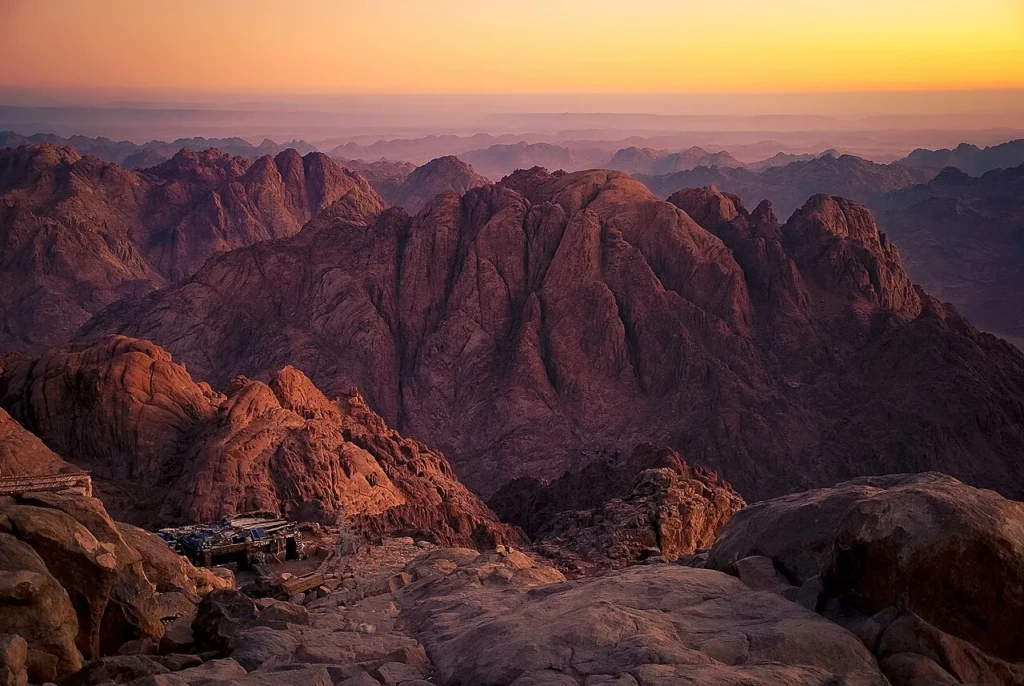
The usual way to do the Mount Sinai climb is to start walking from St Catherine’s Monastery in the dark, with a local Bedouin guide, and reach the 2,285 m (7,497 ft) summit in time for sunrise. You can go up by the gentler Camel Path, which takes about two and a half hours on foot, or by the steep 3,750 Steps of Repentance. Bring warm layers, a headlamp and water, because the top is cold before dawn for much of the year.
This guide explains the two routes, how to time the climb, what to pack, the rules on guides, and how to pair the walk with a visit to the monastery at the foot of the mountain.
| Quick facts | Details |
|---|---|
| Mountain | Mount Sinai, known locally as Jabal Musa (Mountain of Moses) |
| Location | Next to the town of Saint Catherine, South Sinai Governorate |
| Summit height | 2,285 m (7,497 ft) |
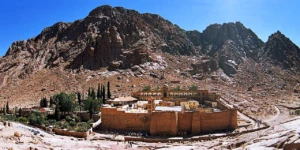
| Starting point | Trails begin by St Catherine’s Monastery, about 2 km north of the summit |
| Town altitude | About 1,586 m (5,203 ft), so the climb gains roughly 700 m |
| Routes | Camel Path (Siket El Bashait) and the Steps of Repentance (Siket Sayidna Musa, 3,750 steps) |
| Guide | Hiking with a guide is mandatory; guides are hired at the trailheads |
| Time needed | Our planning suggestion: 5 to 7 hours in total for a sunrise climb, summit stop and descent |
Why climb Mount Sinai?
Jabal Musa is one of several mountains claimed as the biblical Mount Sinai, where Moses received the Ten Commandments. Tradition has favored this peak for many centuries, and the Quran refers to the mountain as Tur Sina and at-Tur. For pilgrims of all three Abrahamic faiths, the walk is an act of devotion.
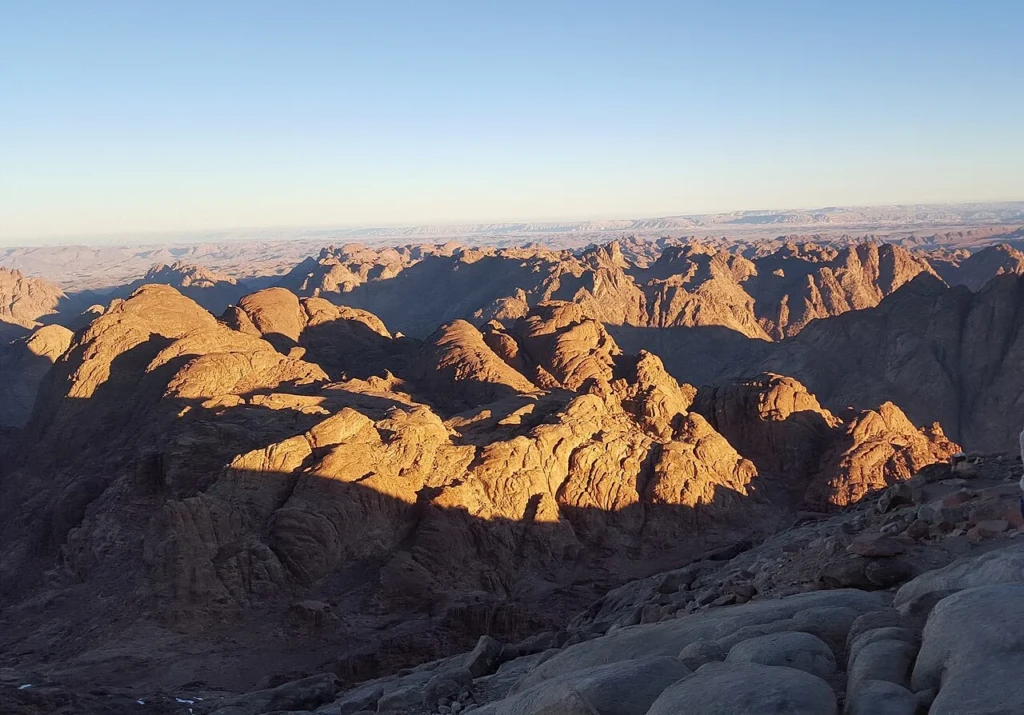
For other travelers, the draw is the view. From the summit you look out over a sea of bare granite peaks that turn from grey to rose to gold as the sun comes up. Mount Sinai is not even the highest point in the range. Mount Catherine next door reaches 2,629 m (8,625 ft), the highest peak in Egypt.
What you find at the top
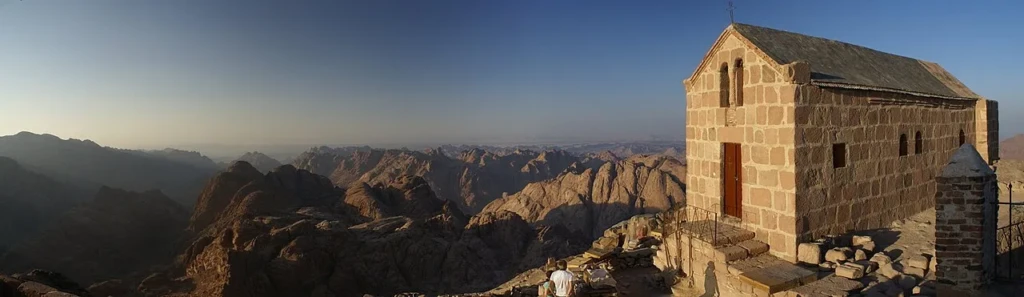
The summit is small and rocky. A Greek Orthodox chapel, built in 1934 on the ruins of a 16th-century church, stands on the highest point. It is not open to the public. Tradition says the chapel encloses the rock from which the stone tablets of the Law were made. A small mosque stands close by, and visitors are also shown a cave where Moses is believed to have waited before receiving the Commandments.
The two routes up Mount Sinai
Both routes start near St Catherine’s Monastery. They suit different walkers, and many people go up one and down the other.
| Camel Path (Siket El Bashait) | Steps of Repentance (Siket Sayidna Musa) | |
|---|---|---|
| Character | Longer, wider and gentler, with zigzags | Shorter and much steeper, on rough stone steps |
| Time | About 2.5 hours on foot, according to Wikipedia | Not reliably published; your guide will confirm |
| Camels | Camels can be hired | A walking route |
| Best for | Night climbs, first-time hikers, sunrise | Daylight descents for strong walkers with good knees |
| Where it starts | Near the monastery | In the ravine behind the monastery |
The Camel Path
This is the route most sunrise climbers use. The gradient is steady, and the path is wide enough to walk in the dark with a headlamp. Camels can be hired on this route, which helps if you are short of breath at altitude. Ask your guide how far the camels go before you set off.
The Steps of Repentance
This route, also called the steps of penitence, climbs 3,750 stone steps up the ravine behind the monastery. It is steep and relentless, and the uneven steps are tiring on the knees. Many walkers prefer to come down this way after sunrise, when there is light to see each step and the descent ends right at the monastery.
How to time a sunrise climb
Wikipedia notes that many tour companies start the ascent after midnight so walkers reach the top for sunrise. In practice, your start time depends on three things: the season, your walking pace, and which route you take.
- Check the sunrise time for Saint Catherine on your date. It shifts a great deal between summer and winter.
- Work back from the summit. Allow about 2.5 hours for the Camel Path at a steady pace, plus rest stops.
- Add a buffer. Arriving 20 to 30 minutes early lets you find a spot and warm up before first light.
- Let your guide set the final plan. Local guides know how long their groups take and will set a realistic start time.
The sunset alternative
If you do not want a night start, consider climbing in the afternoon for sunset. Wikipedia notes that the mountain is quieter then. You will need a headlamp for the descent, and your guide will set a safe turnaround time.
Sleeping on the mountain
A small camp below the summit rents out mattresses and blankets, so you can sleep on the mountain and wake up near the top. It is a basic option, but it avoids the night ascent and lets you watch both sunset and sunrise.
Guides and rules on the mountain
Hiking Mount Sinai with a guide is mandatory. Guides are hired at the start of the trails, before the monastery. The local Jebeliya Bedouin have lived around the monastery since the 6th century, and the mountain is part of their home ground.
Book your guide through your hotel or tour operator so that the arrangement is clear before you start. The UK government’s travel advice recommends booking activities outside resort areas through approved agents or tour operators. If your tour includes the climb, the guide will be arranged for you.
What to bring for the climb
Saint Catherine has the coldest nights of any town in Egypt, according to Wikipedia, and snow falls occasionally from December to February. The summit is about 700 m higher than the town. Pack for cold even if the coast was hot the day before.
- Warm layers: a fleece or insulated jacket, a hat and gloves for most of the year. You will sweat on the way up and chill quickly at the top.
- A headlamp or torch with spare batteries, so your hands stay free on the steps.
- Proper footwear: hiking shoes or trainers with good grip. The path is loose in places.
- Water and a snack. Café stalls along the trail sell warm drinks and snacks, but carry your own basics.
- Small cash in Egyptian pounds for drinks, blanket rental or a camel ride.
- A light daypack to carry layers once you warm up.
- Your passport, as there are security checks on the roads in South Sinai.
How hard is the Mount Sinai climb?
For a reasonably fit adult, the Camel Path is a moderate hike. The challenge is less the distance than the conditions: the dark, the altitude, the cold and the early start after a short night. The last stretch on steps is the hardest part for most people.
Take it slowly and drink water. If you have heart or breathing problems, or knee issues, talk to your doctor before booking. A camel can take some of the strain on the way up the Camel Path, and coming down by the Camel Path is easier on the knees than the steps.
Getting to the trailhead
The trails start beside St Catherine’s Monastery in the town of Saint Catherine. Most climbers drive up from Sharm El Sheikh or Dahab, either the evening before or late at night. Drive times vary with the route and security checkpoints, so your driver or guide will confirm timing when you book.
Staying overnight in Saint Catherine makes the climb far easier. You get a few hours of sleep, avoid a long night drive, and are close to the trailhead. It also puts you in the right place to visit the monastery after you come down.
Visa and safety notes
According to the UK FCDO travel advice for Egypt, travelers who fly into Sharm El Sheikh get a free entry stamp only for short stays in the resorts of Sharm, Dahab, Nuweiba and Taba. A trip to Saint Catherine takes you outside those resorts, so you need a full visa.
The same page advises against all but essential travel to the northern part of South Sinai beyond the St Catherine–Nuweiba road, except for the coastal areas. It describes the Red Sea tourist areas of southern Sinai as generally low risk. Read the current FCDO and US State Department pages before you travel, and see our guide on whether it is safe to travel to Egypt right now.
Best time of year to climb
Spring and autumn usually bring the most comfortable conditions, with cool but not freezing nights. Winter climbs are possible, but the summit can be bitterly cold, and snow sometimes falls. Summer nights on the mountain are milder, though the drive back to the coast will be hot by mid-morning.
For weather across the whole country, see our month-by-month guide to the best time to visit Egypt. Our packing guide for Egypt covers what to wear in cooler regions.
Combining the climb with St Catherine’s Monastery
The monastery sits at the foot of the mountain, so the two belong in the same morning. The official Ministry of Tourism and Antiquities listing in October 2026 gives visiting hours of 8:45 am to 12:45 pm, with Friday limited to 10:30–11:30 am and Sundays closed. Check before you go, as a working monastery can change its hours.
A sunrise climb followed by a descent of the steps brings you down in time for the morning opening on most days. Avoid Sundays if you want to see inside, and remember the short Friday window. After the visit, most travelers head back to the coast; our Red Sea Egypt travel guide compares the resorts.
Visit with Delta Tours Egypt
Delta Tours Egypt does not currently sell a set Mount Sinai climbing tour. We can arrange a private sunrise climb on request as part of a tailor-made Egypt tour, with an overnight stay in Saint Catherine and a monastery visit timed to its opening hours. If you want to end your trip on the Sinai coast, our King Tut Dive tour with Cairo, a Nile cruise and Sharm El Sheikh runs 10 days from $1570 per person, and the Hatshepsut Dive tour covers Cairo, Aswan, Luxor and Sharm El Sheikh in 10 days from $3160 per person. The Royal Egypt Tour also finishes in Sharm El Sheikh, over 14 days from $7597 per person. Delta is a family-run, Ministry-licensed operator (licence No. 121), based in Cairo since 1974. Browse our Egypt and Red Sea tours for more combinations.
Frequently Asked Questions
How long does it take to climb Mount Sinai?
The Camel Path takes about 2.5 hours on foot to the summit. Add rest stops, time at the top and the descent. Most sunrise climbs take five to seven hours from start to finish.
How many steps are there on Mount Sinai?
The steep Steps of Repentance route has 3,750 stone steps. It climbs through the ravine behind St Catherine’s Monastery. The Camel Path is longer but gentler.
Do I need a guide to climb Mount Sinai?
Yes, hiking with a guide is mandatory. Guides can be hired at the trailheads before the monastery. Your hotel or tour operator can arrange one in advance.
How high is Mount Sinai?
The summit stands at 2,285 m (7,497 ft). The town of Saint Catherine below is at about 1,586 m. That means you gain about 700 m on the climb.
Can I ride a camel up Mount Sinai?
Camels can be used on the Camel Path, the longer and gentler route. Ask your guide how far up they go. The steep Steps of Repentance are a walking route.
Is it cold at the top of Mount Sinai?
Often, yes, especially before dawn. Saint Catherine has the coldest nights of any town in Egypt, and snow sometimes falls in winter. Bring a warm jacket, hat and gloves.
Ready to plan a sunrise on Mount Sinai? Share your dates through our tailor-made Egypt tours page, and we will build a private Sinai stop into your journey.
Featured image: Sunrise over the mountains from Mount Sinai. Photo: Mohammed Moussa / Wikimedia Commons, CC BY-SA 3.0