Lake Nasser Cruise and the Rescued Nubian Temples
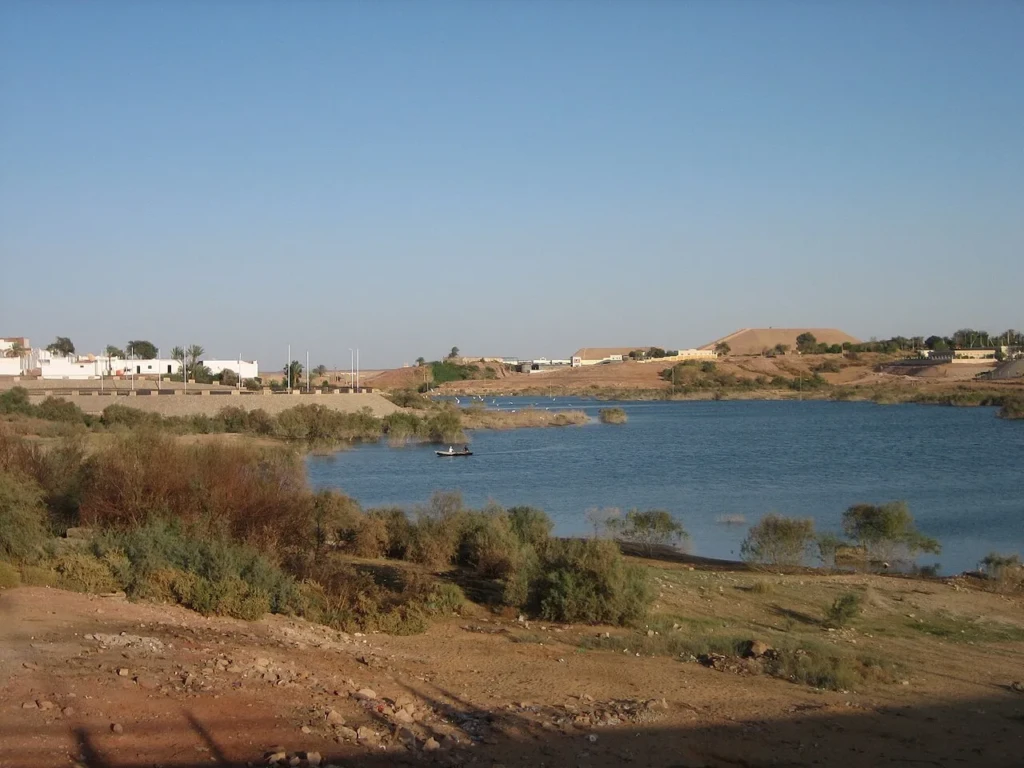
Sailing between Aswan and Abu Simbel on Lake Nasser takes three or four nights, depending on direction. Along the way, ships stop at Nubian temples that were moved to higher ground when the Aswan High Dam flooded the valley, including Kalabsha, Wadi el-Sebua and Amada. The cruise ends, or begins, beneath the colossal statues of Abu Simbel.
This guide explains what Lake Nasser is, which rescued temples a cruise usually visits, how a typical itinerary runs, official site hours and tickets, and how a lake cruise compares with a classic Nile cruise.
| Quick facts | Details |
|---|---|
| Location | Lake Nasser, the reservoir south of the Aswan High Dam, mostly in southern Egypt |
| Created by | The Aswan High Dam, built from 1960 to 1970 |
| Size | About 479 km long and up to 16 km wide |
| Typical cruise length | 4 nights from Aswan to Abu Simbel, or 3 nights from Abu Simbel to Aswan (one operator’s published itineraries) |
| Main stops | Kalabsha, New Wadi el-Sebua, New Amada, a view of Qasr Ibrim, Abu Simbel |
| Abu Simbel from Aswan | About 230 km in a straight line, about 300 km by road |
| World Heritage status | The temples are part of the Nubian Monuments from Abu Simbel to Philae, inscribed in 1979 |
| Time needed | Our planning suggestion: 4 to 5 days including the cruise |
What is Lake Nasser?
Lake Nasser is the vast reservoir that formed behind the Aswan High Dam. It is named after Gamal Abdel Nasser, Egypt’s president when the dam was begun. Wikipedia describes it as one of the largest man-made lakes in the world, about 479 km long and 16 km across at its widest point.
About 83 percent of the lake lies in Egypt. The smaller southern part lies in Sudan, where it is known as Lake Nubia.
The dam was built between 1960 and 1970 to control the Nile’s floods, store water for farming and generate electricity. Its cost was the loss of most of Lower Nubia. Tens of thousands of Nubian people had to leave their homes as the water rose, and many ancient sites were threatened.
The race to save the temples
In response, UNESCO launched an international campaign that ran from 1960 to 1980. Temples were cut into blocks, moved and rebuilt above the new waterline. The Ministry of Tourism and Antiquities lists ten sites between Aswan and Abu Simbel that were added to the World Heritage List in 1979, including Abu Simbel, Amada, Wadi el-Sebua and Kalabsha.
Not everything could be saved. Wikipedia notes that some sites, such as the fortress of Buhen, now lie under the lake. That loss is part of what makes the rescued temples so meaningful to visit.
Why take a Lake Nasser cruise?
Most visitors reach Abu Simbel on a long day trip from Aswan. A lake cruise is the slow alternative. It is the only practical way for most travelers to see the remote rescued temples between the two, which stand on the shore far from any town.
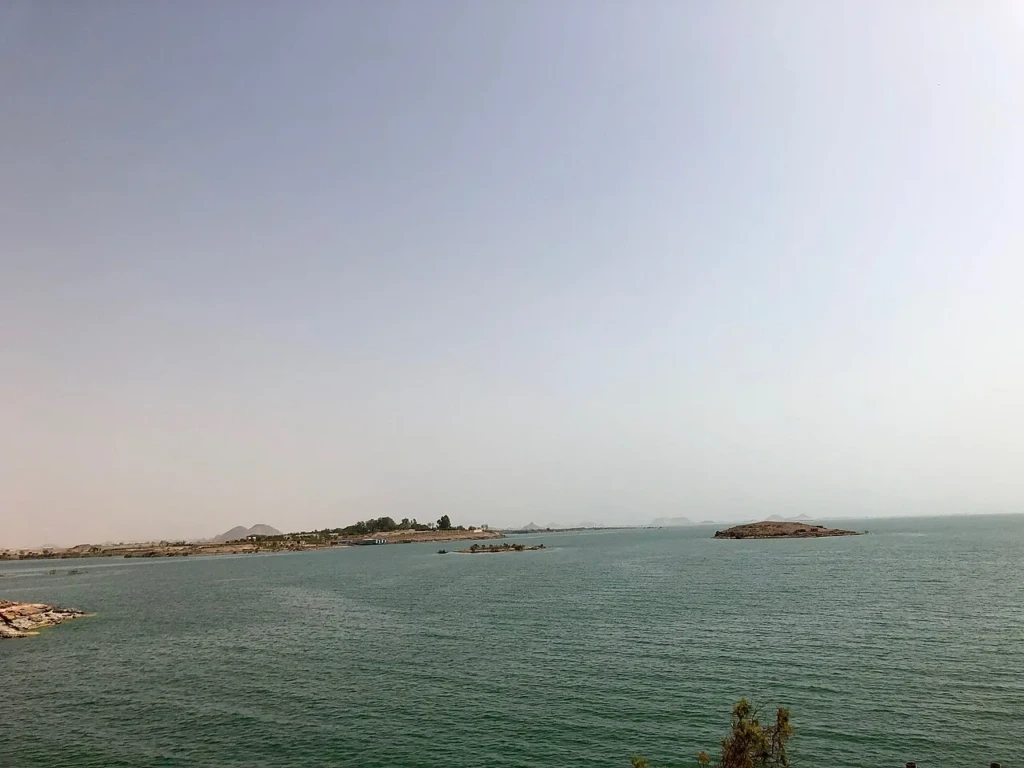
The landscape is very different from the green Nile valley. The lake is bordered by open desert rather than fields and towns. If you have already done a classic Nile cruise between Luxor and Aswan, this is a quieter way to see another side of southern Egypt.
Who it suits
- Return visitors who have already seen Luxor and Aswan
- Travelers interested in Nubian history and the UNESCO rescue story
- Anyone who wants to see Abu Simbel without the early-morning road trip
- Couples and small groups looking for a calmer pace
The rescued temples, in sailing order from Aswan
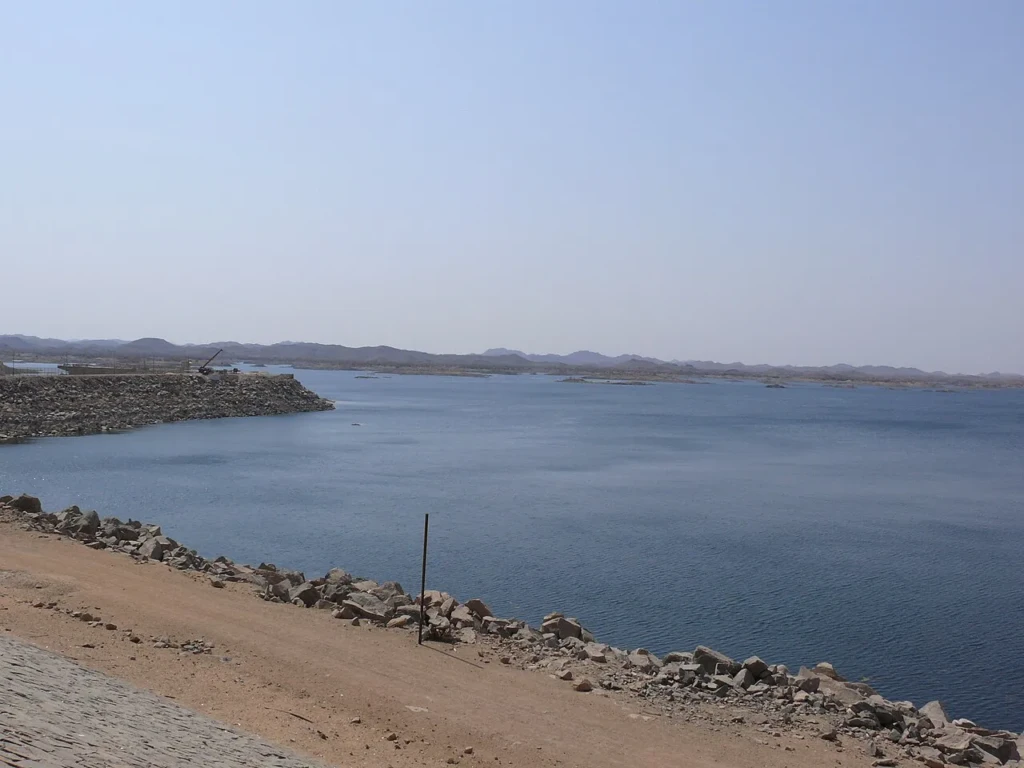
The order below follows a southbound cruise from Aswan. On a northbound cruise from Abu Simbel, you see the same sites in reverse.
Kalabsha
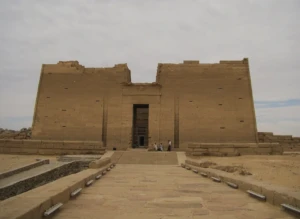
The first stop is usually New Kalabsha, close to the High Dam. Its main temple was built under Augustus, the first Roman emperor, and dedicated to the Nubian god Mandulis. The Ministry describes it as the largest free-standing temple in Lower Nubia. It was moved to its present site in 1962 and 1963.
New Wadi el-Sebua
New Wadi el-Sebua brings together three temples. According to the official site page, they are the Ramesside temple of Wadi el-Sebua dedicated to Amun-Ra and Ra-Horakhty, the Graeco-Roman temple of Dakka dedicated to Thoth, and the Roman temple of el-Maharraqa dedicated to Isis and Serapis.
Wadi el-Sebua means “Valley of the Lions,” a name inspired by the sphinxes that line the approach to Ramesses II’s temple. Wikipedia records that the hypostyle hall was later used as a church. Christians painted an image of Saint Peter in the sanctuary, so Ramesses II now appears to make offerings to the saint.
The Dakka temple has a pylon about 12 meters tall that Wikipedia describes as in near-perfect condition. Maharraqa, though never finished, has a spiral staircase that Wikipedia calls unique among Egyptian temples in Nubia.
New Amada
New Amada lies around 160 km south of Aswan, according to the Ministry. It holds three monuments:
- The temple of Amada, one of the oldest monuments on the lake. It was built by Thutmose III and Amenhotep II, with a hypostyle hall added by Thutmose IV. Its reliefs survived well because later Christians covered them with plaster when they used the temple as a church.
- The temple of el-Derr, a rock-cut temple of Ramesses II. Its sanctuary holds the same four figures as Abu Simbel: Ptah, Ra-Horakhty, the deified Ramesses II and Amun-Ra. The Ministry notes that the colors in its second pillared hall are very well preserved.
- The tomb of Penniut, an official under Ramesses VI, moved here from its original site.
Qasr Ibrim
Qasr Ibrim was once a hilltop town above the Nile. Wikipedia describes it as the only major archaeological site in Lower Nubia to survive the flooding, though it is now an island. It was occupied from at least the eighth century BC until 1813 and holds the largest collection of Old Nubian documents ever found.
The island is closed to all but archaeologists. Cruise ships slow down so passengers can view and photograph it from the deck.
Abu Simbel
The two rock-cut temples of Ramesses II and Queen Nefertari are the climax of the trip. The Ministry explains that they were moved in 1968 to save them from the lake. The published itinerary from Aswan includes a short panorama stop so passengers can photograph the temples from the deck before going ashore.
Our Abu Simbel temples guide covers the history, the Sun Festival and what to see inside in detail.
What a typical itinerary looks like
Itineraries vary by ship, so treat this as an example rather than a promise. Mövenpick, which runs the MS Prince Abbas on Lake Nasser, publishes two sample itineraries on its official site.
Four nights, Aswan to Abu Simbel
- Day 1: Board in Aswan around lunchtime and spend the first night there.
- Day 2: Morning visit to the Kalabsha temples, then sail to Wadi el-Sebua for the night.
- Day 3: Morning visit to the Wadi el-Sebua temples, then sail to Amada. Afternoon visit to Amada, el-Derr and the tomb of Penniut.
- Day 4: Sail past Qasr Ibrim with a short photo stop from the deck. Arrive at Abu Simbel around midday and visit the temples, with an optional sound and light show in the evening.
- Day 5: Disembark in the morning.
Three nights, Abu Simbel to Aswan
- Day 1: Board at Abu Simbel and visit the temples in the afternoon, with an optional sound and light show.
- Day 2: Sail past Qasr Ibrim, then visit Amada, el-Derr and the tomb of Penniut. Overnight at Wadi el-Sebua.
- Day 3: Early visit to the Wadi el-Sebua temples, then sail north to Aswan.
- Day 4: Morning visit to Kalabsha before disembarking.
The operator notes that the schedule may change because of circumstances beyond its control. Departure days and timings should be confirmed when you book.
Opening hours and tickets at the temples
Ask your operator whether site entry is included in your fare. For reference, all of the following are foreigner prices as listed on the official Ministry of Tourism and Antiquities site in October 2026; check before you go.
| Site | Hours | Foreign adult | Foreign student |
|---|---|---|---|
| Kalabsha Temple | 7:00 AM to 4:00 PM | EGP 200 | EGP 100 |
| Temples of Wadi el-Sebua | 7:00 AM to 4:00 PM | EGP 150 | EGP 75 |
| Amada temples site | 7:00 AM to 4:00 PM | EGP 150 | EGP 75 |
| Abu Simbel | 6:00 AM to 5:00 PM | EGP 750 | EGP 375 |
| Abu Simbel on February 22 and October 22 | 6:00 AM to 5:00 PM | EGP 1,200 | EGP 600 |
Note that the Ministry also has separate pages for the Amada temple (EGP 100) and the temple of el-Derr (EGP 70). The listings do not explain how these relate to the site ticket, so confirm with your operator what is included.
The higher Abu Simbel price applies on February 22 and October 22. On those two days, the Ministry notes, the sun’s rays reach the statues in the innermost sanctuary.
How to get to the start of a cruise
Southbound cruises start near Aswan, so most travelers arrive there by Nile cruise, train or flight first. Northbound cruises start at Abu Simbel. You reach it by road from Aswan, about 300 km, or by a short flight.
Delta does not sell Lake Nasser cruises, but we do run the transfer leg. Our Abu Simbel by private car day trip runs from $120 per person, and Abu Simbel by flight from $360 per person. Your driver or guide will confirm timing for the road journey.
Aswan itself deserves a day before or after the lake. Philae, the best-known rescued temple north of the dam, is covered by our private Philae Temple Aswan day tour from $85 per person. Our Nubian village tour by boat, from $50 per person, shows how Nubian culture lives on near the city today.
Lake Nasser cruise or Nile cruise?
The two are often confused, but they cover different stretches of water.
- A Nile cruise sails between Luxor and Aswan, north of the High Dam. It stops at Edfu and Kom Ombo and passes through farmland and villages. See our Luxor to Aswan cruise guide.
- A Lake Nasser cruise sails between Aswan and Abu Simbel, south of the High Dam. It visits the rescued Nubian temples in a quiet desert setting.
The High Dam separates the two stretches of water, so each route uses its own ships. Many travelers do a Nile cruise first, then add Abu Simbel by road or air. You can compare options on our Nile river cruises page.
Best time to go, and safety
Southern Egypt is hot for much of the year, so the cooler months are the most comfortable for temple visits. Our guide to the best time for a Nile cruise gives month-by-month weather that applies to Aswan and the lake as well.
If you want to time your trip with the Abu Simbel Sun Festival, plan around February 22 or October 22. Expect higher ticket prices on those dates.
On safety, the UK Foreign, Commonwealth and Development Office advises against all but essential travel to the area west of the Nile Valley, but it specifically excludes Aswan and Abu Simbel from that advice. Check the latest FCDO or US State Department guidance before you book, as advice can change. For a broader view, see our article on whether it is safe to travel to Egypt right now.
Visit with Delta Tours Egypt
Delta does not currently offer a Lake Nasser cruise product. We can arrange a private trip to the rescued Nubian temples on request as part of a tailor-made Egypt tour, and we can build Abu Simbel and Aswan into the rest of your itinerary. Delta Tours Egypt is a family-run, Ministry-licensed operator (licence No. 121), based in Cairo since 1974. Tell us what you want to see, and we will suggest the most practical way to do it. Our Aswan travel guide is a good place to start planning.
Frequently Asked Questions
How long is a Lake Nasser cruise?
The published itineraries we reviewed run four nights from Aswan to Abu Simbel and three nights in the opposite direction. The southbound trip is longer because the first night is spent in Aswan.
Which temples does a Lake Nasser cruise visit?
Typical stops are Kalabsha, New Wadi el-Sebua, New Amada and Abu Simbel. Ships also pass Qasr Ibrim for a view from the deck, since the island itself is closed to visitors.
Can you go inside Qasr Ibrim?
No. The island is closed to everyone except archaeologists. Cruise ships slow down nearby so passengers can photograph it.
Is a Lake Nasser cruise better than a Nile cruise?
Neither is better; they cover different routes. A Nile cruise links Luxor and Aswan, while a lake cruise links Aswan and Abu Simbel. Many first-time visitors start with the Nile.
How much are the temple tickets on Lake Nasser?
As of October 2026, the official listing shows EGP 150 for foreign adults at Wadi el-Sebua and at the Amada site, EGP 200 at Kalabsha, and EGP 750 at Abu Simbel. Ask your operator whether entry fees are included in your fare.
Why were the Nubian temples moved?
The Aswan High Dam created Lake Nasser, which would have submerged them. UNESCO led an international campaign from 1960 to 1980 to dismantle the temples and rebuild them on higher ground.
Curious about southern Egypt beyond the classic route? Start with our tailor-made Egypt tours, and we will plan a private journey that includes Abu Simbel and the rescued temples of Nubia.
Featured image: Shore of Lake Nasser. Photo: Jerome Bon from Paris, France / Wikimedia Commons, CC BY 2.0